What strong periodic table worksheets actually teach
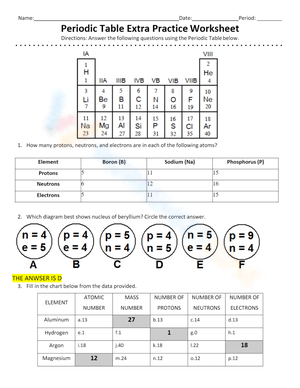
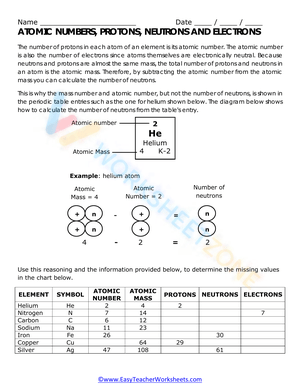
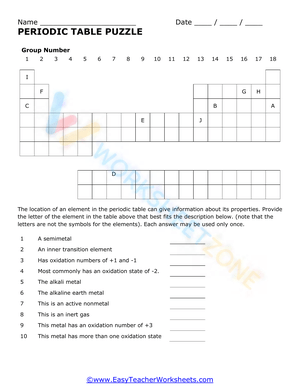
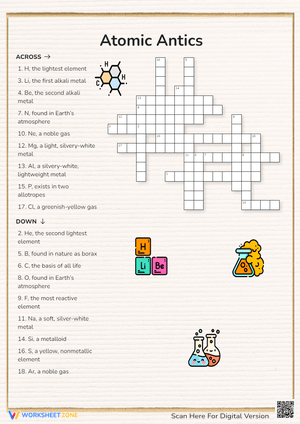
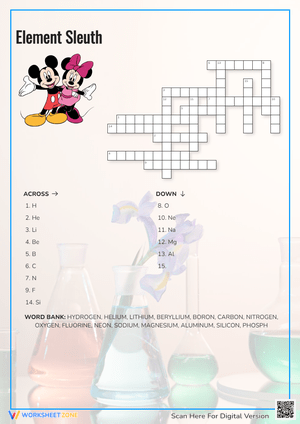
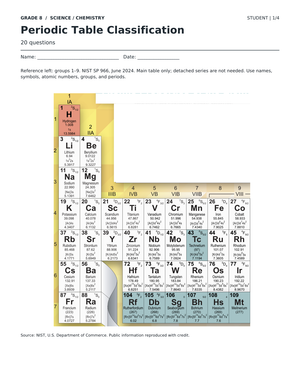
A good set of periodic table worksheets does more than ask students to color squares. It moves them from reading the table to reasoning with it. Teachers planning a physical science or chemistry unit need practice pages that reinforce three linked ideas: how elements are organized into groups and periods, how position signals properties, and how those patterns let students predict behavior they haven't memorized. The current table holds 118 confirmed elements arranged in the standard 18-group layout used across US classrooms, and worksheets that reflect that accurate structure give students a dependable model to work from all year.
Because the table is a reference students return to in nearly every chemistry lesson, worksheet practice pays off far beyond a single week. The goal is fluency: students who can locate a family, read a period, and connect location to reactivity are ready for the labs and problems that follow.
Matching worksheets to NGSS MS-PS1-1
For middle school physical science, the anchor standard is clear. NGSS performance expectation MS-PS1-1 asks students to use the periodic table as a model to predict the relative properties of elements based on patterns of electrons in the outermost energy level. Worksheets aligned to that expectation should ask for prediction, not just recall.
The NGSS disciplinary core ideas describe the table as ordering elements horizontally by proton number, with columns grouping elements that share chemical properties. Practice pages that mirror that language, asking students to explain why two elements in the same column behave alike, keep worksheet work tied to the standard instead of drifting into trivia.
According to the Next Generation Science Standards, MS-PS1-1 expects students to use the periodic table as a model to predict the relative properties of elements based on patterns of electrons in the outermost energy level, framing the table as a predictive tool rather than a memorization chart students recite once and forget.
Building from labeling to pattern prediction
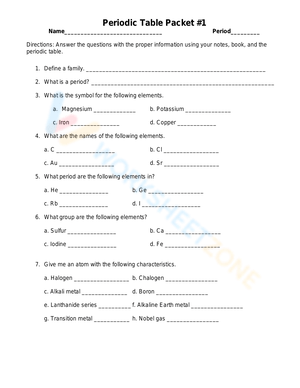
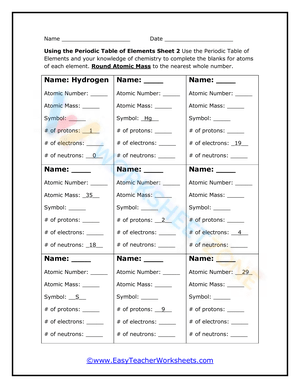
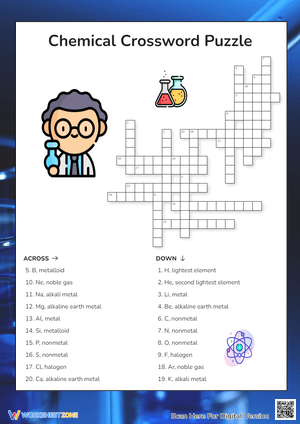
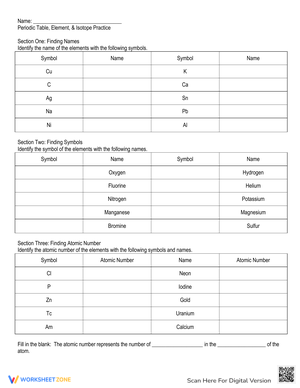
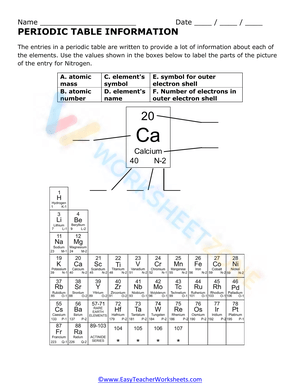
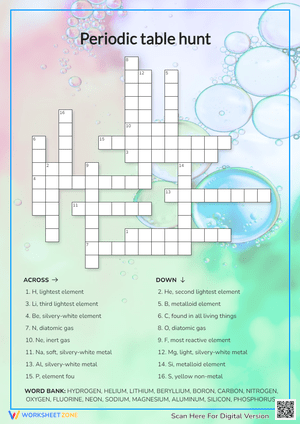
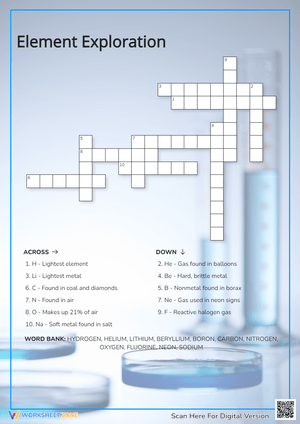
The most effective sequence follows the NGSS phrase itself: use the table as a model. Start with identification, then move to pattern recognition, then to prediction. A student who first labels metals, nonmetals, and metalloids can later predict which unfamiliar element is most reactive because its position tells them so.
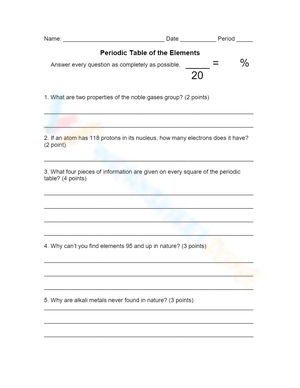
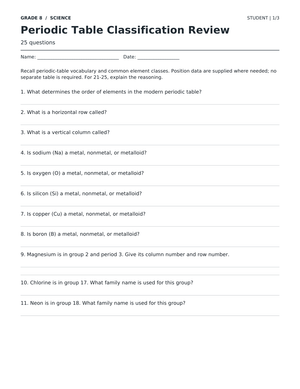
Here's a distinction that separates surface practice from real understanding: labeling worksheets test whether students can find information, while prediction worksheets test whether they can generate it. If a page can be completed by copying from a wall chart, it lives at the recall level. To reach MS-PS1-1, at least one task per worksheet should require a student to state a property of an element they were never told about, using only its group and period as evidence. That single design shift turns a reference exercise into a modeling exercise.
Classroom Implementation
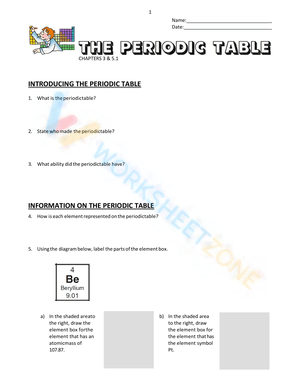
Sequencing worksheets across a unit keeps practice purposeful. Open with a labeling page during direct instruction so every student leaves day one able to orient on the table. Use a groups-and-families page as guided practice, working the first two rows together before releasing students to finish independently. Reserve trend and prediction pages for after your first element-property lab, when students have concrete observations to connect to the pattern.
Homework works best as short, focused pages rather than full-table drills that invite copying. A ten-item prediction set tied to two or three families gives you a clean read on understanding. For review before a test, a mixed page that blends labeling, property sorting, and one prediction prompt lets students self-check across every skill level the unit covered. Keep an answer key visible during peer review so students catch misconceptions while the reasoning is still fresh.
Using worksheets for formative assessment
Periodic table worksheets shine as formative checkpoints between labs. A quick five-question exit page after a properties lab tells you whether students connected their observations to the table's organization before you move on. Because the prompts are specific, you can spot exactly which idea slipped, whether it's confusing groups with periods or missing the electron-pattern reasoning behind MS-PS1-1.
Save formal assessment language for graded work, and use these lower-stakes pages to guide reteaching. When most of a class misses the same prediction item, that's your signal to revisit the model together rather than pushing ahead into new content.
Frequently Asked Questions
1. What grade level are periodic table worksheets appropriate for?
They span grades 6-12. Middle school pages focus on labeling, groups, periods, and basic properties across the 6-8 band, while high school chemistry worksheets move into trends, electron configuration, and reactivity. Match the format to the grade so tasks challenge without overwhelming.
2. How do periodic table worksheets align with NGSS standards like MS-PS1-1?
MS-PS1-1 asks students to use the table as a model to predict element properties from electron patterns in the outermost energy level. Worksheets that require prediction and justification, not just labeling, hit that expectation directly and keep practice standards-aligned.
3. What skills should periodic table worksheets target?
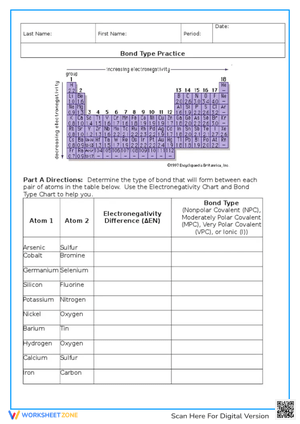
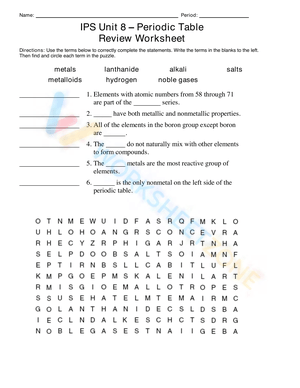
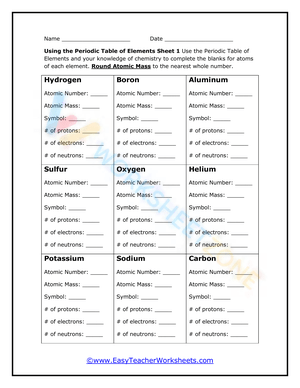
Build from identification to prediction. Early pages cover labeling and sorting metals, nonmetals, and metalloids. Middle pages compare elements within a family. Advanced pages ask students to rank elements by a trend and defend the order using position on the table.
4. How can teachers use periodic table worksheets for review versus formal assessment?
Use mixed-skill pages with answer keys for low-stakes review and peer checking. For formative assessment, assign short exit pages between labs to catch gaps early. Reserve longer, unaided prediction sets for graded work once students have practiced the reasoning.