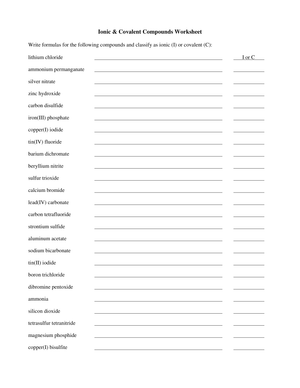
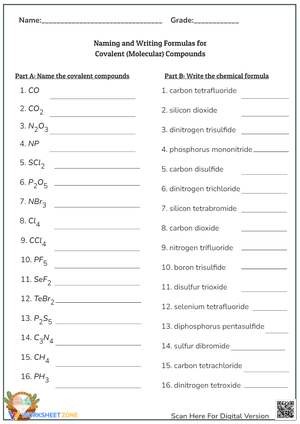
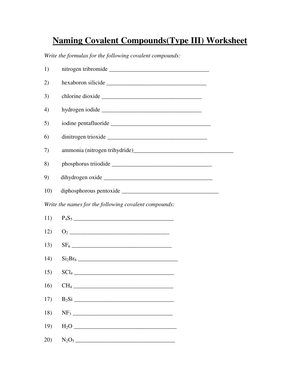
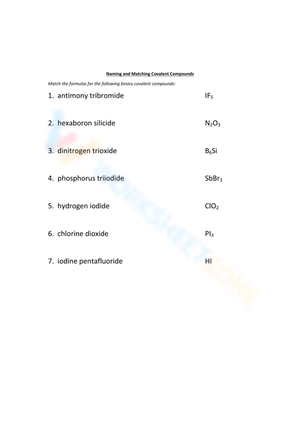
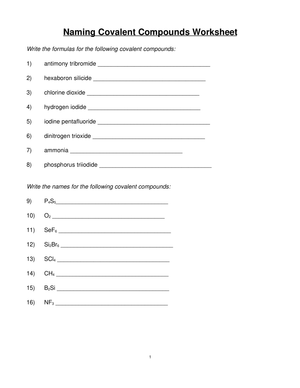
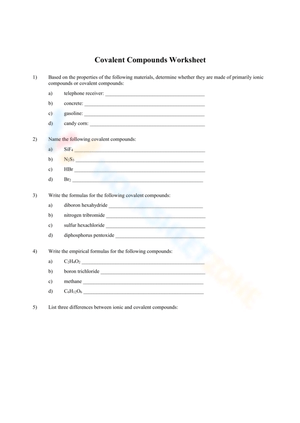
Naming covalent compounds can feel like learning a new chemistry language. Students are not just reading formulas; they are decoding how nonmetal atoms combine and how prefixes reveal the number of atoms in each compound. Naming covalent compounds worksheets give learners a steady way to practice this skill until names like carbon dioxide, dinitrogen monoxide, and sulfur hexafluoride start to make sense. With repeated examples, students learn to move between chemical formulas and compound names with greater accuracy.
Covalent compounds are usually formed between nonmetals, and their names often use prefixes such as mono-, di-, tri-, tetra-, penta-, hexa-, hepta-, octa-, nona-, and deca-. A worksheet might ask students to name a formula like CO2, write the formula for phosphorus trichloride, or correct common naming mistakes. These activities help students understand why prefixes matter and why the second element usually ends in “-ide.” Before students begin naming practice, teachers can build background knowledge with this guide to periodic table activities so learners can recognize nonmetals more confidently.
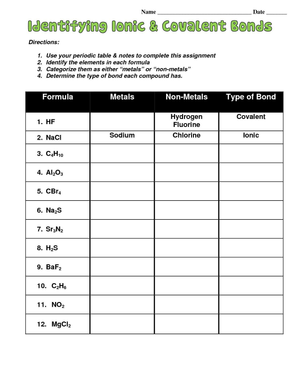
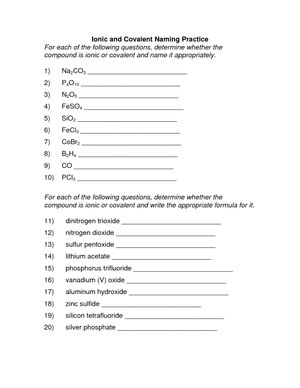
What makes naming covalent compounds worksheets valuable is the balance between rules and pattern recognition. Students need to know when to use prefixes, when to drop or adjust vowels, and how to avoid confusing covalent naming with ionic compound naming. For example, sodium chloride and carbon tetrachloride follow different naming systems because one is ionic and the other is covalent. To strengthen that distinction, teachers can pair naming practice with this chemical bonding worksheet collection, helping students connect compound names to the type of bond involved.
These worksheets fit well into many chemistry routines. Teachers can use them after introducing molecular compounds, during bonding units, as homework, quiz review, bell work, exit tickets, or small-group support. Some students may need simple formula-to-name practice, while others may be ready for mixed review that includes writing formulas from names. The structured format helps teachers quickly see whether students understand prefixes, element order, and naming endings, or whether they need more guided examples before moving forward.
Worksheetzone’s naming covalent compounds worksheets are designed to make chemistry naming clearer and less overwhelming. Students can practice one rule at a time, then build toward more complete naming fluency. As they gain confidence, they become better prepared for chemical formulas, reactions, bonding lessons, and later chemistry topics. Whether used for first-time instruction or review before an assessment, these worksheets help turn chemical naming from a guessing game into a skill students can explain and apply.
Frequently Asked Questions
Question 1: What do students learn from naming covalent compounds worksheets?
Students learn how to name molecular compounds made from nonmetals, use Greek prefixes correctly, change element endings to “-ide,” and write formulas from compound names. They also practice recognizing patterns that help them avoid common naming mistakes.
Question 2: What grade levels are these worksheets best for?
These worksheets are most useful for middle school physical science, high school chemistry, and introductory chemistry review. They are especially helpful for students who are learning chemical bonding, molecular formulas, and the difference between ionic and covalent compounds.
Question 3: Why do students often struggle with covalent compound naming?
Students often struggle because covalent naming uses prefixes, while ionic naming follows a different set of rules. Learners may forget prefixes, use the wrong ending, or confuse metal-nonmetal compounds with nonmetal-nonmetal compounds. Focused worksheet practice helps make these rules easier to remember.
Question 4: How can teachers use naming covalent compounds worksheets in class?
Teachers can use them for guided practice, homework, warm-ups, chemistry centers, quiz review, exit tickets, or small-group reteaching. They work especially well after lessons on covalent bonding, molecular formulas, and periodic table groups.