Middle school Earth science teachers often split water, rock, carbon, and nitrogen cycles into separate weeks of instruction. Students learn to draw each diagram in isolation, then struggle to explain how the cycles actually connect. Integrated science cycles worksheets are built to close that gap by asking students to model more than one cycle at a time, tracing how energy from the sun and gravity drive matter through interconnected pathways rather than through four disconnected topics.
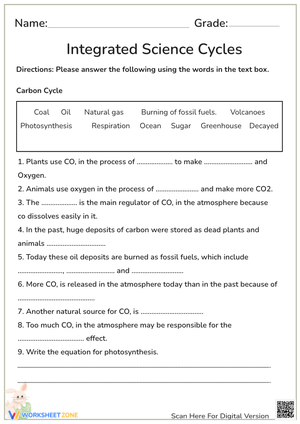
This approach matches how Earth's systems actually function in a classroom-ready format: labeling tasks, sequencing activities, and side-by-side cycle diagrams that push students to compare processes instead of memorizing them one at a time.
Aligning With MS-ESS2-4: Modeling the Water Cycle
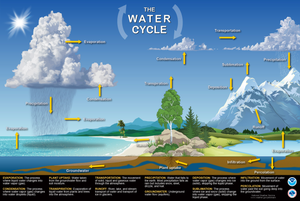
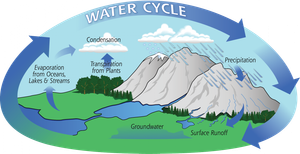
NGSS performance expectation MS-ESS2-4 requires students to develop a model that describes the cycling of water through Earth's systems, driven by energy from the sun and the force of gravity. Worksheets that ask students to label evaporation, condensation, precipitation, and collection stages, then annotate the energy source driving each stage, give teachers a direct way to assess this expectation without building an assessment from scratch.
Because MS-ESS2-4 specifically names sun energy and gravity as drivers, a worksheet that only asks students to sequence the water cycle stages misses part of the standard. Effective versions include a short-answer or labeling prompt where students identify which stage is powered primarily by solar energy and which is powered by gravity, since this distinction is what separates surface-level recall from the modeling behavior the standard actually calls for.
Aligning With MS-ESS2-1: Modeling the Rock and Materials Cycle
MS-ESS2-1 asks students to develop a model describing the cycling of Earth's materials, with emphasis on melting, crystallization, weathering, deformation, and sedimentation. Rock cycle worksheets that isolate these five processes as distinct labeling checkpoints give teachers a clean way to check whether students can identify each stage rather than just recite the cycle in order.
Pairing a rock cycle worksheet with a water cycle worksheet in the same lesson lets teachers show students where weathering and sedimentation depend on water movement, which is one of the clearest links between the two performance expectations without requiring a separate lesson on systems thinking.
Classroom Implementation
A practical sequence for a two-week Earth systems unit looks like this: introduce the water cycle worksheet with MS-ESS2-4 vocabulary in week one, introduce the rock cycle worksheet with MS-ESS2-1 vocabulary a few days later, then use a combined station rotation in the second week that revisits both plus carbon and nitrogen cycles. Close the unit with a short integrated formative assessment before the summative test.
For classes with mixed readiness levels, keep one version of each worksheet with a partially completed diagram as a scaffold, and one blank version for students ready to build the model from scratch. This lets the same station rotation serve the whole class without a separate intervention lesson.
Frequently Asked Questions
1. What grade level are integrated science cycles worksheets designed for?
These worksheets target grades 6-8, matching the middle school band where NGSS MS-ESS2-1 and MS-ESS2-4 sit within the Earth's Systems domain.
2. How do these worksheets align with NGSS Earth's Systems standards?
They support the modeling requirements in MS-ESS2-4 for the water cycle and MS-ESS2-1 for the rock and materials cycle, both part of the MS-ESS2 Earth's Systems domain that treats these processes as one interacting system.
3. Which cycles are typically covered?
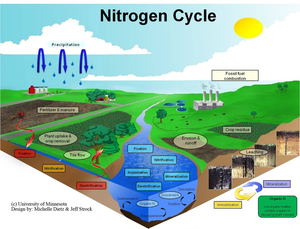
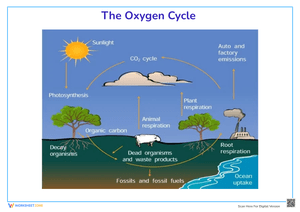
Water and rock cycles are the two directly tied to MS-ESS2 performance expectations, while carbon and nitrogen cycles are commonly included alongside them since integrated units often teach all four cycles together.
4. How can teachers use these worksheets for review versus formative assessment?
Use station rotations or group activities for review, and a shorter, individually completed version two to three days before a unit test to catch gaps early enough to reteach.
5. What classroom setup works best for cycle-comparison activities?
Station rotations with one cycle per station and a final cross-cycle comparison station work well for review, while a staged, broken-down version of the worksheet supports small-group intervention for students who need extra scaffolding on multi-step diagrams.