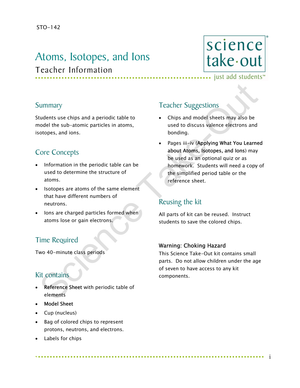
Atomic structure, isotopes, and ions are usually bundled into a single instructional block because they build on the same core model of the atom. Once students know that protons define an element and electrons occupy energy levels, isotopes and ions become variations on that model rather than brand-new content.
Sequencing a Lesson From Structure to Isotopes to Ions
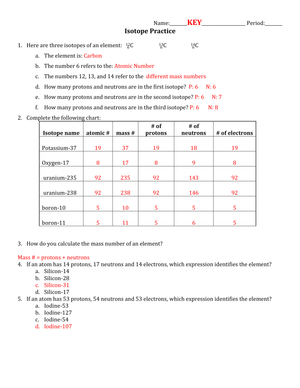
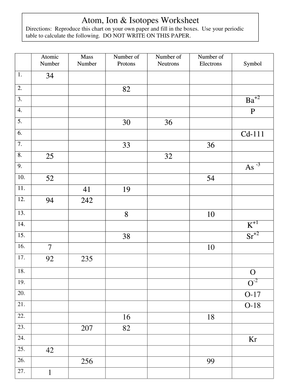
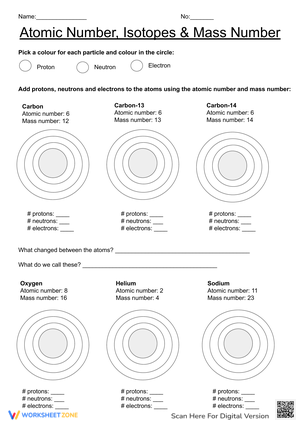
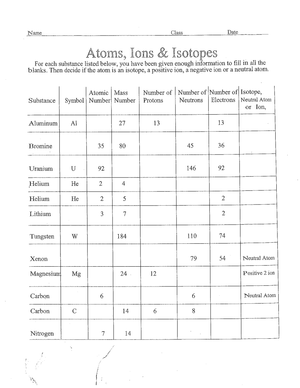
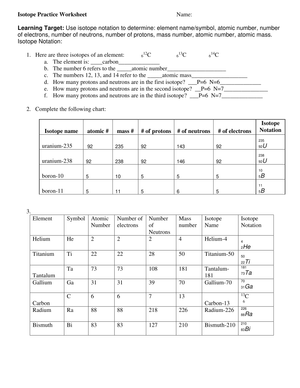
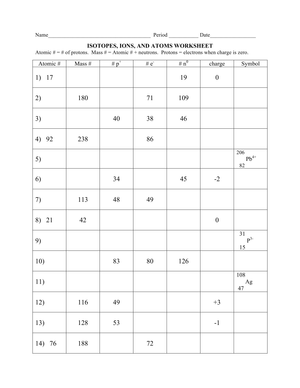
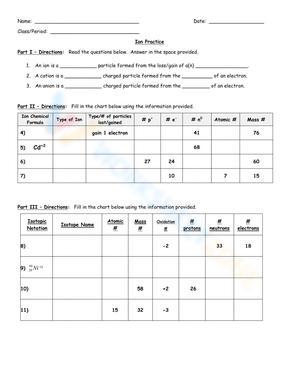
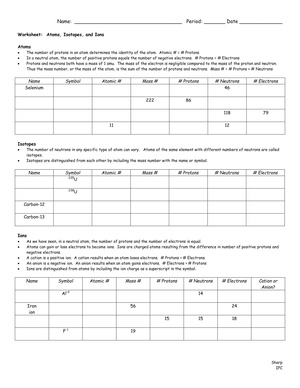
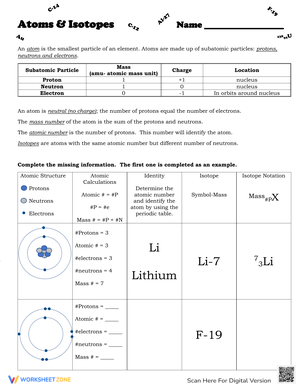
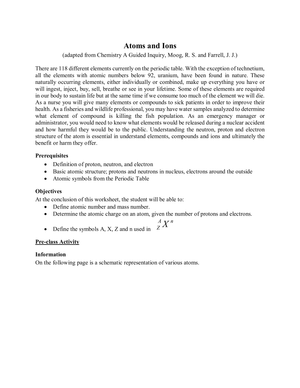
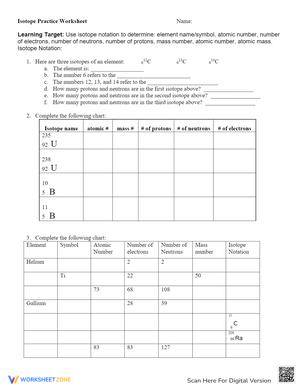
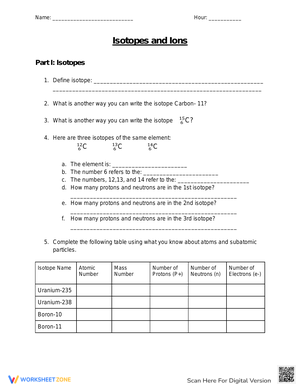
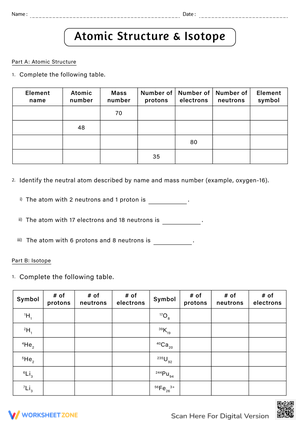
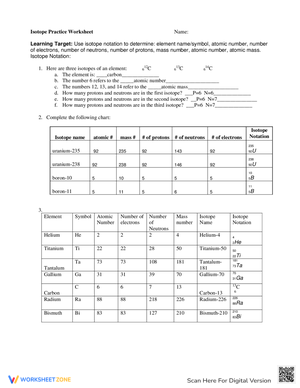
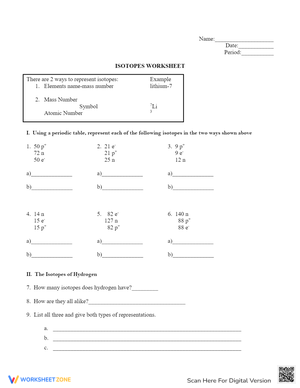
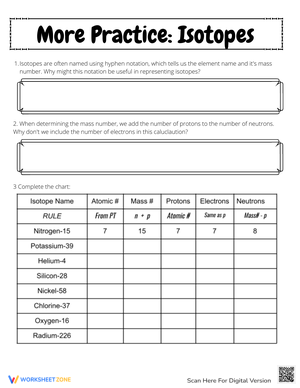
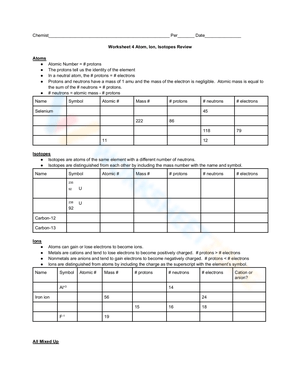
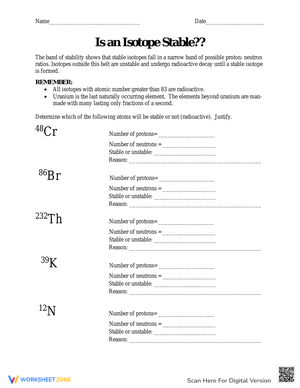
A clean lesson sequence starts with the basic atomic model (protons, neutrons, electrons and their charges and locations), moves into isotope notation using mass number and atomic number, then finishes with ion formation from electron gain or loss. Worksheets that follow this same order help students see isotopes and ions as two separate branches off the same trunk instead of a single confusing blur. Skipping straight to ion charge before isotopes are solid tends to produce students who assume any change in a periodic table entry means a proton count shift.
Average Atomic Mass as a Math and Science Bridge
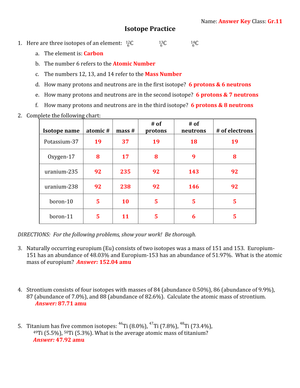
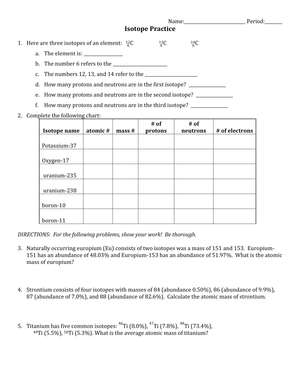
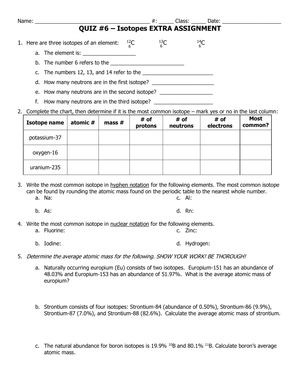
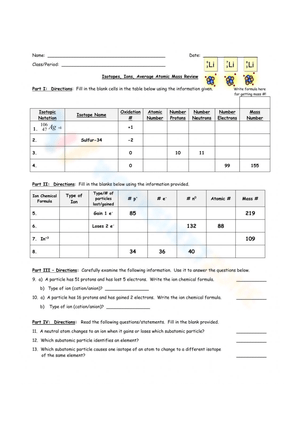
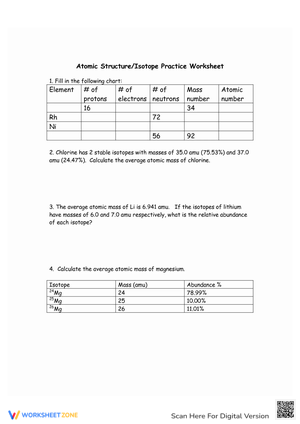
Isotope abundance problems are one of the most useful bridges between chemistry content and math skills. Students take percent abundance and mass values for two or more isotopes of an element, multiply, and sum to find the weighted average atomic mass shown on the periodic table. Worksheets with several of these word problems, ranging from simple two-isotope elements to trickier three-isotope sets, give students repeated practice with the same weighted-average logic they will reuse in later data and statistics work.
Common Misconceptions Worth Targeting Directly
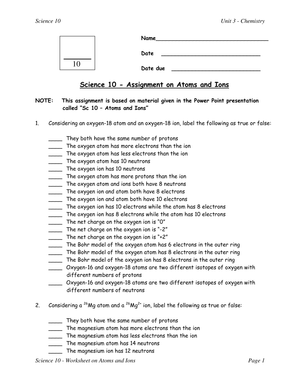
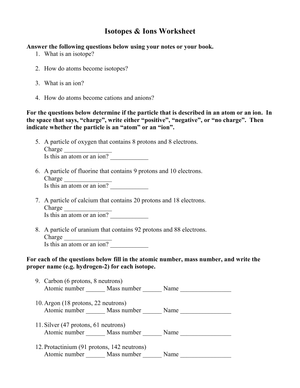
Three mix-ups show up again and again in student work: confusing mass number with atomic number, assuming isotopes change an element's identity, and believing ions form by gaining or losing protons. A worksheet section that asks students to sort true and false statements about these exact confusions, rather than only computing numbers, catches misunderstanding that a purely numeric worksheet might miss. Building a few targeted items around each misconception makes review time more efficient than reteaching the whole unit.
Formative Checks Before the Unit Test
Short isotope and ion worksheets work well as bell-ringers or exit tickets in the days leading up to a summative assessment. A five-question check that mixes one atomic structure item, one isotope notation item, one average atomic mass problem, and two ion charge predictions gives a fast read on which concept needs another day of review. Because the three topics build on each other, a wrong answer on ion charge often traces back to a shakier isotope or electron configuration understanding worth revisiting first.
Classroom Implementation
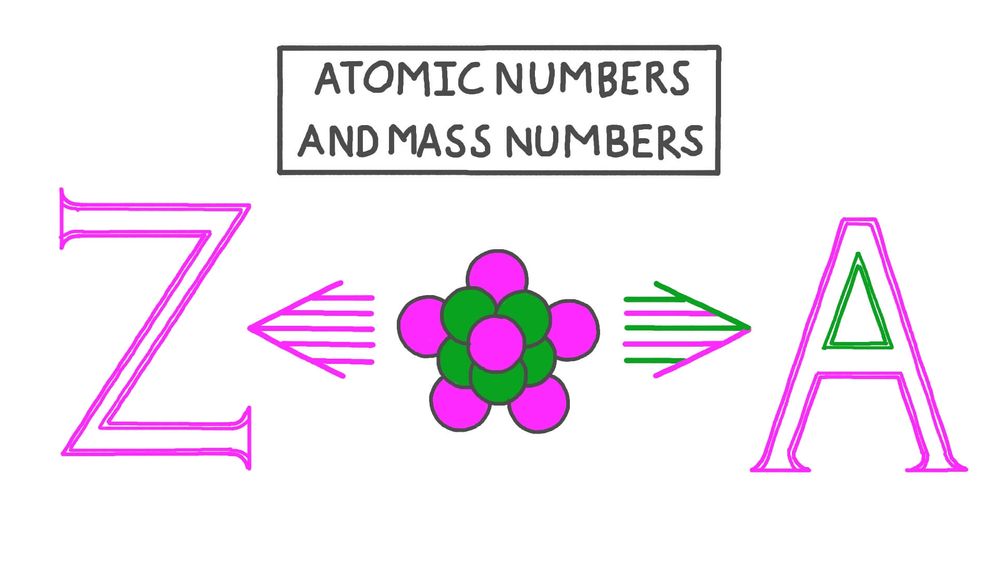
Pair each worksheet with a quick periodic table reference so students can check electron configuration and valence electron count while working through ion charge questions. For isotope notation, keep a simple template on the board (mass number over atomic number, element symbol) so students have a consistent visual to match against worksheet problems. When average atomic mass problems come up, walk through one worked example together before releasing students to the rest of the set, since the weighted-average setup trips up students even when their arithmetic is solid. Group struggling students for a short reteach on subatomic particle charge before moving into ion practice, since that foundational piece predicts most of the downstream confusion.
Standards Alignment for Planning
High school teachers building toward NGSS HS-PS1-1 can use isotope and ion worksheets as scaffolded practice leading into that standard's emphasis on periodic table patterns and outermost electron behavior. A district-level physical science unit on atomic structure similarly sequences subatomic particles before isotope and ion content, which lines up with how most published worksheet sets are ordered. Keeping worksheet practice aligned to this sequence makes it easier to map daily assignments back to the standard you are documenting for admin or curriculum review.
Frequently Asked Questions
1. What grade level typically covers atoms, isotopes, and ions?
Middle school physical science introduces the basics, while high school chemistry classes go deeper, often tying the content to standards like NGSS HS-PS1-1 that expect periodic table-based reasoning about electron patterns.
2. What is the difference between an isotope and an ion in simple classroom terms?
An isotope is a version of an element with a different number of neutrons but the same number of protons, while an ion is an atom that has gained or lost electrons, giving it a positive or negative charge without changing which element it is.
3. How do teachers use these worksheets for review before a unit test or quiz?
Short sets of isotope and ion questions work well as bell-ringers or exit tickets in the days before an assessment, giving a quick read on which of the three concepts (structure, isotopes, ions) still needs reteaching.
4. What NGSS standard aligns with atomic structure and isotope/ion instruction?
NGSS HS-PS1-1 asks students to use the periodic table as a model to predict relative properties of elements based on patterns in outermost electrons, which underlies isotope and ion instruction at the high school level.
5. How can teachers help students avoid mixing up atomic number, mass number, and ion charge?
Targeted true and false items about these exact confusions, paired with a consistent isotope notation template on the board, help students separate the three ideas instead of blending them into one vague set of periodic table facts.












 Interactive Worksheet Maker
 Quiz Maker
 Word Search Maker
 Crossword Puzzle Maker
 Word Scramble Generator
 Sentence Scramble Generator
 Handwriting Worksheet Generator
 Name Tracing Generator
 Fill In The Blank Generator