Attention young scientists, a brand new investigation has landed on your lab bench, and the case file is waiting to be cracked open. Our mixtures and solutions worksheets invite students to step into the role of chemistry detectives, examining everyday substances and asking what is really hidden inside them. Each printable activity sets up a clear mission, from spotting heterogeneous samples to pulling apart a saltwater puzzle, so learners feel the thrill of discovery on every page.
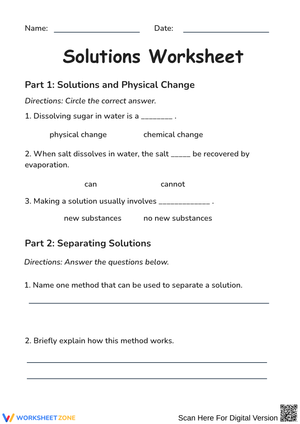
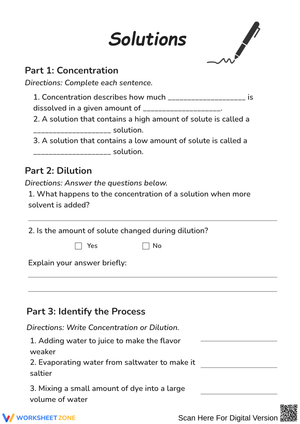
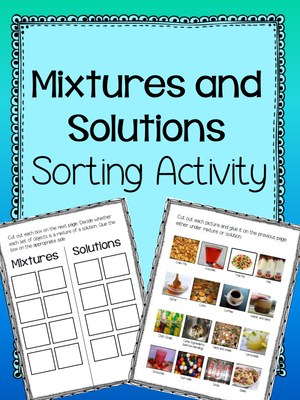
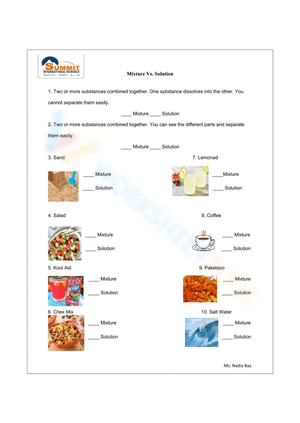
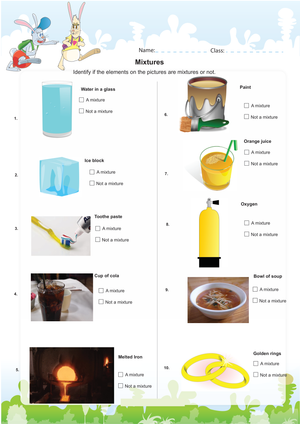
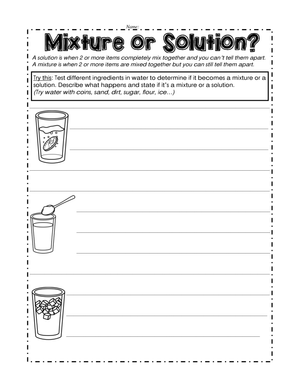
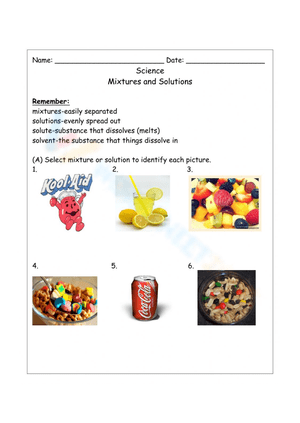
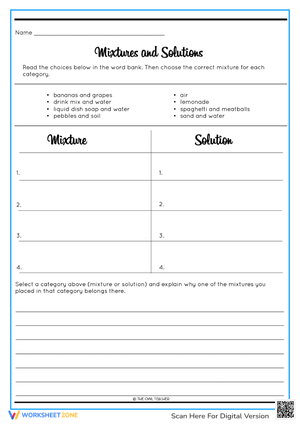
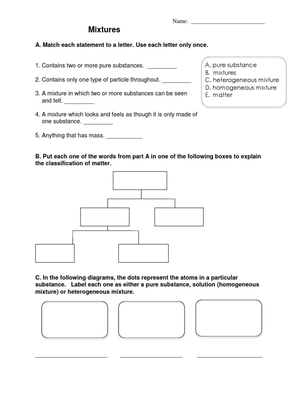
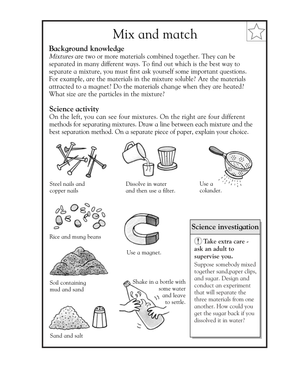
Inside each worksheet, students follow a trail of clues built from labeled diagrams, short scenarios, and guided questions that push them to observe carefully. The worksheet asks them to classify sand and water, sugar and tea, or oil and vinegar, then explain whether the sample is a mixture, a solution, or a pure substance. By treating each item as evidence, learners begin to recognize patterns in particle size, transparency, and the way components blend or stay apart.
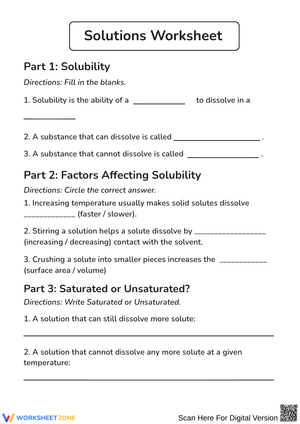
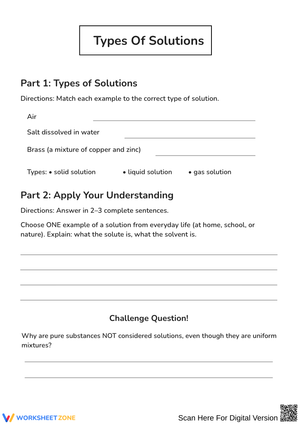
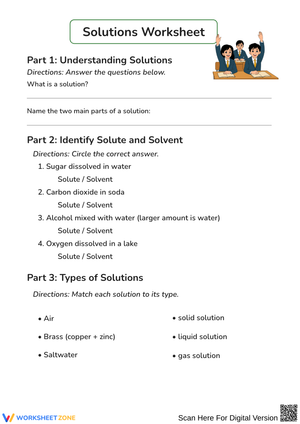
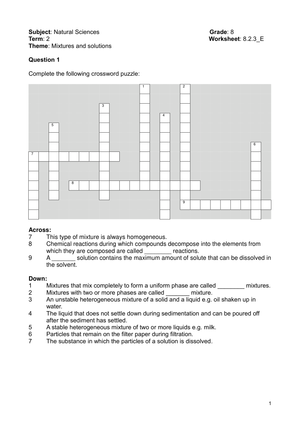
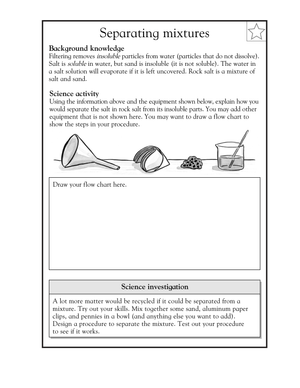
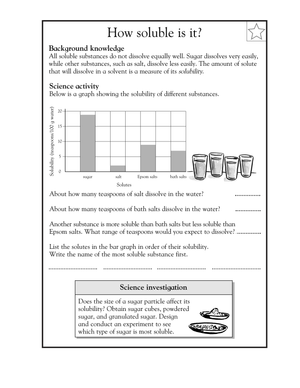
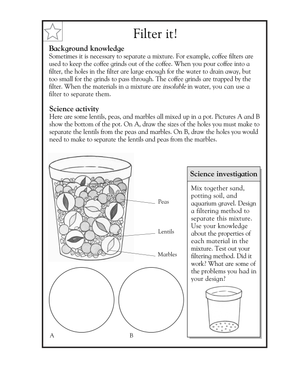
The journey builds steadily as the questions grow more demanding. Students explore separation techniques such as filtration, evaporation, and distillation, then match each method to a real classroom example. They practice solute and solvent vocabulary, calculate basic concentration, and decode what happens when a solid dissolves. For an extension into broader chemistry, learners can connect their findings to element-based activities that reinforce atomic thinking.
For teachers, framing chemistry practice as a mission lifts engagement across the whole classroom. These printable resources support lesson plans for grades four through eight, work well as bell ringers or homework, and pair smoothly with simple lab demonstrations. Parents at home can also use them to reinforce science concepts during weekend study sessions, and they connect naturally with our classifying matter practice for deeper review.
Ready to crack the case? Print, sharpen those pencils, and let students dive into the rewarding world of mixtures and solutions worksheets today.
Frequently Asked Questions
Question 1: What grade levels are mixtures and solutions worksheets best for?
These printable resources are designed for students in grades four through eight, where chemistry concepts begin to take shape. Worksheetzone offers a range of difficulty so younger learners can focus on identifying mixtures by sight, while older students tackle separation techniques, solute and solvent terms, and basic concentration questions. Teachers can easily layer activities to match each learner's pace inside the classroom.
Question 2: How do these worksheets help students understand chemistry concepts?
Each worksheet combines visual examples, short scenarios, and step by step questions that turn abstract chemistry into something students can see and sort. Learners practice classifying samples, predicting outcomes, and matching separation methods to everyday substances. This active approach strengthens scientific reasoning, helps build core vocabulary, and gives students the confidence to discuss matter, particles, and dissolving processes in their own classroom conversations.
Question 3: Can parents use mixtures and solutions worksheets at home?
Absolutely, parents can use these printable activities to support science learning between school days. The pages include clear instructions, simple lab style examples, and answer prompts that guide families through each task. A kitchen table works perfectly as a discovery station, and parents can pair the worksheet with hands-on demonstrations using sugar, salt, water, or oil to bring the chemistry lesson into real life.
Question 4: What topics are covered in these chemistry worksheets?
The collection covers heterogeneous and homogeneous mixtures, solutions, suspensions, solute and solvent identification, and separation methods such as filtration, evaporation, and distillation. Students also practice classifying samples, reading particle diagrams, and calculating simple concentration. Each worksheet builds on the last so learners gradually develop a complete picture of how matter behaves, ready for deeper science studies later on.












 Interactive Worksheet Maker
 Quiz Maker
 Word Search Maker
 Crossword Puzzle Maker
 Word Scramble Generator
 Sentence Scramble Generator
 Handwriting Worksheet Generator
 Name Tracing Generator
 Fill In The Blank Generator