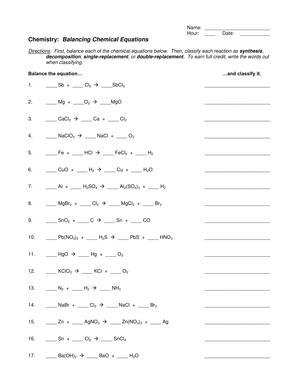
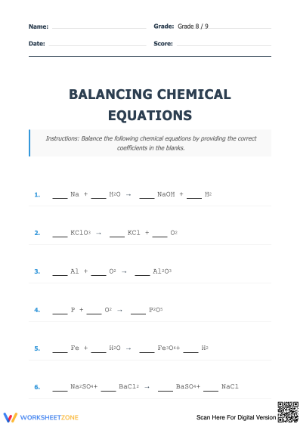
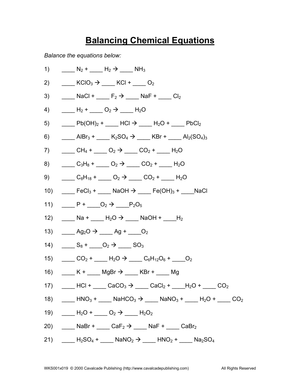
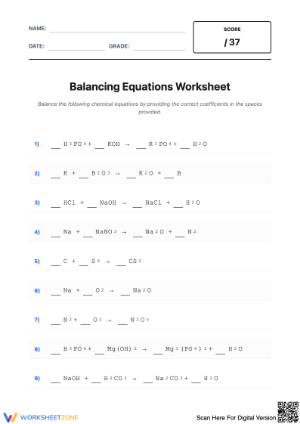
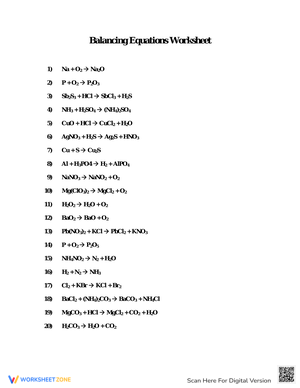
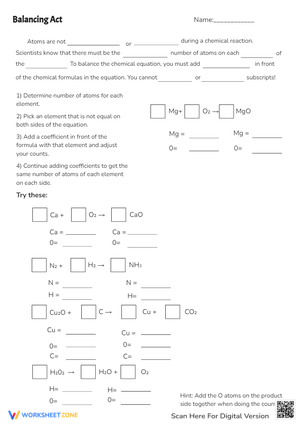
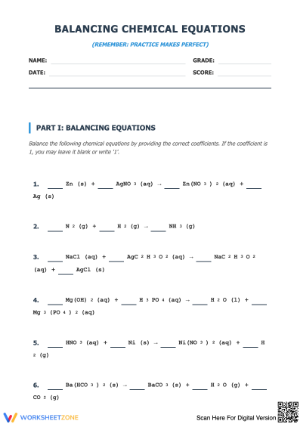
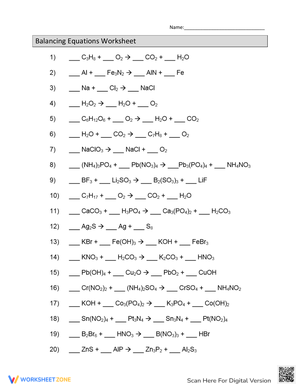
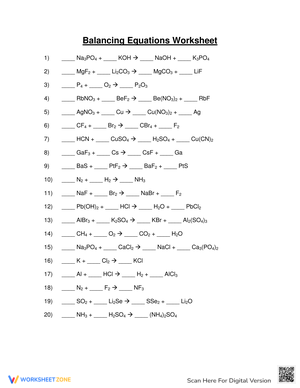
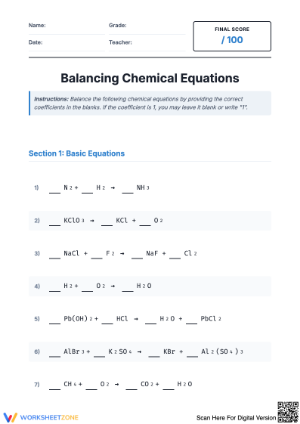
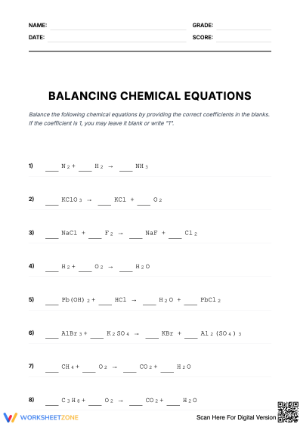
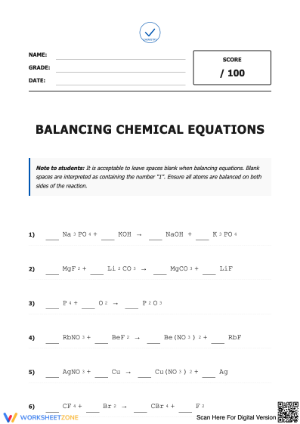
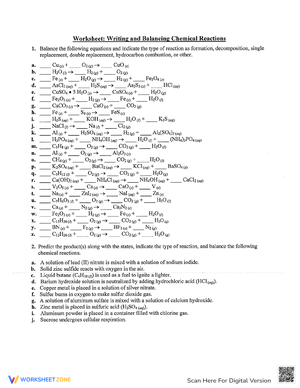
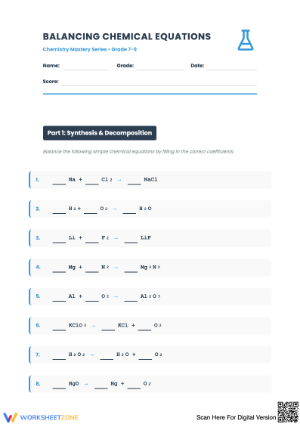
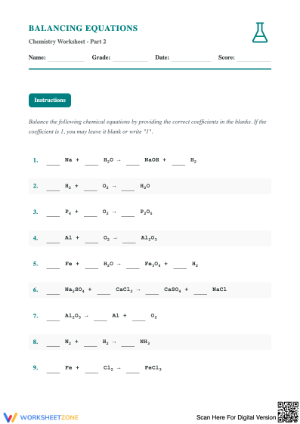
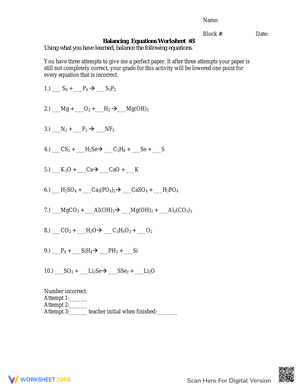
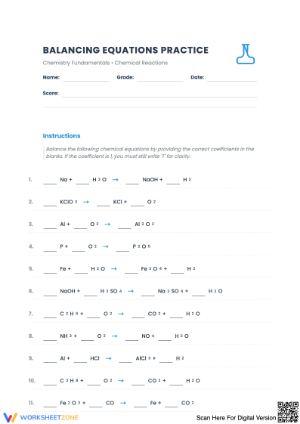
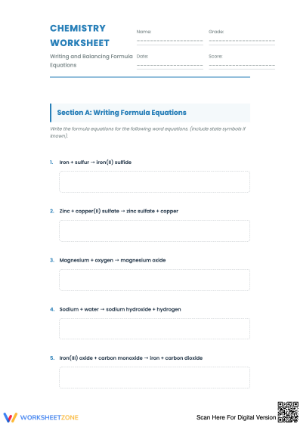
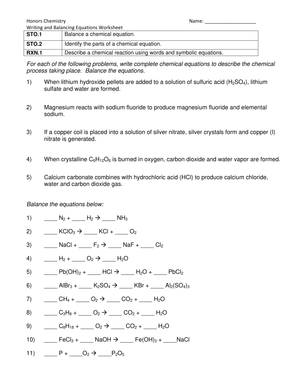
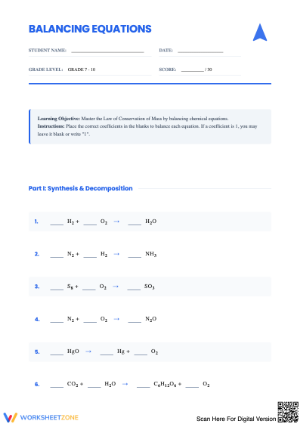
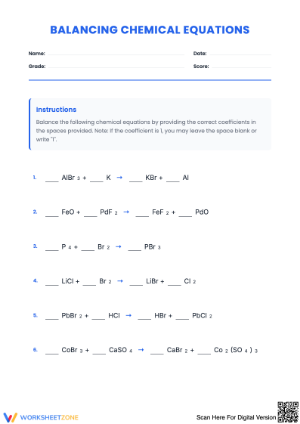
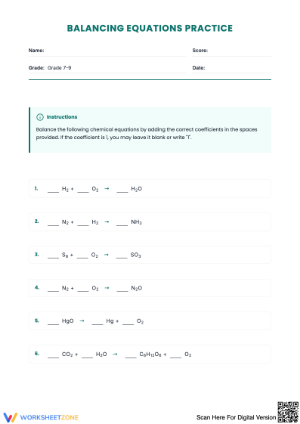
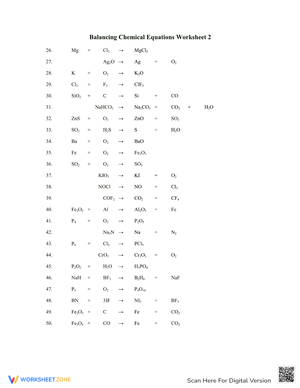
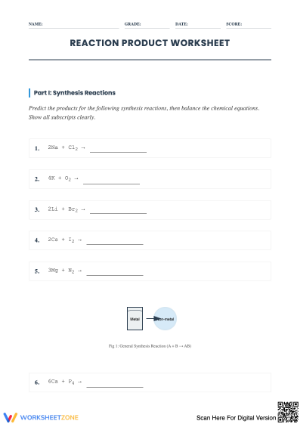
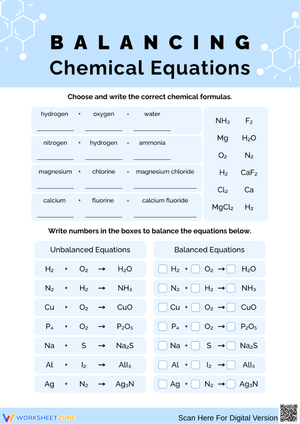
When a student adjusts a coefficient in a skeleton equation, they are not just solving a math puzzle. They are demonstrating that atoms rearrange during a chemical reaction without disappearing or multiplying. That is the heart of NGSS HS-PS1-7, which asks students to use mathematical representations to support the claim that atoms, and therefore mass, are conserved during a chemical process. A worksheet built around this standard should never feel like isolated arithmetic drills. It should read like a short argument: here is a reaction, here is the evidence that mass is conserved, and here is the proof written in balanced coefficients.
HS-PS1-7 sits under Disciplinary Core Idea PS1.B, Chemical Reactions, which means the standard frames equation balancing as evidence for a conservation claim rather than a stand-alone procedural skill. Worksheets that separate the math from the claim miss half of what the standard actually assesses, so strong practice sets pair each balanced equation with a short prompt asking students to explain how atom counts prove nothing was lost or created.
From Word Equations to Skeleton Equations: A Scaffolded Worksheet Sequence
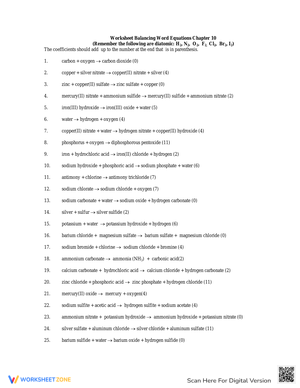
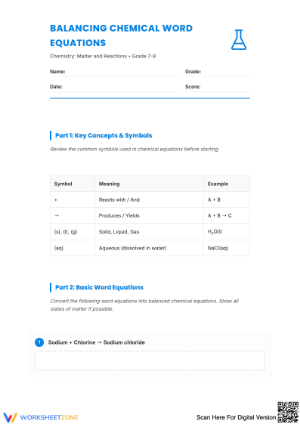
Most successful balancing units follow a predictable progression, and worksheets should mirror it rather than jump straight to abstract formulas. Students typically move through word equations first, translating a sentence like iron reacts with oxygen to form iron oxide into chemical formulas. From there, they build skeleton equations that show reactants and products without any coefficients. Only once students can write a correct skeleton equation should a worksheet ask them to add coefficients and produce a fully balanced formula equation.
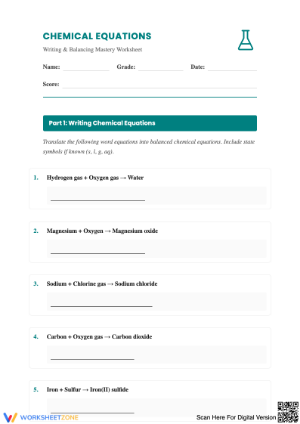
- Stage one: word equations with sentence frames for reactants and products
- Stage two: skeleton equations using correct chemical formulas
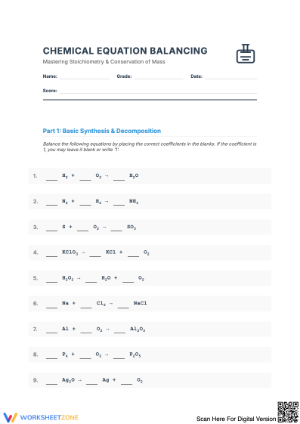
- Stage three: coefficient balancing on simple two-element reactions
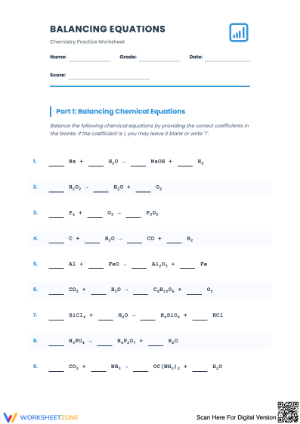
- Stage four: multi-step reactions involving polyatomic ions
Sequencing practice this way gives a curriculum lead an easy way to differentiate within one unit. A student who is still shaky on formula writing can stay in stage one or two while a more advanced student works through stage four problems that include ammonium, sulfate, or carbonate groups.
The Coefficient-Only Rule: Catching the Subscript Mistake Early
The single rule that separates correct balancing from the most common student error is simple to state but hard for many students to internalize: only coefficients can change, never subscripts. Changing a subscript alters the identity of the compound itself, turning water into hydrogen peroxide, for example, rather than balancing an equation. Worksheets that include a short set of already-balanced-incorrectly equations, where students must find and explain the error, are often more diagnostic than a page of blank problems. Asking a class to sort a handful of attempted solutions into correct and incorrect columns surfaces this misconception quickly and gives a teacher immediate formative data.
Building at least one error-analysis problem into every worksheet also signals to students that balancing is a skill worth checking, not a race to a single right answer. That framing matters most in the first two or three weeks of a unit, when subscript-changing mistakes are most common.
Teacher Tips
Build every worksheet set around a short answer key that shows the atom inventory table alongside the final balanced equation, not just the final coefficients. This lets a substitute teacher or co-teacher use the same materials without needing a separate walkthrough. Rotate error-analysis problems into review worksheets throughout the semester rather than only during the initial unit, since the subscript-versus-coefficient confusion tends to resurface when students encounter more complex reactions later in the year. When grading, look specifically for whether students left an original formula unchanged and only adjusted coefficients, since that single check catches the majority of conceptual errors before a student moves on to stoichiometry.
Frequently Asked Questions
1. What grade level typically first learns to balance chemical equations?
Balancing chemical equations is most commonly introduced in middle school physical science and then formalized in high school chemistry, where NGSS HS-PS1-7 requires students to support conservation-of-mass claims with balanced equations.
2. What is the most common mistake students make when balancing equations, and how can worksheets help catch it?
The most common error is changing a subscript instead of a coefficient, which alters the compound itself. Worksheets with error-analysis problems, where students identify why a given attempt is incorrect, catch this mistake more reliably than blank practice problems alone.
3. How many practice problems should a balancing chemical equations worksheet include for effective mastery?
A short warm-up set of three to four problems builds speed, while a homework or practice set of ten to twelve problems, moving from simple two-element reactions to multi-step reactions with polyatomic ions, gives students enough range to reach mastery.
4. How do balancing equations worksheets connect to NGSS HS-PS1-7 and conservation of mass?
HS-PS1-7 asks students to use mathematical representations, including balanced equations, as evidence that atoms and mass are conserved during a reaction. Worksheets that pair each balanced equation with a short conservation-of-mass explanation directly address this standard rather than treating balancing as an isolated math skill.
5. What is the best method to teach students who struggle with balancing, counting table or trial and error?
An atom inventory or counting-table method tends to work better for students who struggle with abstract symbolic manipulation, since it gives them a concrete, visual way to track element counts and catch errors before finalizing coefficients.