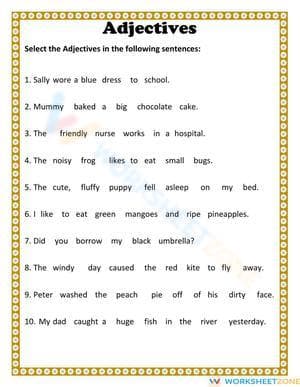
Second grade is the year students move from counting strategies to real fluency, and from sounding out words to reading for information. Grade 2 worksheets give teachers a low-prep way to build these foundational skills across math and reading without losing instructional minutes to planning. Whether you are running a whole-class lesson, pulling a small group, or sending home review, a strong worksheet set covers the specific skills second graders need to master this year.
Core Skills That Worksheetzone's Grade 2 Worksheets Cover
Grade 2 worksheets from Worksheetzone address the major skill areas of this grade: computational fluency, place value reasoning, measurement and geometry basics, foundational reading skills, and comprehension. In math, the biggest lift is computational fluency. By the end of the year, students are expected to add and subtract fluently within 100 and know all one-digit sums from memory. Worksheets that isolate this skill, mixing quick fact practice with word problems, help students move from counting on fingers to automatic recall.
Place value work is equally central. Second graders extend their addition and subtraction to numbers within 1000, using models, drawings, and strategies grounded in place value rather than the standard algorithm. Worksheets that ask students to decompose numbers into hundreds, tens, and ones, or to solve two-step problems using base ten blocks, reinforce this reasoning before it becomes purely procedural in later grades. Alongside math, worksheets addressing measurement and geometry—such as telling time, measuring length, and identifying shapes by their attributes—round out the computational foundation.
Building Reading Foundational Skills
Reading worksheets for Grade 2 need to target decoding as much as comprehension. The foundational skills for this grade require students to decode words with long and short vowels, and to know spelling patterns for common vowel teams. A worksheet set that pairs phonics practice, such as sorting words by vowel team or completing decodable sentences, with fluency passages gives teachers a way to catch decoding gaps before they affect comprehension.
Comprehension work should not stop at narrative text. Grade 2 standards expect students to use text features like captions, bold print, subheadings, and glossaries to locate key facts. Worksheets built around short nonfiction passages with labeled diagrams or sidebars teach students to navigate real informational text, a skill that carries directly into science and social studies reading later in the year.
Classroom Implementation
A practical weekly plan makes worksheet use sustainable. Early in the week, use a worksheet as a warm-up to review the prior day's skill before introducing new content. Midweek, assign a worksheet during centers so the teacher is free to pull small groups. By Friday, use a mixed-review worksheet as a light formative check before the weekend, without turning it into a formal test. This rhythm keeps practice consistent without overwhelming your grading load.
- Pair one math fluency worksheet with one reading foundational skills worksheet each day to keep both subjects moving.
- Use intervention worksheets during small-group time, not as unsupervised seatwork for students who need the most support.
- Send a review worksheet home only after the skill has been taught and practiced in class, so homework reinforces rather than introduces content.
- Keep a simple tracker of which students miss the same skill twice in a row, and regroup for a short reteach.
Frequently Asked Questions
1. What skills should Grade 2 worksheets cover across a school year?
Across the year, worksheets should cover addition and subtraction fluency within 100, place value strategies within 1000, measurement and geometry basics, vowel-team decoding, and comprehension of both literature and informational text using text features.
2. How can teachers use Grade 2 worksheets for small-group intervention?
Choose worksheets that isolate one skill at a time, keep the problem set short, and pair them with direct modeling so students practice with support rather than working through unfamiliar content alone. Follow up by monitoring whether students can apply the skill independently before returning to whole-group instruction.
3. Are these worksheets aligned to Grade 2 standards?
Yes. Grade 2 worksheets can align to Grade 2 standards in both math and reading, including key grade-level expectations for computation, place value, foundational reading skills, and comprehension.
4. How often should teachers assign Grade 2 practice worksheets?
Daily short practice works better than infrequent long assignments. A brief math and reading worksheet each day keeps skills active without overwhelming students or grading time.
5. Can Grade 2 worksheets double as formative assessment?
Yes. A quick review of completed worksheets shows which students still rely on counting strategies for facts or struggle with specific decoding patterns, letting teachers regroup before gaps widen.















 Interactive Worksheet Maker
 Quiz Maker
 Word Search Maker
 Crossword Puzzle Maker
 Word Scramble Generator
 Sentence Scramble Generator
 Handwriting Worksheet Generator
 Name Tracing Generator
 Fill In The Blank Generator