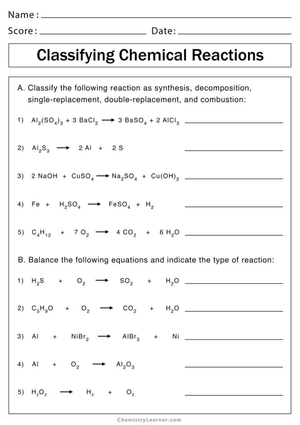
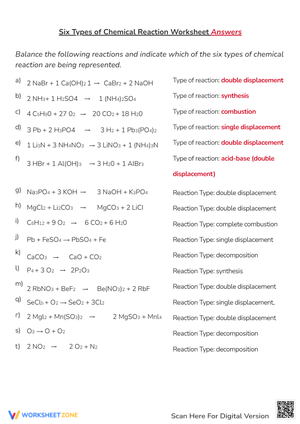
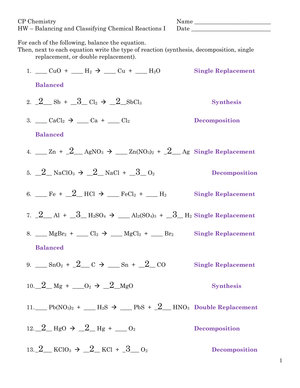
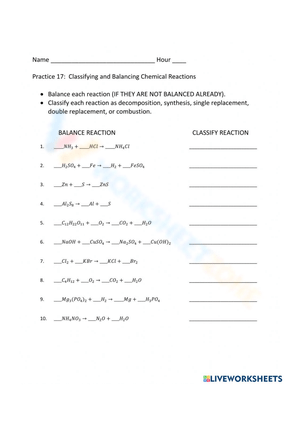
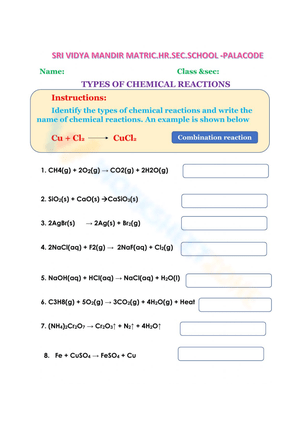
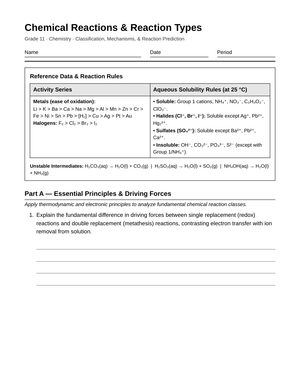
Before students can balance an equation or predict a product, they need to recognize what kind of reaction they are looking at. That is the core skill behind classifying chemical reactions worksheets: giving students repeated, low-stakes practice sorting equations into synthesis, decomposition, single replacement, double replacement, and combustion before they move into more demanding tasks. For grade 8 physical science classes and grade 9-10 chemistry classes alike, this pattern-recognition stage is what makes later units on stoichiometry and reaction prediction click instead of feeling like memorization.
A well-sequenced worksheet unit does not throw all five reaction types at students on day one. It starts with obvious examples, one type at a time, then mixes types together once students can identify each pattern independently. This mirrors how many US classrooms already structure a chemical reactions unit: notice a pattern, name it, then apply it to unfamiliar equations.
The Five Reaction Types Students Need to Identify
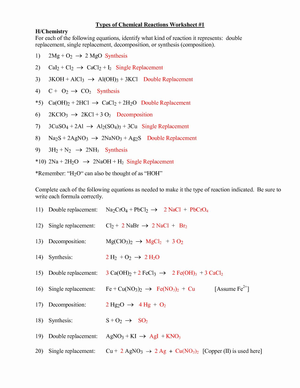
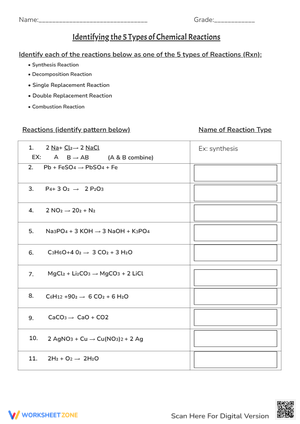
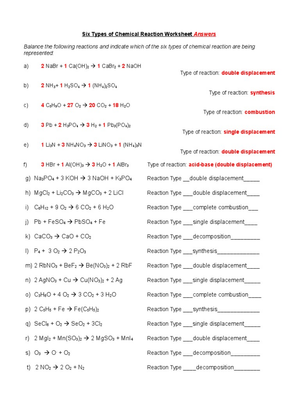
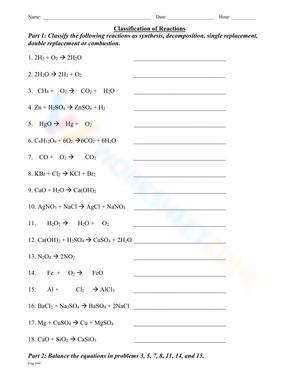
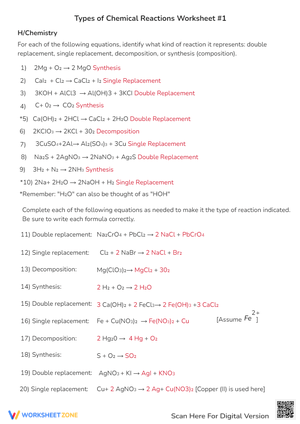
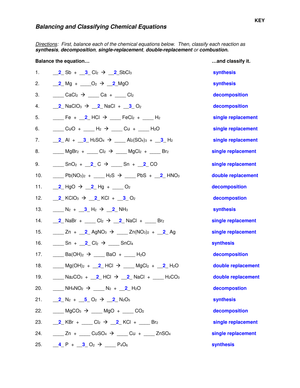
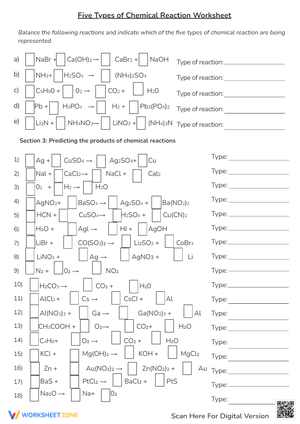
Every classifying chemical reactions worksheet worth assigning should reinforce the same five categories. Synthesis reactions combine two or more substances into a single product and are typically exothermic, releasing energy as new bonds form. Decomposition reactions do the reverse: one compound breaks into two or more products, and because bonds are being broken rather than formed, these reactions require energy input and are endothermic. Combustion reactions involve a substance reacting with oxygen gas, releasing light and heat, which is why students often recognize them quickly once they know to look for O2 as a reactant.
Single replacement and double replacement reactions round out the set and tend to be where students get stuck. A single replacement reaction has one element swapping places with another element in a compound. A double replacement reaction has two compounds swapping ions, usually producing a precipitate, a gas, or water. Worksheets that isolate this distinction with side-by-side equations give students a much clearer mental model than mixed practice alone.
Common Student Misconceptions Worth Targeting
The most persistent mix-up shows up between single and double replacement reactions. Students often focus on the number of compounds on the reactant side rather than tracking what is actually swapping. A useful worksheet cue is to have students circle the element or ion that changes partners in the equation, rather than just labeling the equation from memory. This forces them to trace the actual chemistry instead of pattern-matching on equation length.
Another frequent error is assuming any equation with oxygen as a reactant must be combustion. Students need explicit counterexamples, such as a synthesis reaction that happens to include oxygen gas as one of two reactants forming a single product, so they learn to check the full reaction pattern rather than keying in on one familiar substance.
Classroom Implementation
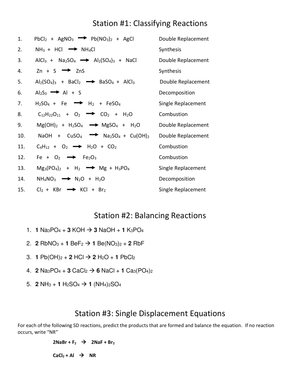
Sequence a classifying reactions worksheet unit across three to four class periods. Start with single-type practice sets so students build confidence with each pattern in isolation. Move to mixed sets of ten to fifteen equations once at least three reaction types have been introduced. Use a shorter, five-question version as a formative check before students move into predicting products or balancing equations, since a strong classification score is a reliable signal that they are ready for the next skill.
For small-group intervention, pull students who consistently miss single versus double replacement items and give them a worksheet that isolates just those two types with the ion-swap circling strategy described above. This is more efficient than re-teaching all five reaction types when the gap is really concentrated in one distinction. Reserve mixed, cumulative worksheets for review stations in the days leading up to a unit test or lab practical, since that format most closely matches summative assessment conditions.
Frequently Asked Questions
1. What grade level are classifying chemical reactions worksheets appropriate for?
These worksheets fit grade 8 physical science classes and grades 9-10 chemistry classes. Grade 8 versions typically use simpler word equations, while grades 9-10 versions use balanced formula equations with polyatomic ions.
2. What are the five main types of chemical reactions students need to identify?
Synthesis, decomposition, single replacement, double replacement, and combustion are the five basic reaction types most classification worksheets cover.
3. How can teachers use these worksheets for small-group intervention or reteaching?
Pull students who miss a specific reaction type, most often single versus double replacement, and give them a shorter worksheet isolating just that distinction rather than re-covering all five types.
4. How do these worksheets align with NGSS middle and high school standards?
They support MS-PS1-2, which asks students to interpret before-and-after property data to determine whether a reaction occurred, and HS-PS1-2, which asks students to explain reaction outcomes using periodic table trends and electron configuration patterns.
5. What is the difference between single replacement and double replacement reactions on a worksheet?
A single replacement reaction has one element swapping with another element in a compound. A double replacement reaction has two compounds swapping ions, often producing a precipitate, gas, or water.