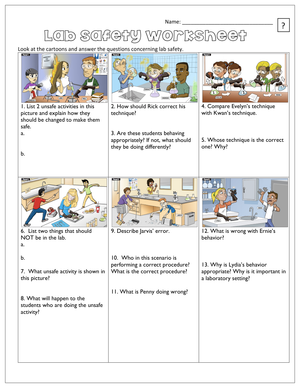
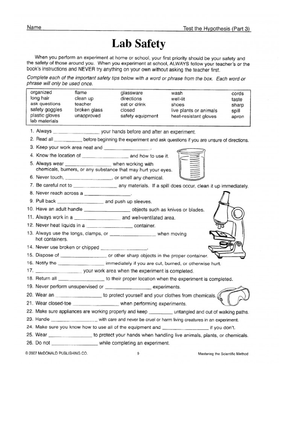
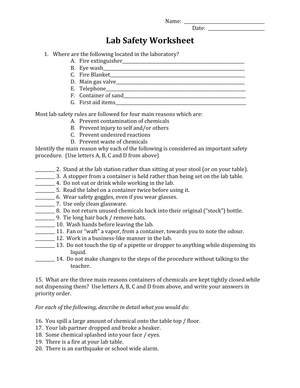
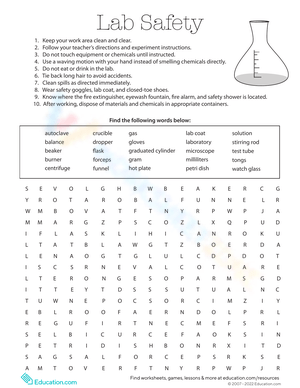
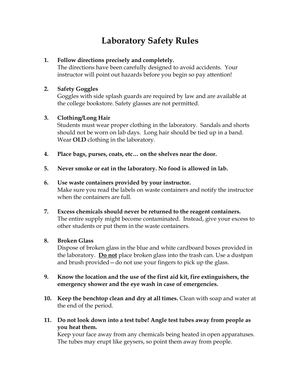
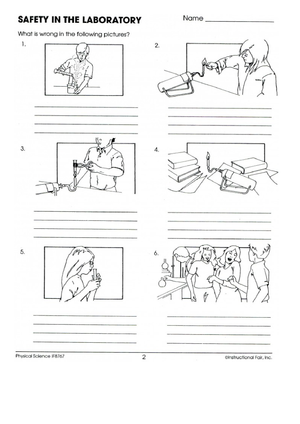
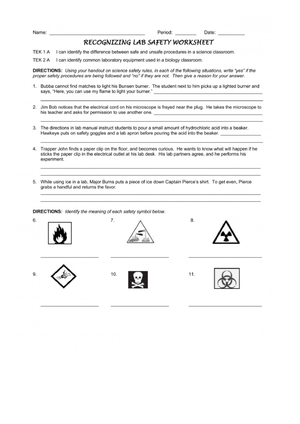
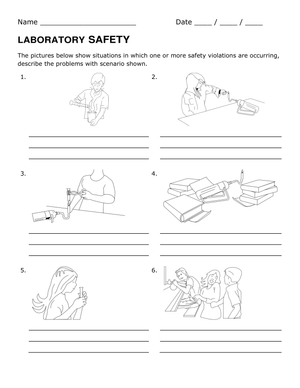
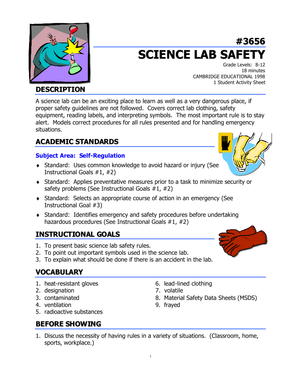
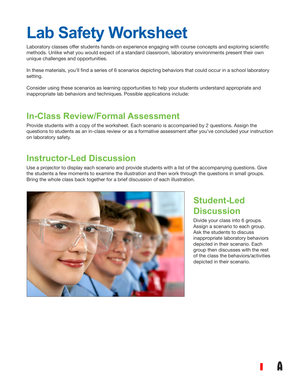
The most useful lab safety worksheets are not generic word searches. They target the specific knowledge students need before touching lab equipment. Common components include hazard symbol identification, PPE selection questions, emergency procedure and evacuation route review, and chemical storage and disposal basics. Structuring a worksheet around these four areas keeps it focused and quick to grade.
- Hazard symbol matching: flammable, corrosive, toxic, and biohazard icons paired with short scenarios
- PPE selection: choosing goggles, gloves, or a lab coat based on a described activity
- Emergency response: locating the eyewash station, fire extinguisher, and evacuation route on a room diagram
- Storage and disposal: sorting chemicals or waste into correct categories
Keeping the worksheet to one page also makes it realistic to use as a true pre-lab checkpoint rather than a homework assignment students rush through the night before.
Aligning Worksheets to PPE and Hazard-Symbol Expectations
NSTA-recommended PPE for school labs includes indirectly vented chemical safety goggles that meet the ANSI/ISEA Z87.1 D3 standard, along with nitrile gloves, lab coats, and closed-toe shoes, and building worksheet questions around this exact PPE list keeps classroom expectations consistent with national guidance rather than a teacher's informal habits.
A worksheet question that asks students to identify why a specific pair of goggles is or is not adequate for a given lab activity does more than test memorization. It builds the habit of evaluating equipment before use, which is the same judgment students will need when PPE is not laid out for them in advance.
Differentiating Lab Safety Review by Grade Band
Middle school and high school chemistry classes need different depths of lab safety content, even though both groups need a worksheet before hands-on work.
Middle school lab safety worksheets should stay close to general lab rules: where to stand, how to carry glassware, when to raise a hand for help, and basic PPE like goggles and closed-toe shoes. Scenario questions work well here because they let younger students reason through a situation instead of just recalling a rule.
High school chemistry worksheets can go further, covering chemical hazard symbols in more depth, an introduction to reading a safety data sheet, and spill response steps specific to acids, bases, or flammable solvents. A worksheet for an advanced chemistry elective might also ask students to explain the reasoning behind a storage decision, not just identify the correct shelf.
Pairing Worksheets With a Signed Safety Contract
Many science departments pair a lab safety worksheet with a signed safety contract at the start of the year or semester. The worksheet checks understanding; the contract documents that students and, in many cases, parents acknowledged the rules and consequences for violations.
Using both together closes a common gap: a student can score well on a safety worksheet through guessing or peer help, but a signed contract creates individual accountability that a school can point to if a safety incident review becomes necessary later in the year.
A practical sequence is to administer the worksheet first, review any missed items as a class, and only then have students sign the contract, so the signature reflects informed understanding rather than a formality completed on day one.
Frequently Asked Questions
1. What should a lab safety worksheet cover for a middle school versus high school chemistry class?
Middle school worksheets should focus on general lab rules, basic PPE, and simple scenario questions. High school chemistry worksheets should add chemical hazard symbols, spill response by hazard type, and an introduction to reading a safety data sheet.
2. How often should teachers review lab safety rules and re-administer safety worksheets or contracts during the school year?
A full worksheet and signed contract at the start of the year or semester is standard, with shorter refresher worksheets before labs that introduce new equipment or hazard types, and after extended breaks.
3. What PPE and hazard-symbol knowledge should students demonstrate before starting a hands-on chemistry lab?
Students should be able to identify goggles meeting the ANSI/ISEA Z87.1 D3 standard, explain when nitrile gloves and lab coats are required, and correctly match common hazard symbols to their meaning before any hands-on work begins.
4. How can lab safety worksheets support NGSS science and engineering practices like planning investigations?
Since safe planning of an investigation requires knowing the hazards, required PPE, and emergency steps involved, a completed safety worksheet functions as evidence that a student has the foundation needed to plan and carry out an investigation responsibly.
5. What is the role of a signed lab safety contract alongside a lab safety worksheet?
The worksheet checks understanding of specific safety content, while the signed contract documents that the student and, where required, a parent acknowledged the rules and consequences, creating individual accountability beyond a graded assignment.