What Classifying Matter Worksheets Actually Teach
Classifying matter worksheets ask students to sort substances into categories, and those categories shift as students move up through the grades. In the early grades, sorting is about observable properties you can see and touch. By middle school, the same skill becomes a branching decision: is this a pure substance or a mixture, an element or a compound? A worksheet that mirrors that branching logic helps students build a mental map they can reuse on every matter unit that follows.
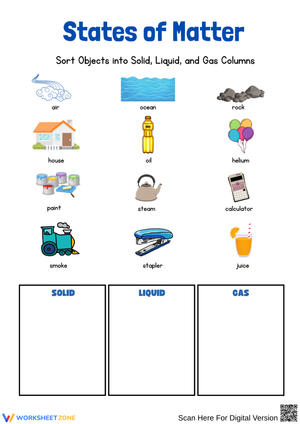
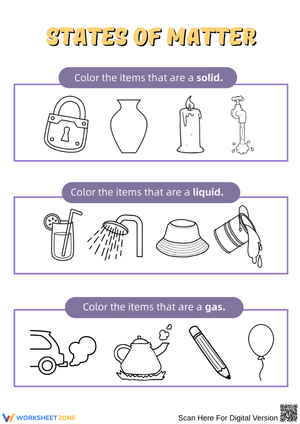
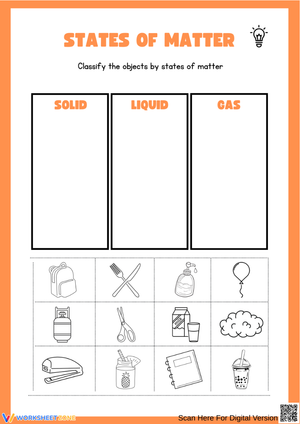
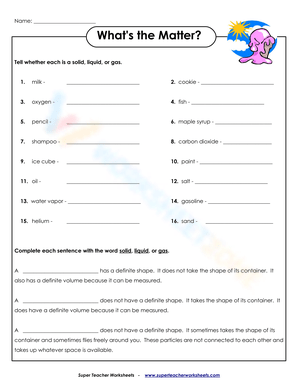
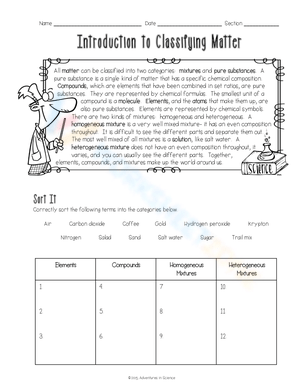
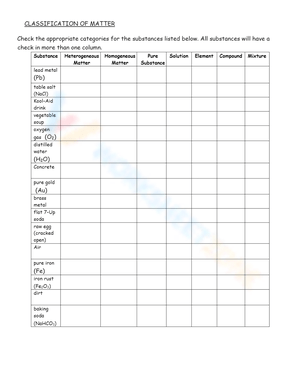
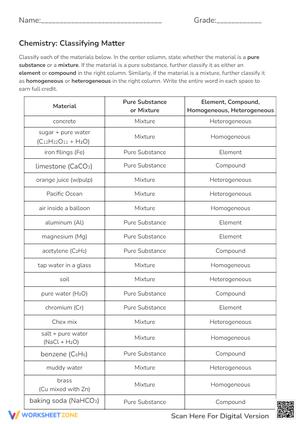
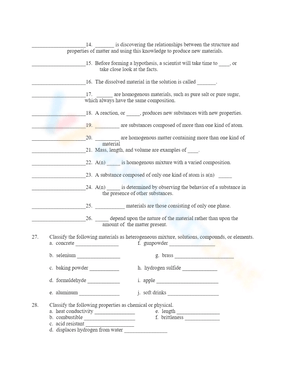
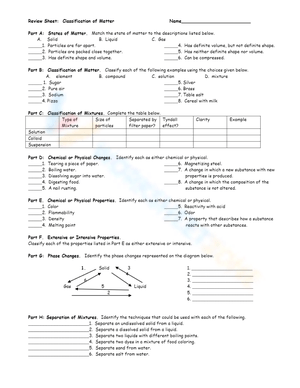
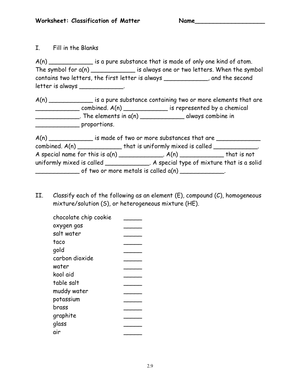
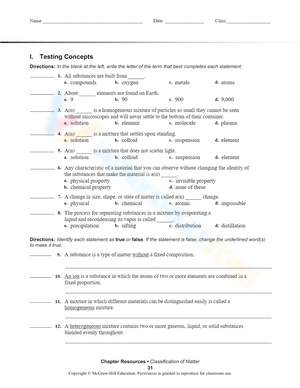
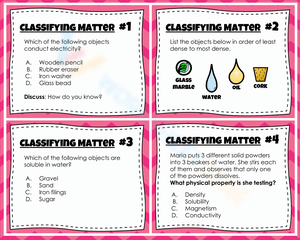
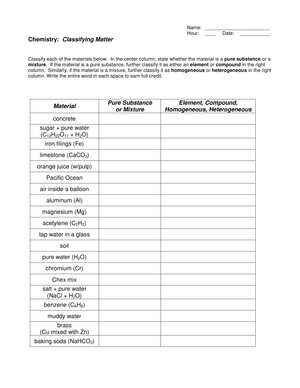
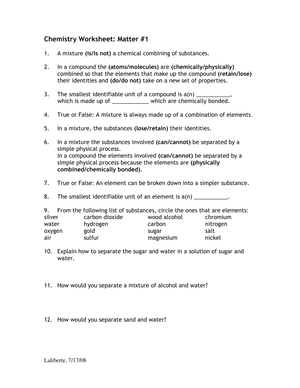
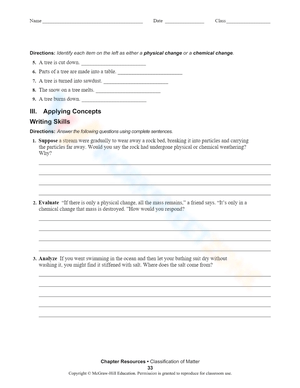
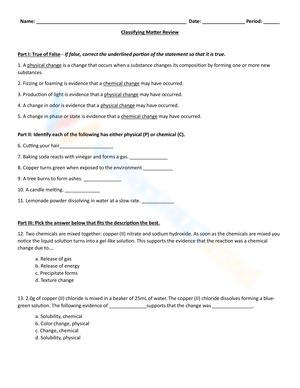
Most printable sets give students a list or a set of images and ask them to label each item. Some use a flowchart students fill in, others use a two- or three-column sort, and a few pair short-answer prompts with the sort so you can see student reasoning, not just the final answer. That variety matters when you plan a lesson, because the format you pick shapes what evidence of understanding comes back to you.
Matching Worksheets to the Right Grade Band
The single most useful move with these worksheets is picking the version that matches your standard. The gap between a second-grade sort and a seventh-grade classification is wide, and handing students the wrong one burns a class period you will not get back.
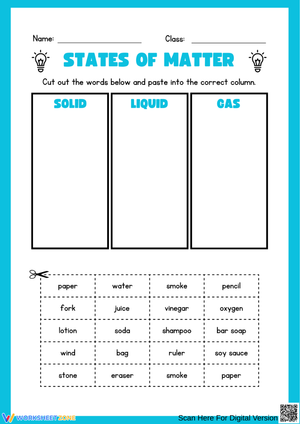
In grades 2-3, classification stays at the level of things students can observe directly. Under NGSS 2-PS1-1 and 2-PS1-2, students describe and classify materials by observable properties such as color, texture, hardness, and flexibility. Worksheets here should ask kids to group buttons, fabrics, or classroom objects and explain their reasoning in a sentence or two.
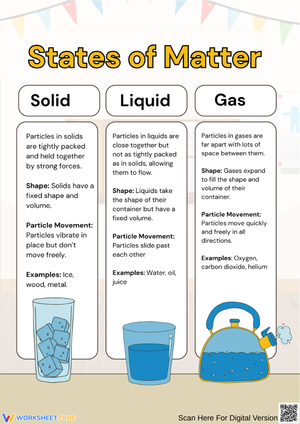
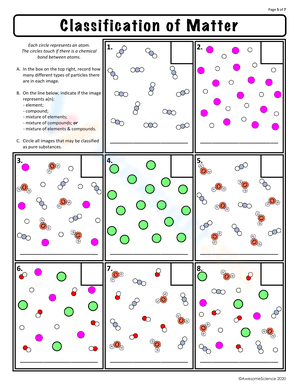
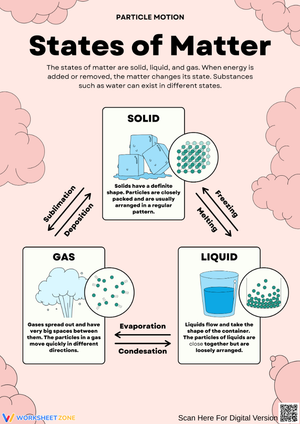
In grades 5-8, the target shifts to the particle level. NGSS MS-PS1-1 has students model the atomic composition of simple molecules, and MS-PS1-4 asks them to model how particle motion and state change as thermal energy is added or removed. Worksheets at this band move students from what does it look like to what is it made of, sorting substances into elements, compounds, and mixtures.
Fixing the Mixture-Versus-Compound Mix-Up
If your students trip over one thing in this unit, it will be the difference between a mixture and a compound. Both combine more than one kind of matter, so students reasonably assume they are the same. They are not, and a worksheet is a low-stakes place to surface that confusion before a test does.
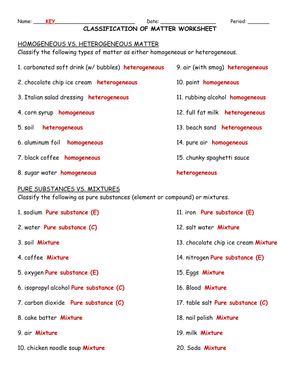
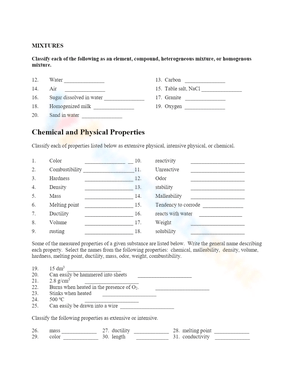
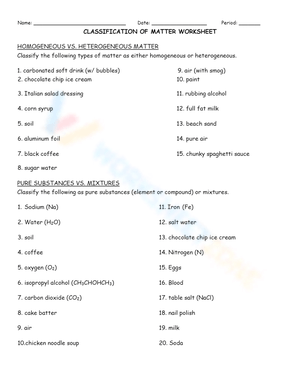
The fix that works is contrast built into the worksheet itself. Instead of asking students to classify twenty random substances, pair items deliberately: salt water next to table salt, air next to oxygen, a bowl of trail mix next to sugar. When students classify a matched pair back to back, the defining question becomes unavoidable: can the parts be separated physically, or are they chemically bonded in a fixed ratio? A small handful of pairs accounts for most of the errors, so targeting those pairs directly is far more efficient than a long undifferentiated list.
Pairing Worksheets With a Classification Flowchart
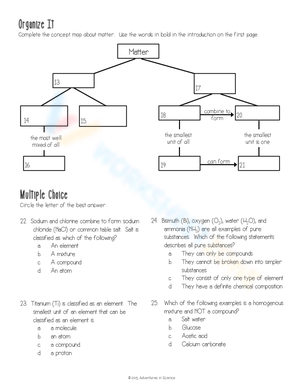
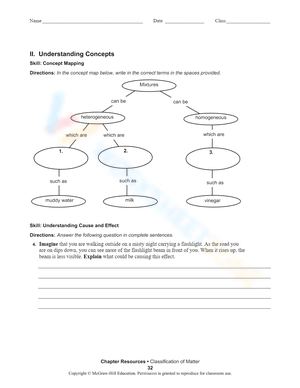
Classification of matter follows a branching structure, and students remember it better when the worksheet looks like that structure. Matter splits into pure substances and mixtures; pure substances split into elements and compounds; mixtures split into homogeneous and heterogeneous. A blank flowchart students complete as they sort turns an abstract hierarchy into something visual they can point to.
The Next Generation Science Standards place classification squarely in the middle grades: MS-PS1-1 asks students to model the atomic composition of simple molecules, while MS-PS1-4 targets changes in particle motion and state. Together these two performance expectations explain why elements, compounds, and mixtures anchor the unit before students ever reach chemical reactions.
When a worksheet asks students to place a substance on the correct branch and then justify that placement, it hits both the sorting skill and the modeling practice the standard names. That justification line is where you catch shaky reasoning early.
Classroom Implementation
These worksheets flex to fit whatever slot you need. For direct instruction, project one item at a time and have the class classify it together before releasing students to work independently. For stations, print three short versions at different difficulty levels and rotate small groups through them so every student works at a productive level.
For small-group intervention, pull the six or seven students who struggled on the last check and use a single-branch worksheet, such as elements versus compounds only, so they are not juggling the whole hierarchy at once. For homework or review, a mixed worksheet with a flowchart on the back gives students a self-check they can reason through at home. For enrichment, ask fast finishers to add their own examples to each category and defend a tricky one, like why an alloy counts as a mixture.
For students on IEP or 504 plans, reduce the number of items, add a word bank, and keep the visual sort rather than switching to open response.
Frequently Asked Questions
1. What grade level are classifying matter worksheets appropriate for?
They span roughly grades 2 through 8. In grades 2-3, worksheets focus on sorting materials by observable properties like color, texture, and hardness. In grades 5-8, they shift to classifying substances as elements, compounds, and mixtures at the particle level. Match the worksheet to your grade band and standard rather than to the topic name alone.
2. What is the difference between a mixture and a compound on a classification worksheet?
A compound is two or more elements chemically bonded in a fixed ratio, so its parts cannot be separated physically. A mixture is two or more substances physically combined, so its parts can be separated by methods like filtering or evaporation. Worksheets that pair examples side by side make this contrast easier for students to grasp.
3. How do classifying matter worksheets align with NGSS standards like MS-PS1-1?
MS-PS1-1 asks middle school students to develop models of the atomic composition of simple molecules and extended structures. A classification worksheet that has students sort substances into elements, compounds, and mixtures and justify each placement supports that modeling practice, while MS-PS1-4 connects to worksheets on states of matter and particle motion.
4. How can teachers use classifying matter worksheets for formative assessment?
Use a short 8-to-10-item sort as a pre-test check, then triage papers into solid, partial, and confused piles to decide what to reteach. Exit tickets with a required justification line work well too, because the justification reveals whether students understand the rule or are guessing from memory.
5. What common misconceptions do classifying matter worksheets help address?
The biggest one is confusing mixtures with compounds, since both involve more than one substance. Worksheets that force a physical-versus-chemical separation decision help correct it. They also surface the idea that a substance can look uniform, like salt water, yet still be a mixture rather than a pure substance.