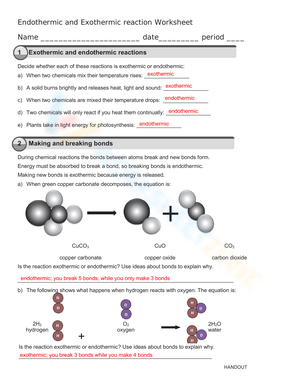
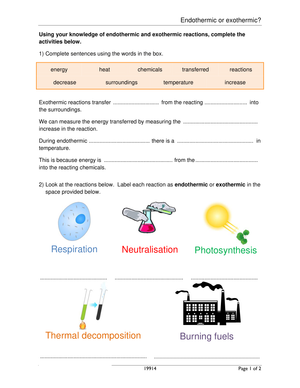
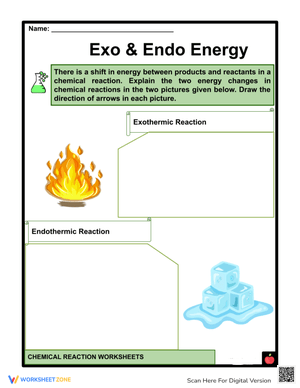
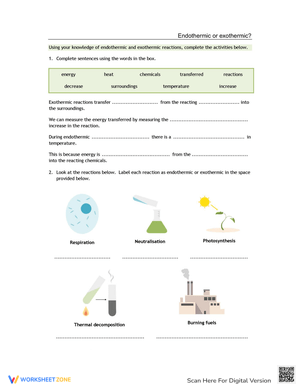
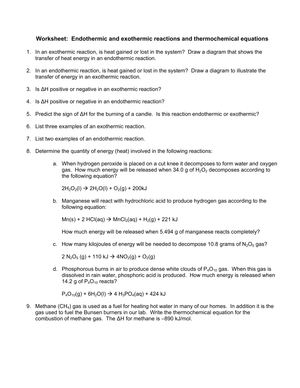
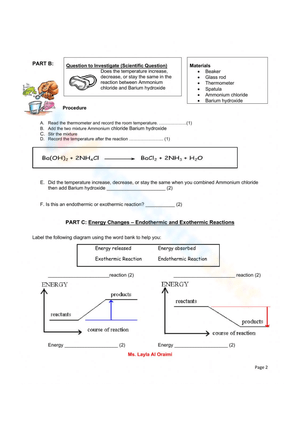
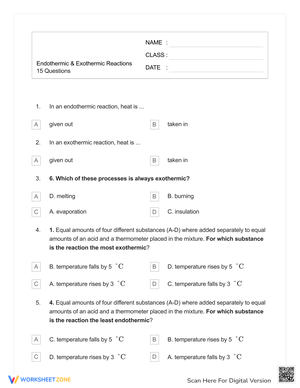
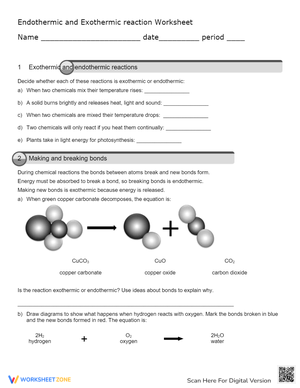
If you are building a unit on thermal energy and chemical reactions, you likely already know how quickly students confuse a fast reaction with a hot one. Endothermic and exothermic reaction worksheets give middle school science teachers a low-prep way to slow that thinking down. Instead of jumping straight into a lab, students first practice reading temperature data and classifying reactions on paper, which makes the hands-on work that follows far more productive. These worksheets fit naturally into a Matter and Its Interactions unit, where the goal is not just vocabulary recall but genuine understanding of how energy moves between a chemical system and its surroundings.
Supporting NGSS MS-PS1-6 Design Challenges
NGSS MS-PS1-6 asks students to design, test, or modify a device that releases or absorbs thermal energy through a chemical process, such as a hand warmer or an instant cold pack. That is a demanding performance expectation, and students cannot engage with it meaningfully until they can reliably tell the difference between a reaction that releases heat and one that absorbs it. Worksheets that walk students through labeled temperature-change scenarios build that foundation before they touch any design materials. A well-sequenced worksheet set moves from simple definitions, to data interpretation, to short-answer prompts asking students to justify why a proposed device would work, which mirrors the reasoning MS-PS1-6 ultimately expects from them.
One planning detail teachers often underestimate is how much class time a full design-challenge cycle actually consumes once testing and iteration are included. Running a worksheet-based classification task the day before a lab, rather than introducing new vocabulary during the lab itself, typically shortens the lab block by letting students move directly into building and testing instead of pausing to relearn definitions mid-activity.
Using Worksheets for Formative Assessment Before a Lab
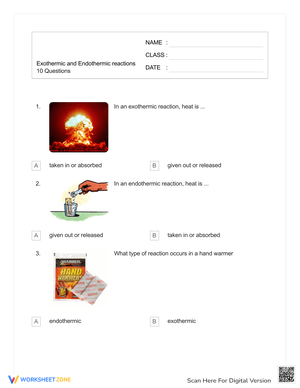
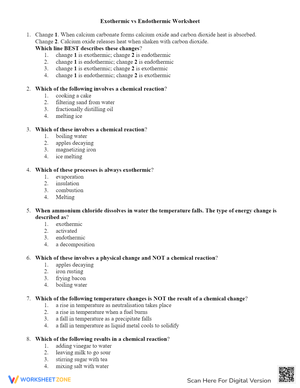
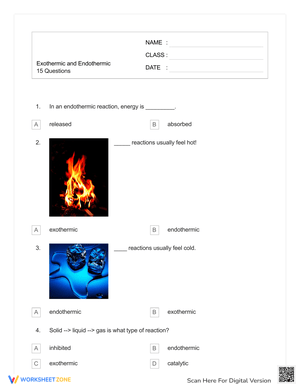
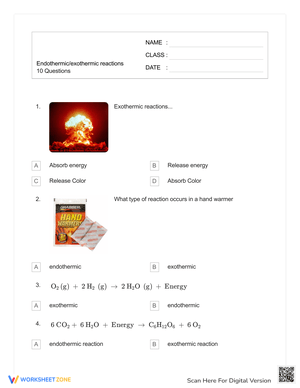
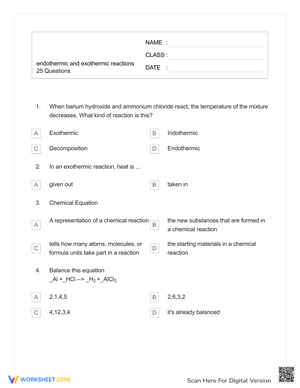
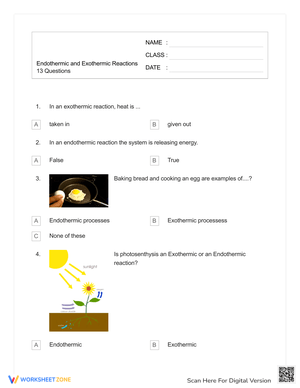
A short classification worksheet handed out at the start of class works well as a formative check. Give students five or six real-world reaction scenarios and ask them to label each as endothermic or exothermic, then briefly explain their reasoning using temperature language. This takes ten minutes but tells you immediately which students are ready for independent lab work and which need a small-group refresher first. Because the worksheet format is quick to grade, you can adjust your lab groupings or add a mini re-teach moment on the spot, rather than discovering gaps only after the lab is already underway.
Differentiating with Sentence Frames and Data Tables
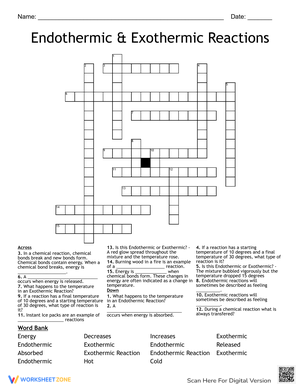
Mixed-ability grade 6-8 classrooms benefit from having two worksheet variants ready. A sentence-frame version gives students partial phrasing, such as this reaction is [endothermic/exothermic] because the temperature [increased/decreased] by ___ degrees, so they can focus on the science concept rather than open-ended writing. A data-table version, aimed at students who are ready for more independence, presents raw temperature numbers across several trials and asks students to identify patterns and draw their own conclusions. Keeping both versions in your unit folder lets you swap materials quickly for a co-taught section or an inclusion classroom without rebuilding the lesson from scratch.
Fitting Worksheets into the 5E Instructional Model
Many middle school chemistry units are built around the 5E model of Engage, Explore, Explain, Elaborate, and Evaluate, and reaction-type worksheets can support nearly every stage. During Engage, a short worksheet with everyday examples like ice packs and hand warmers sparks curiosity. During Explore and Explain, data-table worksheets anchor the lab findings to vocabulary. During Elaborate, a worksheet asking students to design their own device on paper before building it extends the MS-PS1-6 design challenge. During Evaluate, a cumulative worksheet combining classification, vocabulary, and short written justification gives you a clean formative or summative checkpoint without needing a separate quiz format.
Teacher Tips for Getting the Most from These Worksheets
Print worksheets with the temperature data already partially filled in for students who need extra scaffolding, and leave blank versions for students ready to record their own readings during the lab. Pair every worksheet with a one-sentence real-world hook, such as noting that a chemical hand warmer is a practical exothermic device, so students see an immediate connection rather than an abstract classification task. If your class period is short, assign the vocabulary worksheet as a warm-up the day before the lab so lab time is reserved entirely for hands-on testing. Finally, keep answer keys focused on reasoning, not just the correct label, so you can quickly spot which students are guessing versus which are applying the temperature-change logic correctly.
Frequently Asked Questions
1. What grade level are endothermic and exothermic reaction worksheets appropriate for?
These worksheets are designed for grades 6 through 8, matching the middle school chemistry instruction where thermal energy and chemical reactions are typically introduced.
2. How do these worksheets align with NGSS standards?
They build the conceptual groundwork for NGSS MS-PS1-6, which asks students to design, test, or modify a device that releases or absorbs thermal energy through a chemical process.
3. What are simple classroom examples teachers can use alongside the worksheets?
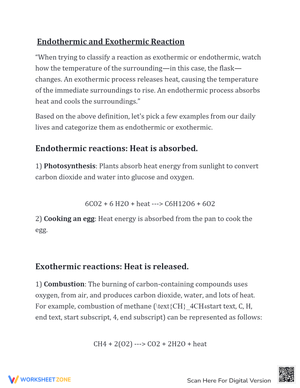
Combustion, slow rusting, and iron-based hand warmers work well as exothermic examples, while instant cold packs using ammonium nitrate and some baking soda and vinegar setups work well as endothermic examples.
4. How can teachers use these worksheets before or after a lab activity?
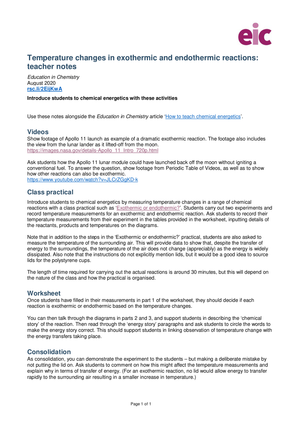
Use a classification worksheet before the lab as a formative check and vocabulary primer, then use a data-table worksheet during or after the lab so students can record and interpret their own temperature readings.
5. What common misconceptions do these worksheets help address?
They help students separate reaction speed from energy direction, so a fast reaction is not automatically assumed to be exothermic, and they reinforce that temperature change in the surroundings, not the reaction itself, is what determines the classification.