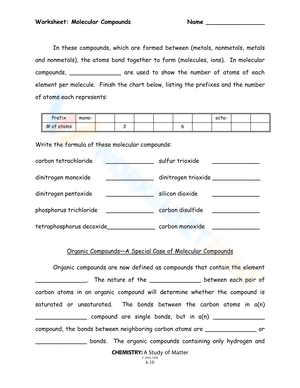
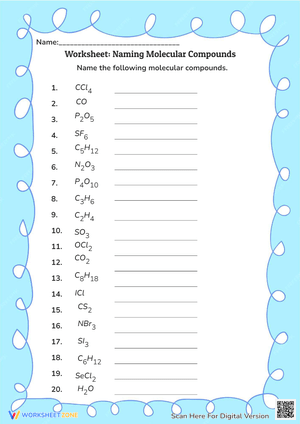
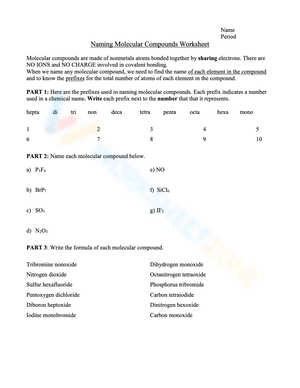
Molecular compound naming can feel like a small chemistry puzzle: the elements are there, the formula is written, but students still need to know which prefix belongs where. Naming molecular compounds worksheets help learners practice this skill in a clear, repeatable way. Instead of memorizing names without understanding the pattern, students learn how nonmetal elements combine, how prefixes show the number of atoms, and how compound names connect directly to chemical formulas.
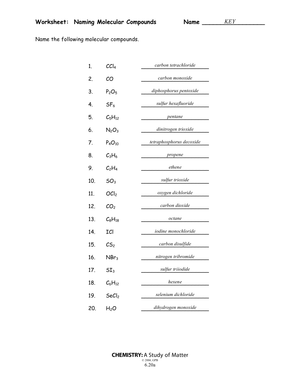
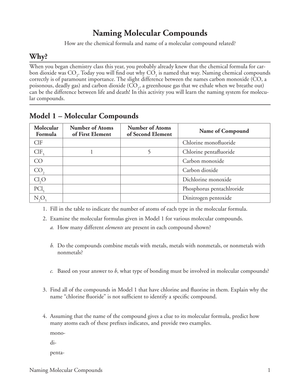
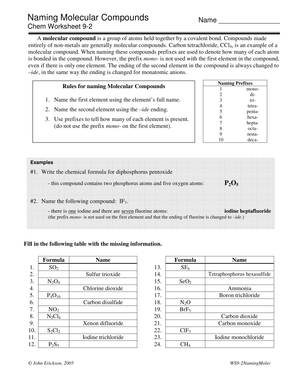
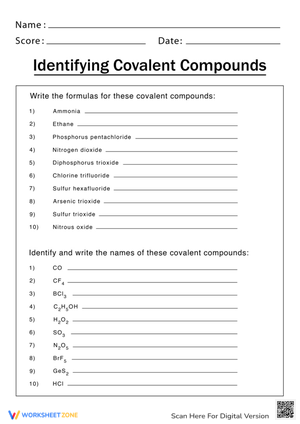
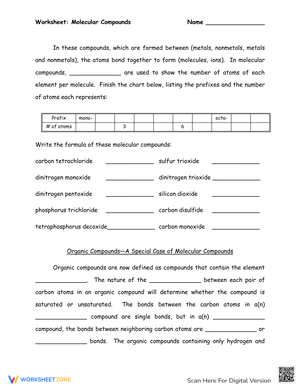
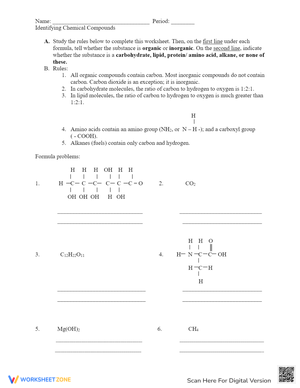
The key to naming molecular compounds is recognizing that these compounds are usually made from two or more nonmetals. Students practice using prefixes such as mono-, di-, tri-, tetra-, penta-, hexa-, and others to show how many atoms of each element are present. For example, CO becomes carbon monoxide, while CO2 becomes carbon dioxide. Naming molecular compounds worksheets give students enough examples to see the difference clearly and avoid mixing up similar formulas.
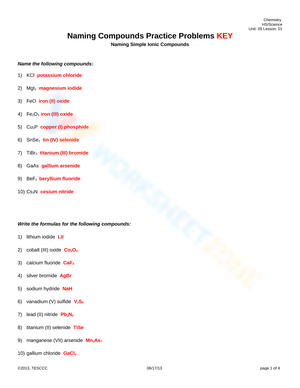
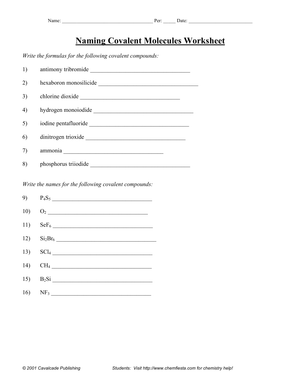
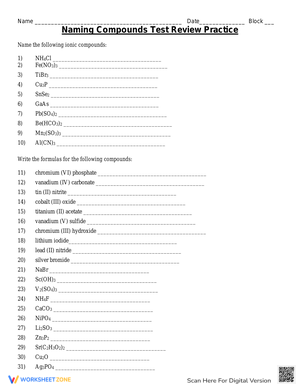
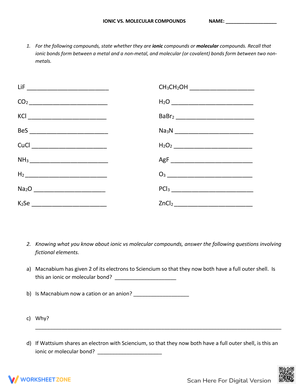
These worksheets are especially helpful because students often confuse molecular naming with ionic compound naming. Molecular compounds use prefixes, while ionic compounds usually depend on charges, metals, nonmetals, and sometimes Roman numerals. To build a stronger foundation, students can review naming covalent compounds, since molecular and covalent naming often follow the same pattern in classroom chemistry. This connection helps learners understand why the naming rules work instead of treating them as separate lists to memorize.
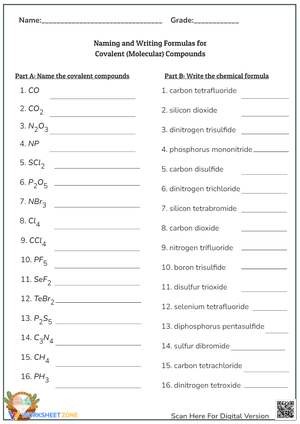
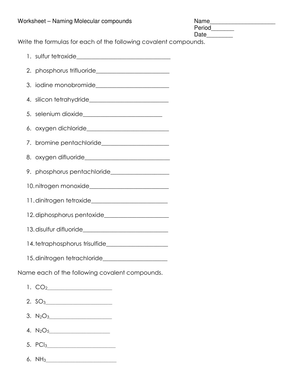
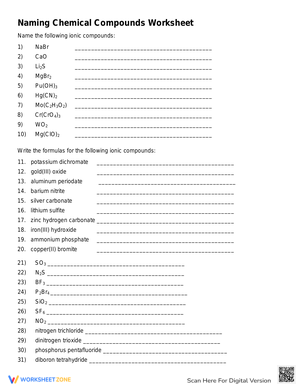
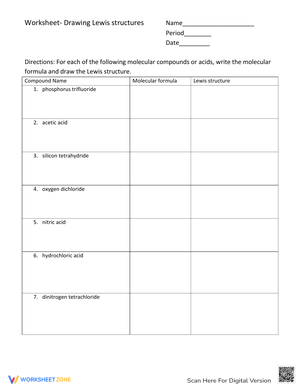
Teachers can use naming molecular compounds worksheets during bonding units, formula-writing lessons, homework practice, quiz review, or small-group reteaching. A useful worksheet may ask students to write names from formulas, write formulas from names, correct naming errors, or compare molecular and ionic compounds side by side. For students who feel overwhelmed by chemical names, prefixes, and formulas, this guide to tackling difficult chemistry homework can also offer practical strategies for slowing down and working through chemistry step by step.
Worksheetzone’s naming molecular compounds worksheets are designed to make chemistry naming more approachable and organized. Students can begin with simple examples, then move toward mixed practice that requires more careful thinking. With consistent practice, they become better at reading formulas, applying prefixes, spelling compound names correctly, and explaining their reasoning. Whether used for first-time instruction or review before a test, these worksheets help turn molecular naming into a skill students can use with confidence.
Frequently Asked Questions
Question 1: What do students learn from naming molecular compounds worksheets?
Students learn how to name compounds made from nonmetals, use Greek prefixes correctly, change the ending of the second element to “-ide,” and write formulas from compound names. They also practice telling the difference between molecular compound naming and ionic compound naming.
Question 2: What grade levels are these worksheets best for?
These worksheets are most useful for middle school physical science, high school chemistry, and introductory chemistry review. They are especially helpful for students studying chemical bonding, covalent compounds, molecular formulas, and compound naming rules.
Question 3: Why do students struggle with naming molecular compounds?
Students often struggle because they need to remember prefixes, element order, spelling changes, and when the prefix “mono-” is used or omitted. They may also confuse molecular naming with ionic naming. Repeated worksheet practice helps students recognize patterns and apply the rules more accurately.
Question 4: How can teachers use these worksheets in class?
Teachers can use naming molecular compounds worksheets for guided notes, independent practice, homework, chemistry centers, exit tickets, quiz review, or small-group support. They work especially well after lessons on covalent bonding and before assessments on chemical formulas and compound names.