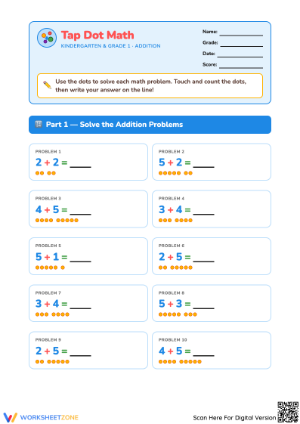
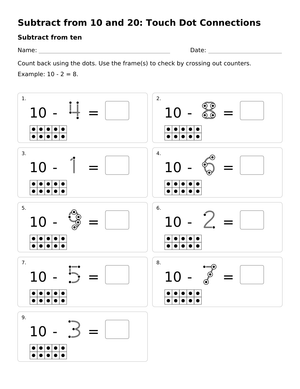
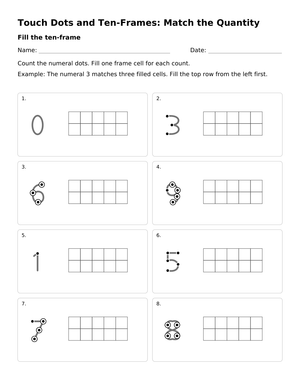
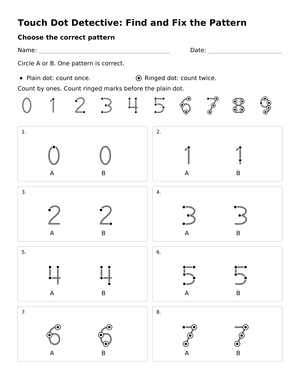
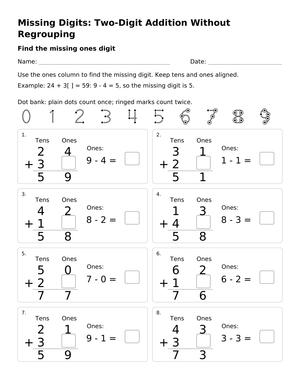
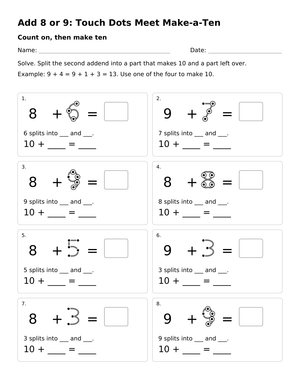
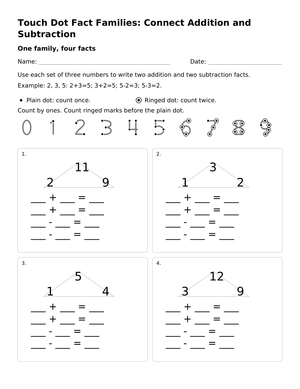
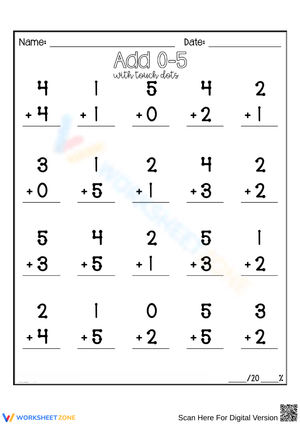
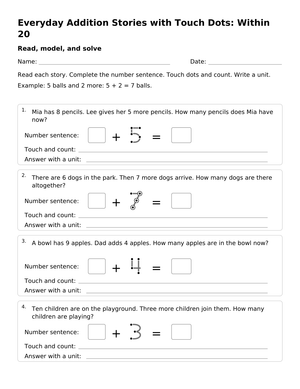
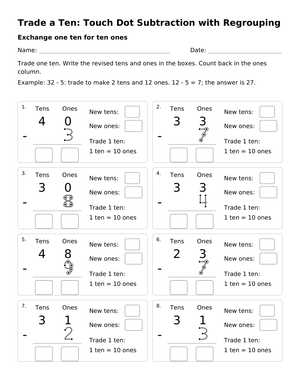
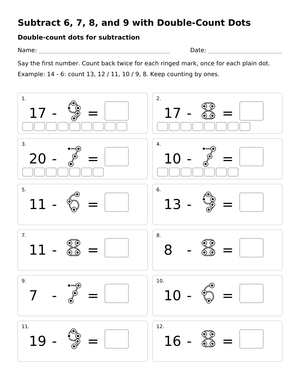
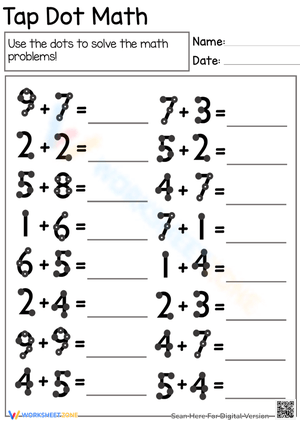
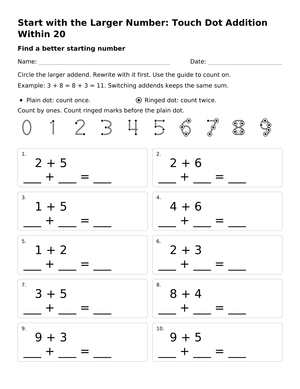
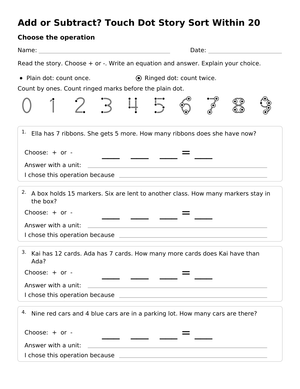
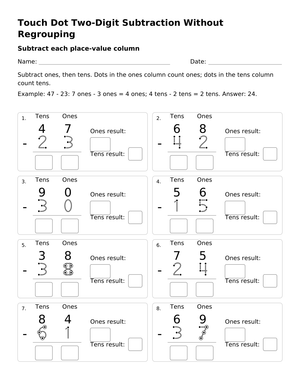
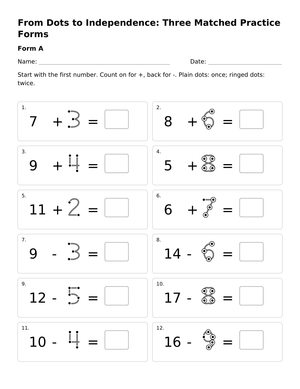
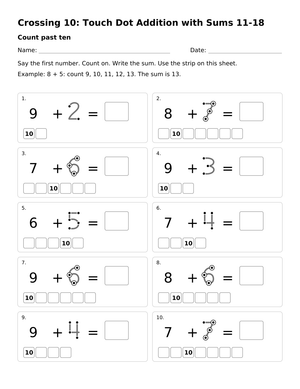
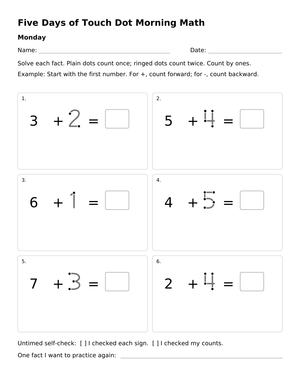
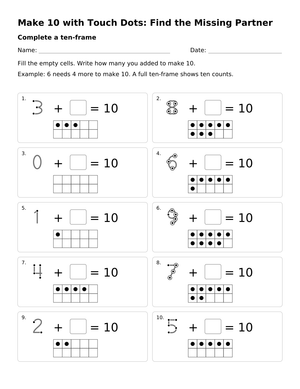
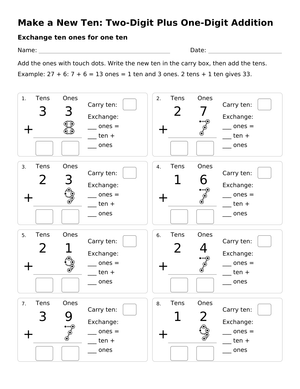
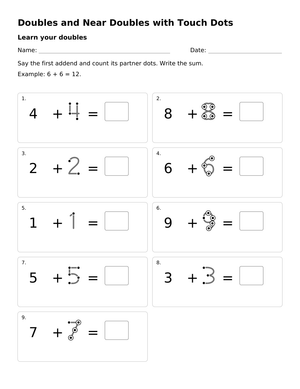
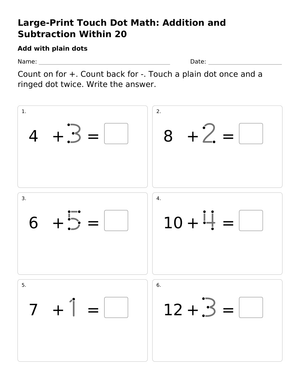
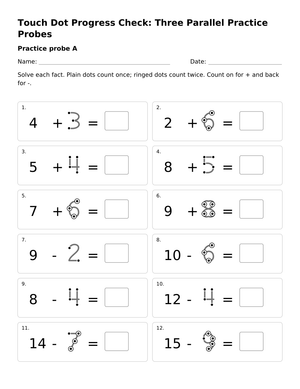
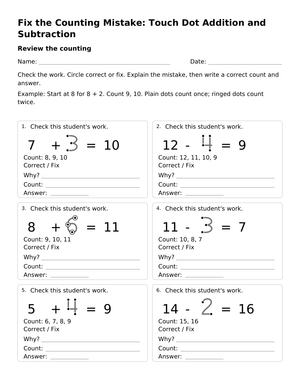
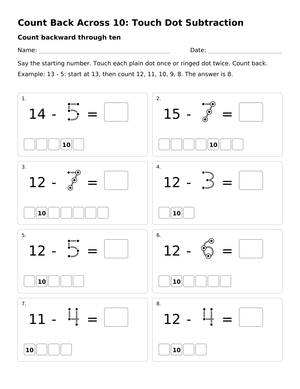
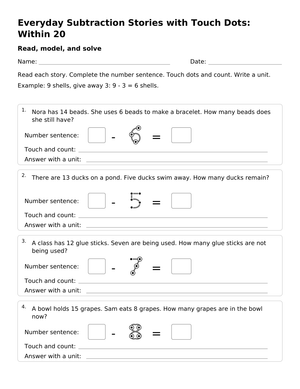
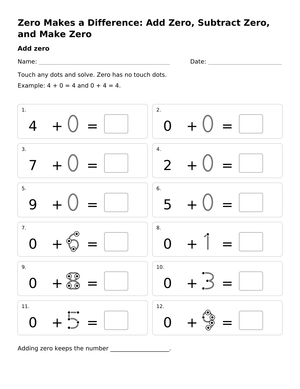
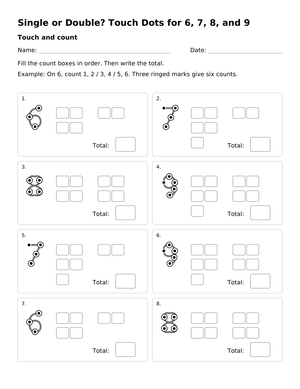
Touch math worksheets use a dot-and-circle notation placed directly on numerals 1 through 9. Each touchpoint marks a spot students touch and count aloud while solving addition and subtraction problems. Numerals 1 through 5 get single dots at key points on the numeral, while 6 through 9 add a circled dot to represent a group of two. Students touch each point once, saying the count aloud, which links the abstract symbol to a concrete, repeatable counting action. For early elementary classrooms and intervention groups, this gives students a consistent physical strategy to fall back on before they have automatic recall of facts.
The appeal for US K-12 teachers is that touch math worksheets do not require manipulatives, counters, or extra materials during independent work. Once a student has learned the touchpoint pattern for each numeral, the worksheet itself becomes the tool. That makes touch math worksheets useful for whole-class number sense units, small-group Tier 2 support, and IEP-driven Tier 3 intervention blocks where consistent, repeatable strategies matter.
Sequencing Worksheets from Single-Digit Addition to Subtraction
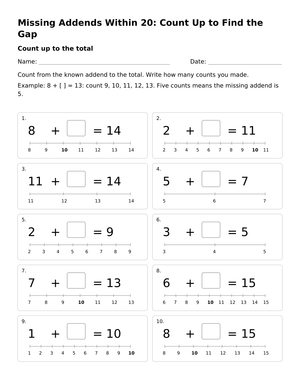
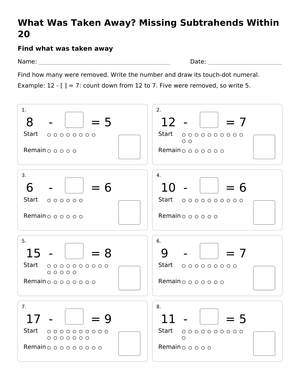
A sound touch math worksheet sequence starts narrow and builds. Begin with addition problems where both addends are 5 or less, since these numerals use only single touchpoints and are easiest to count accurately. Next, move to addition problems involving one addend from 6 to 9, which introduces the circled double-count points. Only after students are consistently accurate with addition should subtraction worksheets be introduced, since subtraction with touchpoints asks students to touch and count backward, a more demanding skill.
Within each stage, vary the worksheet format: some pages should be pure computation practice, others should mix touch math problems with a few standard-notation problems so students start bridging the two representations. This gradual mixing is what eventually allows touchpoints to fade. Teachers should watch accuracy and speed closely at each stage rather than moving to a new worksheet type on a fixed calendar, since students progress through the touchpoint sequence at very different rates depending on their starting number sense.
Classroom Implementation
A dependable classroom routine has three stages. First, direct instruction: model touchpoint counting on the board or document camera, touching each point and counting aloud in a consistent voice, then have students echo the count with you before touching anything themselves. Second, guided practice: work through several problems together, watching for students who skip points, double-count, or lose their place, and correct these errors immediately rather than letting them repeat on independent work. Third, independent worksheet practice, which should only begin once most of the group can complete guided problems accurately without prompting.
Small-group intervention teachers often find it useful to keep a short observation checklist during guided practice: does the student touch each point once, count in the correct order, and land on the correct total. This checklist doubles as informal progress-monitoring data and helps decide when a student is ready to move to the next worksheet stage or begin fading touchpoints altogether.
Frequently Asked Questions
1. How do teachers introduce touchpoints for the first time to a class or small group
Start with direct, explicit modeling on numerals 1 through 5 only. Demonstrate touching and counting aloud, have students echo the pattern chorally, then move to guided practice with a small set of addition problems before any independent worksheet is assigned.
2. Is touch math appropriate for students without diagnosed disabilities or only for special education
Touch math worksheets are commonly used in general education number sense units as well as special education and intervention settings. Research cited by TouchMath includes both special education populations and broader classroom use, so teachers can use the strategy with any student who needs a concrete-to-abstract bridge for computation.
3. How long should students use touchpoints before transitioning to standard algorithms
There is no fixed timeline. Teachers should base the transition on accuracy and speed data from guided and independent practice, gradually fading touchpoints numeral by numeral rather than switching the whole class to standard notation at once.
4. What grade levels benefit most from touch math worksheets
Early elementary grades typically get the most use out of touch math worksheets during initial addition and subtraction instruction, while upper elementary special education and intervention groups often use them as a targeted fluency-building tool tied to IEP goals.
5. How can teachers track progress and know when to fade the touchpoint support
Short, regular touch math worksheet probes, combined with an observation checklist during guided practice, give teachers enough data to see accuracy and speed trends. Consistent accuracy without touching, or accurate counting only on the harder numerals 6 through 9, are both signals that fading can begin.