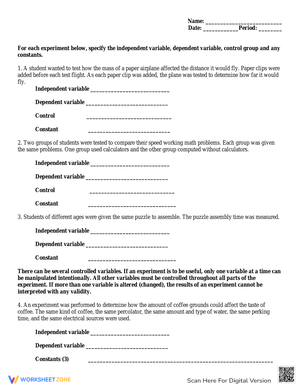
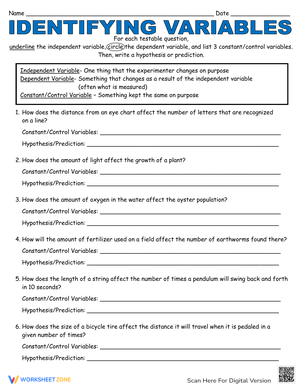
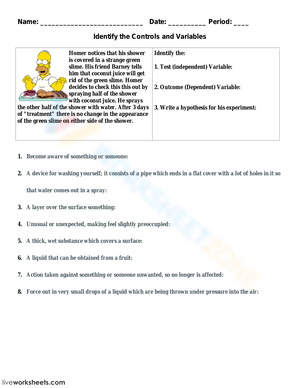
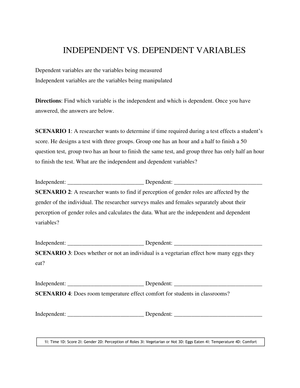
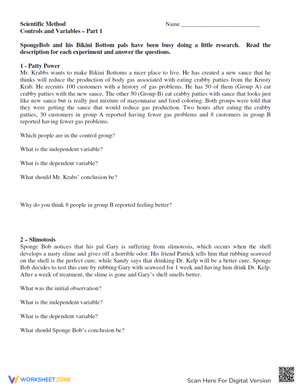
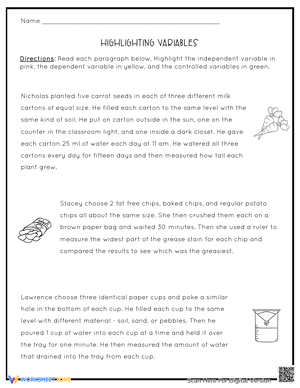
Ask a room full of sixth graders which variable depends on which, and you will get a lot of confident wrong answers. Independent and dependent variables worksheets exist because this distinction is genuinely hard for students who are used to solving for x rather than describing a relationship between two changing quantities. Before students can graph a function or write an equation from a word problem, they need to reliably sort inputs from outputs. That sorting skill is the entire point of CCSS.MATH.CONTENT.6.EE.C.9, and it is the standard most of your students are working toward when they open one of these worksheets.
What the Standard Asks For
CCSS 6.EE.9 sits inside the Expressions and Equations domain, and it asks students to use variables to represent two quantities in a real-world problem, write an equation that relates the dependent variable to the independent variable, and then analyze that relationship using tables and graphs. That three-part expectation, equation plus table plus graph, is why a single worksheet on this topic rarely does the job. Students need repeated exposure across all three representations before the concept sticks, which is why sequencing your worksheet practice matters as much as the worksheets themselves.
Sequencing Practice: Words Before Symbols
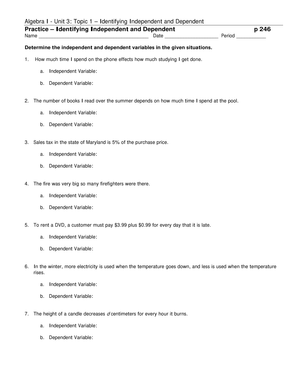
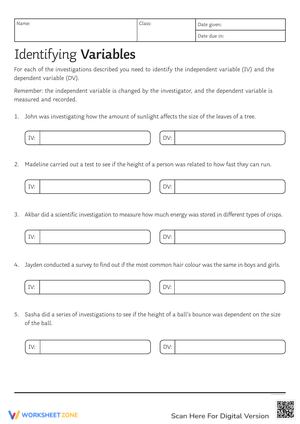
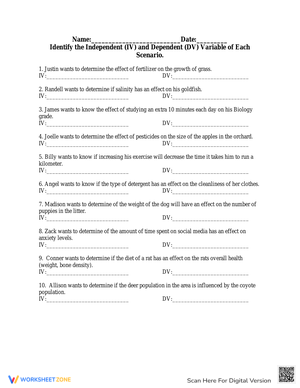
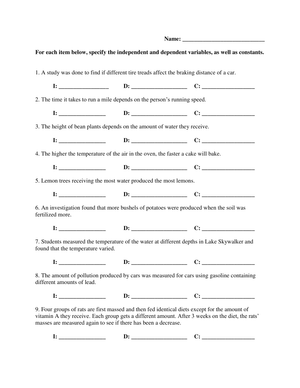
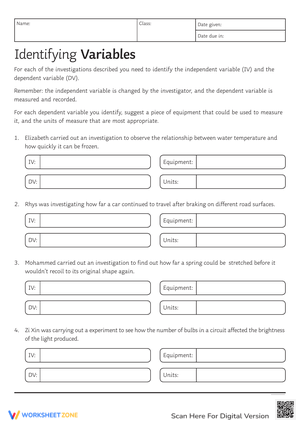
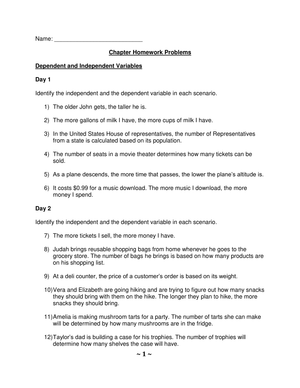
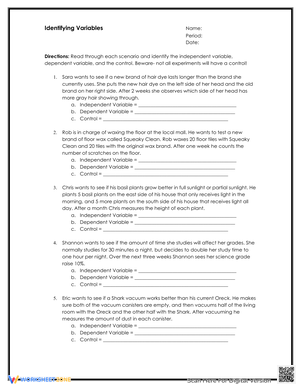
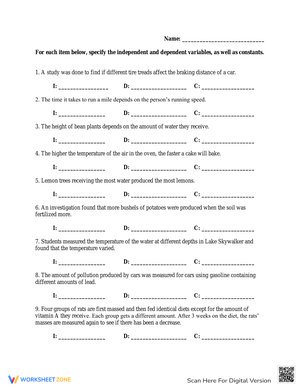
The most effective order for these worksheets starts with real-world word problems, not equations. Students first identify which quantity is being controlled or chosen (the independent variable) and which one responds to that choice (the dependent variable). Only after that identification step is solid should you move students into representing the relationship as an ordered pair, then a table, then a graph, then finally an equation. Jumping straight to equation-writing skips the reasoning step that actually builds understanding.
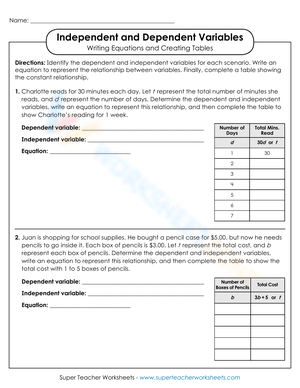
A classroom example that consistently works: distance and time at a constant speed. If a car travels at 65 miles per hour, students write d = 65t, where time is independent, since it is the value someone chooses or measures freely, and distance is dependent, since it changes as a result of time passing. Worksheets that use this kind of scenario, alongside cost per item, savings over weeks, or pages read per day, give students a repeatable mental model they can apply to less familiar contexts on a test.
Common Misconceptions Worksheets Should Target
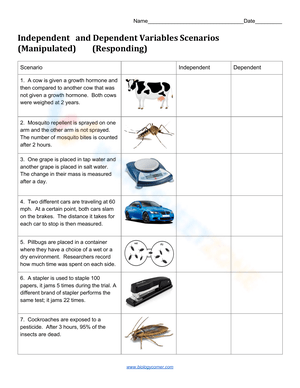
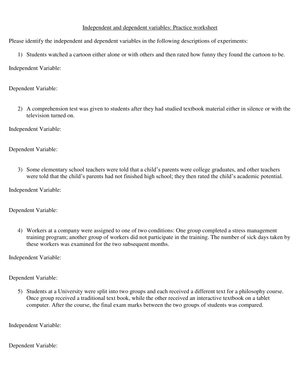
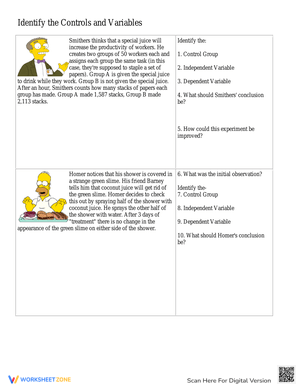
Three mix-ups show up again and again in student work. First, students often assume the variable listed first in a sentence is automatically independent, which is not always true and needs to be checked against meaning, not word order. Second, students confuse cause and effect in less obvious scenarios, such as plant height and days of growth, where it is not immediately clear which variable is doing the controlling. Third, once students move to graphing, many plot the dependent variable on the horizontal axis out of habit, rather than the vertical axis where it belongs. Worksheets that include a mix of straightforward and ambiguous scenarios, plus a graphing component, give you a direct way to catch and correct all three patterns before a unit test.
Classroom Implementation
Use a short independent and dependent variables worksheet as a warm-up before introducing function tables, since this concept is the direct bridge into 8th grade functions work under the 8.F standards. For small-group intervention, pull students who missed variable-identification questions on a prior quiz and give them a worksheet built around a single familiar scenario, like allowance saved per week, repeated across several question formats. For formative assessment, a two-question exit ticket asking students to identify variables in a new scenario and sketch a rough graph tells you within minutes whether the class is ready to move forward or needs another day of practice. Keep review worksheets in rotation even after the initial unit, since this skill fades quickly if it is not revisited before standardized testing windows.
Frequently Asked Questions
1. What grade level typically covers independent and dependent variables in math class?
This concept is primarily a 6th grade math topic under CCSS 6.EE.9, though teachers often revisit and extend it in 7th and 8th grade as students move toward formal function concepts under the 8.F standards.
2. What is the difference between an independent and a dependent variable in a real-world problem?
The independent variable is the quantity that is chosen or changes freely, such as time or number of items purchased. The dependent variable is the quantity that responds to that change, such as distance traveled or total cost.
3. How can teachers use these worksheets for small-group intervention or review?
Group students by the specific misconception they are showing, such as confusing which variable comes first, and assign a worksheet built around one consistent real-world scenario so they can practice the reasoning repeatedly before applying it to new contexts.
4. How do independent and dependent variable worksheets connect to graphing and writing equations?
CCSS 6.EE.9 requires students to represent the same relationship as an equation, a table, and a graph, so worksheets that move students through all three formats, rather than variable identification alone, more fully address the standard.
5. What real-world examples work best for teaching this concept to middle schoolers?
Scenarios with a clear, familiar cause-and-effect relationship work best, such as distance and time at constant speed, cost and number of items, or savings accumulated per week, since students can reason about which quantity is controlling the other before applying that logic to less obvious examples.