A strong math routine does not always need to be long. Sometimes, one carefully chosen number can open the door to counting, comparing, expanding, adding, subtracting, and explaining mathematical thinking. Number of the day worksheets give students a familiar daily structure where they explore one number in many different ways. Instead of jumping from skill to skill, learners return to the same format each day, which helps build confidence, independence, and number sense over time.
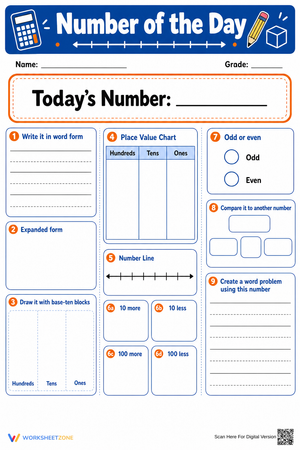
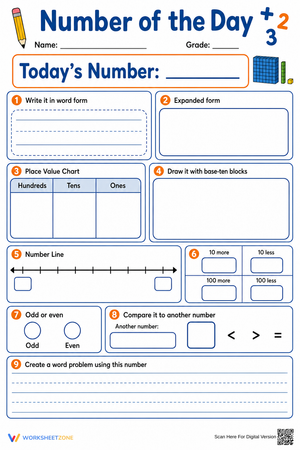
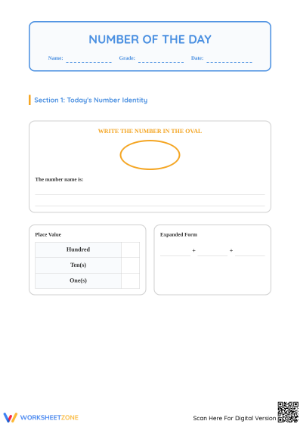
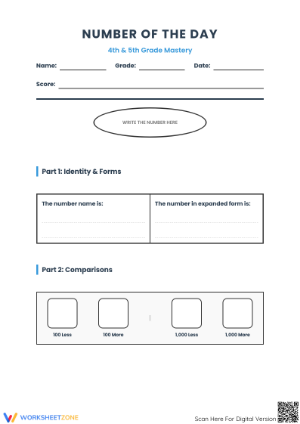
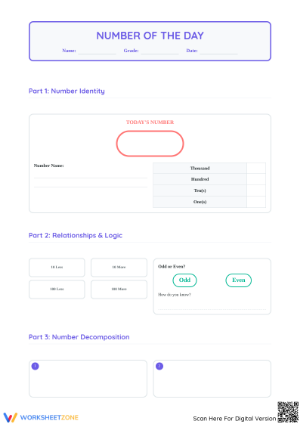
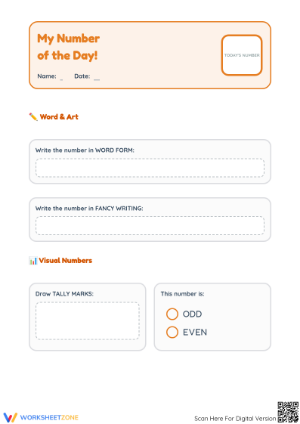
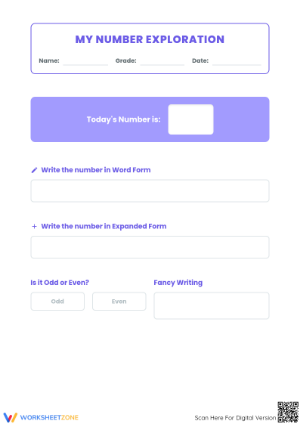
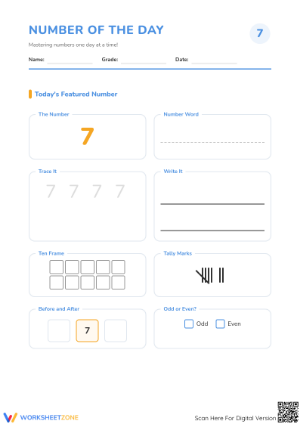
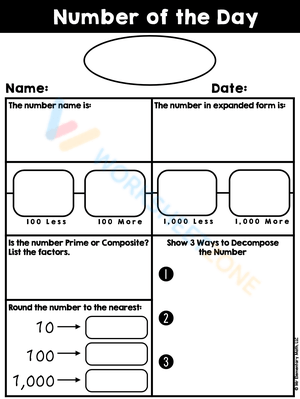
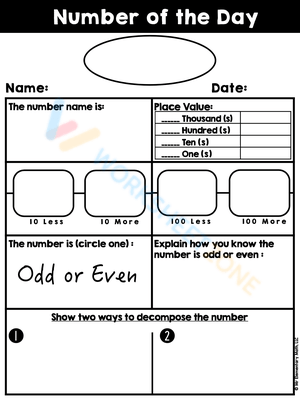
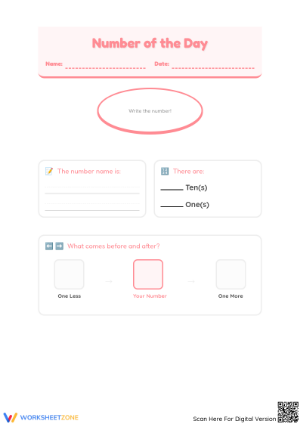
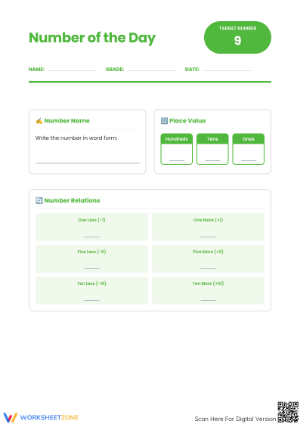
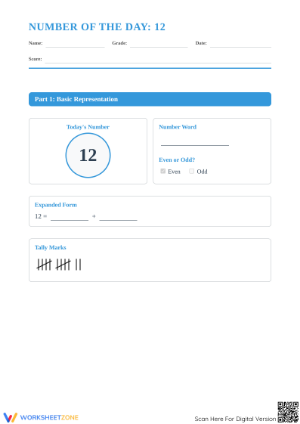
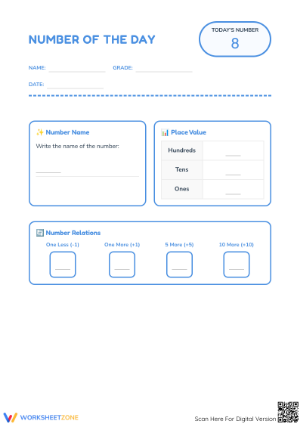
These worksheets usually ask students to break a number apart, write it in expanded form, show it with base-ten blocks, compare it with other numbers, identify odd or even, create equations, or place it on a number line. This repeated practice is especially powerful for students who need time to understand how numbers work. For learners developing stronger digit awareness, place value practice sheets can be a helpful companion because place value is often at the center of number of the day activities.
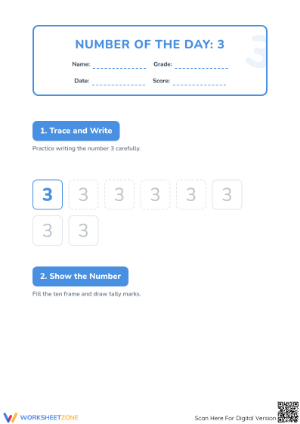
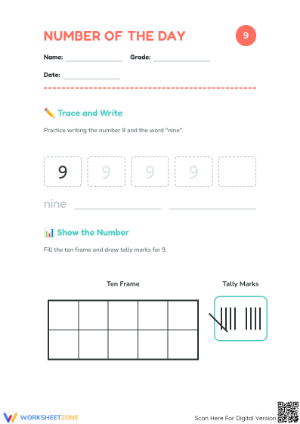
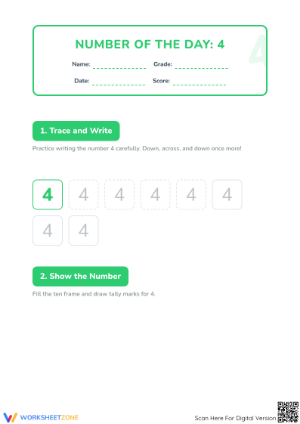
Number of the day worksheets work well because they create a predictable math habit. Students know what to expect, but the number changes, so the thinking stays fresh. A first grader might explore the number 18 by drawing ten frames and writing addition facts. A third grader might work with 486 by identifying hundreds, tens, and ones. An upper elementary student might use a larger number to practice rounding, factors, multiples, or multi-step equations. The same routine can grow with the student.
Teachers can use these worksheets as morning work, math warm-ups, centers, homework, intervention practice, or quick review before a lesson. They are also useful for spotting gaps in understanding. If a student can write a number but struggles to expand it, the teacher knows place value needs more support. If another student can compare numbers but cannot create equations, operations practice may be needed. For more hands-on ways to support this skill, teachers can explore these place value activities and connect worksheet practice with games, manipulatives, and classroom discussions.
Worksheetzone’s number of the day worksheets are designed to make daily math practice simple, flexible, and meaningful. They help students look at numbers from different angles instead of treating them as isolated symbols. With consistent use, learners become more fluent with place value, operations, comparisons, and mathematical language. Whether used for early elementary practice, review, or skill reinforcement, these worksheets give students a steady path toward stronger number confidence.
Frequently Asked Questions
Question 1: What do students practice with number of the day worksheets?
Students practice number sense skills such as place value, expanded form, odd and even numbers, number lines, comparing values, skip counting, rounding, and basic operations. Depending on the grade level, they may also create equations, identify factors, or represent numbers in multiple ways.
Question 2: What grade levels are these worksheets best for?
Number of the day worksheets are most useful for kindergarten through upper elementary students. Younger learners can work with smaller numbers, ten frames, and simple counting, while older students can use larger numbers for place value, rounding, multiplication, division, and problem-solving practice.
Question 3: How often should teachers use number of the day worksheets?
Many teachers use them daily or several times a week as a short math warm-up. Consistent practice works well because students become familiar with the routine and can focus more on the number itself. Even five to ten minutes a day can strengthen number sense over time.
Question 4: How can number of the day worksheets support struggling students?
These worksheets break number practice into small, repeated tasks, which helps struggling students build confidence gradually. The familiar format reduces confusion, while the varied prompts help teachers see which skills need more support, such as place value, comparison, or basic operations.