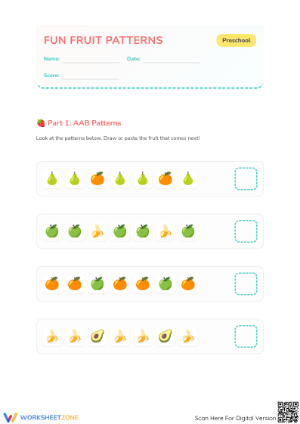
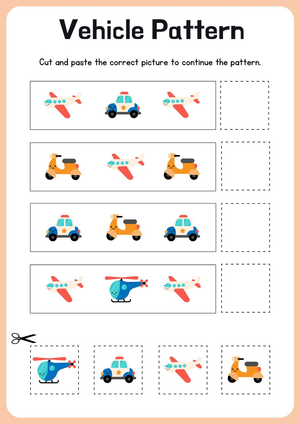
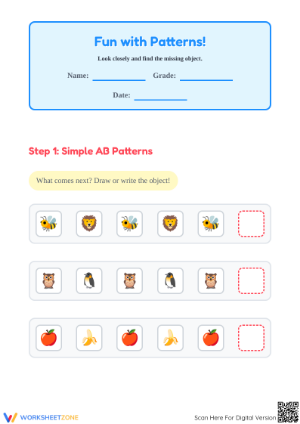
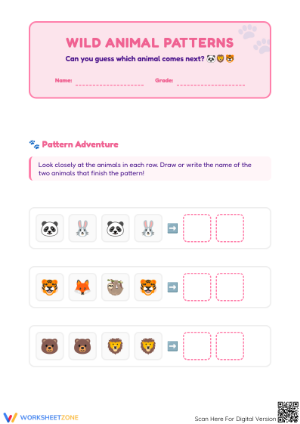
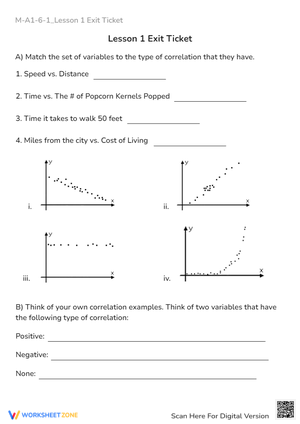
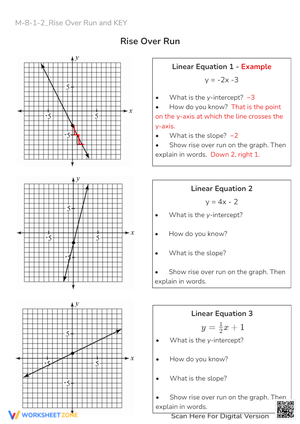
Common Core does not list patterns as a standalone content standard in kindergarten or first grade. Instead, pattern reasoning lives inside the Standards for Mathematical Practice, specifically MP7, look for and make use of structure, and MP8, look for and express regularity in repeated reasoning. This means a first-grade teacher assigning an AB pattern worksheet is not filling time between content standards, they are directly building the structural thinking that MP7 and MP8 describe, and that habit of noticing structure transfers into skip-counting, place value, and eventually multiplication facts.
Because pattern work is embedded rather than isolated, teachers sometimes underuse it in the early grades. Building a short, consistent rotation of patterns worksheets into weekly math centers keeps this skill visible and measurable, even when it is not its own line item on a pacing guide.
How Patterns Progress From Kindergarten Through Grade 4
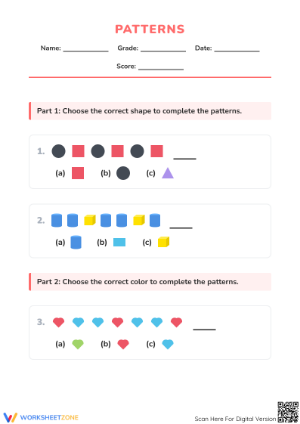
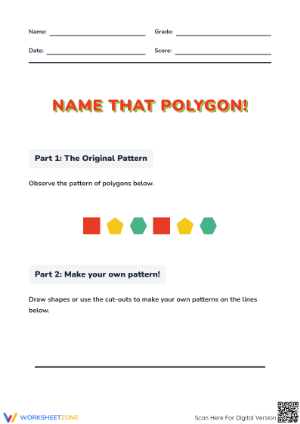
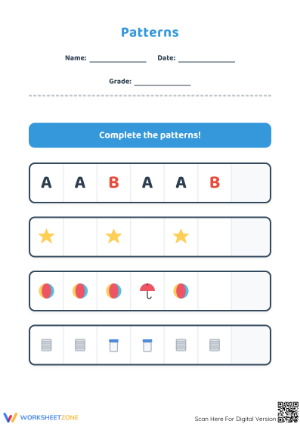
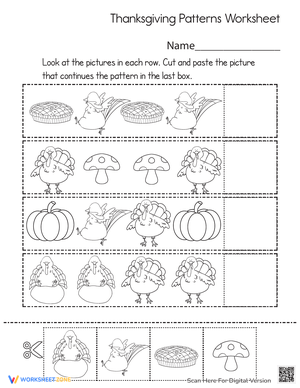
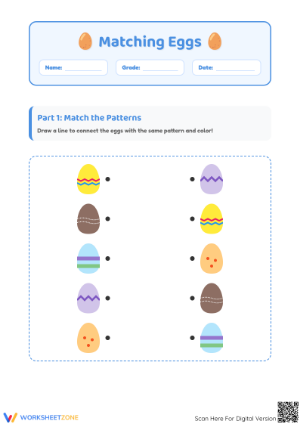
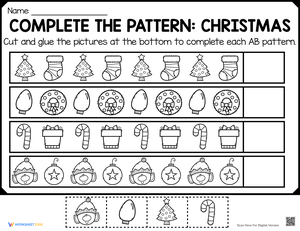
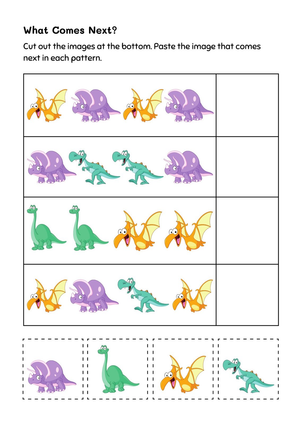
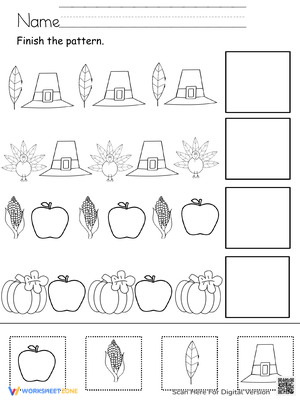
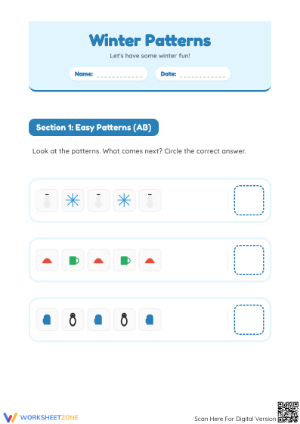
Pattern complexity should scale deliberately across the primary grades. In kindergarten and first grade, most patterns worksheets focus on repeating sequences: AB (red, blue, red, blue), AAB, or ABC combinations using shapes, colors, or simple objects. By second and third grade, students start working with growing and shrinking numeric patterns, such as adding two each time or skip-counting backward from a given number.
Grade 4 is where pattern work becomes formalized. CCSS.Math.Content.4.OA.C.5 requires students to generate a number or shape pattern that follows a given rule, and then identify features of the pattern that were not explicit in the rule itself. A classic example is starting at 1 and repeatedly adding 3, which produces a sequence that alternates between odd and even terms, a feature students would not predict just from reading the rule add 3. Patterns worksheets built around this standard should always ask students to state the rule, generate several terms, and then explain an unstated feature they notice, not just fill in blanks.
Differentiating Pattern Worksheets for Mixed-Ability Classrooms
One worksheet rarely fits every learner in a class. Differentiation with patterns worksheets usually comes down to three levers: pattern type, sequence length, and whether the rule is given or must be inferred.
- Struggling students often need shorter AB or AAB sequences with concrete pictures rather than abstract numbers
- On-level students can handle ABC patterns or two-step growing patterns with the rule stated up front
- Advanced students benefit from patterns worksheets that hide the rule, requiring them to infer it from given terms and then extend the sequence, which builds toward 4.OA.C.5 thinking earlier than grade level
Keeping three tiers of the same core worksheet on hand lets a teacher run one lesson with the whole class while quietly meeting students where they are.
Connecting Patterns to Input/Output Tables and Early Algebra
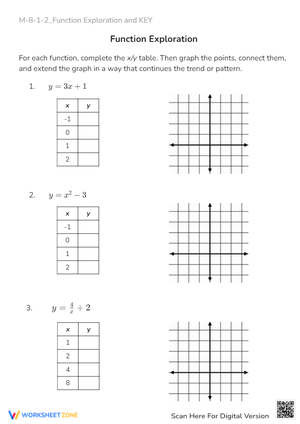
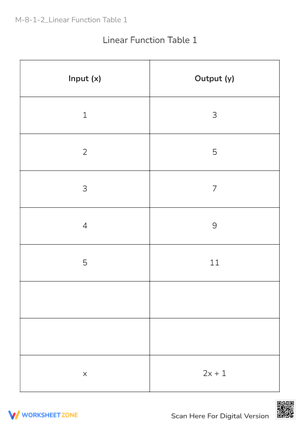
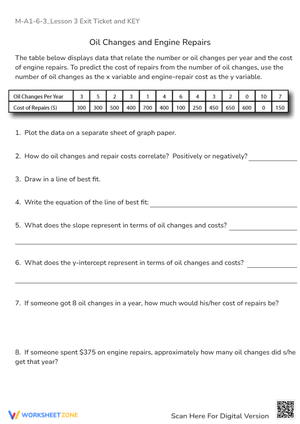
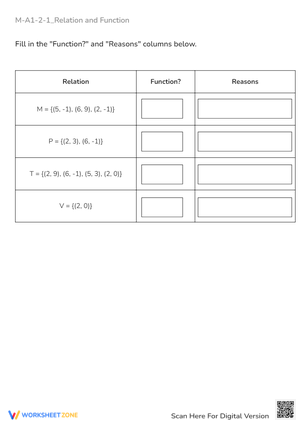
By third and fourth grade, pattern worksheets should start bridging into input/output tables, where a rule applied to one number produces another. This is a natural extension of 4.OA.C.5 and sets up formal function thinking that students will meet again in middle school algebra. A worksheet that asks students to complete an input/output table using a stated rule, then describe the rule in their own words, does double duty: it reinforces the pattern standard and previews algebraic notation without introducing variables too early.
Teachers can use a short patterns worksheet as a formative checkpoint before starting a new algebraic thinking unit. If most students can generate and extend a rule-based pattern independently, the class is likely ready for input/output tables. If not, another week of guided pattern practice is worth the time investment before moving forward.
Classroom Implementation
To get consistent value out of patterns worksheets across a unit, build a short, repeatable routine rather than treating each worksheet as a one-off assignment.
- Start each new pattern type with manipulatives before introducing the paper worksheet version
- Use a brief warm-up pattern each morning to keep the skill active between formal lessons
- Pair patterns worksheets with turn-and-talk time so students explain their reasoning aloud, not just mark answers
- Rotate difficulty tiers within the same worksheet set so intervention, on-level, and advanced students all get appropriate challenge
- Use a completed patterns worksheet as a quick formative check before moving into rule-based or input/output pattern work
This routine keeps pattern reasoning visible across the year instead of treating it as a single unit that gets checked off and forgotten.
Frequently Asked Questions
1. What grade level should introduce patterns worksheets?
Simple repeating patterns, such as AB or AAB sequences, are appropriate starting in kindergarten. Growing and shrinking numeric patterns typically appear by second or third grade, and formal rule-based patterns aligned to 4.OA.C.5 are introduced in fourth grade.
2. How do patterns worksheets align with Common Core math standards?
Early pattern work supports the Standards for Mathematical Practice, specifically MP7 and MP8, which focus on structure and repeated reasoning. In fourth grade, patterns worksheets can align directly with CCSS.Math.Content.4.OA.C.5, which requires generating and analyzing number or shape patterns from a given rule.
3. What is the difference between repeating and growing patterns in worksheet activities?
A repeating pattern cycles through the same fixed sequence, such as red, blue, red, blue. A growing pattern changes by a consistent amount each step, such as adding two to each new term, and it does not return to its starting point.
4. How can teachers use patterns worksheets for math intervention groups?
Intervention groups benefit from starting with a manipulative-based version of a pattern before moving to the worksheet, keeping sessions focused on one pattern type, and having students explain their reasoning aloud to catch misconceptions early.
5. How do pattern worksheets prepare students for algebraic thinking in later grades?
Rule-based patterns introduce the idea that a consistent operation applied to a starting value produces a predictable sequence, which is the same logic behind input/output tables and, later, algebraic functions with variables.