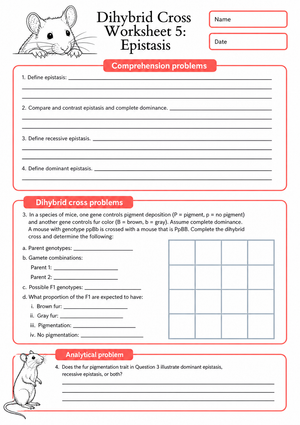
Why Dihybrid Cross Worksheets Earn Their Place in a Genetics Unit
Dihybrid crosses are where a lot of students either lock in Mendelian genetics or quietly fall behind. Tracking two genes at once means four gamete types per parent and a sixteen-box Punnett square, so the jump from monohybrid practice is real. Well-built dihybrid cross worksheets give you a structured way to move students through that jump without turning every class period into a lecture. They also free you up to circulate, spot errors early, and pull the small groups that need another look at gamete setup.
For a high school biology class, these worksheets do three jobs at once. They build procedural fluency with the 4x4 grid, they connect that procedure to the underlying logic of independent assortment, and they generate predictable practice data you can use for formative checks. When students can explain why a cross produces its ratio, not just fill in boxes, you know the unit is landing.
What Students Actually Practice on a Dihybrid Cross Worksheet
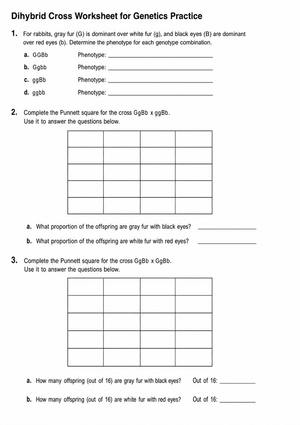
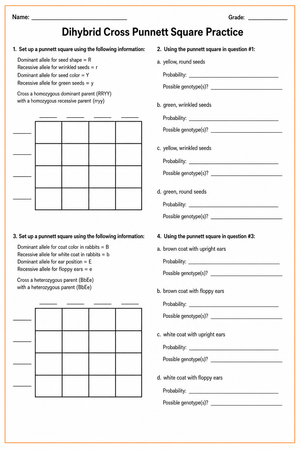
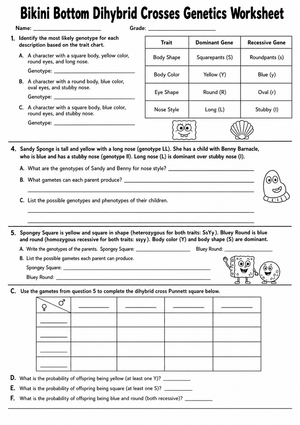
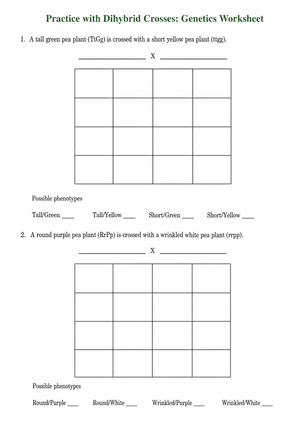
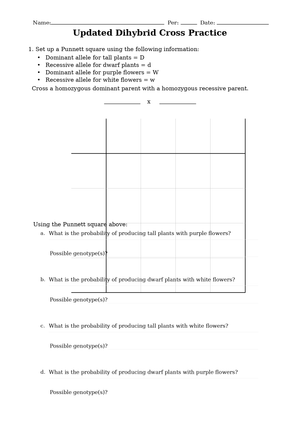
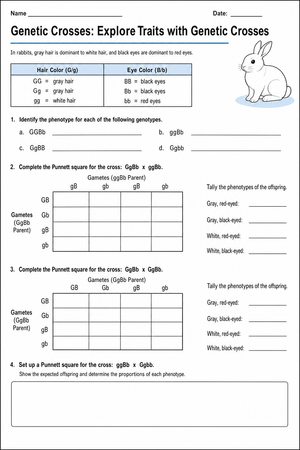
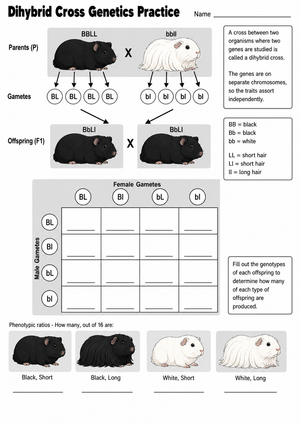
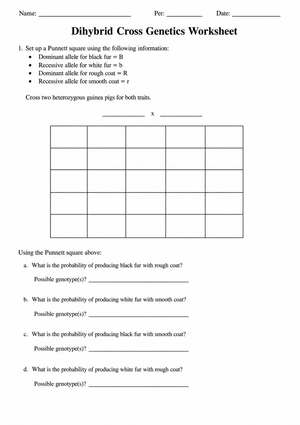
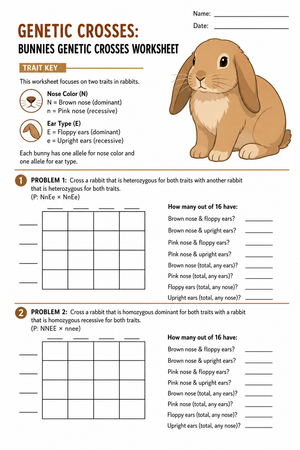
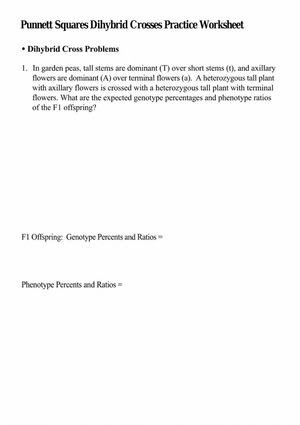
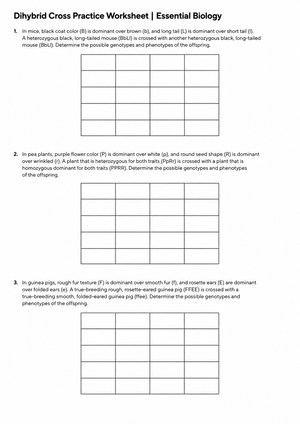
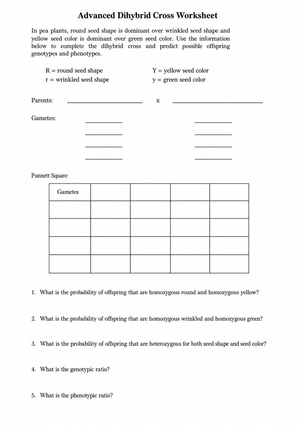
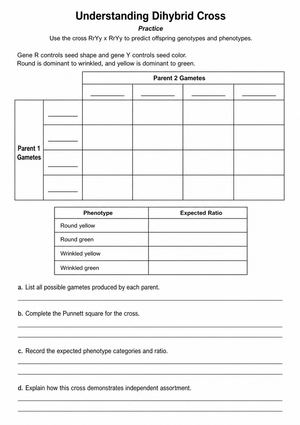
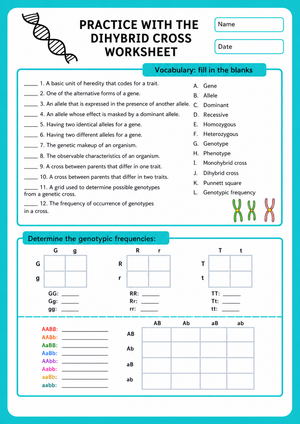
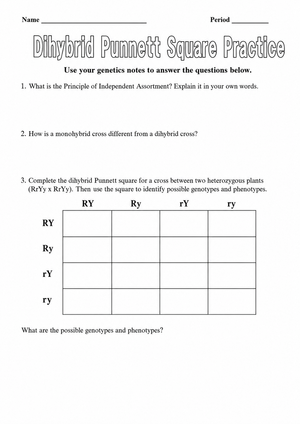
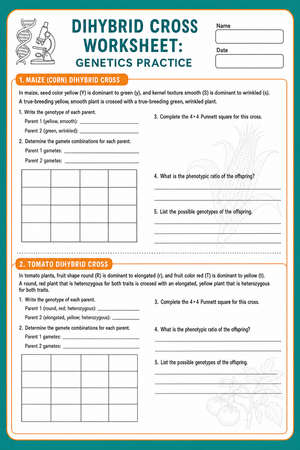
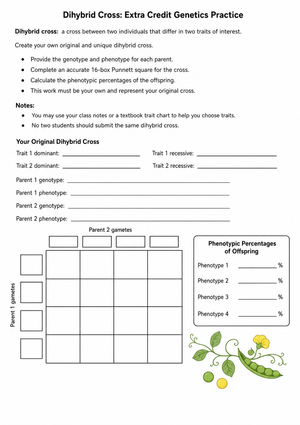
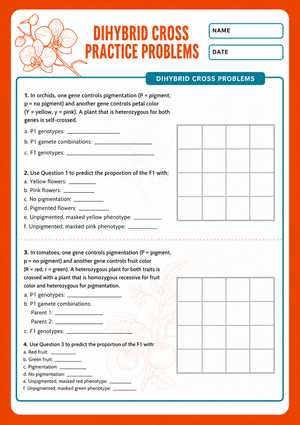
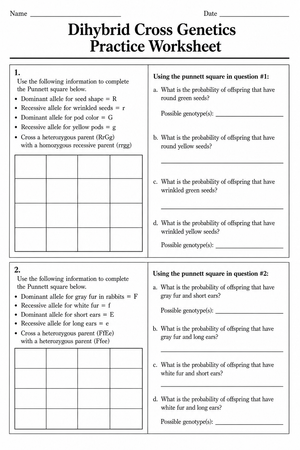
A strong worksheet set walks students through a repeatable sequence. First they read the cross, for example RrYy x RrYy, and identify the two genes and their alleles. Next they determine each parent's gametes, which is where four combinations appear per parent. Then they build the 4x4 Punnett square, fill in all sixteen boxes, and finally tally genotypes and phenotypes.
That last step is where the 9:3:3:1 phenotypic ratio shows up, and it is worth making students count it themselves rather than handing it over. A dihybrid cross tracks two traits, each with two alleles, so every parent contributes four gamete types and the grid has sixteen cells. Worksheets that ask for gamete lists, the completed grid, and a written ratio all on one page keep the whole reasoning chain visible.
Scaffolding Students From Monohybrid to the 4x4 Punnett Square
The most common pacing mistake is jumping straight to sixteen boxes. Students who are still shaky on a 2x2 monohybrid square will guess at gametes and never recover. A cleaner path is to spend a full round of practice on gamete determination alone before any grid appears.
Here is the move that saves the most reteaching: treat gamete determination like the FOIL method from algebra. For RrYy, students pair one allele from each gene in every combination, producing RY, Ry, rY, and ry. Because most ninth and tenth graders have already met FOIL in math, borrowing that label cuts gamete errors sharply, and gamete errors are the single largest source of wrong sixteen-box grids. Fix the four gametes and the rest of the worksheet usually takes care of itself.
Once gametes are reliable, the grid becomes bookkeeping. Have students label the four gamete types across the top and down the side, fill each of the sixteen cells, and only then move to counting. Worksheets that pre-print the empty 4x4 grid for the first few problems, then remove the scaffold, help students internalize the setup instead of leaning on it.
Where the 9:3:3:1 Ratio Really Comes From
Students remember 9:3:3:1 as a magic number long before they understand it. The ratio is not memorization bait; it is two independent 3:1 monohybrid ratios multiplied together. Each single trait in a heterozygous cross gives 3 dominant to 1 recessive, and because the two genes assort independently, you multiply the outcomes to reach 9:3:3:1.
According to the Next Generation Science Standards topic on Inheritance and Variation of Traits, high school students should use probability to explain the variation and distribution of expressed traits in a population. A dihybrid cross makes that expectation concrete, since 9 of every 16 offspring are predicted to show both dominant phenotypes while just 1 in 16 shows both recessive traits.
Framing the ratio as a product of probabilities also sets up the multiplication rule that students reuse in later probability problems. Worksheets that ask students to derive 9:3:3:1 from two 3:1 crosses, rather than restate it, push the reasoning one level deeper.
Using These Worksheets In Real Classes
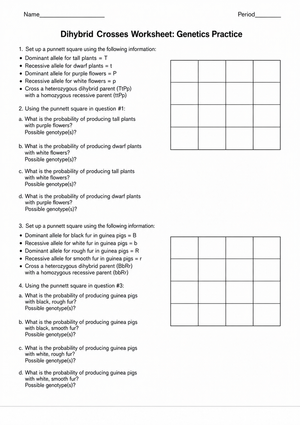
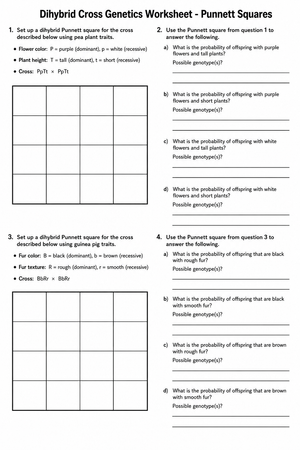
Drop dihybrid cross worksheets into the unit at the point where students have finished monohybrid practice but before any quiz. A workable three-day arc looks like this: day one is guided gamete practice and one modeled 4x4 problem, day two is independent worksheet practice with you circulating, and day three is a hands-on extension.
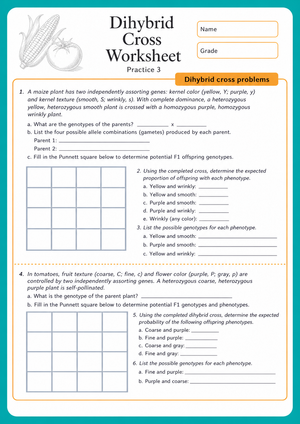
For that extension, corn kernel ears are a classroom favorite. An ear from a dihybrid cross displays kernel phenotypes, such as purple versus yellow and smooth versus wrinkled, in an observable 9:3:3:1 ratio. Students count real kernels, compare their tally to the predicted ratio, and see why observed data wobbles around the expected numbers. That single activity turns an abstract worksheet answer into physical evidence.
Keep the worksheet, the grid, and the ratio on a single sheet so students can check their own logic. Fast finishers can move to two-trait crosses where one parent is homozygous, which shifts the ratio and forces them to reason rather than recall 9:3:3:1.
Frequently Asked Questions
1. What is the difference between a monohybrid and a dihybrid cross worksheet?
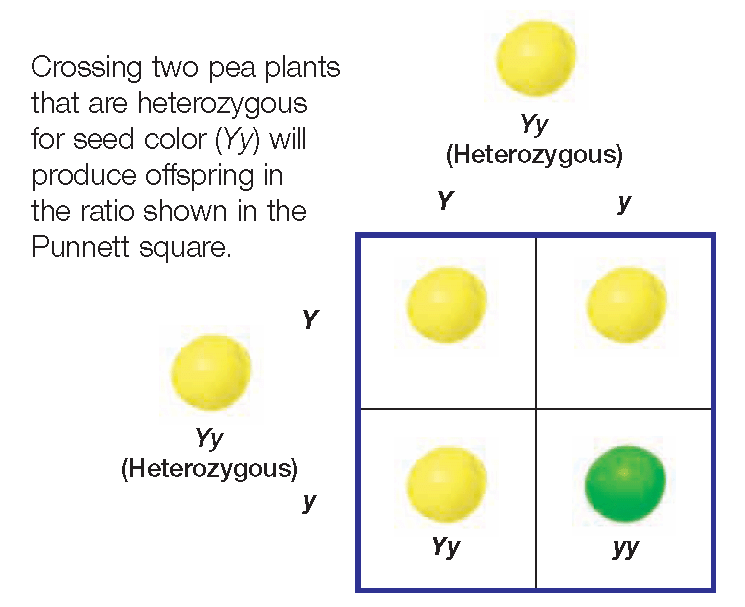
A monohybrid worksheet tracks one gene with a 2x2 Punnett square and a 3:1 ratio. A dihybrid worksheet tracks two genes at once, which means four gametes per parent, a 4x4 grid with sixteen boxes, and the 9:3:3:1 phenotypic ratio.
2. How do you set up a 4x4 Punnett square for a dihybrid cross?
List each parent's four gamete combinations, for example RY, Ry, rY, and ry for an RrYy parent. Write one parent's gametes across the top and the other's down the side, then fill all sixteen cells by combining the row and column alleles.
3. Why does a dihybrid cross produce a 9:3:3:1 ratio?
Each trait on its own gives a 3:1 ratio in a heterozygous cross. Because the two genes assort independently, you multiply the two 3:1 outcomes, which yields 9:3:3:1. That result reflects the Law of Independent Assortment.
4. What grade level typically covers dihybrid crosses?
Dihybrid crosses usually appear in high school biology, most often grades 9 through 12, within a Mendelian genetics or inheritance unit. The work aligns with NGSS inheritance and variation of traits expectations for using probability to explain trait patterns.
5. How can teachers use dihybrid cross worksheets for formative assessment?
Collect a single completed cross as an exit ticket and scan for two things: correct gametes and a correctly counted 9:3:3:1 ratio. Those two checkpoints tell you quickly whether a student understands independent assortment or needs another round of gamete practice.