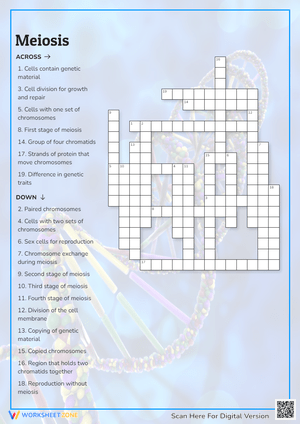
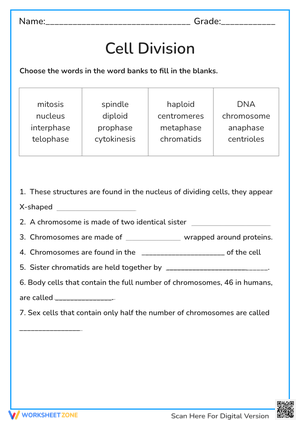
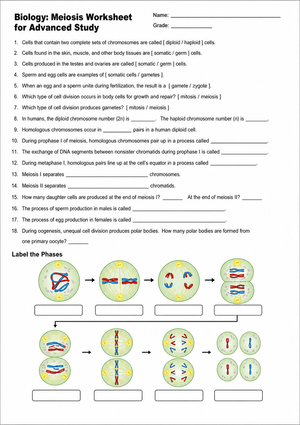
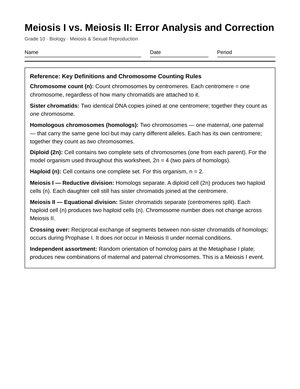
Cell division can feel like a confusing split-screen lesson: two processes, similar vocabulary, and plenty of stages to remember. Mitosis verses meiosis worksheets help students slow everything down and compare the two side by side. Instead of trying to memorize each process separately, learners can study what each type of cell division does, where it happens, how many cells it produces, and why the results matter. This comparison-based approach makes biology review clearer, especially for students who mix up chromosomes, daughter cells, and genetic variation.
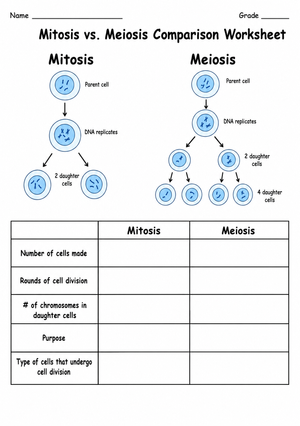
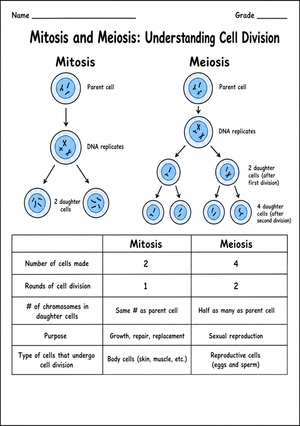
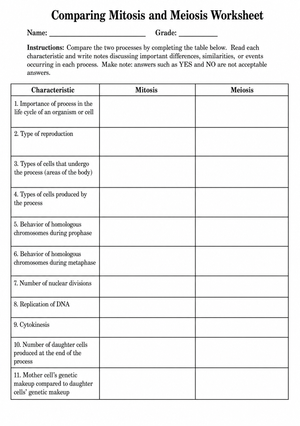
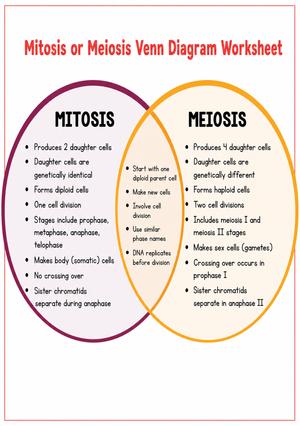
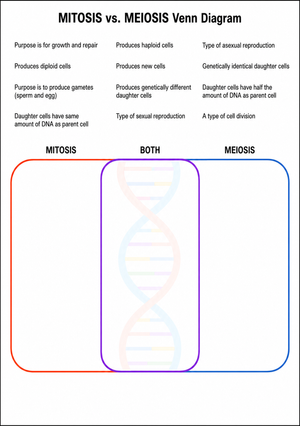
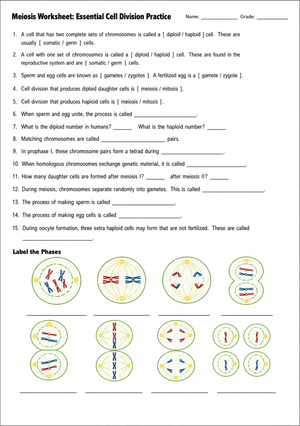
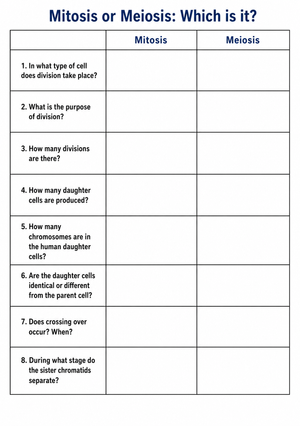
Mitosis is the process body cells use for growth, repair, and replacement. It creates two identical daughter cells with the same number of chromosomes as the original cell. Meiosis, on the other hand, creates reproductive cells with half the chromosome number, allowing genetic variation to occur. A strong worksheet helps students organize these differences through comparison charts, labeling activities, sequencing tasks, vocabulary review, and short-answer questions. Before diving into cell division, teachers can also use this cellular structure resource to review the parts of a cell and their functions.
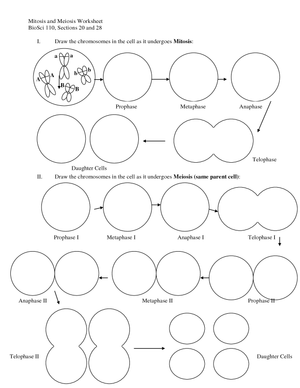
These worksheets are especially useful because students often know the words but do not always understand the purpose behind each process. They may remember that mitosis has phases like prophase, metaphase, anaphase, and telophase, but forget how the outcome differs from meiosis. They may know that meiosis includes two rounds of division, but struggle to explain why four non-identical cells are produced. Mitosis verses meiosis worksheets give learners repeated practice with these details until the big picture becomes easier to explain.
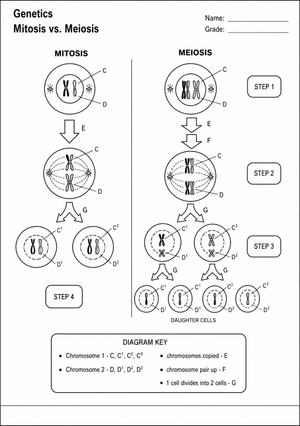
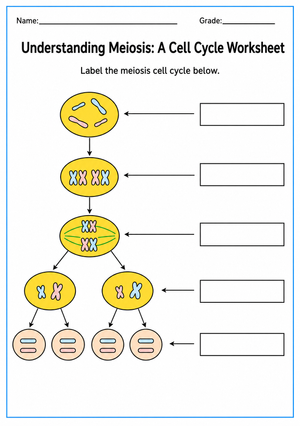
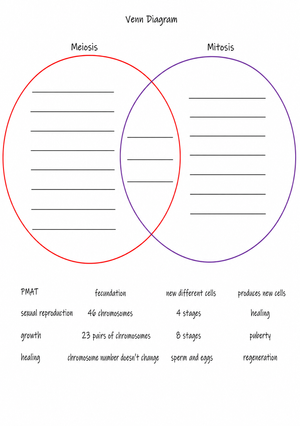
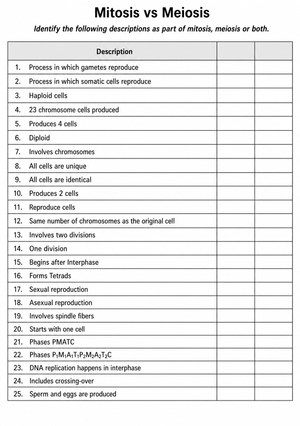
Teachers can use these worksheets during life science, biology, genetics, or human reproduction units. One class activity might ask students to sort statements into mitosis or meiosis categories. Another might have learners compare chromosome numbers, identify diagrams, or explain how genetic diversity is created. For a lighter moment during a challenging unit, teachers can pair review time with this cellular biology humor collection to help students relax before returning to serious comparison practice.
Worksheetzone’s mitosis verses meiosis worksheets are designed to make complex cell division topics easier to review and apply. They can be used for warm-ups, guided notes, homework, test preparation, science centers, or small-group reteaching. With clear visuals and structured prompts, students can build stronger vocabulary, compare processes accurately, and understand why cell division is essential for growth, reproduction, and inheritance. Over time, these worksheets help learners move from memorizing stages to truly explaining how living organisms develop and pass on genetic information.
Frequently Asked Questions
Question 1: What do students learn from mitosis verses meiosis worksheets?
Students learn how mitosis and meiosis are similar and different. They practice comparing purposes, stages, chromosome numbers, daughter cells, and outcomes. These worksheets also help learners understand why mitosis supports growth and repair, while meiosis supports sexual reproduction and genetic variation.
Question 2: What grade levels are these worksheets best for?
These worksheets are most useful for middle school life science, high school biology, and introductory genetics lessons. Younger students can focus on basic comparison charts and vocabulary, while older students can study chromosomes, haploid and diploid cells, crossing over, and genetic variation in more detail.
Question 3: Why do students often confuse mitosis and meiosis?
Students often confuse the two processes because they share similar stage names and both involve cell division. The main difference is the result: mitosis produces two identical body cells, while meiosis produces four genetically different reproductive cells. Side-by-side worksheet practice helps make this distinction clearer.
Question 4: How can teachers use these worksheets in class?
Teachers can use them as warm-ups, guided practice, homework, station activities, review pages, or test preparation. They work especially well after students have learned both processes separately and are ready to compare diagrams, vocabulary, chromosome numbers, and real biological purposes.