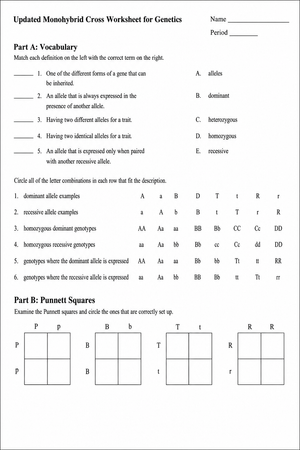
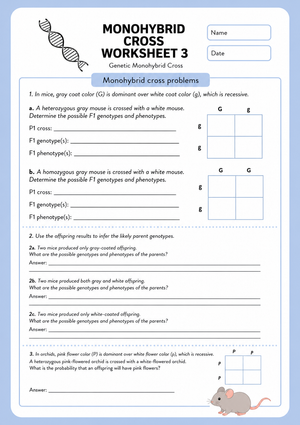
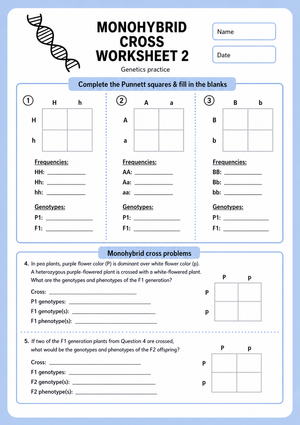
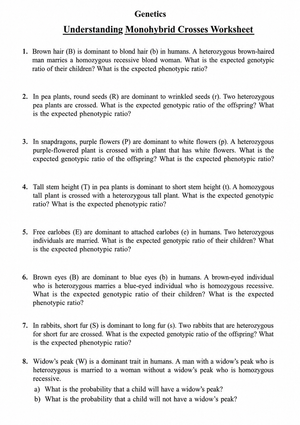
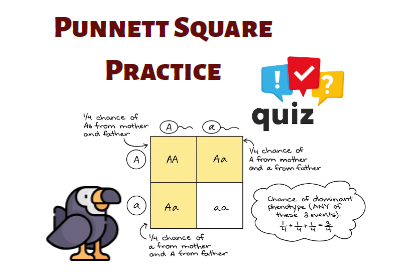
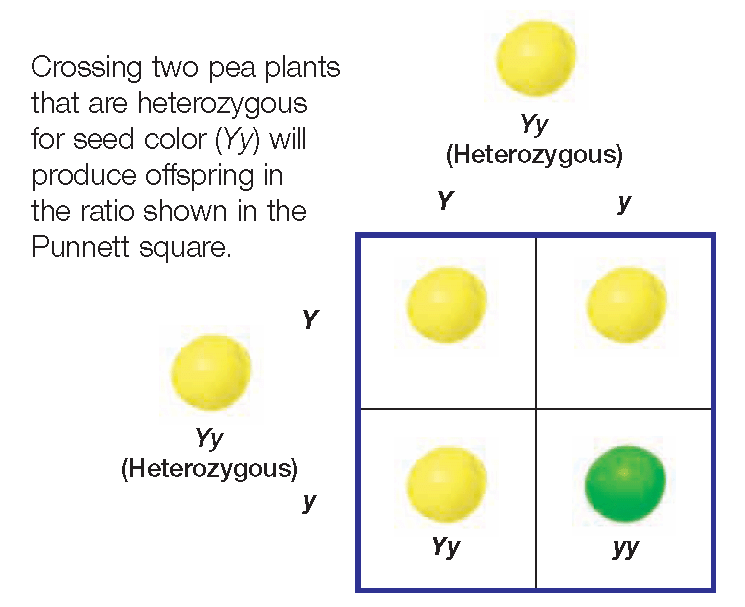
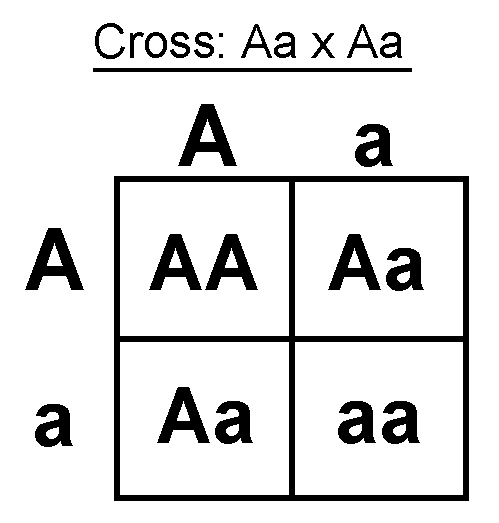
A monohybrid cross tracks inheritance of a single trait controlled by one gene with two alleles. Students set up a 2x2 Punnett square, cross two parent genotypes, and read off the possible offspring genotypes and phenotypes. The classic example is a heterozygous by heterozygous cross, which produces a predictable 3:1 phenotypic ratio and a 1:2:1 genotypic ratio.
That predictability is the whole point pedagogically. Once students can reliably produce and explain a 3:1 ratio, you have evidence that they understand dominant and recessive inheritance at a basic level, and you have a foundation to build on when you introduce dihybrid crosses later in the unit.
From Monohybrid to Dihybrid Crosses
Monohybrid crosses are typically taught before dihybrid, or two-trait, crosses. That sequencing is not arbitrary. A dihybrid cross uses a 4x4 grid and asks students to track two genes at once, which multiplies the number of gamete combinations and the chances for error. If students have not internalized how alleles segregate and combine in a single-trait cross, a dihybrid cross becomes a memorization exercise instead of an application of understanding.
Practically, this means monohybrid cross worksheets work best as the first practice set in a genetics unit, not an afterthought squeezed in before the dihybrid unit test. Give students several rounds of monohybrid problems, check for mastery, and only then move to two-trait crosses.
Using Punnett Square Practice for Formative Assessment
Monohybrid cross worksheets are useful well beyond initial instruction. Because each problem produces a clear right answer, these worksheets double as quick formative assessment tools. A teacher can scan a stack of completed Punnett squares in a few minutes and immediately see which students have the mechanics down and which ones are still confusing genotype with phenotype ratios.
That fast feedback loop matters for planning next steps. If half the class nails the ratio and half does not, a short small-group reteach session targeting only the students who struggled is a better use of class time than reteaching the whole class or moving on regardless.
Common Misconceptions to Watch For
A handful of errors show up again and again when students first practice monohybrid crosses. Some students report the genotypic ratio (1:2:1) when asked for the phenotypic ratio (3:1), because they have not distinguished which question is actually being asked. Others fill in the Punnett square grid correctly but then miscount the boxes when tallying results, especially when a trait is unfamiliar or the letters chosen for alleles look visually similar.
Building a short answer key discussion into your worksheet routine, where students check their ratio against a partner before moving on, catches these errors early. It also gives you language to reference later in the unit when dihybrid crosses introduce more room for the same kinds of mistakes.
Aligning Monohybrid Cross Practice with NGSS Standards
Monohybrid cross and Punnett square content aligns with NGSS HS-LS3-3, which asks students to apply statistics and probability to explain variation in traits, and HS-LS3-1, which addresses gene and chromosome mutation effects on structure and function. When you build a genetics unit around monohybrid cross worksheets, you are directly supporting the statistics and probability reasoning that HS-LS3-3 requires, since predicting a 3:1 ratio from a cross is itself an application of probability to biological variation.
Documenting that alignment matters if you are writing lesson plans for observation, a curriculum audit, or a new unit you are piloting. Framing worksheet practice explicitly around HS-LS3-3 and HS-LS3-1 gives administrators and instructional coaches a clear line between the activity and the standard it supports.
Frequently Asked Questions
1. What grade level typically covers monohybrid cross worksheets
Foundational concepts of gene variation and inheritance appear in middle school under NGSS MS-LS3-1 and MS-LS3-2, while formal Punnett square work with monohybrid crosses is most commonly taught in high school biology courses, including AP-level classes that expect faster mastery.
2. What is the difference between a monohybrid and dihybrid cross
A monohybrid cross tracks one gene with two alleles using a 2x2 Punnett square, while a dihybrid cross tracks two genes at once using a 4x4 grid. Monohybrid crosses are taught first because they establish the basic logic of allele segregation that dihybrid crosses build on.
3. How many practice problems should students complete to master Punnett squares
There is no fixed number, but most teachers find that students need several rounds of guided and independent practice across more than one class period before they reliably produce correct genotypic and phenotypic ratios without support.
4. What NGSS standards do monohybrid cross worksheets support
Monohybrid cross and Punnett square practice most directly supports HS-LS3-3, which involves applying statistics and probability to explain trait variation, along with HS-LS3-1 on gene and chromosome mutation. Middle school foundational work connects to MS-LS3-1 and MS-LS3-2.
5. How can teachers use monohybrid cross worksheets for review or intervention
Because each Punnett square problem has a clear correct ratio, teachers can scan completed worksheets quickly to identify students who are confusing genotype and phenotype ratios, then pull those students into a short small-group session with a few additional problems before moving the whole class forward.