What DNA Structure and Replication Worksheets Cover
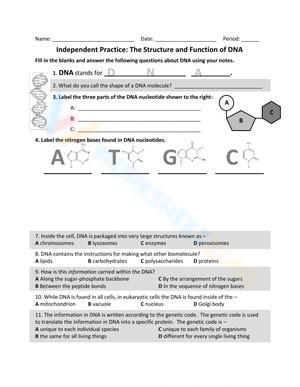
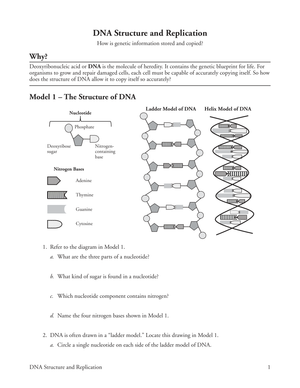
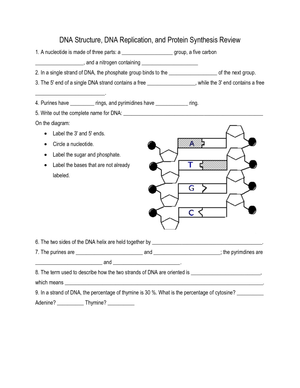
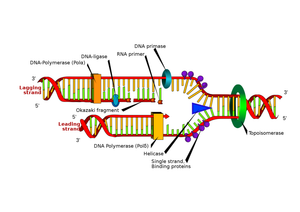
DNA structure and replication worksheets give high school biology teachers a sequenced way to move students from the double helix to the mechanics of copying that helix. Most sets open with nucleotide labeling (sugar, phosphate, nitrogen base), then base-pairing practice, then diagrams that trace helicase, DNA polymerase, and the leading and lagging strands. The goal isn't memorization for its own sake. It's building the structural vocabulary students need before they can explain why replication is accurate, why it's semi-conservative, and how errors slip through. When you hand out a worksheet in this order, you're mirroring the way molecular genetics units are usually paced across grades 9-12.
Start With Base Pairing Before You Touch Replication
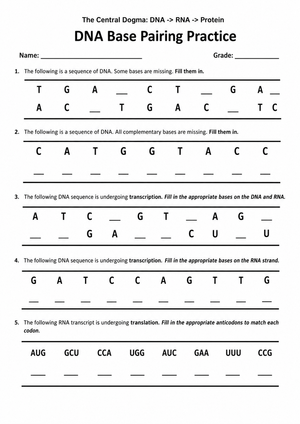
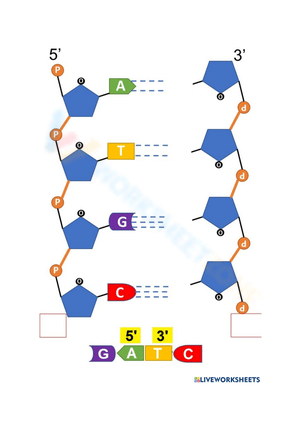
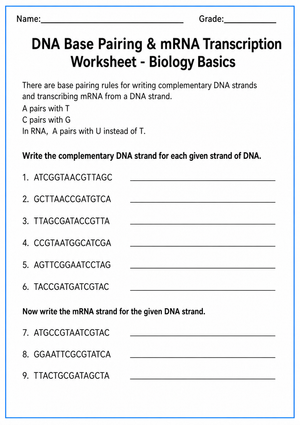
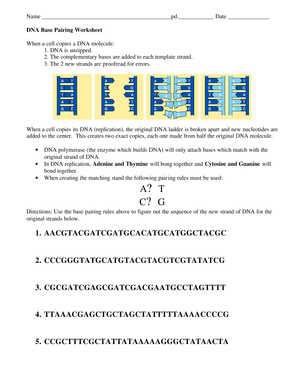
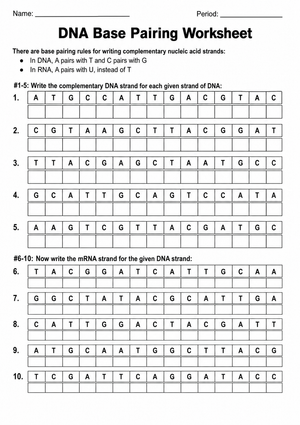
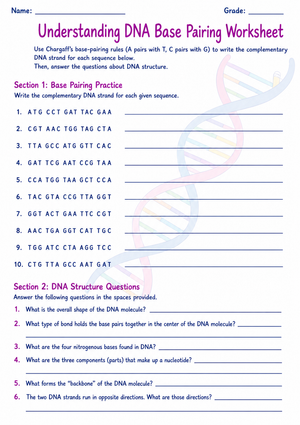
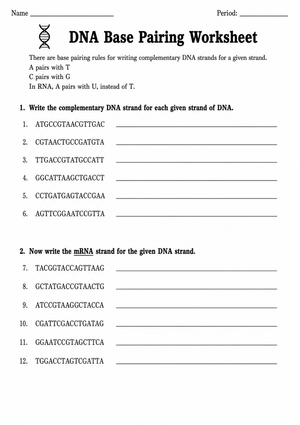
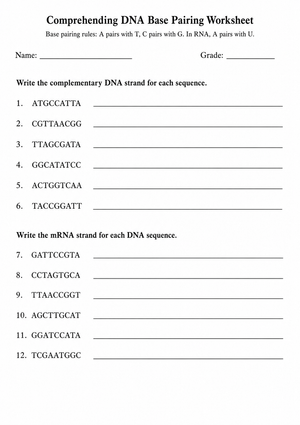
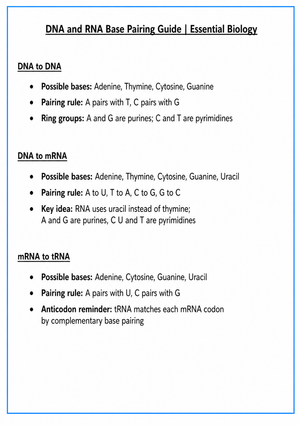
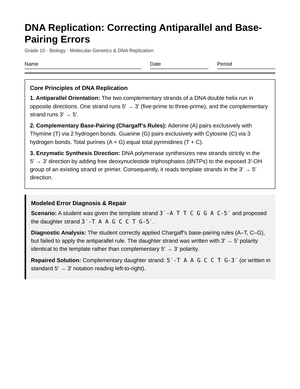
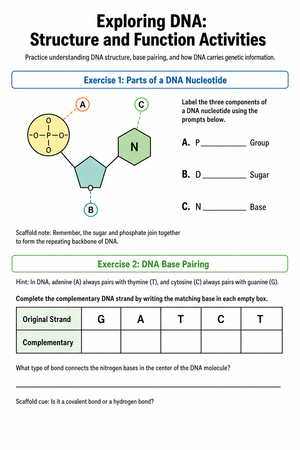
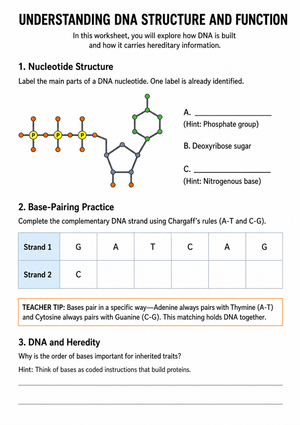
Base pairing is the skill everything else rests on. If a student can't reliably apply the A-T and C-G rules, replication diagrams turn into guesswork. Good structure worksheets ask students to complete a complementary strand, count hydrogen bonds, and explain why adenine never pairs with cytosine. These items look simple, but they surface misconceptions early, while they're still cheap to fix.
A practical sequence is to run one short base-pairing sheet as a warm-up for two or three days before the replication lesson. By the time students see a replication fork, the pairing rules are automatic, and their working memory is free to track the enzymes and strand directions instead.
Teaching Semi-Conservative Replication With Guided Diagrams
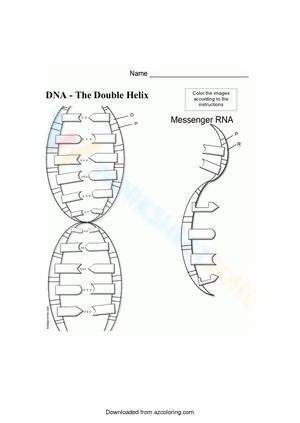
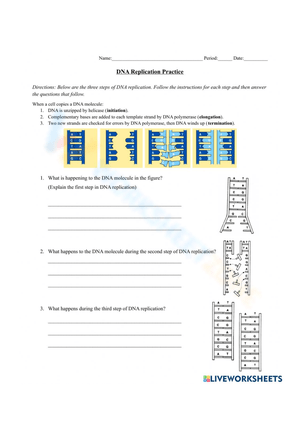
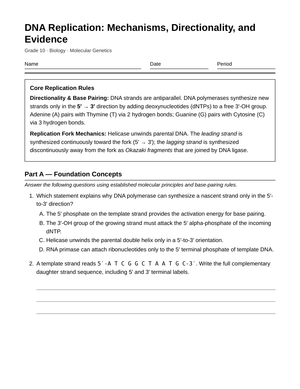
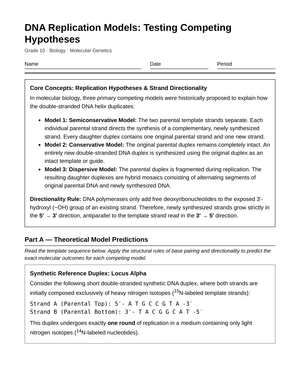
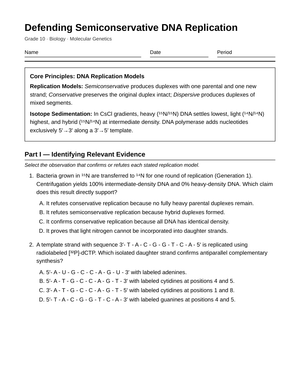
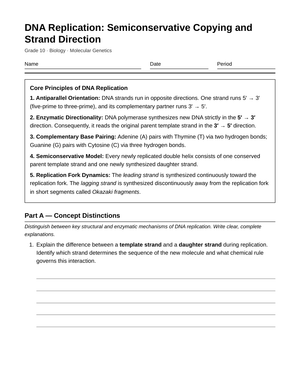
Semi-conservative replication is the concept most worksheets are ultimately building toward: each new double helix keeps one original strand and one newly synthesized strand. Guided diagram worksheets work better here than plain question sets, because students can shade the parent strands and then trace the new nucleotides added by DNA polymerase.
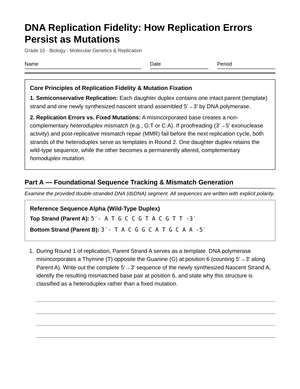
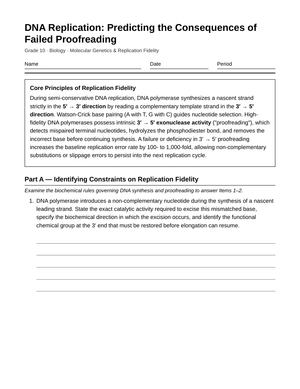
According to the Next Generation Science Standards, HS-LS3-2 asks students to explain how DNA replication errors, though rare because of proofreading enzymes, contribute to inheritable genetic variation. That single performance expectation ties a molecular copying process directly to the heredity concepts that dominate most grade 9-12 genetics units, which is why replication diagrams deserve real class time rather than a quick homework mention.
Aligning Worksheet Sequencing to NGSS
Standards alignment makes these worksheets easier to defend in a lesson plan and easier to grade against a target. Under NGSS HS-LS1-1, students explain how DNA structure determines protein structure, so your structure worksheets are doing double duty: they set up replication and they set up transcription and translation later in the unit.
Replication itself connects to NGSS HS-LS3-1 and HS-LS3-2, which link the copying of DNA to heredity and to the origin of inheritable variation. A clean sequence is structure sheets first (HS-LS1-1), then replication sheets (HS-LS3-1), then a short item set on replication errors and variation (HS-LS3-2). Labeling each worksheet with its standard also gives you a ready answer when an administrator or curriculum lead asks how the practice maps to your pacing guide.
Using These Worksheets In Real Classes
The most reliable use of these worksheets is as formative checks, not graded quizzes. Run a base-pairing sheet as a bell-ringer, collect it, and scan for the two or three students who reversed a pair. That five-minute scan tells you whether the class is ready for replication or needs another day.
For the replication lesson, project a blank fork and complete it as a class, then hand out a parallel worksheet students finish in pairs. Small-group intervention works well with a partially completed diagram, where helicase and one strand are already drawn, so struggling students focus only on the new nucleotides. Enrichment students can get a blank fork plus a prompt asking them to predict what happens if a proofreading enzyme fails. Save the fully independent worksheet for the day before the genetics unit test, when you want a true snapshot of who's ready.
Here's a pattern worth watching for: students who ace base-pairing sheets still frequently miss semi-conservative replication, and the reason is usually the diagram, not the concept. When a worksheet shows both new helices side by side, many students shade all four strands as "new" because they picture replication as building two fresh molecules from scratch. The fix is a worksheet item that forces them to color the original strands first in one color and the added nucleotides in a second color. That single two-color step exposes the misconception faster than any multiple-choice question, because it makes the retained parent strand impossible to ignore.
Frequently Asked Questions
1. What grade level typically covers DNA structure and replication worksheets?
These worksheets are built for high school biology, most often grades 9-12, where molecular genetics units introduce the double helix, base pairing, and semi-conservative replication. Advanced middle school programs sometimes preview base pairing, but the full replication mechanics fit the high school curriculum.
2. How do these worksheets align with NGSS standards for high school biology?
Structure worksheets support HS-LS1-1, which asks students to explain how DNA structure determines protein structure. Replication worksheets support HS-LS3-1 and HS-LS3-2, which connect DNA copying to heredity and to inheritable variation from replication errors.
3. What is the difference between DNA structure practice and DNA replication practice?
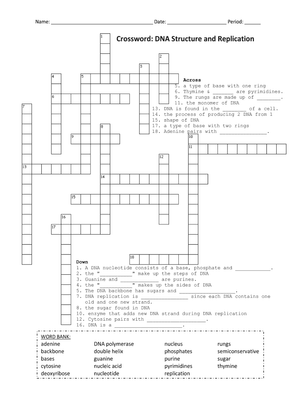
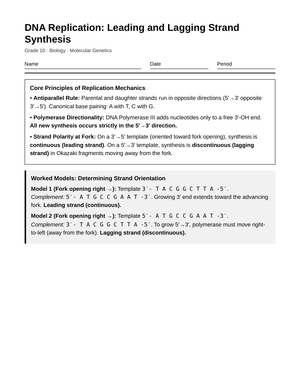
Structure practice focuses on nucleotides, the double helix, and base-pairing rules. Replication practice focuses on the process of copying DNA, including helicase, DNA polymerase, leading and lagging strands, and the semi-conservative result. Structure practice always comes first.
4. How can teachers use these worksheets for review before a genetics test?
Use a single mixed worksheet that samples structure, base pairing, and replication, have students complete it untimed, and then let them self-check and annotate their errors. The annotations become a targeted study guide for the concepts each student still needs to reinforce.
5. What background knowledge should students have before starting DNA replication worksheets?
Students should be fluent with the A-T and C-G base-pairing rules and able to build a complementary strand from a given sequence. Once that skill is automatic, they can follow replication diagrams without losing track of the enzymes and strand directions.












 Interactive Worksheet Maker
 Quiz Maker
 Word Search Maker
 Crossword Puzzle Maker
 Word Scramble Generator
 Sentence Scramble Generator
 Handwriting Worksheet Generator
 Name Tracing Generator
 Fill In The Blank Generator