Start With Monohybrid Crosses to Build the Foundation
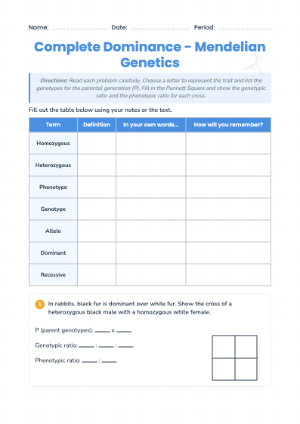
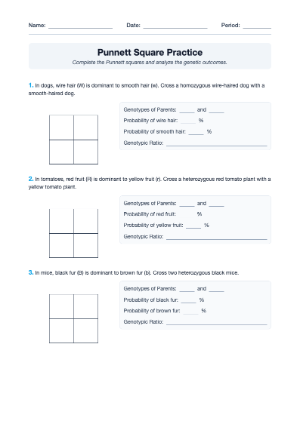
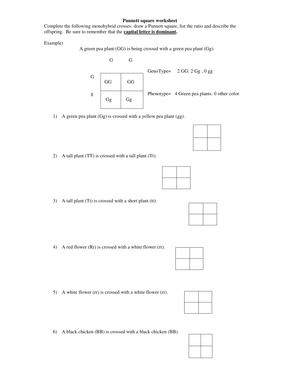
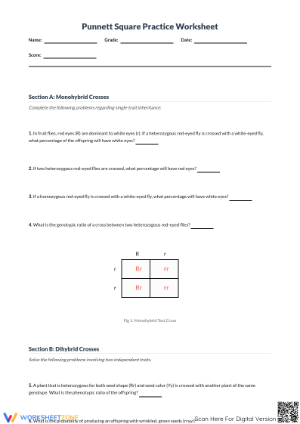
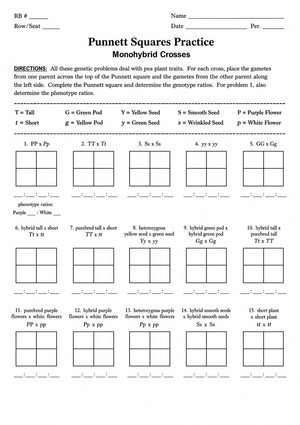
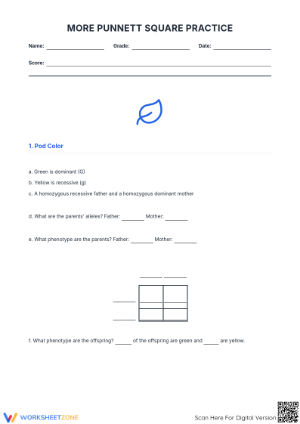
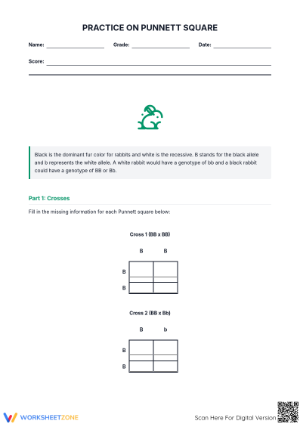
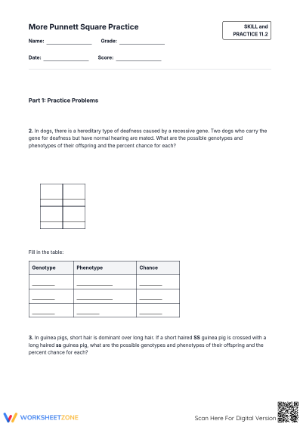
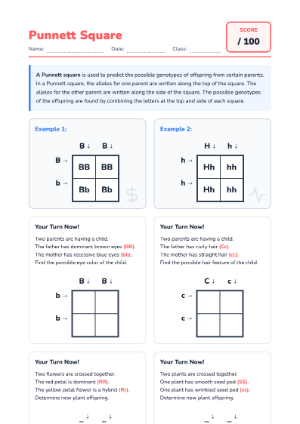
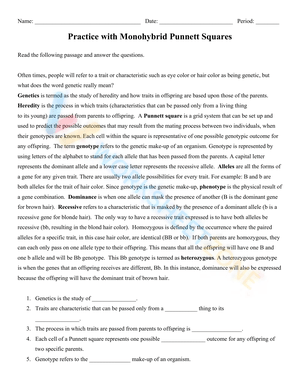
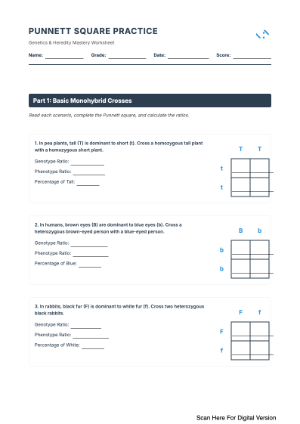
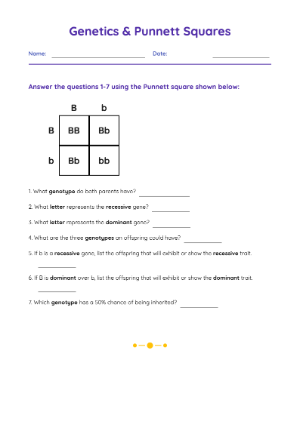
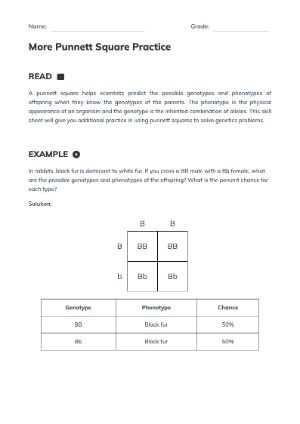
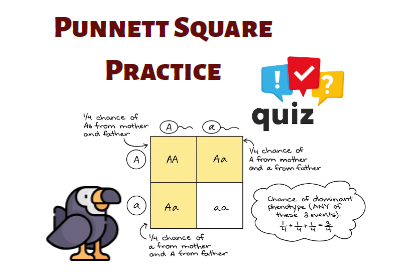
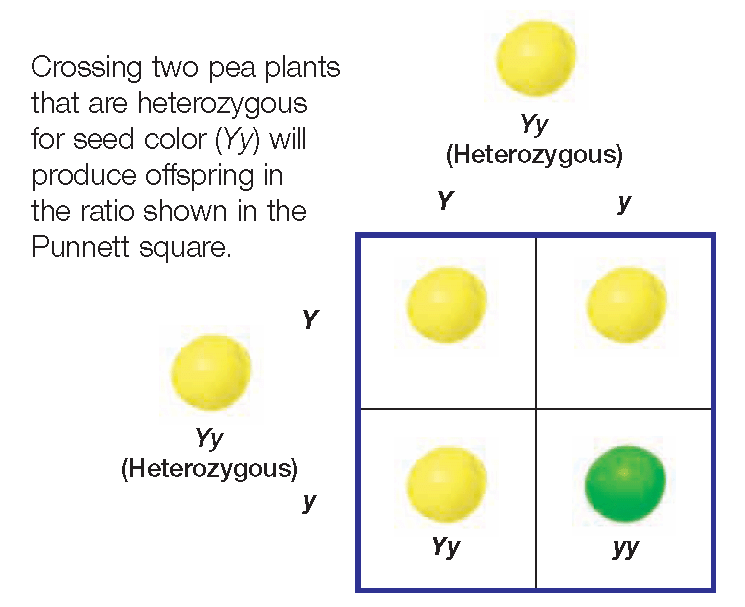
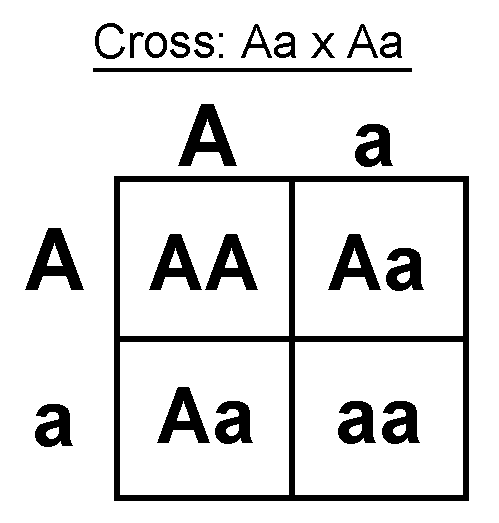
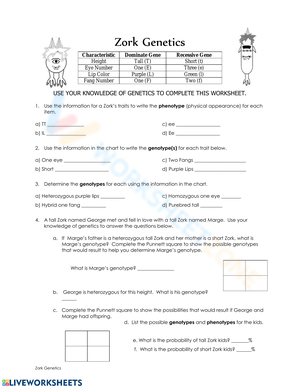
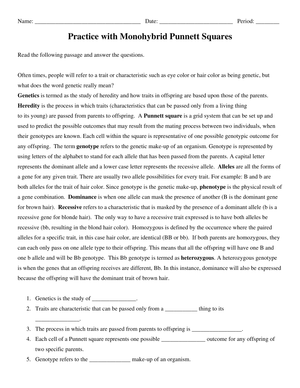
Most genetics units open with monohybrid crosses, and for good reason. A single-trait cross uses a simple 2x2 grid with four boxes, so students can focus on the mechanics: writing parent genotypes, splitting them into gametes, filling each box, and reading the genotype and phenotype ratios. Pea plant traits like tall versus short, or a classic 3:1 phenotype ratio, give students a concrete, predictable pattern to anchor on.
Monohybrid practice is the foundational skill-builder for NGSS MS-LS3-2, which asks students to use a model such as a Punnett square to explain how sexual reproduction generates genetic variation. Give students several monohybrid problems in a row so the 2x2 setup becomes muscle memory. Only once they can predict a 3:1 ratio without hesitation are they ready to add a second trait.
It helps to keep the notation consistent across every problem early on. Pick one convention, such as a capital letter for the dominant allele and the same lowercase letter for the recessive one, and stick with it until students are fluent. Switching letters too early adds a layer of confusion that has nothing to do with the genetics itself.
Progressing to Dihybrid Crosses and Probability
Dihybrid crosses raise the ceiling. Tracking two traits at once means a 4x4 grid with sixteen boxes, more gamete combinations, and the well-known 9:3:3:1 phenotype ratio. This is where many students stall, so worksheets that isolate the dihybrid setup, walk through gamete pairing, and then ask for ratio calculations pay off.
Here is the pattern worth naming for your students: a dihybrid cross is really two monohybrid crosses running in parallel, and the 9:3:3:1 ratio is just the 3:1 ratio multiplied by itself. Students who see that connection stop memorizing sixteen boxes and start reasoning with probability. That shift is exactly what NGSS HS-LS3-3 targets when it asks students to apply statistics and probability to explain the distribution of expressed traits in a population.
Dihybrid practice is also direct preparation for the probability demands students meet later. When a worksheet asks what fraction of offspring will show both dominant traits, students are doing exactly the statistical reasoning that genetics assessments reward. Build in a few problems that ask for fractions and percentages, not just box counts, so the math becomes routine.
Classroom Implementation
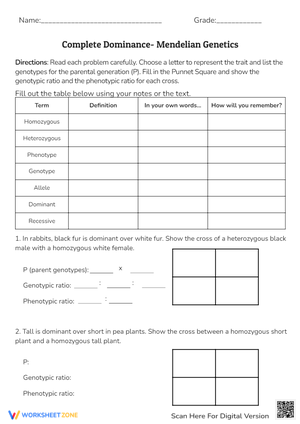
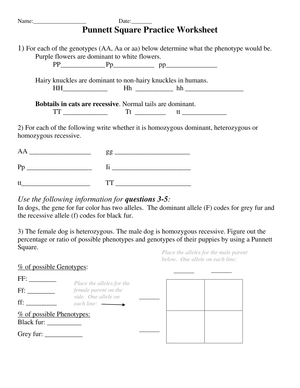
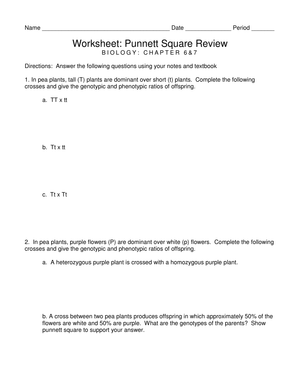
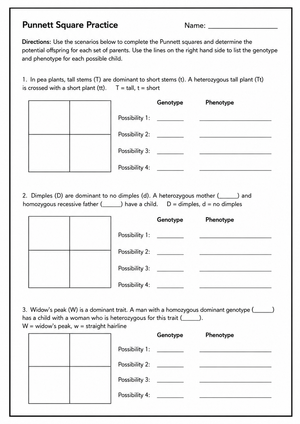
Sequence your worksheets from guided to independent. Start with a partially completed square you finish together on the board, then hand out a worksheet where students only fill the grid and read ratios, and finally give a version where they set up the entire cross from a word problem. This gradual release keeps mixed-ability classes moving without leaving strugglers behind.
For pacing, a single monohybrid worksheet works well as a warm-up, while a dihybrid set makes a strong main activity. Reserve a mixed worksheet for the day before your unit test.
According to the Next Generation Science Standards, MS-LS3-2 asks students to develop and use a model, such as a Punnett square, to explain why sexual reproduction produces genetically variable offspring while asexual reproduction does not. A standard monohybrid cross uses a 2x2 grid, giving four possible genotype outcomes for a single trait.
Common Student Mistakes Worksheets Should Target
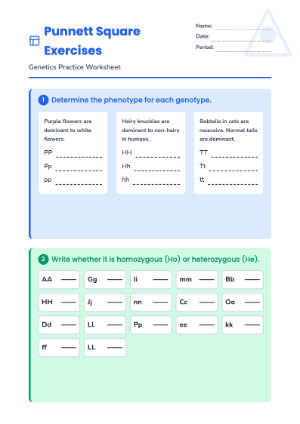
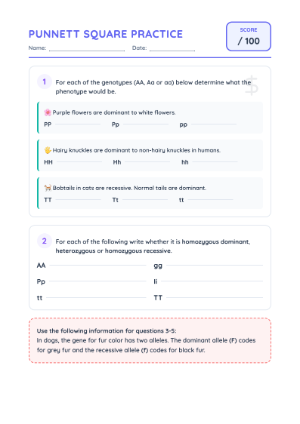
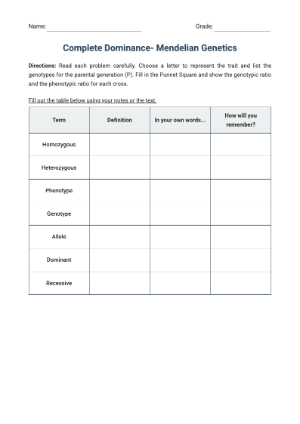
Good practice sets are built around predictable errors. Students routinely mix up genotype and phenotype ratios, forget that a heterozygous parent produces two different gametes, or copy alleles into the wrong boxes. Others confuse dominant and recessive notation, writing a lowercase letter where a capital belongs.
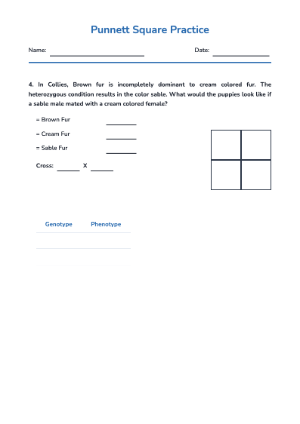
Choose worksheets that force students to label both the genotype ratio and the phenotype ratio separately, that vary which parent is homozygous, and that occasionally use incomplete dominance so students cannot rely on a single memorized pattern. When a worksheet exposes a misconception, treat it as a teaching opportunity rather than a grading penalty.
It also helps to have students explain one wrong answer in a sentence. Asking why a 2:2 genotype ratio is not the same as a 3:1 phenotype ratio forces the reasoning that a purely mechanical worksheet can miss. A short written explanation turns a checked box into evidence of understanding.
Connecting Genotype Ratios to Real Traits
Ratios feel abstract until they map onto something students can picture. Tie practice problems to observable traits: pea plant height, blood type, eye color, or the ability to roll a tongue. When a 3:1 ratio predicts how many pea plants will be tall, the numbers stop being arbitrary and start describing a population students can imagine.
This real-world framing also connects to NGSS HS-LS3-1, which asks students to clarify how DNA and chromosomes carry the instructions for traits passed from parents to offspring. A Punnett square is the bridge between that molecular idea and the visible outcomes students can count.
You can extend this to a quick classroom survey. Have students count how many classmates can roll their tongue or have attached earlobes, then compare the observed numbers to what a Punnett square would predict. The gap between prediction and reality opens a useful conversation about sample size and probability.
Frequently Asked Questions
1. How do Punnett square practice worksheets align with NGSS standards?
Monohybrid worksheets support MS-LS3-2, which asks students to use a model like a Punnett square to explain genetic variation from sexual reproduction. Dihybrid and ratio-heavy worksheets support HS-LS3-3, which asks students to apply statistics and probability to the distribution of traits.
2. What is the difference between monohybrid and dihybrid practice?
A monohybrid cross tracks one trait on a 2x2 grid and produces a 3:1 phenotype ratio. A dihybrid cross tracks two traits on a 4x4 grid and produces a 9:3:3:1 ratio. Middle school usually starts with monohybrid; high school biology moves into dihybrid.
3. How can teachers use these worksheets for formative assessment or intervention?
Use a short worksheet as a mid-unit check to spot who reverses genotypes or miscounts ratios, then group those students for a targeted reteach. Because the problems grade quickly, you can act on the results before the summative test.
4. What mistakes should practice worksheets address?
Target the common errors: confusing genotype and phenotype ratios, forgetting that a heterozygous parent makes two gamete types, and misplacing alleles in the grid. Worksheets that ask for both ratios separately and vary parent genotypes catch these misconceptions early.