These human body systems printable worksheets give science teachers a concrete entry point into anatomy units — a subject where students can name individual organs but reliably struggle to explain what those organs do within a larger physiological network. Each worksheet targets one system or one cross-system relationship, keeping the content focused enough that students build solid understanding before the next concept arrives.
The Specific Skills Targeted
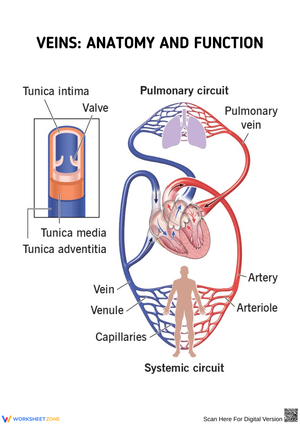
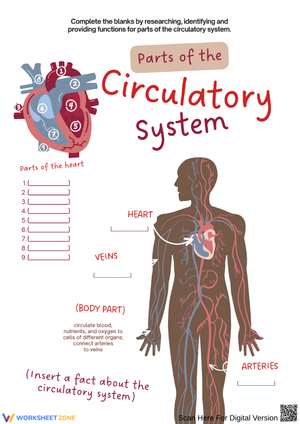
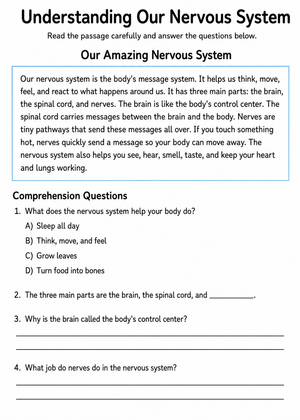
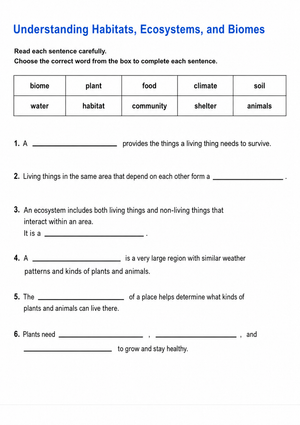
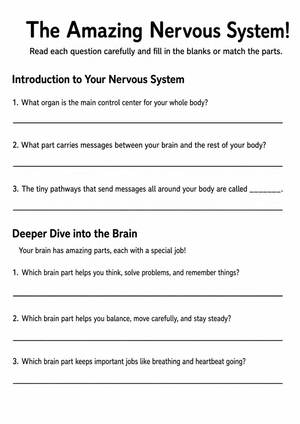
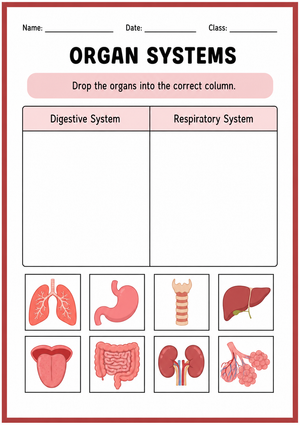
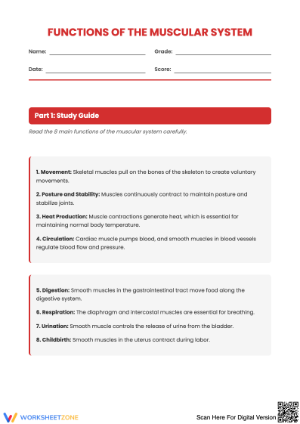
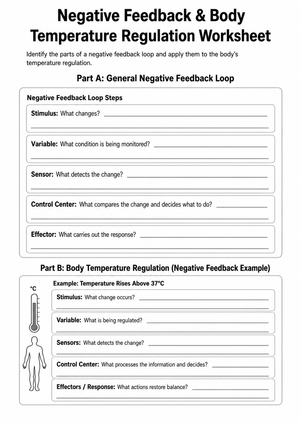
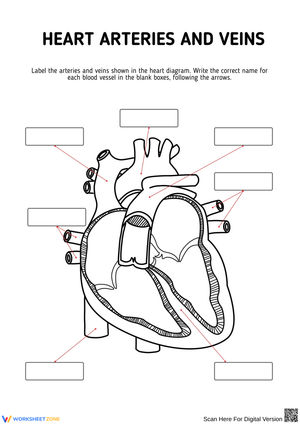
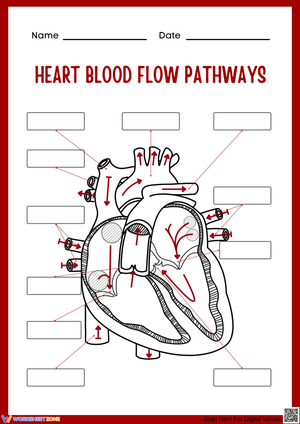
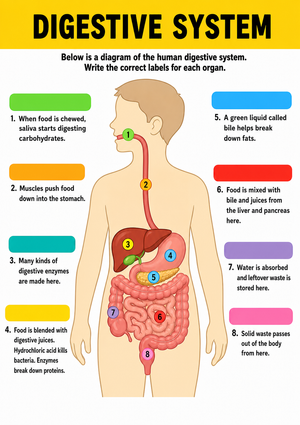
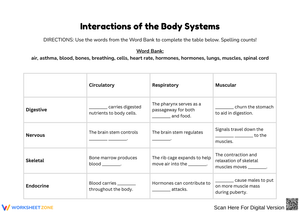
The set covers seven major systems — circulatory, respiratory, digestive, skeletal, muscular, nervous, and integumentary — through varied exercise formats. Students label blank anatomical diagrams, complete function-matching tables, mark the pathway of substances (oxygen, nutrients, nerve signals) across body regions, and write short constructed-response answers connecting two systems. The circulatory system worksheet, for example, moves students from organ labeling to tracing oxygenated and deoxygenated blood through the heart's four chambers — a progression that turns vocabulary recall into a working understanding of how circulation actually functions.
Misconceptions Students Bring to Anatomy Units
The most persistent error we see across middle school anatomy units is students treating organ systems as sealed boxes with no connection to each other. A student who correctly labels the lungs will still write, when asked to trace oxygen's path after inhalation, that it "goes into the blood and then to the stomach." They understand respiration as a standalone event but have not yet grasped that the circulatory system is the delivery mechanism. These worksheets address that gap directly by pairing system-specific labeling with cross-system trace questions on the same worksheet — the connection between systems cannot be ignored when the exercise requires students to follow a substance across both.
A second reliable error involves organ placement on body diagrams. Sixth graders routinely draw the kidneys high in the thoracic region, roughly at the level of the heart, when anatomically they sit in the lumbar region flanking the spine. A blank body outline forces students to commit to a position, and that commitment surfaces the misplacement in class — corrected on the spot, not discovered for the first time on a unit exam.
Why Diagramming Works for This Subject
Anatomy is one of the few K-12 science topics where spatial knowledge is the content. Knowing that the pancreas sits posterior to the stomach is not background trivia — it is part of understanding how the digestive and endocrine systems share anatomy. When students write organ names directly onto a printed diagram, they encode location and label together, a dual-coding effect that reading a textbook description alone cannot produce. Completing a blank diagram also functions as retrieval practice: students are recalling, not copying, and that distinction matters for long-term retention in a way that passive review does not.
A human body systems printable worksheets that dedicates each exercise to a single system manages cognitive load in a way that full-body diagrams cannot. Showing students all 11 systems simultaneously produces the predictable result — they copy labels without processing relationships. Isolating the respiratory system on one worksheet lets students build a clear mental model before a later worksheet asks them to trace how that system connects to circulation.
How to Build These Worksheets Into Your Lesson Plans
The most effective sequence is direct instruction followed immediately by guided completion. Introduce the system with a brief lecture or projected diagram, then distribute the corresponding worksheet and work through the first section together before releasing students to finish independently. That transition from guided to independent practice takes roughly eight minutes, which makes these worksheets well-suited to the middle of a 45-minute class period — after the opening hook, before the closing discussion.
A color-coding protocol extends the worksheets' usefulness when you reach cross-system units. Assign consistent colors across the set — red and blue for circulatory, yellow for nervous, green for digestive — and have students layer systems onto a single body-outline worksheet. The visual separation keeps the diagram legible and makes intersection points discussable: the place where the digestive and circulatory systems meet at the small intestine's capillary network becomes visible rather than implied. The completed, color-coded diagrams also function as effective interactive notebook inserts, giving students a personalized anatomical reference to return to throughout the year.
Adjusting the Worksheets for a Range of Learners
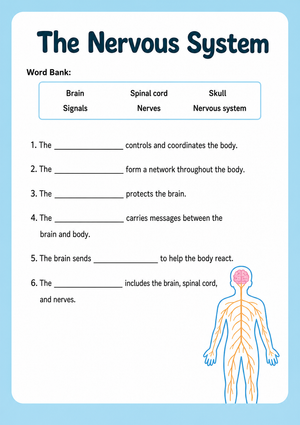
For students who need additional support, print the labeling worksheets with a word bank intact and pre-fill two or three organ names to reduce the overwhelm of a completely blank diagram. For students ready for more challenge, remove the word bank and add a second prompt at the bottom: "Choose one organ from this system and explain what happens to the body if it stops functioning." That single question shifts the task from identification to systems thinking — which is where the actual biology lives.
Scenario-based prompts work particularly well with advanced learners in grades 6-8. After completing the skeletal and muscular system worksheets, give those students a written scenario — "A soccer player sprints 40 meters and then stops suddenly" — and ask them to identify which systems are responding, in what sequence, and why. This is the same analytical thinking that appears on state science assessments, so it serves as both enrichment and targeted test preparation.
Standard Alignment
These worksheets align most directly with NGSS MS-LS1-3, which asks students to use argument supported by evidence for how the body is a system of interacting subsystems composed of groups of cells. The cross-system trace questions on each human body systems printable worksheets address that standard directly — students construct evidence-based explanations of how subsystems communicate, not simply recite organ functions. For elementary grades, the single-system labeling worksheets align with NGSS 4-LS1-1, which focuses on the inputs, outputs, and functions of animal structures. Teachers typically introduce this content in 4th grade with basic organ identification and return to it in 6th grade with system interactions, so the set supports instruction across both grade bands without requiring entirely separate materials.
Frequently Asked Questions
Which grade levels work best with this set?
The labeling-focused worksheets work well in grades 4-5, where the curriculum centers on organ identification and basic function. The function-matching and cross-system worksheets are written for grades 6-7, where students are expected to analyze system interactions. Several middle school teachers also use the simpler labeling worksheets as review entry tasks at the start of a 6th-grade anatomy unit, particularly for students who did not cover the content in elementary school.
Can these be used as formative assessments?
Blank diagram versions work reliably as quick formative checks — distribute one at the start of class, give students five minutes, collect, and scan for patterns in the errors before planning the next lesson. Any human body systems printable worksheets that includes a pathway-tracing question doubles as a richer formative task because it requires students to demonstrate understanding of sequence, not just label recall. Avoid using word-bank versions as assessments; they measure copying more than comprehension.
How do I handle students who finish quickly?
The most useful extension is a peer-teaching protocol: finished students pair with a classmate and explain the system using only their completed diagram as a reference. This verbal reconstruction surfaces gaps that a correctly filled-in diagram can mask. Students who labeled everything accurately will sometimes stumble when asked to explain why the diagram shows what it shows — and that stumbling is diagnostic information worth having before the unit assessment.