What Strong Ecosystem Worksheets Cover
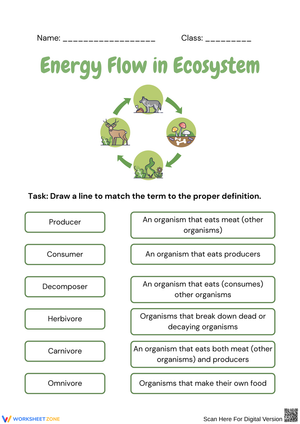
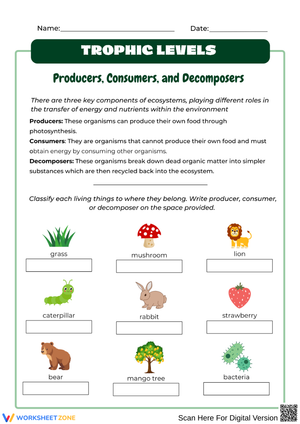
When you search for ecosystem worksheets, you're usually planning a unit that has to move students from naming organisms to modeling how matter and energy move through a system. The best worksheets build that progression on purpose. They start with vocabulary like producer, consumer, decomposer, habitat, and biome, then push students toward diagrams they can label, food webs they can trace, and data they can interpret.
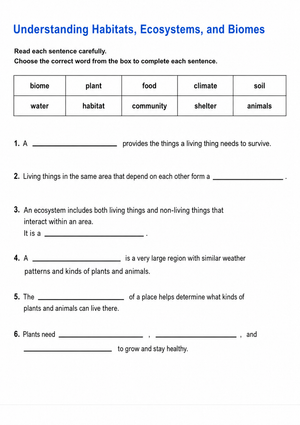
For US science classrooms, a worksheet set works best when it covers four connected ideas: biotic and abiotic factors, feeding relationships, energy flow, and matter cycling. A single page rarely does all four well, so plan to pull several pages that each target one skill. That way you can differentiate by handing a labeling page to students who need support and a data-analysis page to students ready for a challenge.
Matching Worksheets to NGSS Grade-Level Standards
Ecosystem content sits inside a clear NGSS progression, and knowing where your grade falls keeps your worksheets from being too shallow or too advanced. Elementary instruction centers on matter movement and resource availability, while middle school shifts toward energy cycling and interaction patterns across ecosystems.
According to NGSS standard 5-LS2-1, grade 5 students must develop a model that describes the movement of matter among plants, animals, decomposers, and the environment. Matter movement is the foundation for later energy work, making it the elementary ecosystem concept your worksheets should target first.
In grades 6-8, MS-LS2-1 asks students to analyze and interpret data on how resource availability affects organisms and populations, and MS-LS2-3 asks them to develop a model describing the cycling of matter and flow of energy among living and nonliving parts of an ecosystem. Worksheets for these grades should include real or realistic data sets, not just labeling tasks.
Print a copy of the relevant performance expectation and keep it beside your worksheet stack. When you can point to the exact verb the standard uses, whether it's develop, analyze, or interpret, you can spot quickly whether a worksheet actually asks students to do that work or just to recall a definition.
Food Webs, Energy Flow, and Matter Cycling
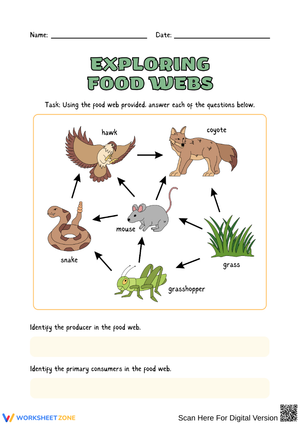
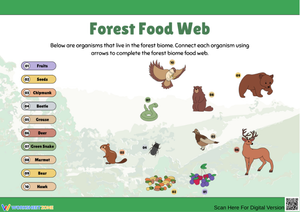
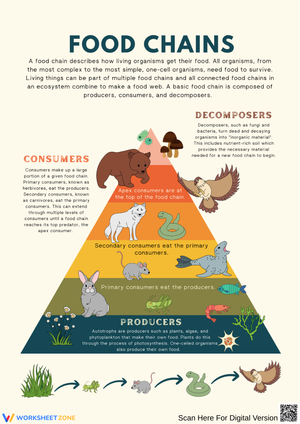
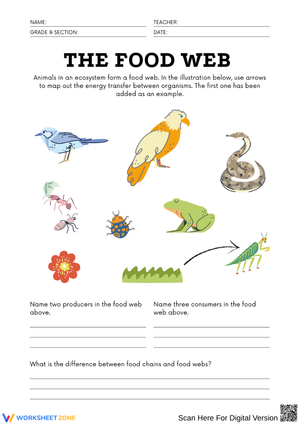
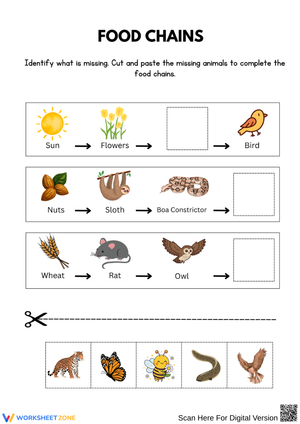
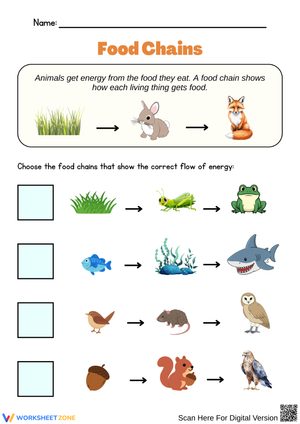
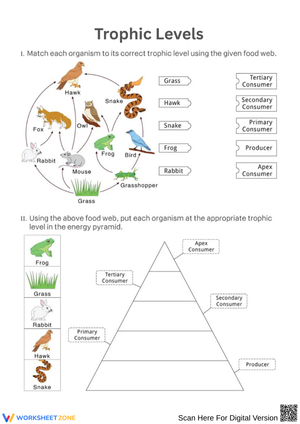
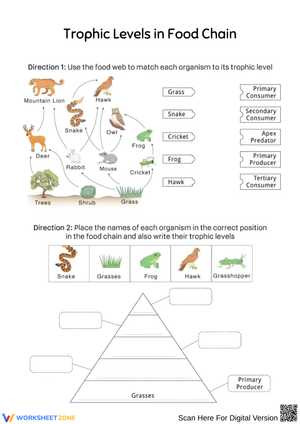
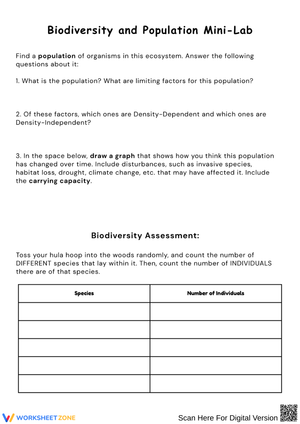
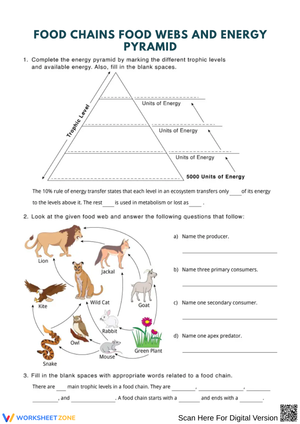
Food web worksheets are the workhorse of any ecosystem unit because they make invisible relationships visible. Start with a simple food chain page so students can practice the direction of energy transfer, then move to a full food web where one organism sits in several chains at once. Ask students to predict what happens when one population drops, which mirrors the data-reasoning MS-LS2-1 expects.
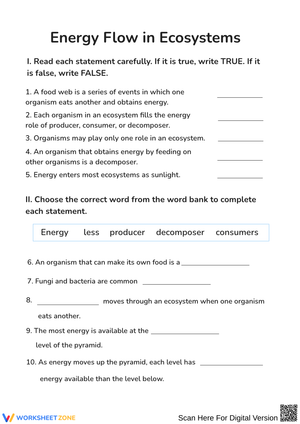
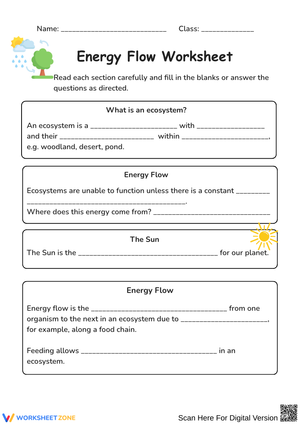
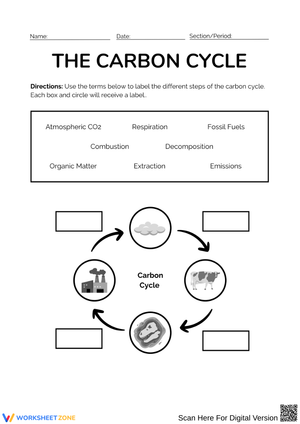
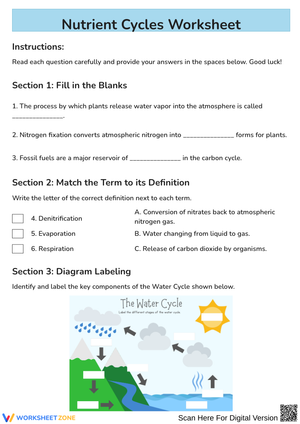
Here's a distinction that trips up even strong students: matter cycles, but energy flows one way. Elementary ecosystem instruction emphasizes that non-food matter such as air, water, and decomposed soil materials is converted by plants into matter that becomes food for the web. If your grade 5 worksheets only show arrows going up a food chain, students internalize energy flow but miss the cycle. Pair every food web page with a matter-cycling page that sends arrows back to the soil through decomposers, and the 5-LS2-1 model finally clicks.
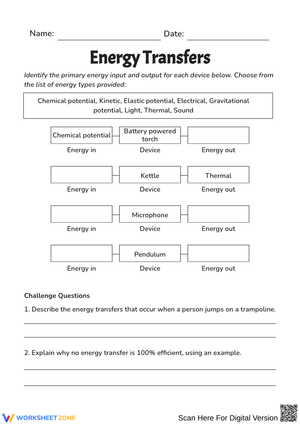
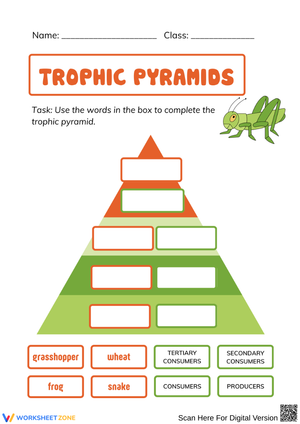
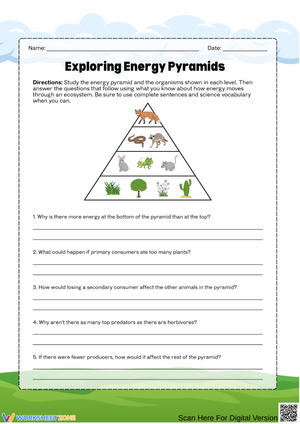
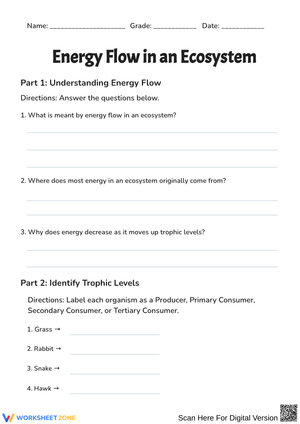
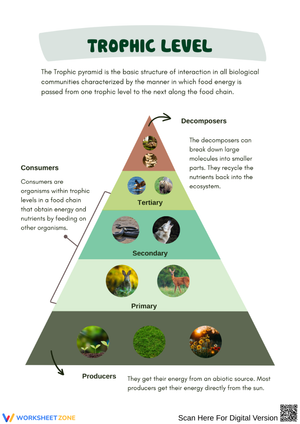
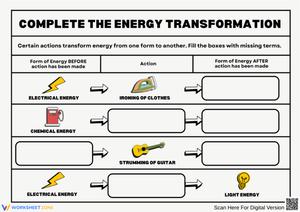
Energy pyramid worksheets add another layer for middle school. They show why each level supports fewer organisms and give students a visual for the roughly ten percent of energy passed between levels. Use them as a bridge into MS-LS2-3 modeling once students are comfortable tracing a web.
Biotic and Abiotic Factors for Mixed-Level Classrooms
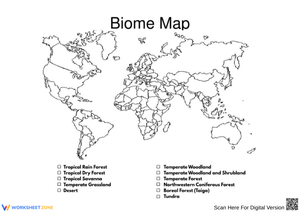
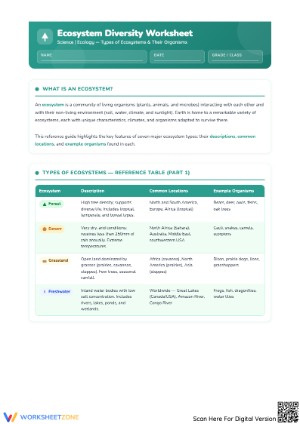
Sorting biotic and abiotic factors is one of the easiest ways to differentiate a lesson. A basic sort asks students to place sunlight, water, temperature, plants, and animals into two columns. A harder version asks them to explain how an abiotic change, like reduced rainfall, ripples through the biotic community.
Group students by readiness and hand each group the version that fits. Because the underlying vocabulary stays constant, you can run a whole-class discussion afterward without leaving anyone behind. A quick extension is to have advanced students propose a second-order effect, such as how fewer plants after a drought change the animals that depend on them, which previews the population reasoning of middle school standards.
Using These Worksheets In Science Classroom
Worksheets do their best work when they anchor something active rather than replace it. Pair a food web page with a hands-on modeling activity where students use yarn to connect organism cards, then complete the worksheet to record what they built. The physical model gives struggling readers a way in, and the worksheet holds everyone accountable for the same thinking.
Small-group stations are another reliable structure. Set up one station for vocabulary sorting, one for food web tracing, one for energy pyramids, and one for a data quick-check. Students rotate, and each page becomes a checkpoint you can collect. Science notebooks work too: have students glue a completed matter-cycling page beside their own sketch of a local ecosystem so the abstract standard connects to a place they know.
Whatever structure you choose, decide in advance which worksheet is instruction, which is practice, and which is evidence. That single decision keeps a stack of ecosystem pages from turning into busywork and keeps every page tied to a standard you're actually assessing.
Frequently Asked Questions
1. What grade levels are ecosystem worksheets appropriate for?
Ecosystem worksheets fit best in grades 3-8. Elementary pages focus on organism roles and matter movement, while middle school pages add energy cycling and data analysis. Choose the version that matches your students' grade-level standards rather than the topic alone.
2. How do ecosystem worksheets align with NGSS standards?
Grade 5 worksheets support 5-LS2-1 by having students model matter movement among plants, animals, decomposers, and the environment. Middle school worksheets support MS-LS2-1 and MS-LS2-3 through data analysis and energy-cycling models.
3. What topics should ecosystem worksheets cover?
Strong sets cover biotic and abiotic factors, producers, consumers, and decomposers, food webs, energy flow, and matter cycling. Covering all five gives students the vocabulary and models they need before any standards-aligned assessment.
4. How can teachers use ecosystem worksheets for formative assessment?
Use short quick-check pages mid-unit, such as a resource-availability data prompt, and read the responses the same day. They reveal who can connect cause and effect so you can regroup before a summative test.
5. What is the difference between elementary and middle school ecosystem worksheets?
Elementary worksheets emphasize matter movement and organism roles with labeling and sorting tasks. Middle school worksheets shift toward interpreting data and modeling how energy and matter cycle among living and nonliving parts of an ecosystem.












 Interactive Worksheet Maker
 Quiz Maker
 Word Search Maker
 Crossword Puzzle Maker
 Word Scramble Generator
 Sentence Scramble Generator
 Handwriting Worksheet Generator
 Name Tracing Generator
 Fill In The Blank Generator