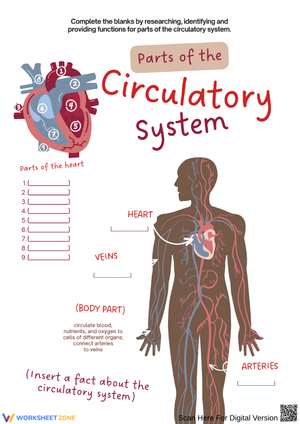
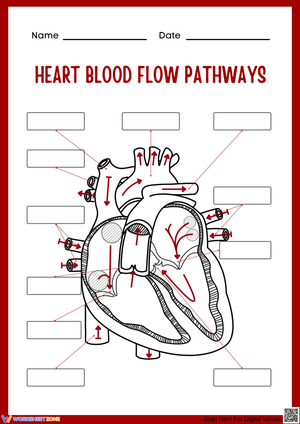
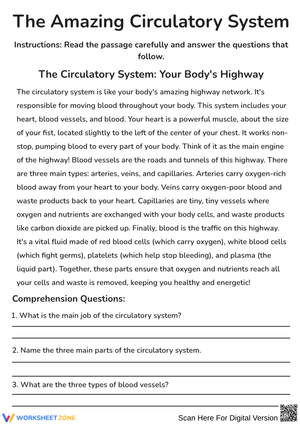
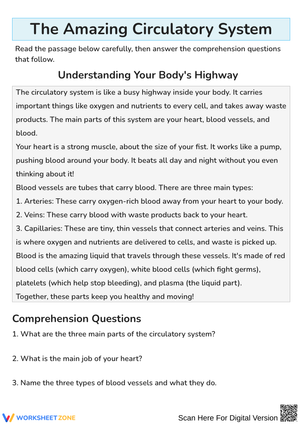
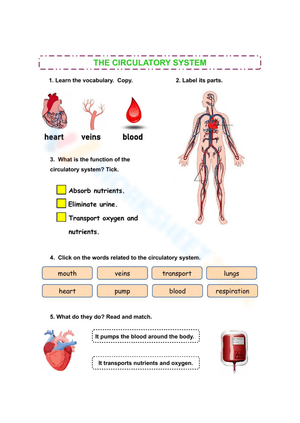
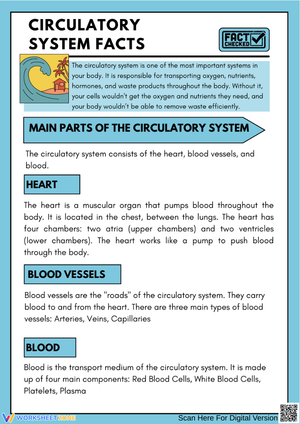
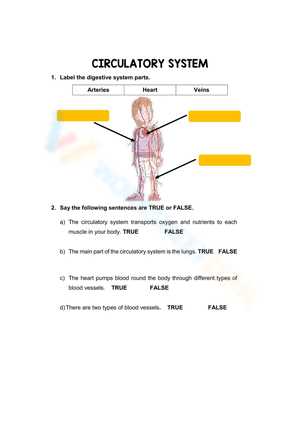
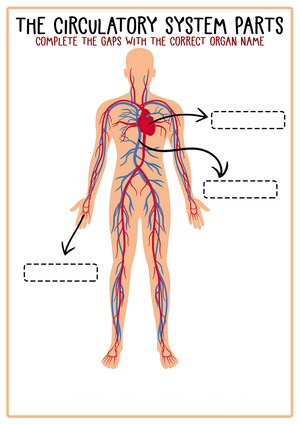
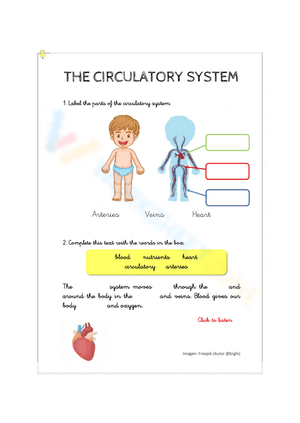
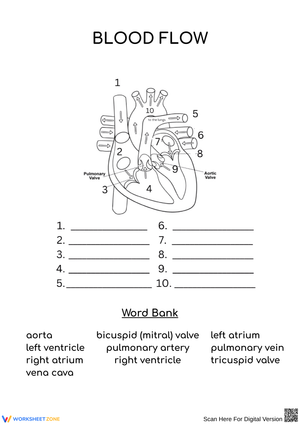
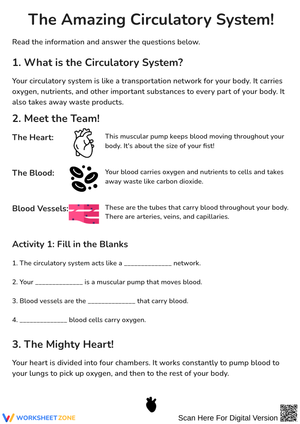
When students first learn about the heart, blood, and blood vessels, they tend to treat the circulatory system as an isolated topic to memorize rather than a working system connected to everything else the body does. Circulatory system worksheets give you a structured way to correct that from day one. A well-built worksheet does not just ask students to label a heart diagram, it pushes them to explain why blood moves the way it does and how that movement supports digestion, respiration, and muscle activity happening at the same time.
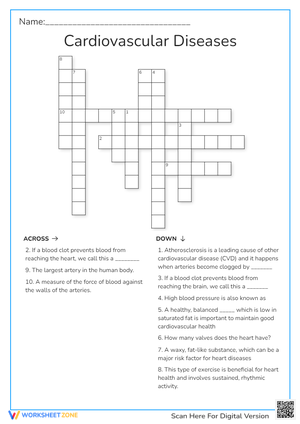
For US classrooms, this matters because current life science standards do not treat body systems as separate units to check off a list. Students are expected to reason about how systems interact, using evidence rather than recall alone. Worksheets that combine labeling, short-answer explanation, and data interpretation give you a single resource that supports that shift without requiring you to build new materials from scratch every year.
Aligning Worksheets to NGSS MS-LS1-3
Middle school standard MS-LS1-3 asks students to use argument supported by evidence for how the body is a system of interacting subsystems. This standard explicitly names the circulatory system alongside excretory, digestive, respiratory, muscular, and nervous systems, and it centers on interaction rather than isolated memorization of parts.
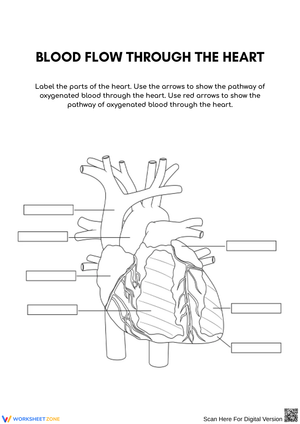
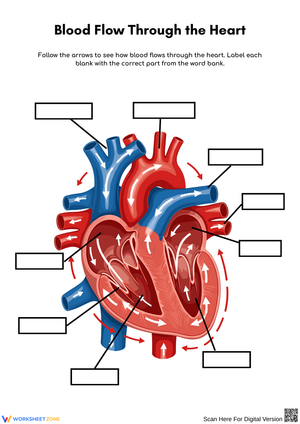
That framing should shape how you choose or build a worksheet. A labeling page that only asks students to identify the atria, ventricles, and major vessels covers vocabulary, but it does not touch the standard on its own. Add a short constructed-response prompt asking students to explain what would happen to oxygen delivery if the circulatory and respiratory systems stopped communicating, and the same worksheet now supports argumentation grounded in evidence. Middle school life science instruction built around MS-LS1-3 consistently pairs a visual task, like a diagram or flowchart, with a written justification task, because the standard requires students to demonstrate reasoning, not just recognition.
Elementary Versions Tied to 5-LS1-1
Fifth grade classrooms have their own entry point into this content through standard 5-LS1-1, which focuses on how organisms obtain the materials they need for growth. At this grade band, circulatory system worksheets should stay closer to function and vocabulary: what blood carries, where it travels, and why the heart needs to keep pumping without stopping.
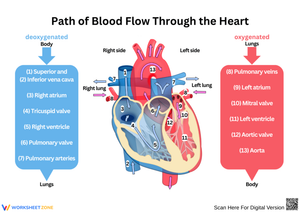
Simpler worksheets at this level still work well as long as they connect structure to purpose. A page that has students trace the path of blood through a simplified diagram and then answer one or two sentences about what the blood delivers on that path builds the foundation middle school teachers will later expand into full system-interaction reasoning.
Pairing Circulatory Worksheets With Respiratory and Digestive Units
NGSS guidance on interacting body systems recommends building activities that force students to trace connections across systems rather than teaching each one in a silo. Circulatory system worksheets are a natural bridge point because blood moves through and connects to nearly every other system covered in a typical middle school life science sequence.
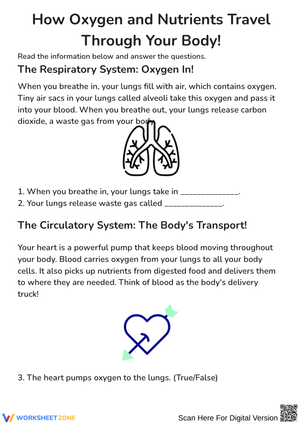
A practical sequence is to teach the respiratory system first, then introduce circulatory content with a worksheet that explicitly asks students to trace how oxygen moves from lungs to blood to muscle tissue. Follow with a digestive system worksheet that asks students to trace how nutrients move from the small intestine into the bloodstream. By the end of the sequence, students have used circulatory system worksheets as the connective thread across three separate units instead of treating each system as disconnected content.
Classroom Implementation
Circulatory system worksheets fit easily into a station rotation model. Set up one station for labeling and diagram work, one for the heart-rate and blood-volume data calculations, and one for a short evidence-based writing prompt tied to MS-LS1-3. Students rotate through all three in a single class period, which keeps the pacing brisk and gives you three different formats to assess the same content.
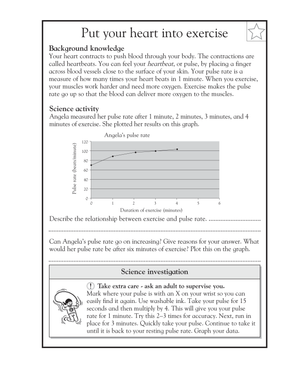
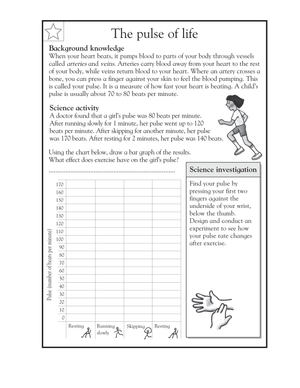
For small-group intervention, pull students who struggled with the labeling station and reteach using a simplified diagram before moving them back to the writing prompt. For enrichment, extend the data-calculation worksheet by asking advanced students to research and estimate how heart rate changes during exercise, then justify their estimate using the baseline daily figures already provided. For review before a unit test, a mixed worksheet combining a labeling section, a short data problem, and one argumentation prompt serves as a compact study guide that mirrors the range of question types students will see on an assessment.
Frequently Asked Questions
1. What grade levels are circulatory system worksheets appropriate for in a US classroom
Circulatory system worksheets work well from upper elementary through middle school. Fifth grade classrooms can use simpler labeling and function-based worksheets connected to standard 5-LS1-1, while grades 6 through 8 use more complex, evidence-based worksheets tied to MS-LS1-3.
2. How do circulatory system worksheets align with NGSS standard MS-LS1-3
MS-LS1-3 requires students to argue, using evidence, that the body functions as a system of interacting subsystems, explicitly including the circulatory system alongside excretory, digestive, respiratory, muscular, and nervous systems. Worksheets that combine diagram or labeling tasks with short written justification prompts support this standard directly, since they ask students to reason about interaction rather than simply recall vocabulary.
3. What should a circulatory system worksheet include to support interacting body systems instruction
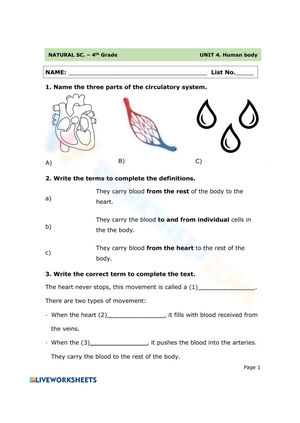
An effective worksheet combines a visual task, such as labeling heart structures or tracing blood flow, with a written or data-based task that requires students to connect circulatory function to another body system. This pairing moves the worksheet beyond vocabulary recall and into the evidence-based reasoning that current life science standards emphasize.
4. How can teachers use circulatory system worksheets for formative assessment or review
Short data-based prompts, like calculating heartbeats in a class period from the daily total of about 100,000, make quick and effective bell-ringers or exit tickets. Mixed-format worksheets that combine labeling, a data problem, and a brief argumentation question also work well as compact review tools before a unit assessment.












 Interactive Worksheet Maker
 Quiz Maker
 Word Search Maker
 Crossword Puzzle Maker
 Word Scramble Generator
 Sentence Scramble Generator
 Handwriting Worksheet Generator
 Name Tracing Generator
 Fill In The Blank Generator