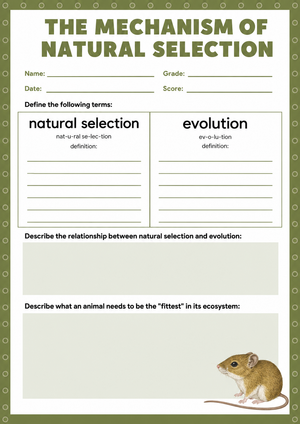
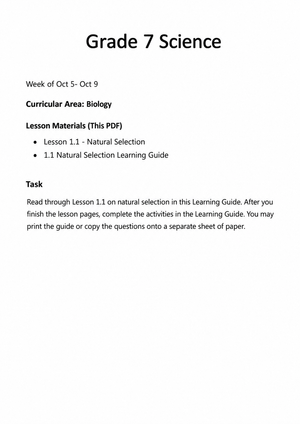
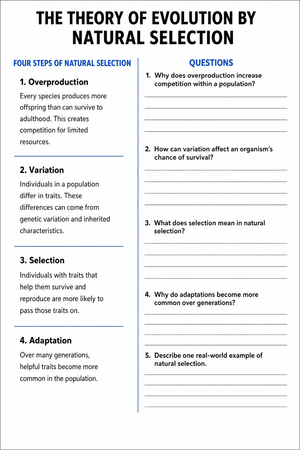
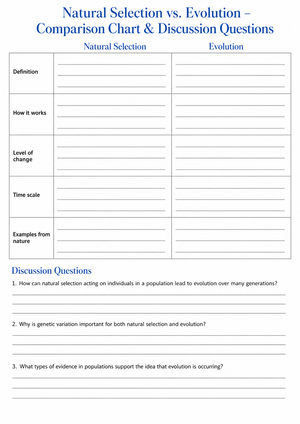
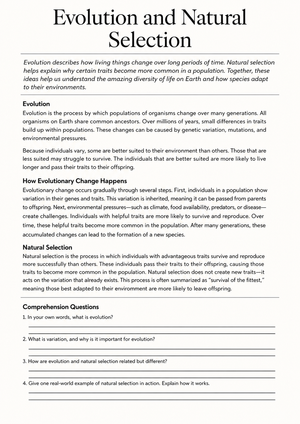
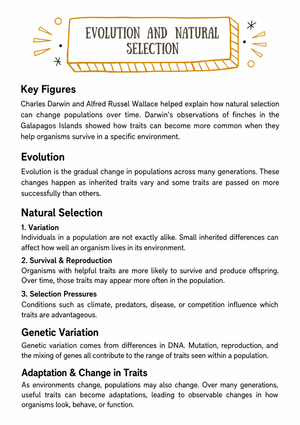
Natural selection is not a single lesson; it is a recurring, testable idea that shows up across middle school and high school life science standards. Worksheets give students repeated, low-stakes practice with the vocabulary and reasoning patterns they will need for formal assessments, lab write-ups, and unit tests.
For middle school biology or life science teachers, natural selection worksheets are especially useful because the concept is dense: students must connect genetic variation, environmental pressure, survival, and reproduction into a single causal chain. A worksheet that isolates one link in that chain at a time, before asking students to write a full explanation, reduces cognitive load and produces stronger independent writing later.
Aligning Worksheets to NGSS MS-LS4-4
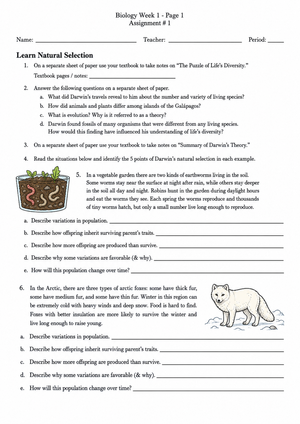
NGSS MS-LS4-4 requires students to construct an explanation, based on evidence, describing how genetic variations of traits in a population affect the probability of survival and reproduction. This is a writing-heavy standard, and worksheets are the natural bridge between reading a scenario and producing that explanation independently.
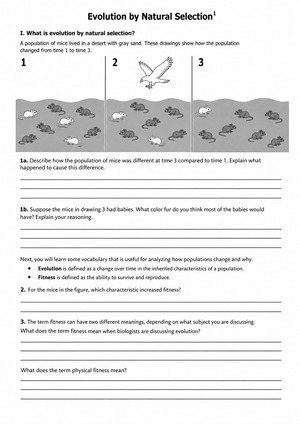
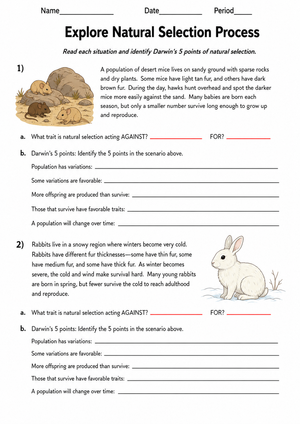
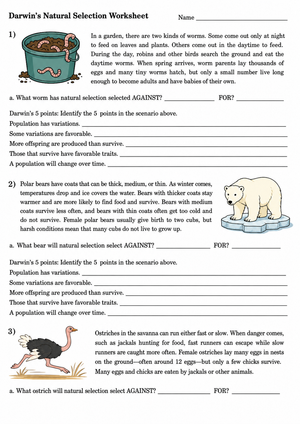
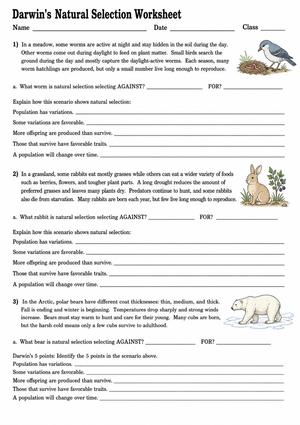
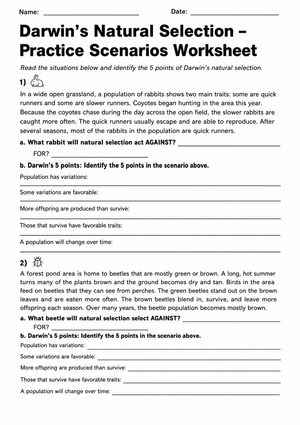
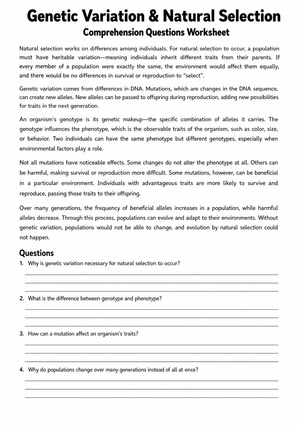
A strong MS-LS4-4 worksheet sequence does not ask for the explanation on day one. It first asks students to identify the trait, then the variation in that trait across a population, then the environmental pressure, and only then the survival or reproduction outcome. Students who practice this four-step breakdown across two or three short worksheets before attempting a full claim-evidence-reasoning paragraph tend to produce more specific, less generic explanations, because they have already rehearsed each component separately.
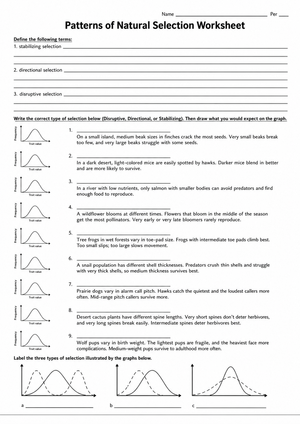
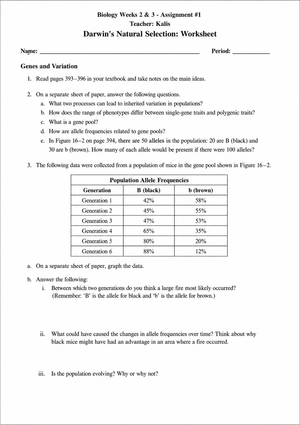
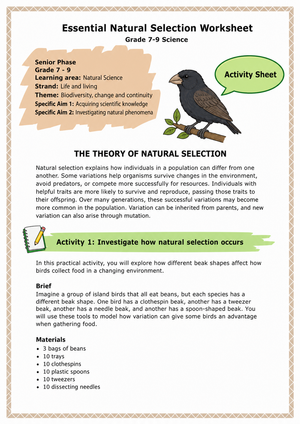
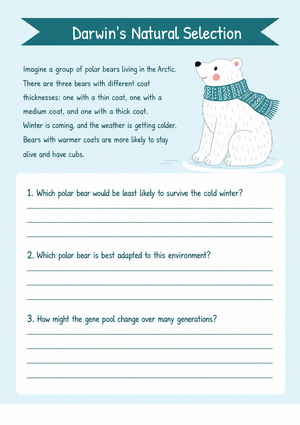
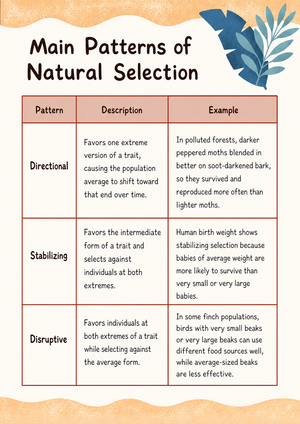
Use worksheets built around a single population and trait, such as beak size in finches or coloration in moths, so students are not relearning context while also trying to master the reasoning structure.
Building Toward MS-LS4-1: Fossil Record Pattern Analysis
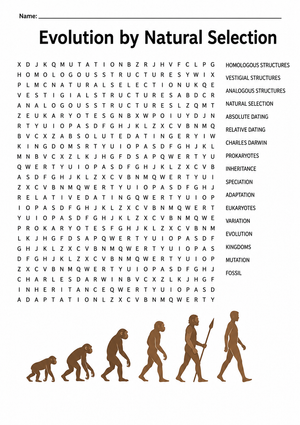
NGSS MS-LS4-1 asks students to analyze and interpret fossil record data to identify patterns of existence, diversity, extinction, and change of life forms over time. Fossil record worksheets pair well with natural selection worksheets because both require students to read data and describe a pattern, rather than simply recall a definition.
A useful classroom sequence introduces a simplified fossil layer diagram or data table first, has students describe what changed between layers, and then asks how natural selection could explain that change. This keeps the fossil evidence and the mechanism of natural selection connected instead of teaching them as two unrelated topics that happen to sit in the same unit.
Classroom Implementation
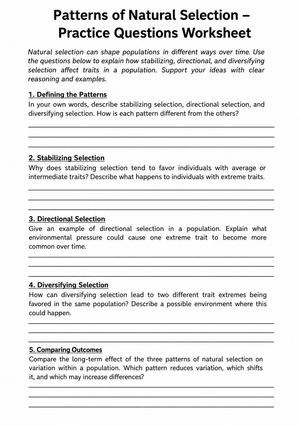
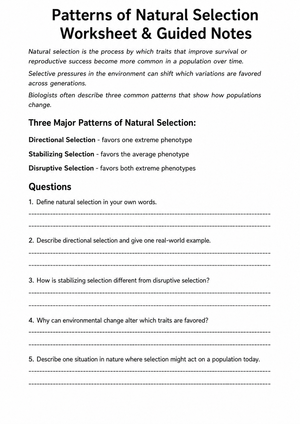
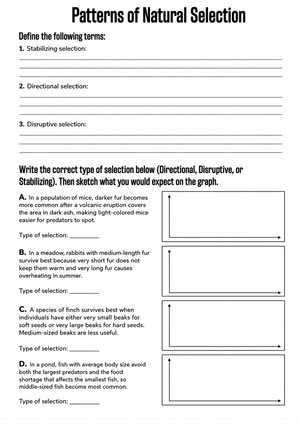
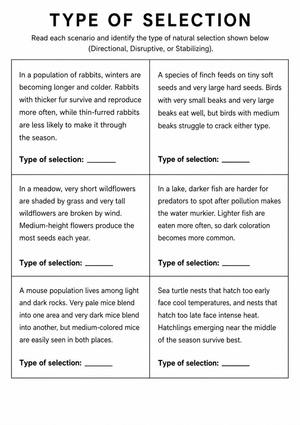
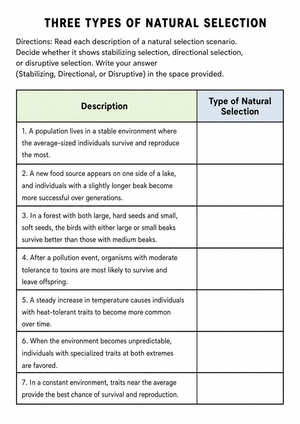
A practical sequence for a natural selection unit might look like this: start with a vocabulary worksheet, move to a scenario-based worksheet that isolates one reasoning step at a time, add a case study or simulation with a connected worksheet, then assign a fossil record data worksheet to build toward pattern analysis, and finish with a full evidence-based explanation task that mirrors the demands of MS-LS4-4.
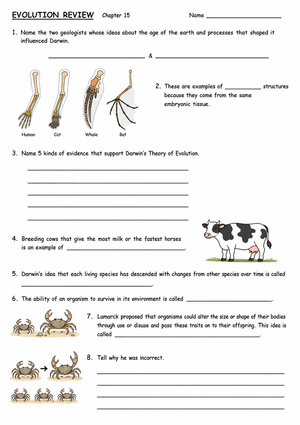
Keep an answer key or rubric handy for each worksheet so you can spot-check student reasoning quickly rather than reading every explanation in full during class. For high school sections revisiting natural selection with more advanced evidence types, add a worksheet that asks students to compare fossil evidence, comparative anatomy, and molecular evidence as converging lines of support for the same evolutionary claim, since high school standards extend the middle school foundation into these additional evidence types.
Frequently Asked Questions
1. What grade levels typically cover natural selection under NGSS?
Natural selection is a middle school disciplinary core idea within Biological Evolution: Unity and Diversity, and it is extended in high school with additional evidence types such as comparative anatomy and molecular biology.
2. How do natural selection worksheets align with NGSS MS-LS4-4 and MS-LS4-1?
MS-LS4-4 focuses on explaining how trait variation affects survival and reproduction probability, while MS-LS4-1 focuses on analyzing fossil record data for patterns of change over time. Worksheets can target each standard separately or connect them through a shared case study.
3. What classroom activities pair well with natural selection worksheets?
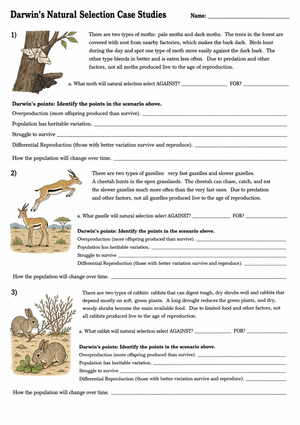
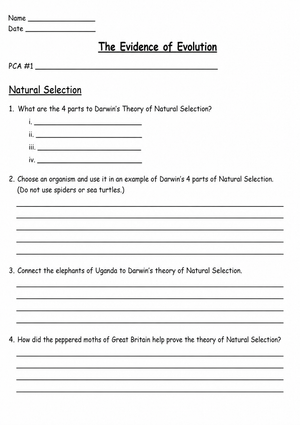
Simulations such as predator-prey bead activities and case studies like peppered moths or finch beak variation give students concrete scenarios that worksheets can reference throughout a unit.
4. How can teachers use natural selection worksheets for formative assessment?
A short worksheet combining vocabulary checks with one scenario-based explanation question, given midway through the unit, can reveal whether students are ready for a full evidence-based writing task before the summative test.












 Interactive Worksheet Maker
 Quiz Maker
 Word Search Maker
 Crossword Puzzle Maker
 Word Scramble Generator
 Sentence Scramble Generator
 Handwriting Worksheet Generator
 Name Tracing Generator
 Fill In The Blank Generator