




























Views
Downloads

Essential Dihybrid Cross Worksheet | Grades 9-12 Biology

Paste this activity's link or code into your existing LMS (Google Classroom, Canvas, Teams, Schoology, Moodle, etc.).
Students can open and work on the activity right away, with no student login required.
You'll still be able to track student progress and results from your teacher account.
This high school biology worksheet provides comprehensive practice for mastering dihybrid crosses and independent assortment. Students will move beyond simple Mendelian genetics to predict complex inheritance patterns using 4x4 Punnett squares. By calculating phenotypic ratios and analyzing real-world breeding data, learners develop a deep understanding of how multiple traits interact in offspring populations.
At a Glance
- Grade: 9-12 · Subject: Biology
- Standard:
HS-LS3-3— Apply probability to explain the variation and distribution of expressed traits- Skill Focus: Dihybrid Punnett Squares
- Format: 4 pages · 12 tasks · Answer key included · PDF
- Best For: High school genetics unit practice
- Time: 45–60 minutes
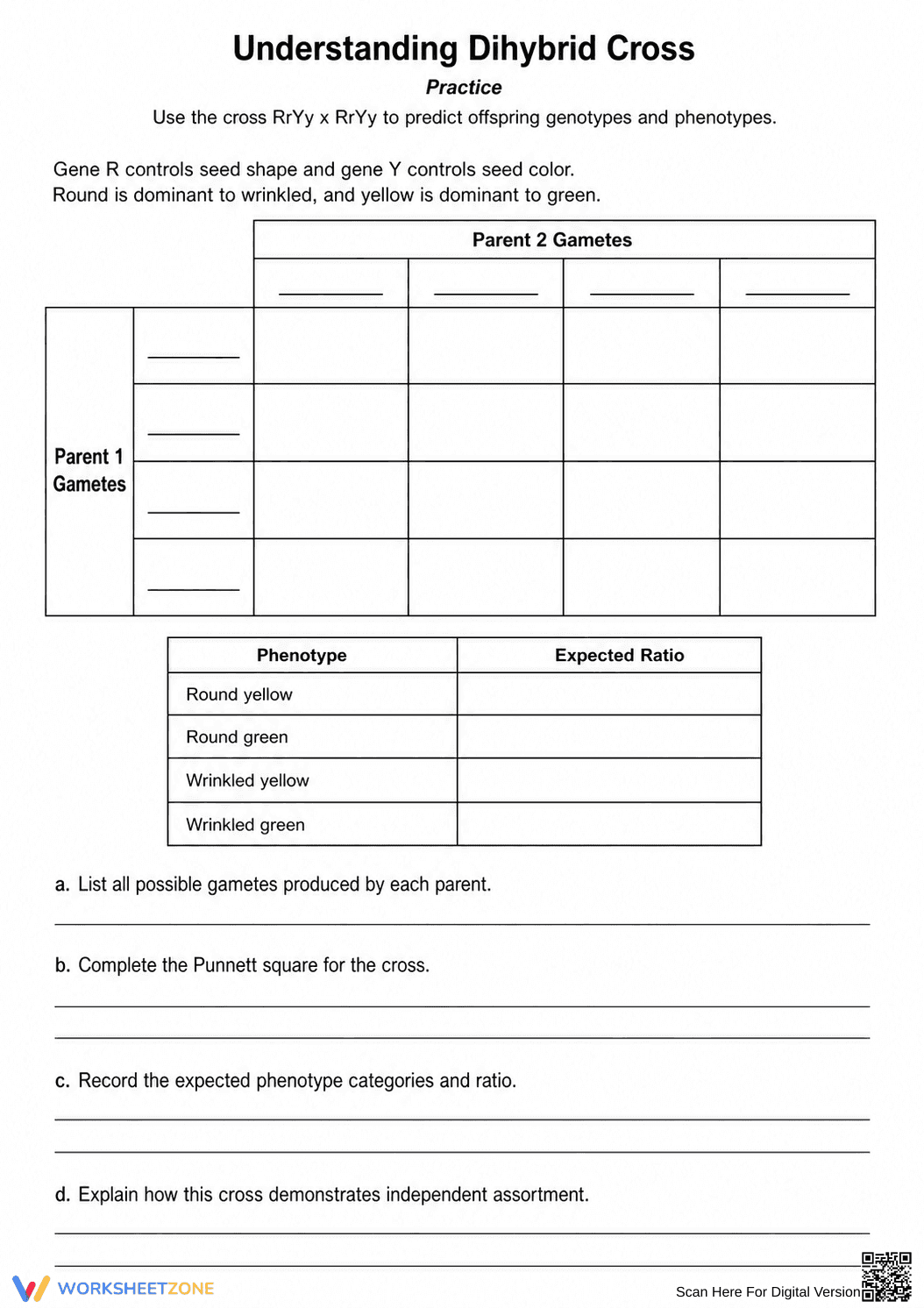
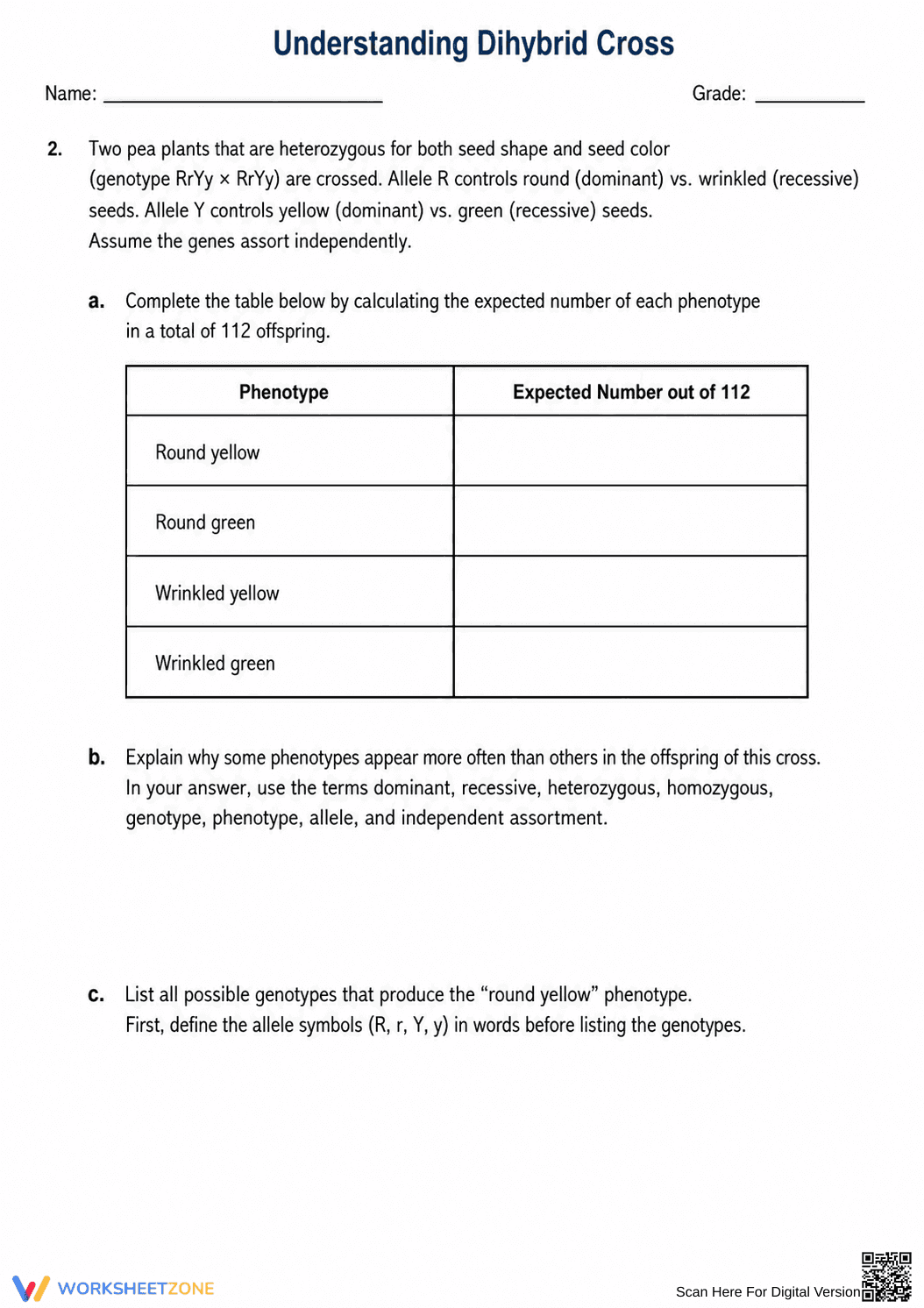
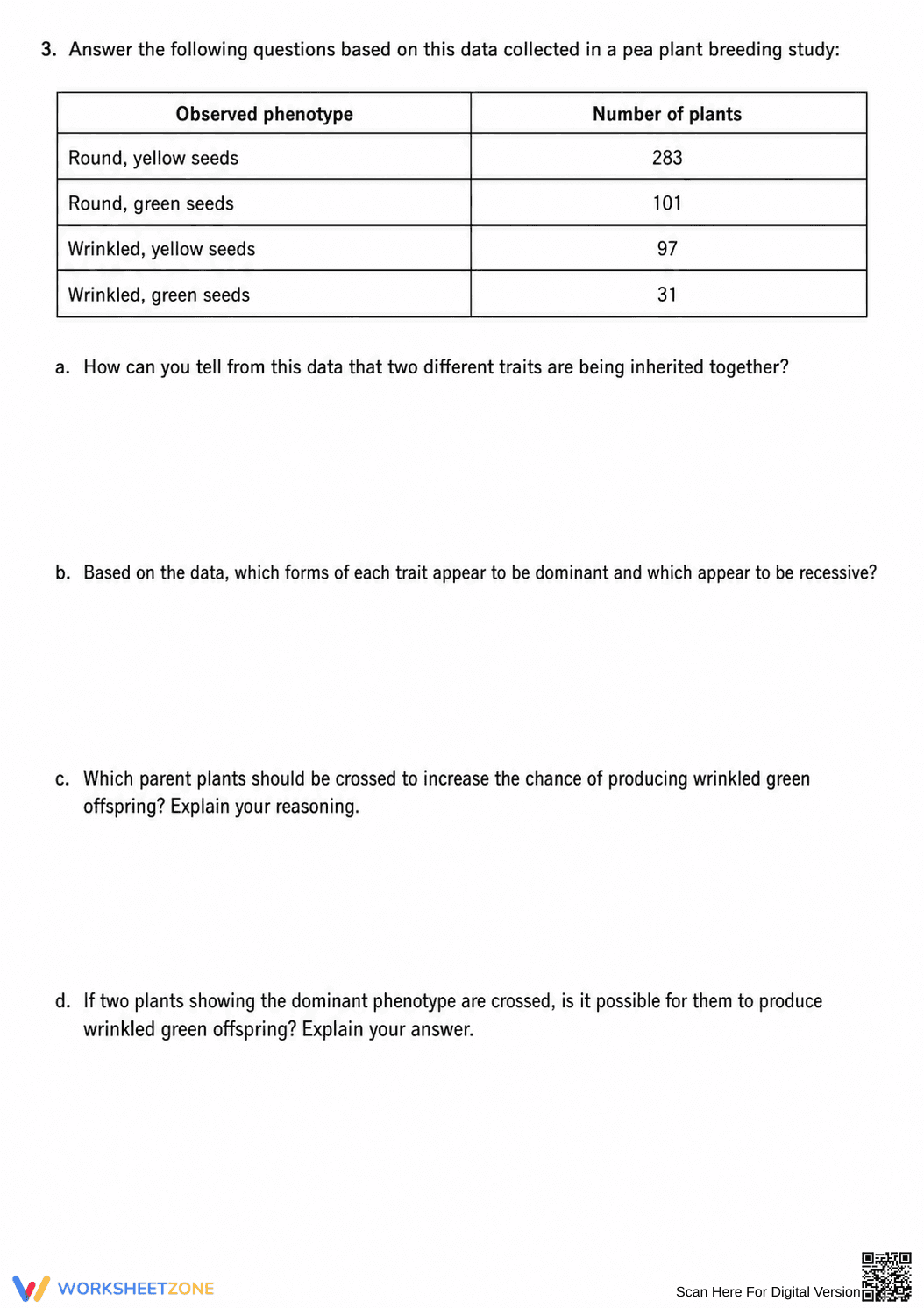
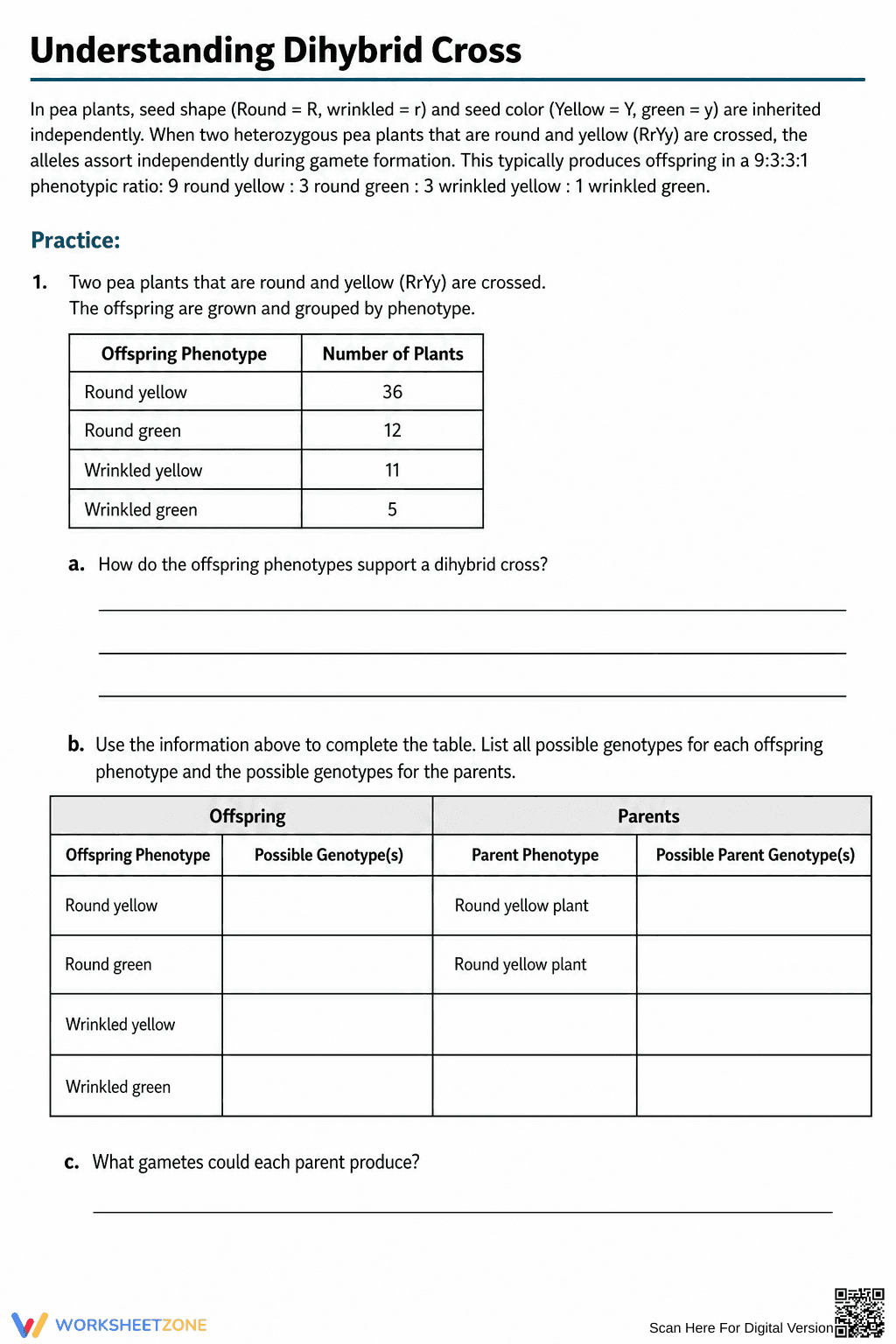
This 4-page resource features a structured progression of genetic analysis. It includes a blank 16-square Punnett grid for the classic RrYy x RrYy cross, data tables for calculating expected offspring counts out of specific population sizes (e.g., 112 individuals), and a section dedicated to interpreting observed phenotype data from pea plant studies. The layout provides ample space for students to list gametes and define allele symbols clearly.
- Guided practice: Students begin by identifying parent gametes and setting up the 4x4 grid with provided allele keys for seed shape and color.
- Supported practice: Learners calculate the 9:3:3:1 phenotypic ratio and apply it to larger population samples to predict specific numbers of offspring.
- Independent practice: The final pages require students to work backward from observed data to determine parental genotypes and explain the law of independent assortment.
This gradual-release approach ensures students build confidence before tackling complex data interpretation and statistical analysis.
This worksheet is aligned with HS-LS3-3: "Apply concepts of statistics and probability to explain the variation and distribution of expressed traits in a population." It also supports HS-LS3-2 by illustrating how variation results from new genetic combinations through meiosis. Both standard codes can be copied directly into lesson plans, IEP goals, or district curriculum mapping tools.
Use this worksheet as a primary practice activity following a direct instruction lesson on Mendelian inheritance. It works effectively as a formative assessment mid-unit; observe students during the gamete-listing phase to ensure they understand the law of segregation before they fill the Punnett square. Expect completion in 45 to 60 minutes depending on prior knowledge and mathematical fluency.
This resource is designed for Grade 9-12 biology students, including those in Honors or AP Biology tracks who need to reinforce the mathematical foundations of heredity. It pairs naturally with a laboratory investigation involving fast-growing plants or a digital simulation of dihybrid inheritance patterns to provide a multi-modal learning experience.
According to the RAND AIRS 2024 report on secondary science education, structured practice with Punnett squares is essential for translating abstract probability into concrete biological models. This worksheet targets the HS-LS3-3 standard by requiring students to use mathematical ratios to explain trait distribution. Research by Fisher & Frey (2014) emphasizes that the gradual release of responsibility—moving from scaffolded grid completion to independent data analysis—is the most effective way to build mastery in complex scientific procedures. By engaging with 12 distinct tasks across 4 pages, students move from rote calculation to higher-order reasoning about independent assortment. This alignment ensures that learners are not just memorizing the 9:3:3:1 ratio but are understanding the statistical mechanics behind it, a key requirement for success in college-level genetics and standardized science assessments.


