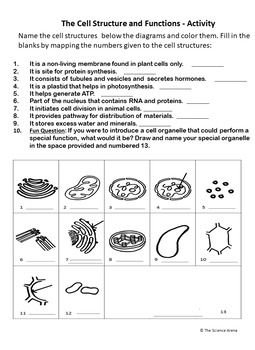
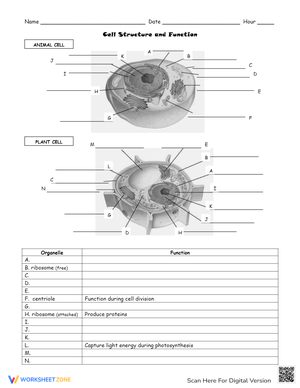
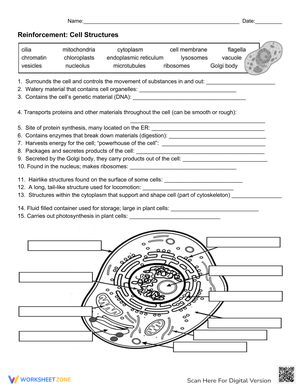
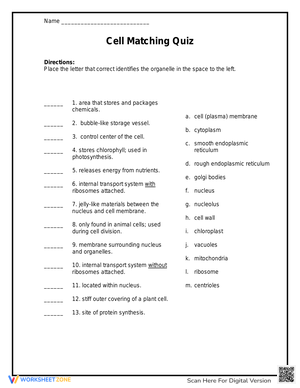
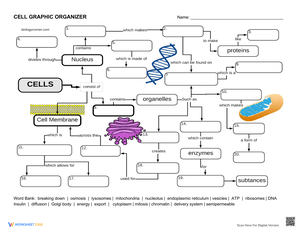
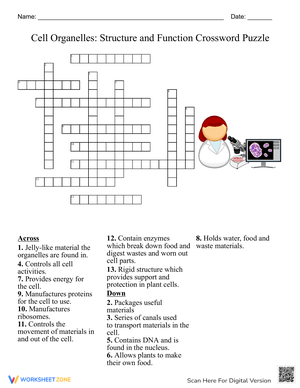
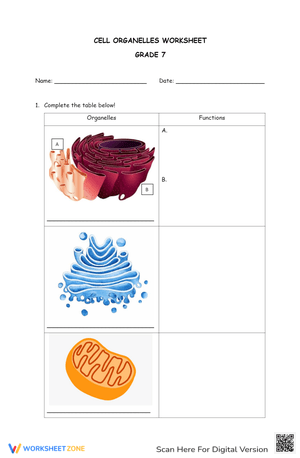
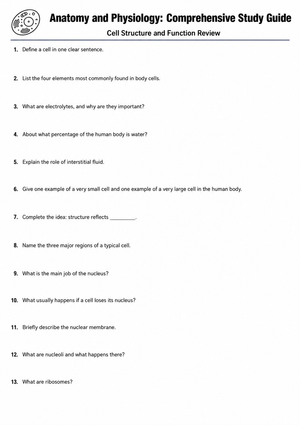
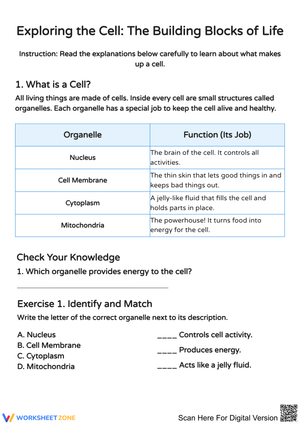
Cell structure and function worksheets give grades 6-8 science teachers a consistent way to move students from vague statements like cells are the building blocks of life toward specific, testable claims about what each organelle does. Rather than opening a cell unit with a lecture on vocabulary, many teachers use a short diagram worksheet on day one to see what students already believe about cell parts, then build instruction around the gaps. This approach fits well with a life science sequence that treats cells as systems, not just labeled pictures, and it gives teachers an early formative snapshot before deeper modeling work begins later in the unit.
Aligning Worksheets to Evidence-Gathering Before Structure and Function Work
Before students dig into organelle function, they need to establish that living things are made of one cell or many cells. Worksheets built around microscope images, prepared slides, or labeled photographs of different organisms let students practice gathering evidence for that idea, which mirrors the expectation in MS-LS1-1. A short evidence log worksheet works well here: students record what they observe in unicellular versus multicellular specimens and note where cell boundaries appear. This groundwork matters because students who skip straight to organelle function without first confirming that cells are the basic unit of life often struggle later to explain why structure connects to function at all.
Building Toward MS-LS1-2 with Organelle Modeling Worksheets
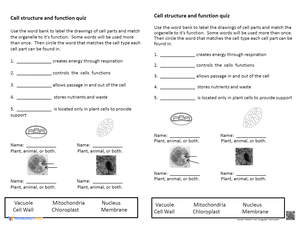
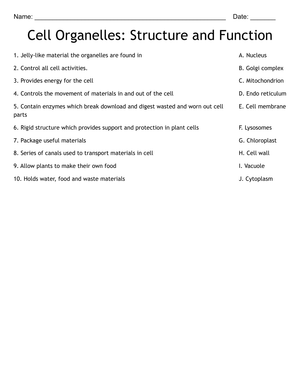
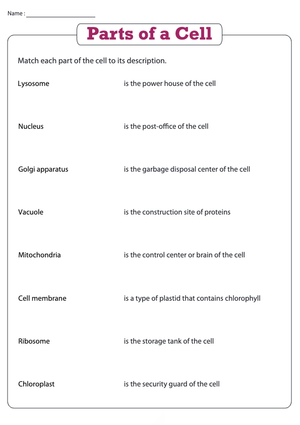
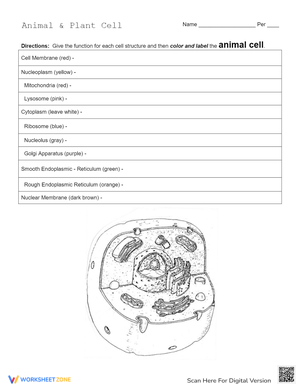
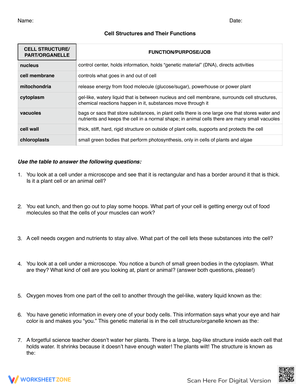
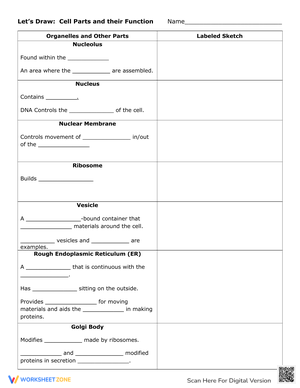
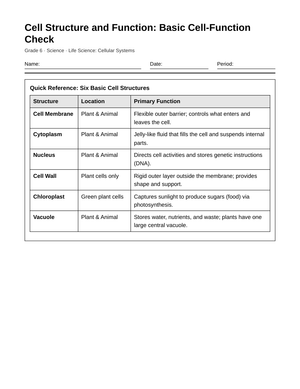
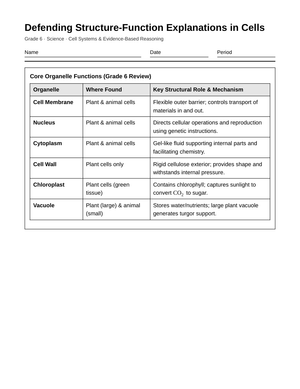
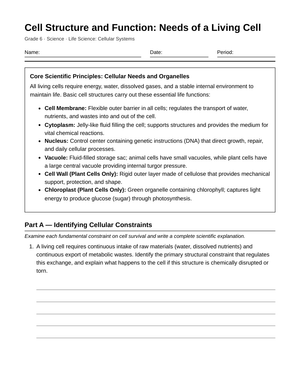
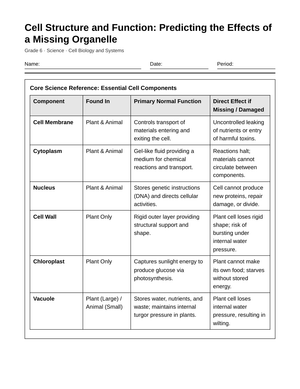
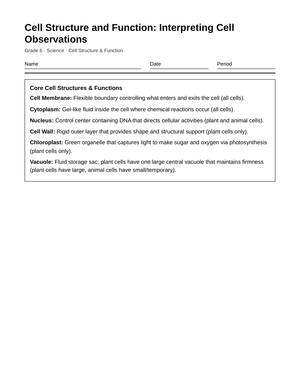
Once students accept that cells are the basic unit of life, worksheets can shift toward the modeling work at the center of MS-LS1-2. That standard asks students to develop and use a model describing how cell parts contribute to the function of the cell as a whole, with five organelles carrying the instructional weight: nucleus, chloroplasts, mitochondria, cell membrane, and cell wall. A worksheet sequence that has students sketch a cell model, label these five organelles, and write a one-sentence function claim for each part gives teachers a direct way to check whether students can explain structure and function together rather than memorizing them separately.
In practice, the five organelles named in MS-LS1-2 form a tight, testable set, which means a single well-designed labeling worksheet can cover the entire disciplinary core idea instead of requiring a dozen separate handouts. Teachers who consolidate instruction around exactly these five parts tend to see cleaner exit-ticket data, because students are not asked to track loosely related structures like ribosomes or the Golgi apparatus that sit outside the standard's core expectation.
Classroom Implementation
Sequence cell structure and function worksheets in three stages across a unit. Start with an observation worksheet tied to MS-LS1-1 so students confirm that cells are the basic unit of life before naming any organelles. Move into a labeling and function worksheet focused on the five organelles central to MS-LS1-2, using it as a checkpoint before assigning original model-building. Close the unit with a plant vs animal comparison worksheet that doubles as review before a summative assessment. Keep small-group sorting worksheets on hand throughout the unit for students who mix up organelle names, and use exit tickets after each worksheet to decide whether the next lesson needs reteaching or can move forward.
Frequently Asked Questions
1. What organelles should middle school cell structure worksheets cover for standards alignment?
Worksheets should center on the nucleus, chloroplasts, mitochondria, cell membrane, and cell wall, since these five organelles are the specific set named in MS-LS1-2. Worksheets that add many extra structures can dilute focus on the core disciplinary idea.
2. How can teachers use cell structure worksheets to support model-building practice?
Use labeling worksheets as a scaffold, then move students toward drawing or revising their own model that shows how each organelle contributes to the cell as a whole, matching the Developing and Using Models practice tied to MS-LS1-2.
3. What is the difference between worksheets for MS-LS1-1 and MS-LS1-2?
MS-LS1-1 worksheets focus on gathering evidence that living things are made of one cell or many cells, often through microscope or image-based observation. MS-LS1-2 worksheets go further, asking students to model how specific cell parts function together.
4. How should teachers use plant vs animal cell worksheets in a classroom rotation?
Place comparison worksheets after students already know the five key organelles individually, then use the plant vs animal task as a formative checkpoint or partner discussion activity before a quiz or unit test.
5. How can cell structure worksheets be used for review before a unit assessment?
Combine a labeling worksheet, a plant vs animal comparison worksheet, and a short model-building task as a three-part review station rotation, giving teachers a quick way to see which organelle functions still need reteaching.












 Interactive Worksheet Maker
 Quiz Maker
 Word Search Maker
 Crossword Puzzle Maker
 Word Scramble Generator
 Sentence Scramble Generator
 Handwriting Worksheet Generator
 Name Tracing Generator
 Fill In The Blank Generator