What Apple Life Cycle Worksheets Actually Cover
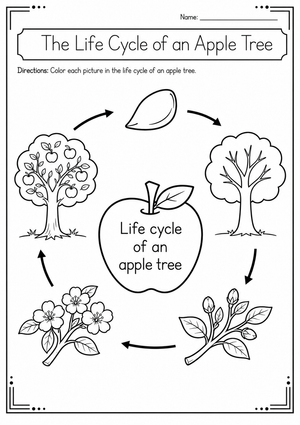
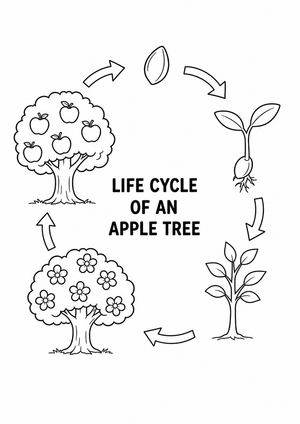
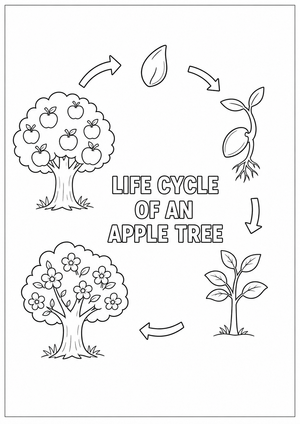
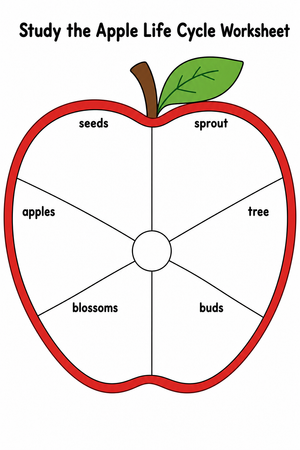
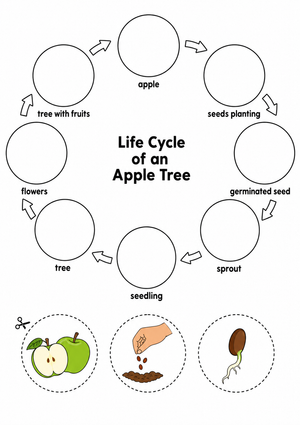
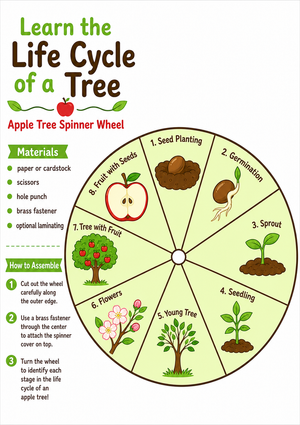
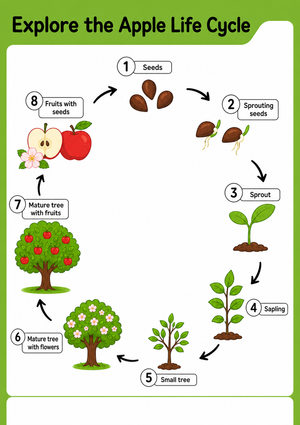
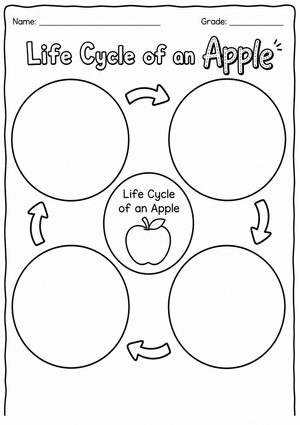
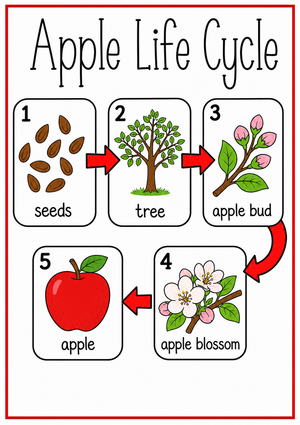
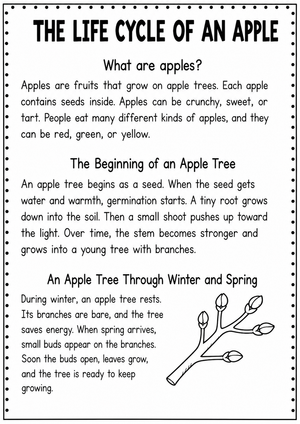
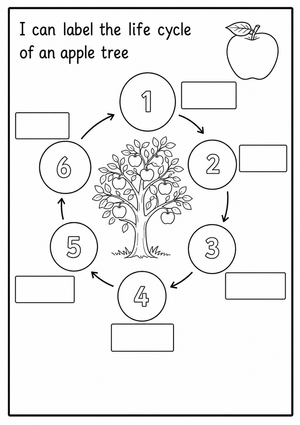
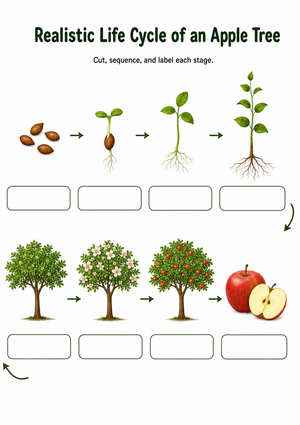
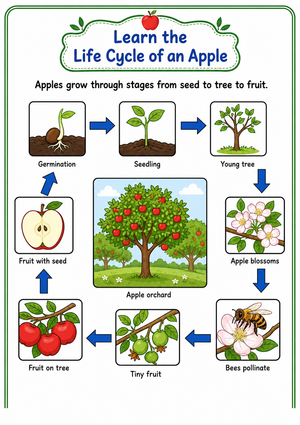
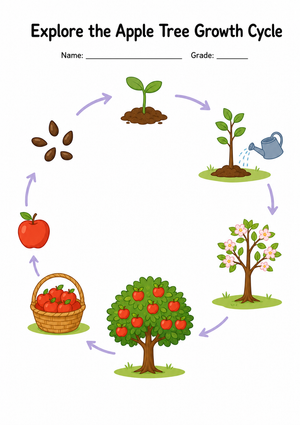
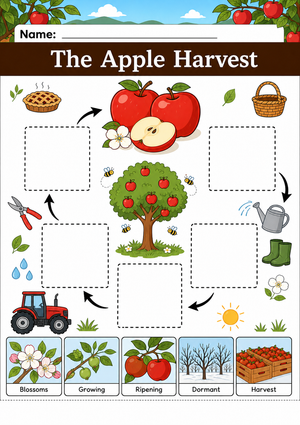
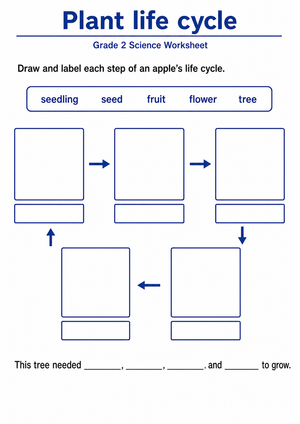
Apple life cycle worksheets break a familiar fall subject into stages students can see, draw, and label. Most printable sets move through six phases: seed, sprout or sapling, young tree, blossom, pollinated flower, and mature fruit. Because the sequence is concrete and tied to a food most kids already know, it gives early elementary teachers a low-barrier entry point into life cycle science.
That accessibility matters. Before students can model the life cycle of an abstract organism, they need practice ordering a cycle they can picture. An apple worksheet lets you teach the vocabulary of stages, sequence, and reproduction using pictures a five-year-old recognizes, which is why these sheets show up so often in September and October science centers.
Matching Worksheets to the Right Grade Level
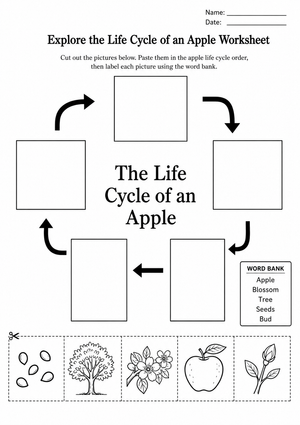
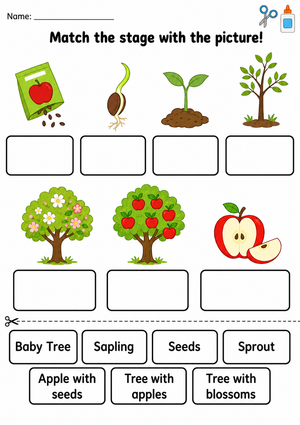
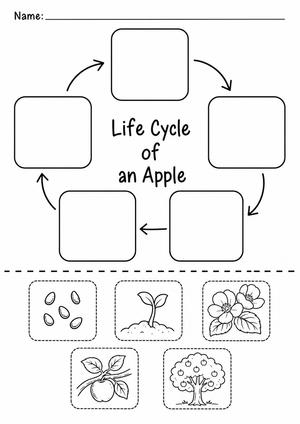
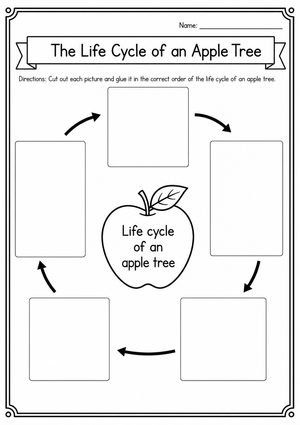
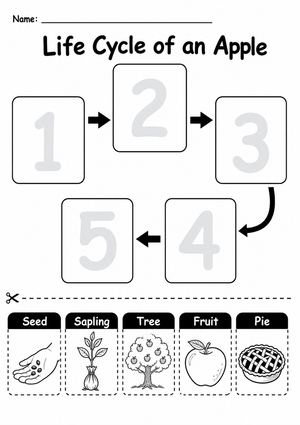
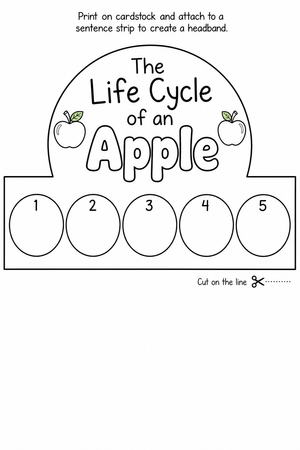
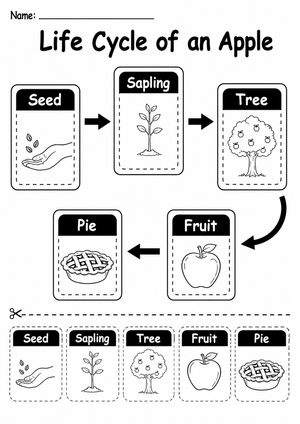
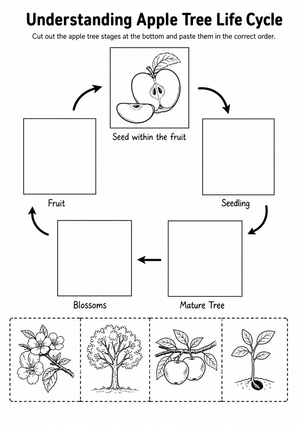
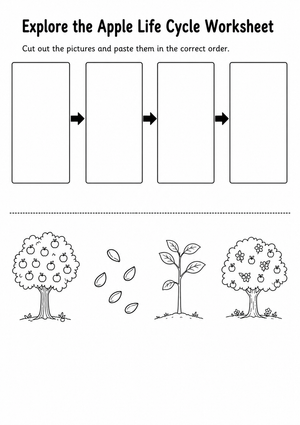
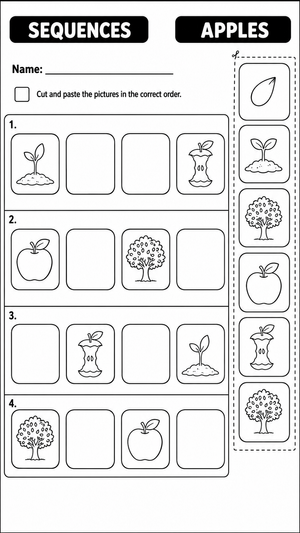
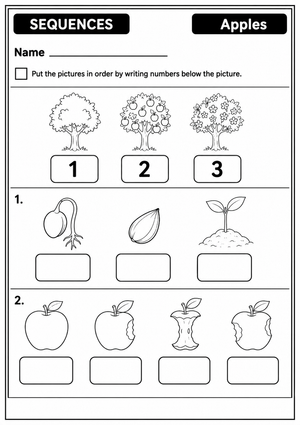
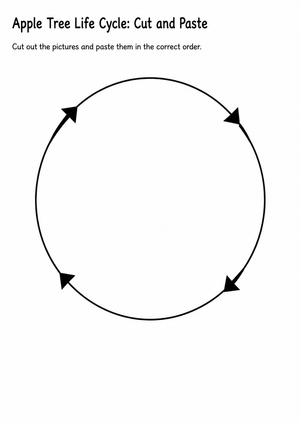
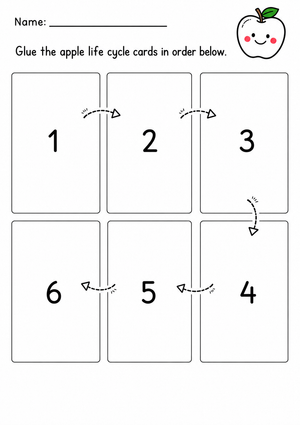
The same topic works across several grades if you match the format to the reader. In kindergarten and first grade, cut-and-paste sequencing strips and picture labeling keep the cognitive load on ordering and vocabulary rather than handwriting. Students physically arrange the stages, glue them down, and trace or copy the stage names.
By second and third grade, students can handle diagram labeling, short written captions, and an explanation of why each stage follows the one before it. Third graders should be able to describe pollination in a sentence, not just point to it. Keeping both versions on hand lets you assign the same apple life cycle worksheets to a whole class while quietly differentiating by ability and never announcing who got which sheet.
Connecting to NGSS 3-LS1-1
The apple tree is a clean model organism for the third-grade life science standard. Its stages are visible outdoors during a single school year in much of the country, and the plant plainly moves through birth, growth, reproduction, and death without any part of the cycle hidden from a young observer.
According to the NGSS 3-LS1-1 performance expectation, students should develop models describing that organisms have unique and diverse life cycles but all share birth, growth, reproduction, and death. An apple tree, which needs roughly 4 to 5 years to bear its first fruit, models every one of those phases in a form students can draw.
Classroom Implementation
Introduce the vocabulary before you hand out any worksheet. Read an apple-themed picture book, then build an anchor chart with the six stage words so students have a visible reference during independent work. Once the anchor chart is up, the worksheet becomes practice rather than a first exposure, and you spend your small-group time on thinking instead of decoding directions.
The stage most students get wrong is pollination, not the visible growth steps. Children reliably order seed, sprout, tree, and fruit, but they skip the blossom-to-pollinated-flower transition because it is invisible and abstract. Front-load a short clip or diagram of a bee carrying pollen between blossoms, name the bee as the reason fruit forms, and error rates on that middle section drop sharply on the next sequencing check.
Pairing Worksheets With Hands-On Activities
Worksheets stick better when they sit next to something physical. Plant apple seeds saved from a class snack in clear cups so students can watch germination over a few weeks, or bring in blossoming branches in spring to observe the flower stage up close. The clear cup matters because students can see the root and shoot forming, which makes the first two boxes on the worksheet real instead of memorized.
Have students record what they notice on a simple observation log, then map each observation back to the matching box on their life cycle worksheet. The paper becomes a summary of real evidence rather than an isolated drill, and students who struggle with reading still have a concrete memory to anchor each term.
Cross-Curricular Fall Tie-Ins
Apple life cycle worksheets rarely stand alone in an elementary classroom. The topic slots neatly into a fall unit, so you can pair the science sheet with a how-to writing prompt on planting a tree, a fall vocabulary word sort, or a graphing activity comparing apple varieties the class tastes together. The TeachKyAg life cycle of an apple tree lesson is a useful reference for building this kind of cross-curricular week without buying a new curriculum. Threading one topic through science, writing, and math also gives students repeated exposure to the stage vocabulary, which is what moves it into long-term memory.
Frequently Asked Questions
1. What are the main stages included on an apple life cycle worksheet?
Most sheets cover six stages: seed, sprout or sapling, young tree, blossom, pollinated flower, and mature fruit. Simpler kindergarten and first-grade versions may condense these into four broad steps to keep the sequencing manageable for early readers.
2. What grade levels are apple life cycle worksheets best suited for?
They work best from kindergarten through grade 3. Younger students use picture sequencing and cut-and-paste strips, while third graders can label diagrams and explain the reproduction stage in a written sentence.
3. How can teachers use these worksheets for formative assessment?
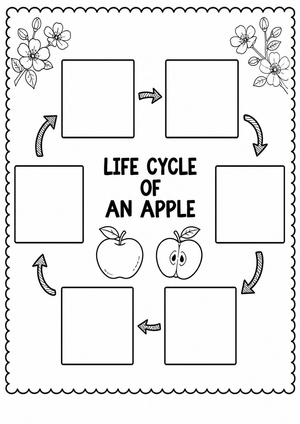
Use an unlabeled sequencing sheet as an exit ticket. When students order and name the stages in a few minutes, you can quickly see who owns the vocabulary and who needs a small-group reteach the next day.
4. How do apple life cycle worksheets connect to NGSS life cycle standards?
They support NGSS 3-LS1-1, which asks students to model that organisms share birth, growth, reproduction, and death. The apple tree shows all four phases in one familiar plant students can draw and describe.
5. What hands-on activities pair well with apple life cycle worksheets?
Plant seeds from a class snack, observe spring blossoms, or keep a weekly observation log. Students then map what they see back to each stage on the worksheet so the paper reflects real evidence.












 Interactive Worksheet Maker
 Quiz Maker
 Word Search Maker
 Crossword Puzzle Maker
 Word Scramble Generator
 Sentence Scramble Generator
 Handwriting Worksheet Generator
 Name Tracing Generator
 Fill In The Blank Generator