


























Views
Downloads

Grade K Apple Life Cycle — Printable No-Prep Worksheet
Paste this activity's link or code into your existing LMS (Google Classroom, Canvas, Teams, Schoology, Moodle, etc.).
Students can open and work on the activity right away, with no student login required.
You'll still be able to track student progress and results from your teacher account.
This hands-on apple life cycle worksheet helps young students sequence the stages of plant growth while building fine motor skills. By coloring, cutting, and pasting five distinct growth phases onto a wearable headband, kindergarten and first-grade learners actively engage with foundational science concepts.
At a Glance
- Grade: K · Subject: Science
- Standard:
K-LS1-1— Observe and describe patterns in plant growth.- Skill Focus: Sequencing life cycles
- Format: 2 pages · 5 problems · No answer key · PDF
- Best For: Hands-on science centers
- Time: 20–30 minutes
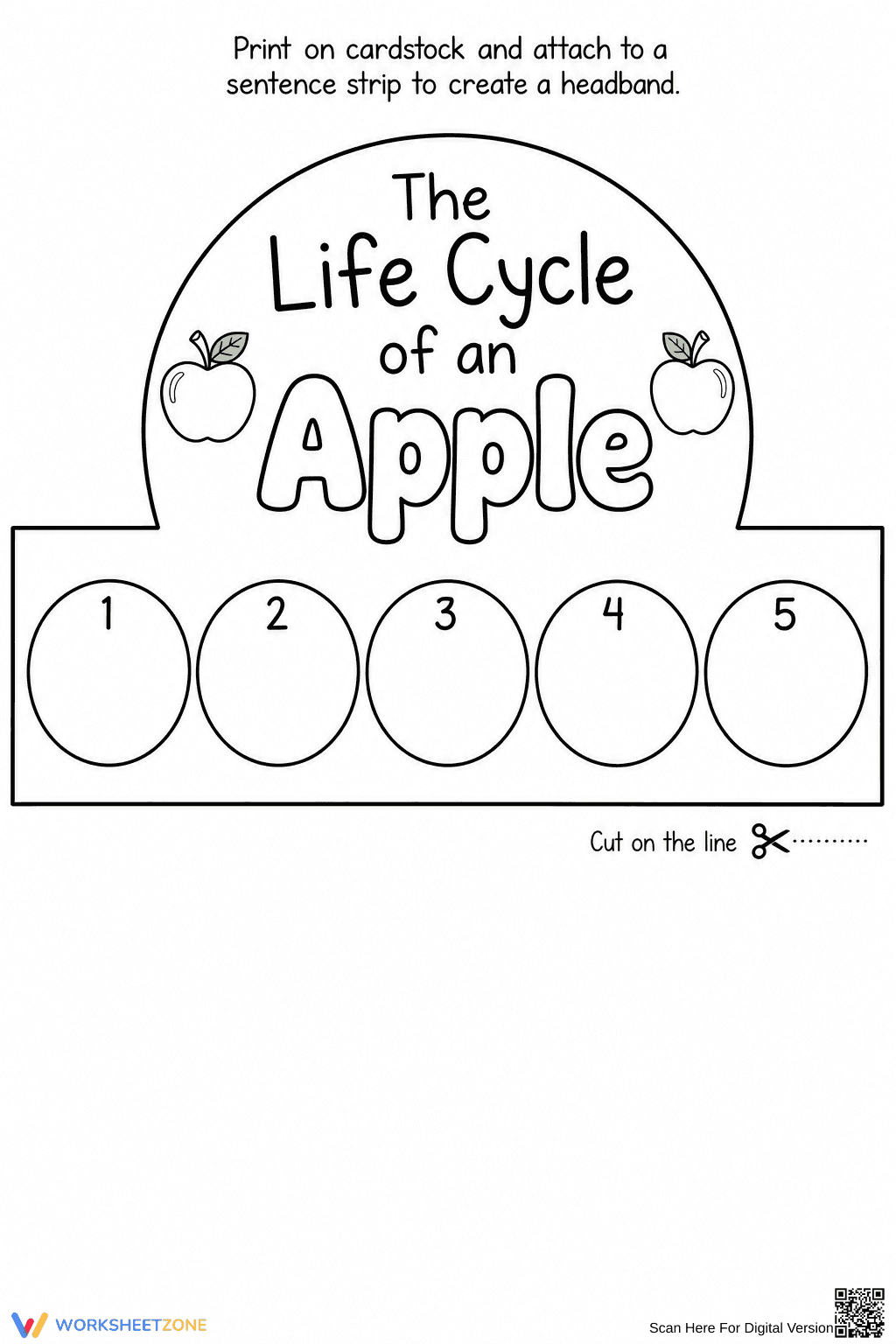
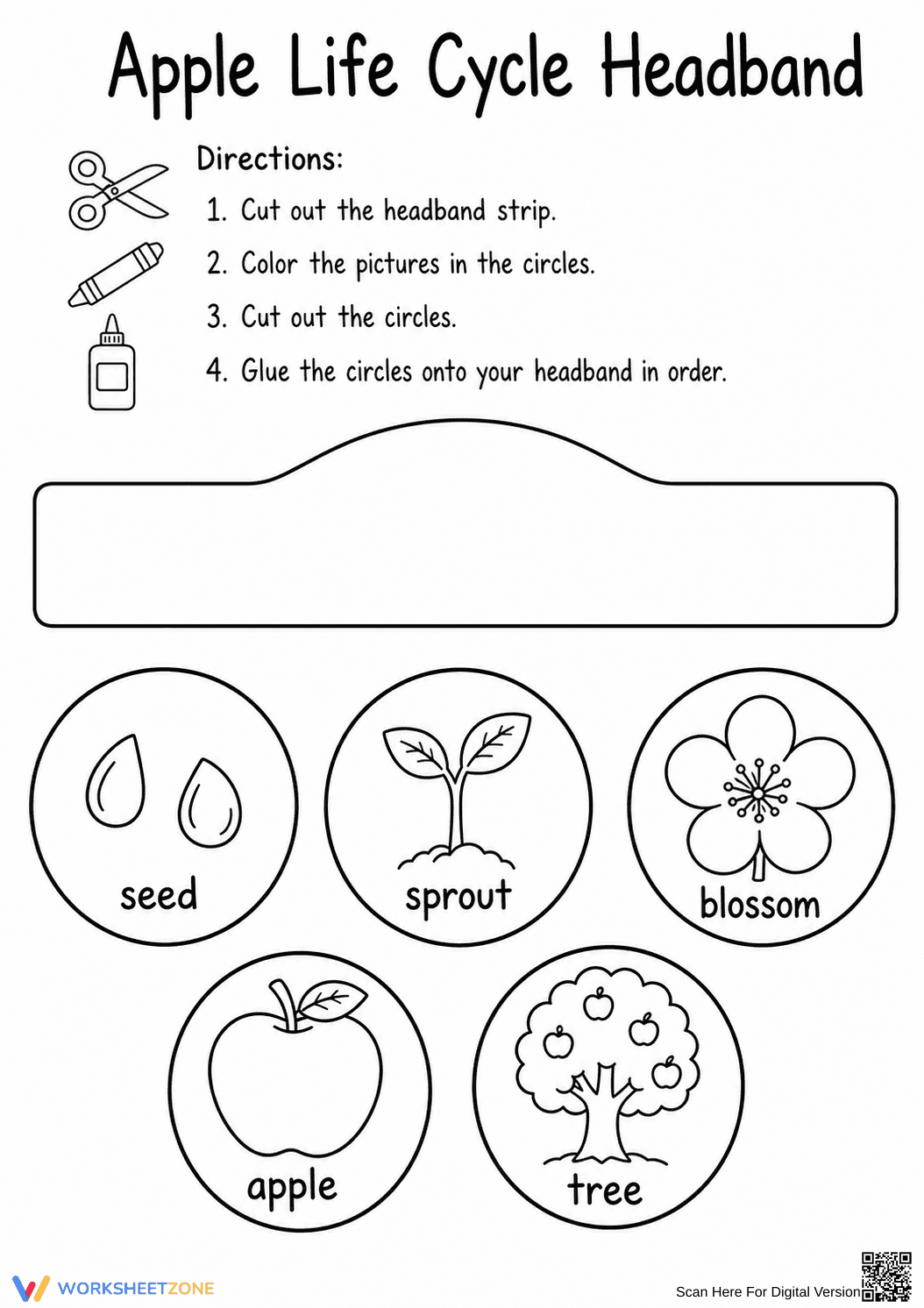
This two-page printable includes everything needed to create an interactive learning craft. The first page features the main headband base with five numbered placeholders to guide the sequencing process. The second page provides clear, visual directions alongside five illustrated circles depicting the seed, sprout, blossom, apple, and tree stages. Students will color the illustrations, cut them out, and glue them in the correct chronological order.
Zero-Prep Workflow
- Print (1 minute): Print the two-page PDF on standard paper or cardstock for durability. No special materials are required.
- Distribute (1 minute): Hand out the pages with scissors, crayons, and glue. The visual instructions make it easy for students to understand the task.
- Review (3 minutes): Walk around to check that students are gluing the five stages in the correct sequence before attaching the headband strips. Total teacher prep time is under two minutes, making this an excellent option for substitute teacher plans.
Aligned to primary standard K-LS1-1, this activity supports students as they observe and describe patterns in plant growth and development. It also reinforces early sequencing skills by requiring learners to order events chronologically. Both standard codes can be copied directly into lesson plans, IEP goals, or district curriculum mapping tools.
This craft is highly effective as a culminating activity after reading a picture book about how apples grow. Use it during whole-group science instruction to give students a tangible way to demonstrate their understanding of the sequence. As a formative assessment tip, observe students while they arrange the five cut-out circles; their ability to place the seed, sprout, and tree in order provides immediate insight into their comprehension of biological progression. Expect the coloring, cutting, and assembly to take between 20 and 30 minutes.
This resource is designed for kindergarten and first-grade students developing their understanding of the natural world. It naturally supports visual and kinesthetic learners who benefit from manipulating objects to internalize abstract concepts. Pair this headband activity with a classroom anchor chart detailing the seasons or a hands-on apple tasting session to create a comprehensive, multi-sensory learning experience.
Integrating hands-on crafts into early childhood science instruction significantly boosts the retention of sequential concepts. When students interact with physical materials to model biological processes, they develop a much stronger foundational understanding of the natural world around them. This specific activity aligns directly with K-LS1-1 by having students observe and describe patterns in plant growth. According to Fisher & Frey (2014), incorporating tactile, multi-sensory tasks into direct instruction helps young learners anchor new vocabulary and conceptual frameworks far more effectively than passive observation alone. By physically arranging the five distinct stages of development, children actively process the chronological nature of life cycles. This evidence-based approach ensures that foundational science standards are met while simultaneously refining the critical fine motor skills necessary for early academic success.


