The stalk grows fast, the flower head is unmistakable, and the seed-to-seed cycle is easy to sequence on paper. Life cycle of a sunflower worksheets let you turn that observation into a structured labeling or sequencing task, which is exactly what most K-5 teachers need after a read-aloud, a planting activity, or a science notebook entry.
Because sunflowers are typically planted in spring and harvested in fall, they line up naturally with a spring science block. Students can start seeds in cups during the same weeks they complete a worksheet packet, which makes the printed sequence feel like a prediction they get to test rather than an abstract diagram.
The Five Stages Your Worksheets Should Cover
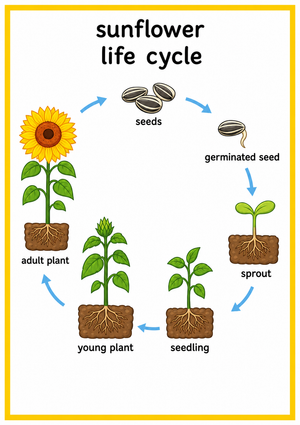
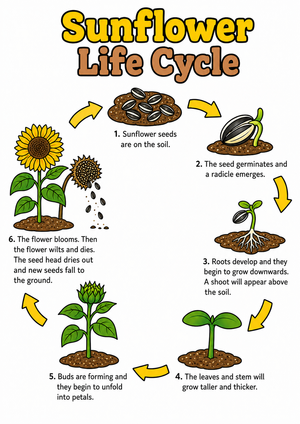
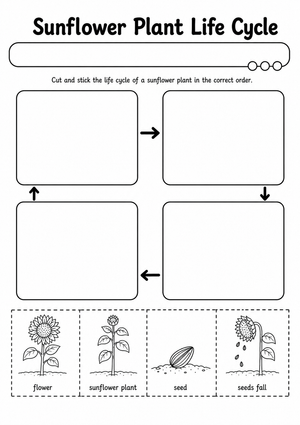
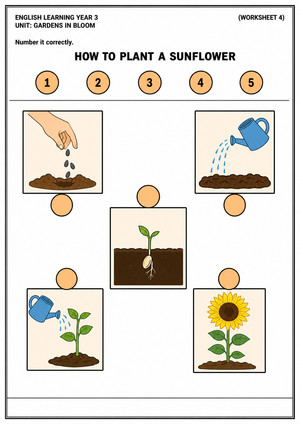
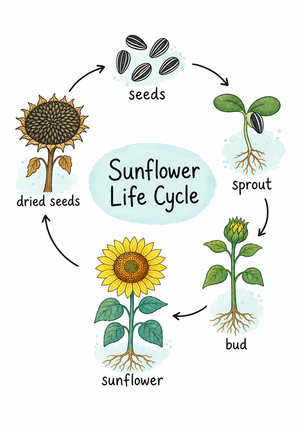
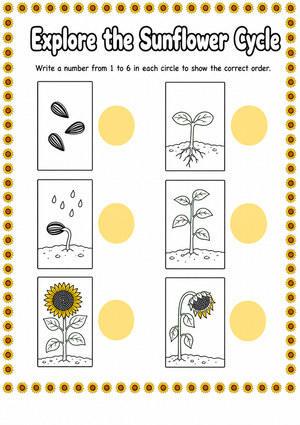
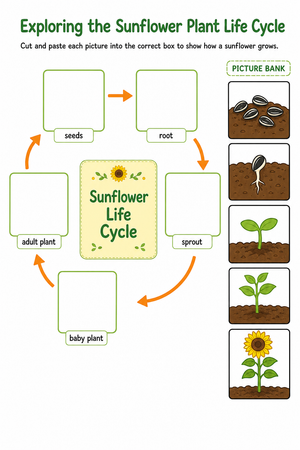
Most elementary sunflower life cycle resources are built around five stages: seed, sprout, growth, flower, and fruit, which is the stage where the plant produces new seeds. Framing your worksheet set around this exact sequence gives students a consistent structure they can reuse for other plants later in the year.
- Seed: the starting point, often shown as a striped shell ready for planting
- Sprout: the seed cracks open and a small root and shoot emerge
- Growth: the stem lengthens and true leaves form
- Flower: the large yellow head opens and attracts pollinators
- Fruit (seed production): the flower head fills with new seeds, completing the cycle
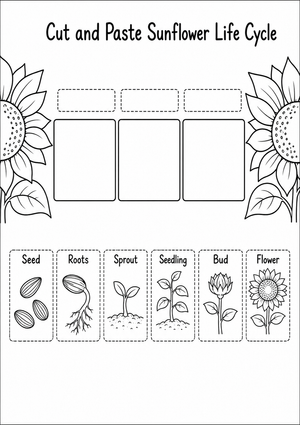
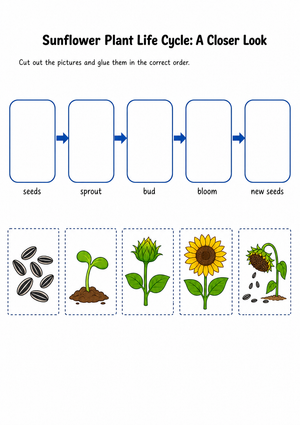
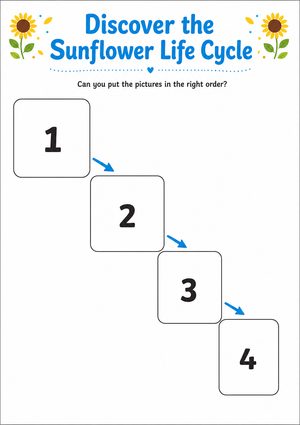
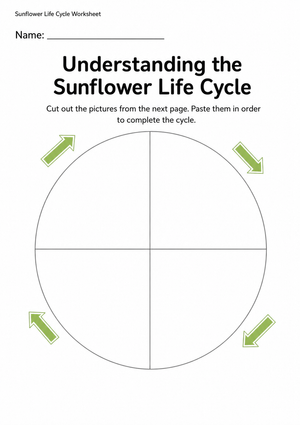
A sequencing worksheet that asks students to cut, order, and glue these five stages works well as an independent center, while a labeling version with a word bank supports students who need more scaffolding.
Matching Worksheets to NGSS 3-LS1-1
For 3rd grade teachers building a formal unit, NGSS 3-LS1-1 is the standard most often cited for sunflower life cycle instruction, since it asks students to develop models that describe how organisms grow and change through life stages. A worksheet that requires students to draw or write a short model description at each stage, rather than just circle a picture, gives you a quick way to check whether students can explain the sequence in their own words.
One classroom-tested move is to pair the worksheet with a real seed packet: students glue an actual sunflower seed onto the seed stage box, which anchors the abstract diagram to something they can touch before they ever plant it.
Bringing in Pollination Without a Separate Lesson
The flowering stage is also the easiest place to introduce pollination, since sunflowers attract bees, butterflies, and other pollinators that carry pollen between plants during this stage. A short worksheet section that asks students to name which stage attracts pollinators, and why that matters for seed production, connects the life cycle sequence to a second science concept without adding a whole new unit.
For classrooms doing a cross-curricular block, this is also a natural bridge into agriculture: many growers plant sunflowers specifically to harvest the seeds for birdseed, livestock feed, snacks, and cooking oil, which gives you a real-world reason for why the fruit stage matters beyond the plant reproducing itself.
Classroom Implementation
Start the unit with a KWL or quick draw of what students think a sunflower looks like from seed to flower, then hand out the five-stage sequencing worksheet as a baseline check. Midway through the unit, once seeds have sprouted in classroom cups, use a labeling worksheet as a formative check to see whether students can match the vocabulary to what they are observing in real time. Save a model-based worksheet, where students write a sentence or two per stage, for the end of the unit if you are working toward NGSS 3-LS1-1 documentation.
For small-group intervention, cut the five stages onto strips and have students physically resequence them before completing the full worksheet independently, which reduces the reading demand for students who understand the science but struggle with the page layout. If you are using the worksheets for review before an assessment, a mixed set that combines sequencing, labeling, and one short-answer pollination question gives you three data points from a single page.
Frequently Asked Questions
1. What are the five stages of a sunflower life cycle for elementary students?
The five commonly taught stages are seed, sprout, growth, flower, and fruit, where the fruit stage is when the plant produces new seeds and the cycle begins again.
2. Which grade level and standard does a sunflower life cycle worksheet best support?
These worksheets are most often used in K-5 classrooms, with 3rd grade teachers commonly aligning the unit to NGSS 3-LS1-1 for modeling organism growth and change.
3. How can teachers pair sunflower life cycle worksheets with a hands-on classroom activity?
A paper plate sunflower craft using real seeds, paper leaves, and a craft stick stem gives students something physical to build alongside a matching or labeling worksheet.
4. Why is the flowering stage important for teaching pollination?
During the flowering stage, sunflowers attract bees, butterflies, and other pollinators that carry pollen between plants, which connects the life cycle sequence directly to a pollination lesson.
5. When should teachers plant sunflower seeds to match a spring life cycle unit?
Sunflowers are typically planted in spring and harvested in fall, so starting seeds early in a spring unit lets students observe real growth stages as they complete the worksheet sequence.












 Interactive Worksheet Maker
 Quiz Maker
 Word Search Maker
 Crossword Puzzle Maker
 Word Scramble Generator
 Sentence Scramble Generator
 Handwriting Worksheet Generator
 Name Tracing Generator
 Fill In The Blank Generator