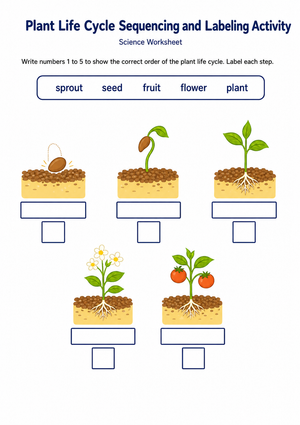
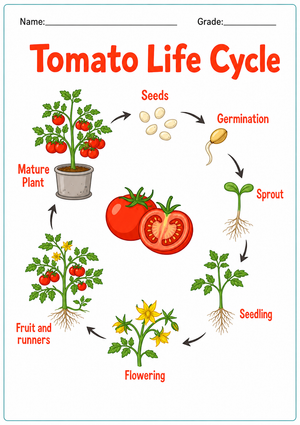
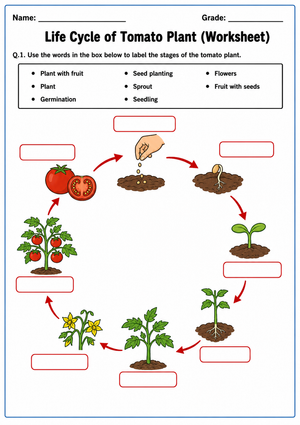
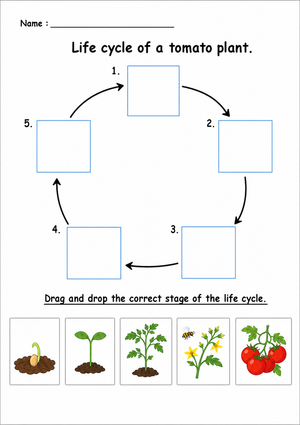
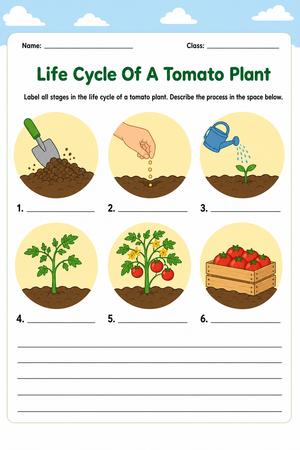
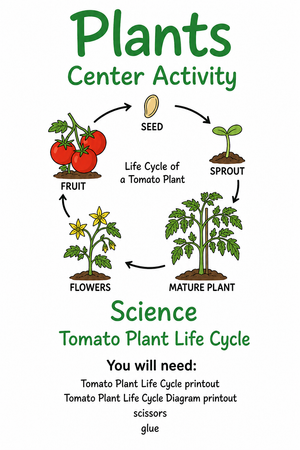
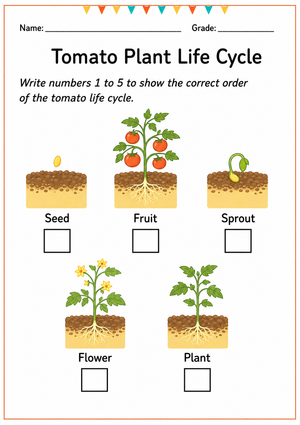
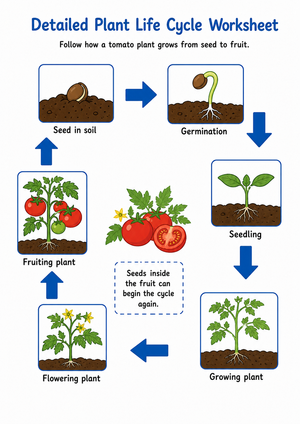
If you searched for tomato life cycle worksheets, you are probably planning a plant unit for kindergarten through third grade and need a concrete, visual way to show students how a seed becomes fruit. A tomato plant is one of the best classroom models for this because the stages happen fast enough for a school year timeline and the plant itself is familiar to most students from the cafeteria or a family garden. These worksheets give you a printable sequencing tool that turns an abstract concept, plant growth, into something students can label, sort, and explain in their own words.
The Five Stages of the Tomato Life Cycle
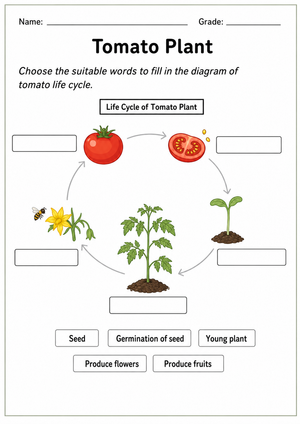
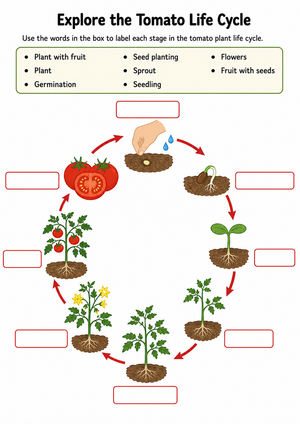
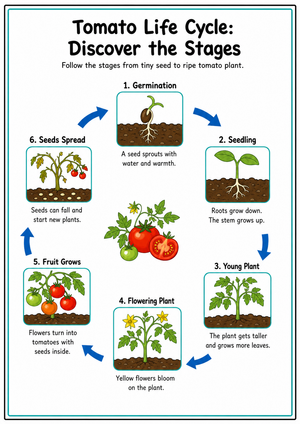
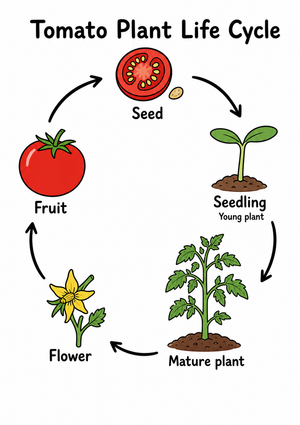
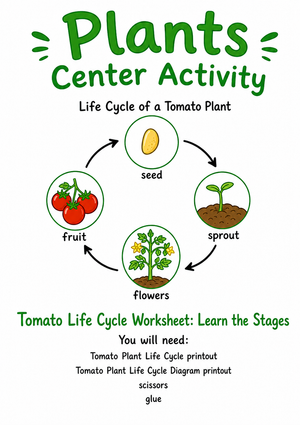
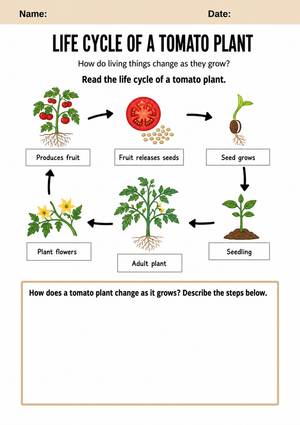
Most tomato life cycle worksheets break the process into five stages that students can sequence in order. The first stage is germination, when the seed absorbs water and a root emerges. The second is the seedling stage, when the first leaves appear and the young plant begins photosynthesis. Third is vegetative growth, when the stem thickens and the plant produces more leaves and branches. Fourth is flowering and pollination, when yellow blossoms appear and must be pollinated to set fruit. The fifth and final stage is fruiting, when the tomato forms, ripens, and is ready for harvest.
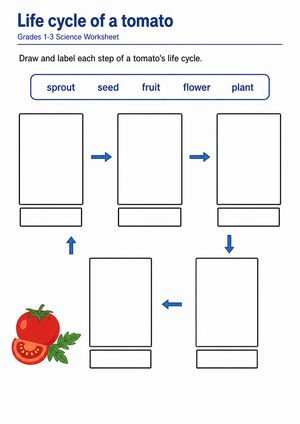
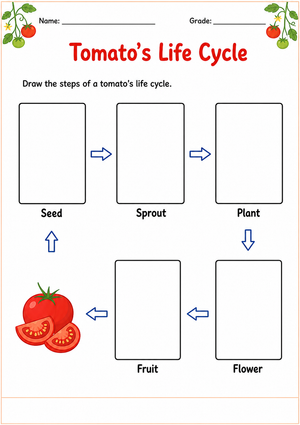
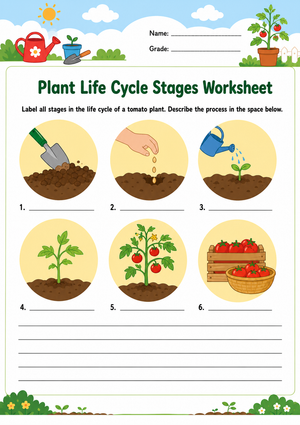
Teaching these five stages as a fixed sequence gives students a repeatable model they can apply to other flowering plants later in the unit. A sequencing worksheet that asks students to cut, order, and glue stage cards works well for younger students, while older students in second and third grade can label each stage with vocabulary terms and describe what is happening inside the plant.
Tomato seeds typically germinate in 5 to 10 days when soil temperature stays between 75 and 90 degrees Fahrenheit, which is warmer than many classrooms keep their rooms in early spring. If you are running a live growing project alongside these worksheets, a seedling heat mat or a spot near a sunny window can close that gap and keep germination on the timeline your worksheet activities expect.
Aligning Worksheets to NGSS Standards
Tomato life cycle worksheets support K-LS1-1 and 3-LS1-1, the two standards most commonly used for plant life cycle units in grades K-3. K-LS1-1 focuses on what plants need to grow, which pairs well with simple stage-matching worksheets for kindergarten and first grade. 3-LS1-1 asks students to develop models that show the life cycle stages of a flowering plant, including birth or germination, growth, reproduction, and death, which lines up directly with a labeled five-stage tomato diagram for third grade.
According to the NGSS 3-LS1-1 flowering plant life cycle standard, third-grade students are expected to construct an argument that plants and animals have life cycles that include a beginning, growth, reproduction, and death, using observations or models as evidence. A completed tomato worksheet, especially one a student annotates with their own growing journal notes, becomes exactly that kind of evidence for a portfolio or formative assessment.
Classroom Implementation
Start the unit with a blank sequencing worksheet before students have seen any real plant growth, then revisit the same worksheet after a few weeks of observation to see how their understanding changes. This before-and-after approach gives you a quick formative assessment without extra prep.
Pair worksheets with a simple science journal where students record plant height or leaf count every few days. This creates a natural cross-curricular tie-in with measurement and graphing, and it gives your class real data to compare against the stage descriptions on their worksheets. For small-group intervention, pull students who are still confusing the seedling and vegetative growth stages and have them sort picture cards again with a partner before returning to independent worksheet practice.
If you do not have space for a full garden, a single tomato plant grown in a large pot near a window is enough to anchor the unit. Students can take turns watering and observing it, then update a class chart that mirrors the stages on their individual worksheets.
Frequently Asked Questions
1. What are the main stages of a tomato plant life cycle for elementary students?
The tomato life cycle is commonly taught in five stages: germination, seedling, vegetative growth, flowering and pollination, and fruiting or harvest. Worksheets typically ask students to sequence, label, or match these five stages in order.
2. Which grade levels and NGSS standards do tomato life cycle worksheets support?
These worksheets fit grades K-3 science instruction and align most closely with K-LS1-1, which covers what plants need to grow, and 3-LS1-1, which asks students to model the full life cycle of a flowering plant including growth, reproduction, and death.
3. How long does it take a tomato seed to germinate and grow to harvest?
Tomato seeds typically germinate in 5 to 10 days at soil temperatures between 75 and 90 degrees Fahrenheit. Seedlings need 6 to 8 weeks of indoor growth plus about a week of hardening off before transplanting, and full-grown plants take 50 to 100 or more days from transplant to harvest depending on the variety.
4. How can teachers pair a real tomato-growing activity with these worksheets?
Start seeds indoors in a sunny window or on a heat mat, then have students track growth in a science journal alongside their worksheets. Revisiting the same sequencing worksheet before and after observing real growth gives you a simple before-and-after formative assessment.
5. What vocabulary should students learn during a tomato life cycle unit?
Key terms include germination, seedling, pollination, and vegetative growth. Pre-teaching this vocabulary before students work through labeling or sequencing worksheets helps them focus on the science content rather than decoding new words.












 Interactive Worksheet Maker
 Quiz Maker
 Word Search Maker
 Crossword Puzzle Maker
 Word Scramble Generator
 Sentence Scramble Generator
 Handwriting Worksheet Generator
 Name Tracing Generator
 Fill In The Blank Generator