


























Views
Downloads

Apple Life Cycle Reading | Essential Grade 3
Paste this activity's link or code into your existing LMS (Google Classroom, Canvas, Teams, Schoology, Moodle, etc.).
Students can open and work on the activity right away, with no student login required.
You'll still be able to track student progress and results from your teacher account.
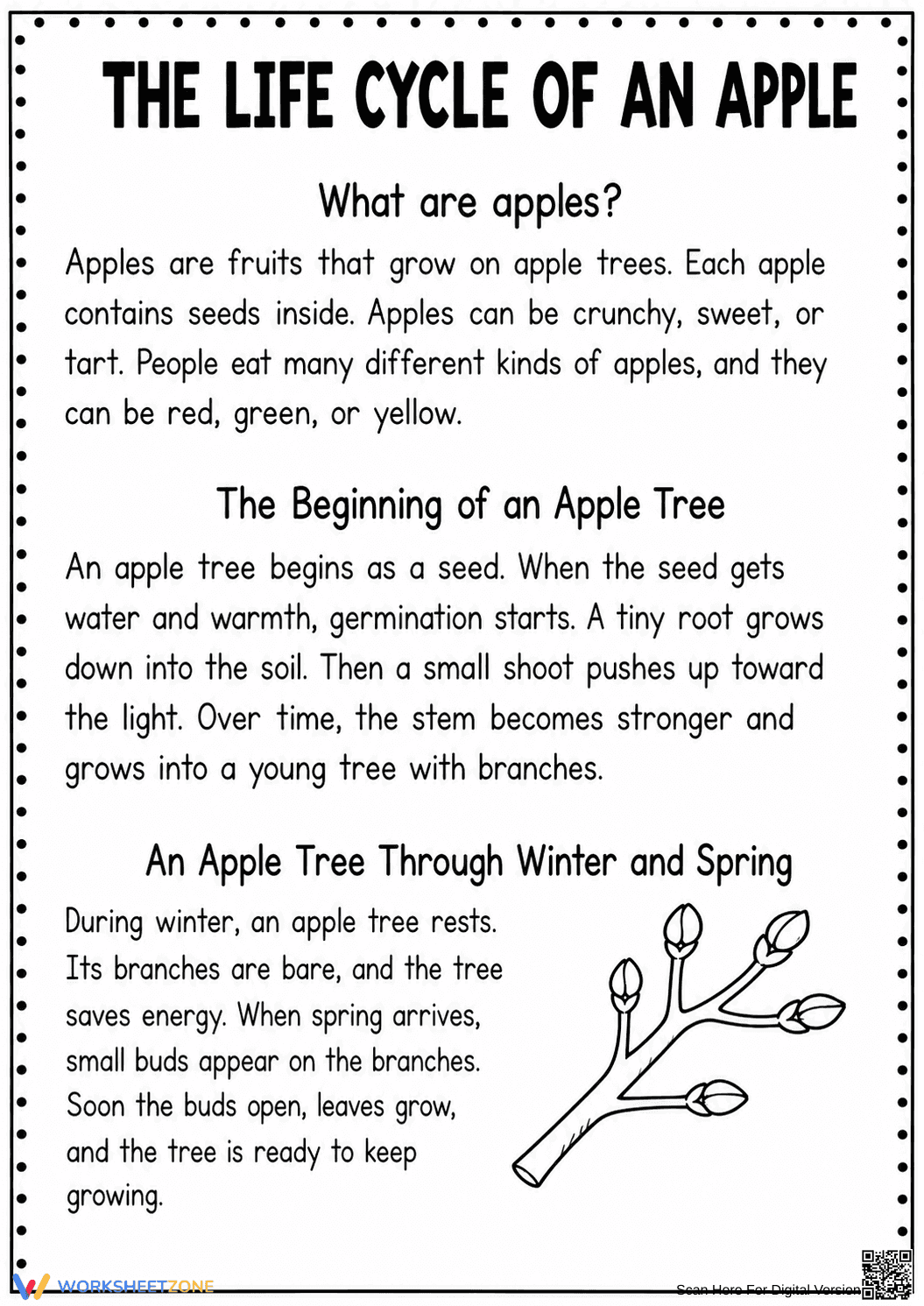
This Grade 3 science and reading worksheet provides a comprehensive look at the life cycle of an apple tree. Students engage with informational text covering germination, pollination, and seasonal changes. By connecting biological processes with literacy skills, learners build a robust understanding of how plants grow and change over time through evidence-based reading.
At a Glance
- Grade: 3 · Subject: Science & ELA
- Standard:
CCSS.ELA-LITERACY.RI.3.1— Ask and answer questions to demonstrate understanding of a text using explicit evidence.- Skill Focus: Life Cycles & Reading Comprehension
- Format: 6 pages · 10 problems · Answer key included · PDF
- Best For: Independent reading or science centers
- Time: 30–45 minutes
What's Inside
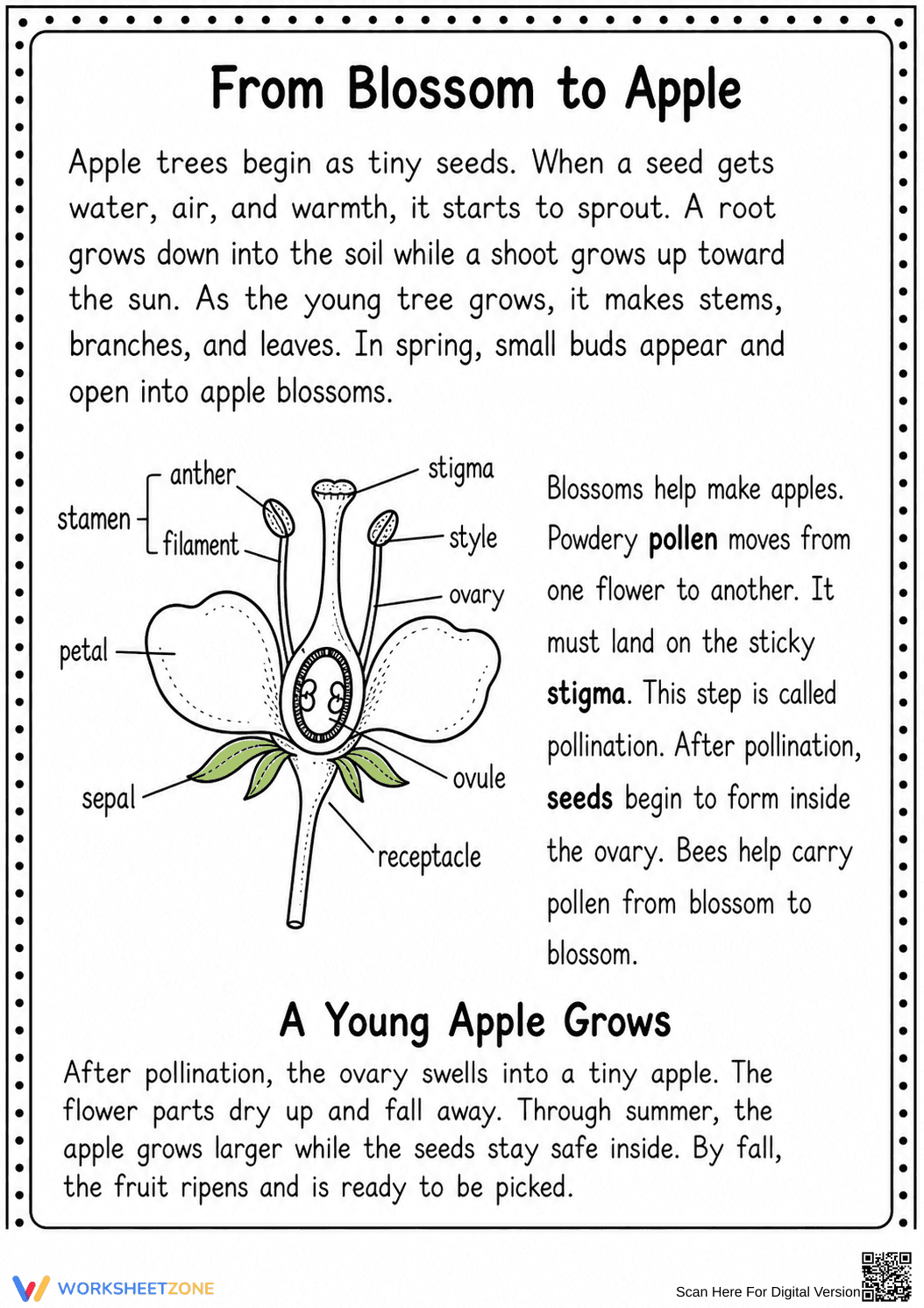
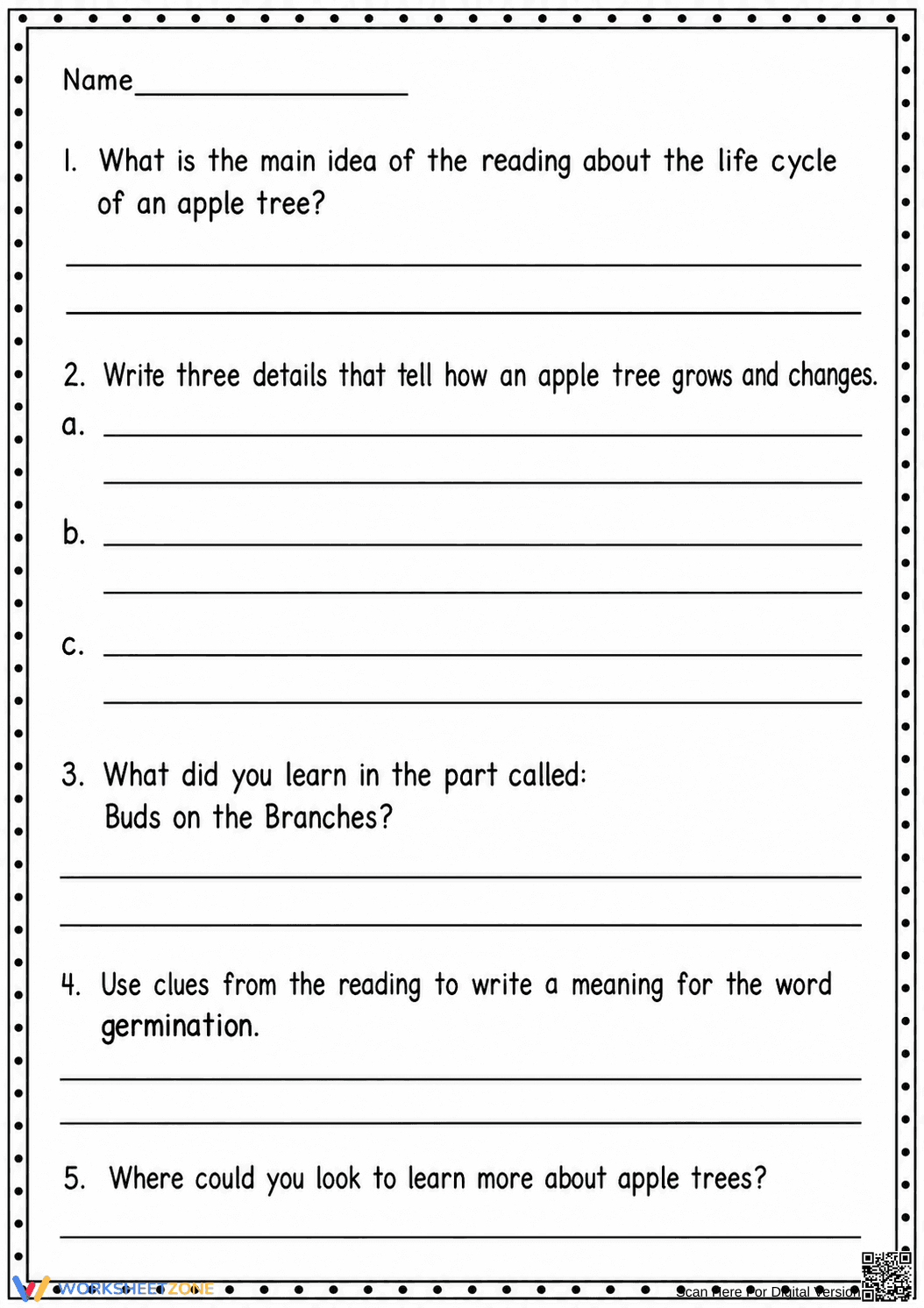
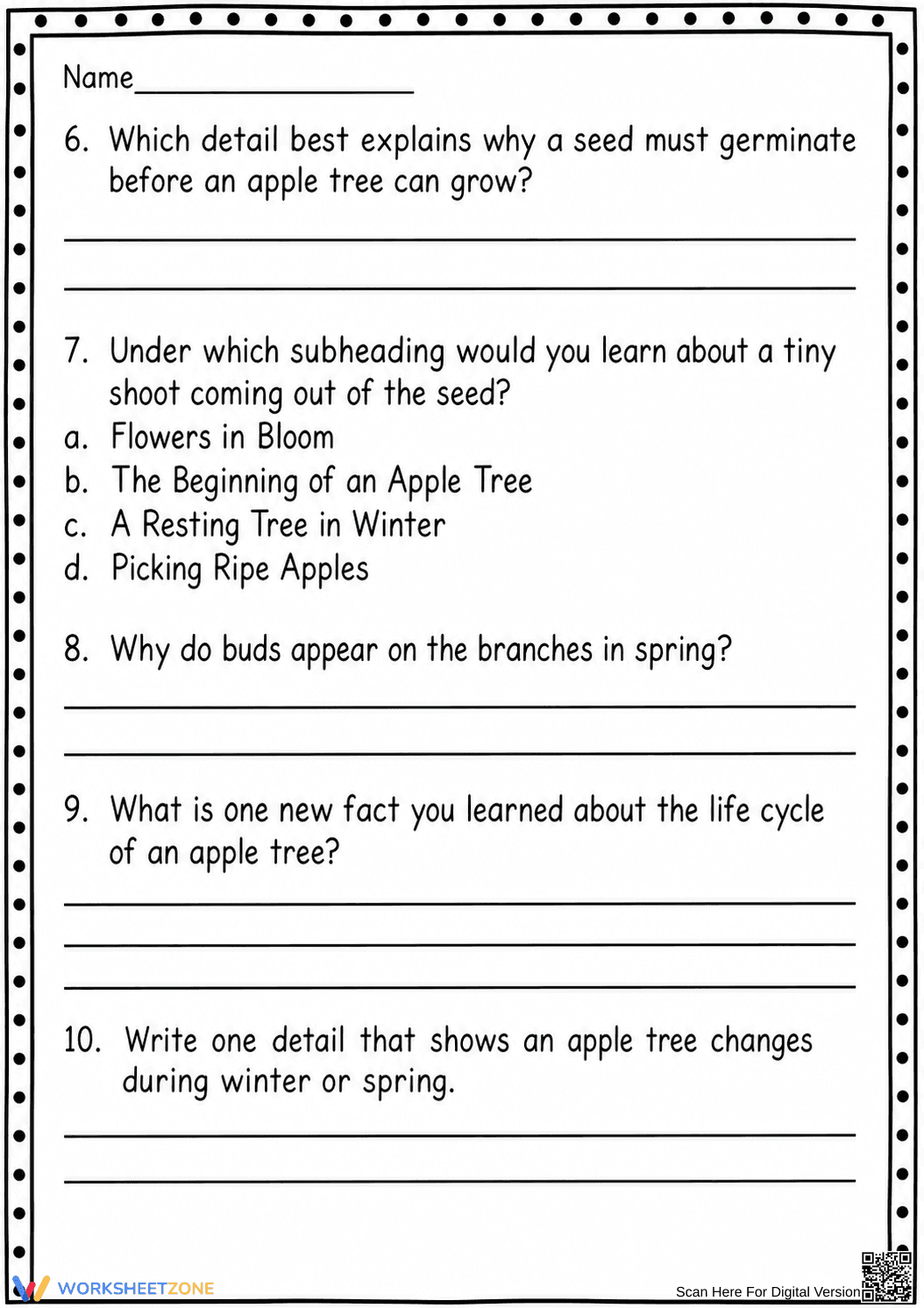
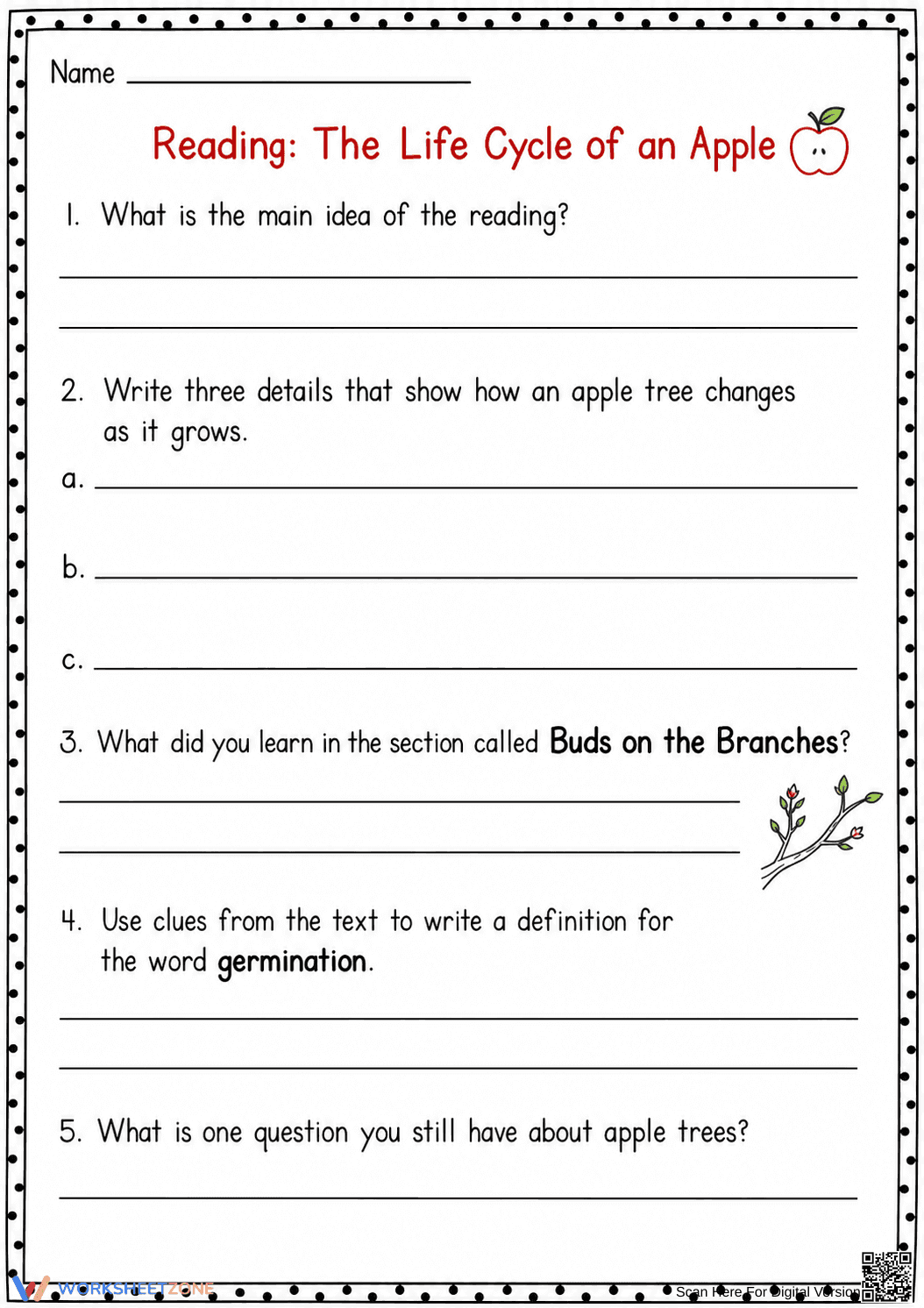
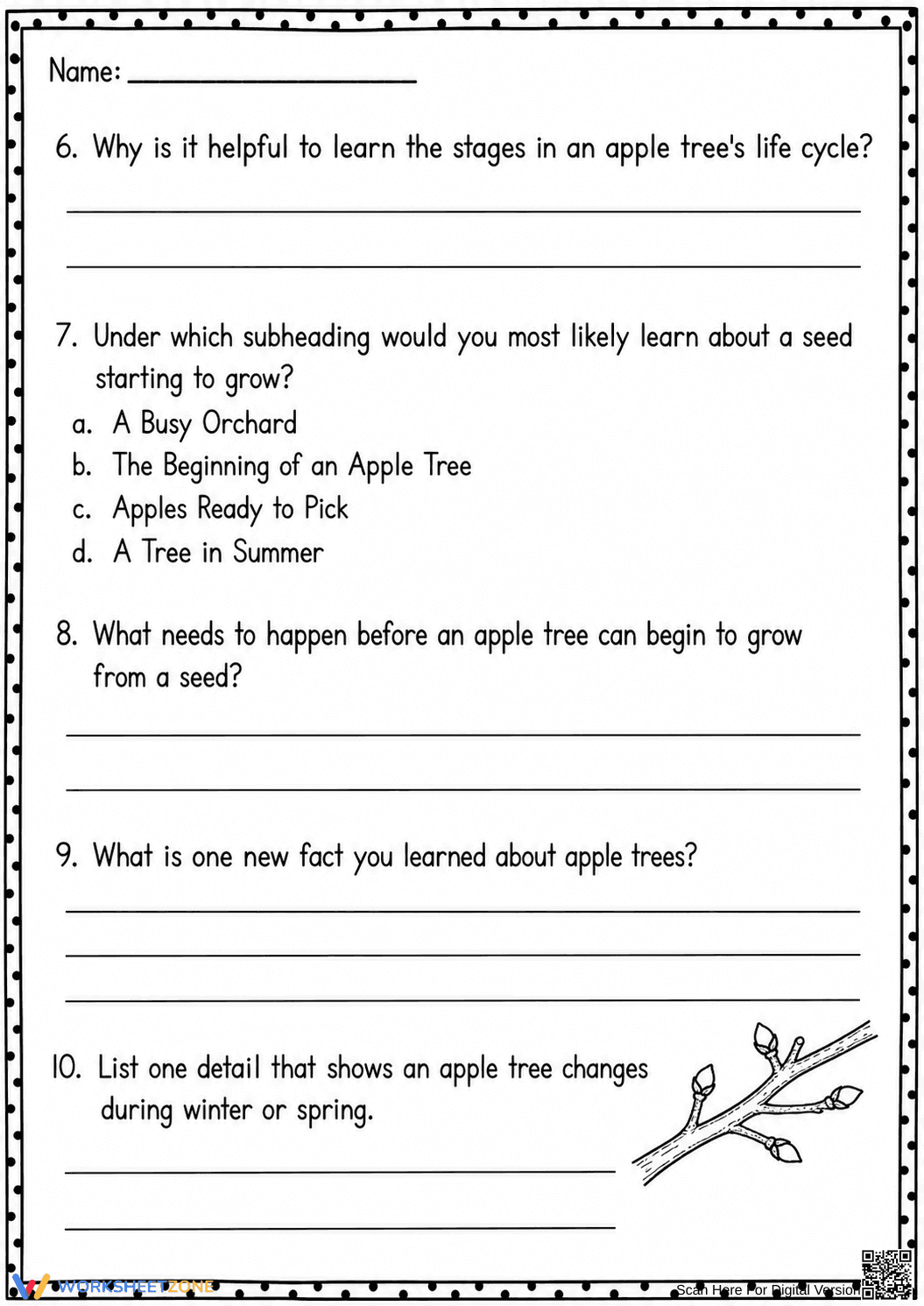
The packet contains two pages of illustrated informational text and four pages of comprehension questions. It features clear subheadings, a detailed diagram of an apple blossom for botanical study, and bolded vocabulary terms like germination and pollination. The 10-question assessment is provided in two layout versions to suit different classroom needs and printing preferences.
Zero-Prep Workflow
- Print: Select the reading passages and the preferred question layout (1 minute).
- Distribute: Hand out the materials for independent reading or small-group science centers (1 minute).
- Review: Use the included answer key for rapid grading or whole-class discussion.
Total teacher preparation time is under 2 minutes, making this an ideal resource for sub plans or unexpected schedule changes.
Standards Alignment
Primary alignment is CCSS.ELA-LITERACY.RI.3.1, focusing on using text evidence to answer specific questions about the apple life cycle. It also supports 3-LS1-1 by describing the unique life cycle of a flowering plant. Both standard codes can be copied directly into lesson plans, IEP goals, or district curriculum mapping tools.
How to Use It
Use this as a primary text during a life science unit on plants. It works well as a during-instruction activity where students highlight key terms in the text before answering questions. For formative assessment, observe how students use the subheadings to locate information for question 7. Completion typically takes 35 minutes.
Who It's For
This is designed for Grade 3 students but is accessible for Grade 2 advanced readers or Grade 4 students needing review. It pairs naturally with a physical apple dissection or a seed-planting experiment. The clear structure supports English Language Learners by providing visual cues and defined vocabulary within the narrative.
According to the RAND AIRS 2024 report, integrating informational text within science instruction significantly improves retention of complex biological concepts compared to isolated vocabulary drills. This worksheet applies these findings by embedding terms like germination and pollination within a chronological narrative of the apple tree's growth. By requiring students to reference specific subheadings and text evidence per CCSS.ELA-LITERACY.RI.3.1, the resource aligns with Fisher & Frey’s (2014) research on the importance of close reading for disciplinary literacy. The inclusion of 10 targeted questions ensures that students move beyond surface-level reading to analyze the relationships between seasonal changes and plant development. This evidence-based approach supports the development of critical thinking skills necessary for meeting national standards in both ELA and Science. Educators can confidently use this standalone packet to bridge the gap between reading proficiency and scientific inquiry in the elementary classroom.


