


























Views
Downloads

Apple Life Cycle Sequencing | Grade 1 Ready
Paste this activity's link or code into your existing LMS (Google Classroom, Canvas, Teams, Schoology, Moodle, etc.).
Students can open and work on the activity right away, with no student login required.
You'll still be able to track student progress and results from your teacher account.
This Grade 1 apple life cycle worksheet provides a hands-on way for students to master chronological sequencing while exploring plant biology. By organizing growth stages from seed to harvest, learners develop a concrete understanding of how living things change over time. It transforms abstract biological concepts into a tactile, memorable learning experience.
At a Glance
- Grade: 1 · Subject: Science
- Standard:
K-LS1-1— Use observations to describe patterns of what plants need to survive and grow- Skill Focus: Apple life cycle sequencing
- Format: 2 pages · 6 problems · Answer key included · PDF
- Best For: Fall science units and centers
- Time: 15–20 minutes
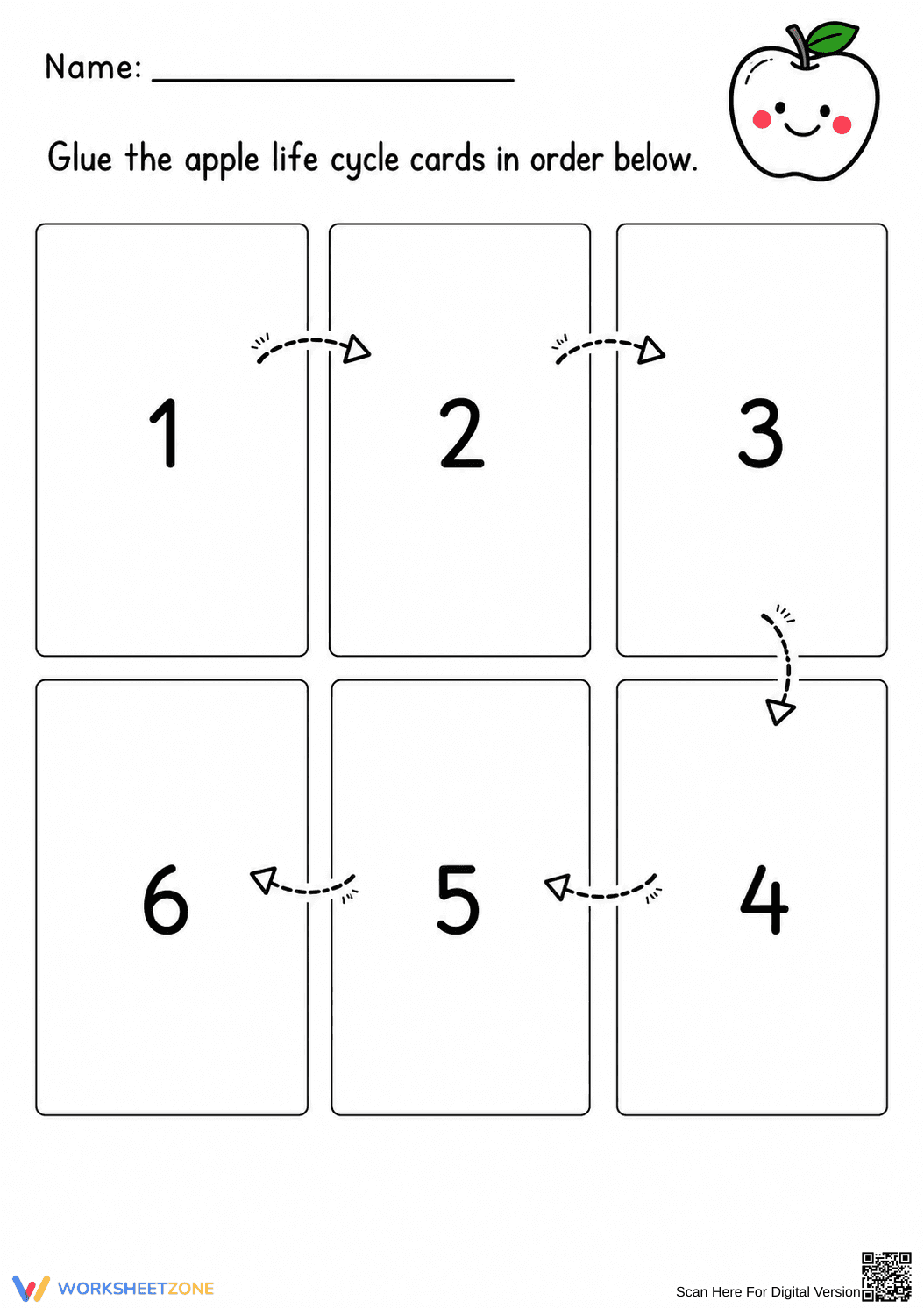
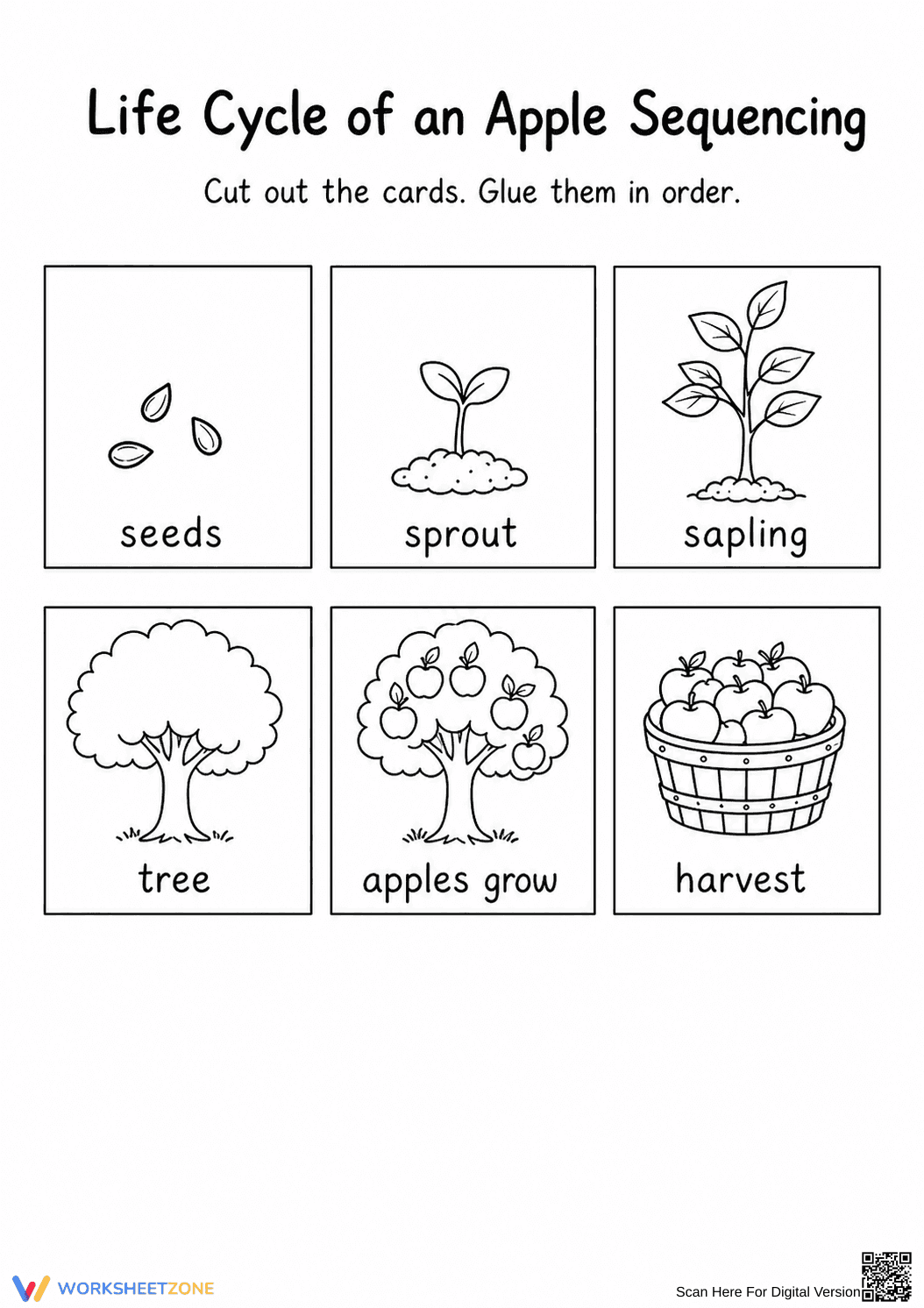
The resource consists of two high-quality PDF pages designed for immediate classroom use. The first page features a numbered sequencing mat with directional arrows to guide the flow of the life cycle. The second page contains six illustrated cards—seeds, sprout, sapling, tree, apples grow, and harvest—each paired with clear text labels to support early literacy and vocabulary acquisition.
Zero-Prep Workflow
- Print: Select the two pages and print enough copies for your group (30 seconds).
- Distribute: Provide students with scissors and glue to cut out the six stage cards (5 minutes).
- Review: Students glue the cards onto the numbered mat and explain the sequence to a partner (10 minutes).
Total teacher preparation time is under 2 minutes, making it an ideal choice for emergency sub plans or last-minute science blocks during busy autumn months.
Standards Alignment
This worksheet aligns with `K-LS1-1`, focusing on the observable patterns of plant growth and development. It also supports CCSS.ELA-LITERACY.RI.K.3 by requiring students to describe the connection between a series of scientific events. Both standard codes can be copied directly into lesson plans, IEP goals, or district curriculum mapping tools.
How to Use It
Use this during a fall-themed science unit after reading a book about orchards. It serves as an excellent formative assessment to check if students understand that a tree must mature before producing fruit. For a quick extension, ask students to point to the "sapling" and explain what it needs to become a "tree." This activity is best used during the independent practice portion of a lesson.
Who It's For
This resource is tailored for Kindergarten and Grade 1 students, including English Language Learners who benefit from the visual-to-text associations. It pairs perfectly with a real apple-tasting activity or a classroom anchor chart detailing the parts of a plant. Homeschooling parents will find it a simple yet effective addition to nature studies.
According to research by Fisher & Frey (2014) on the gradual release of responsibility, tactile sequencing activities like this apple life cycle worksheet bridge the gap between teacher modeling and independent mastery. By physically manipulating the stages of growth, students internalize the chronological logic required for scientific inquiry. This specific resource addresses the K-LS1-1 standard by requiring students to observe and order the patterns of plant development. Data from NAEP suggests that early exposure to life science cycles builds the foundational schema necessary for more complex biological studies in later elementary years. The inclusion of both images and text labels supports dual-coding theory, ensuring that diverse learners can access the curriculum effectively. This 2-page PDF provides 6 distinct tasks that reinforce fine motor skills alongside core science content, making it a versatile tool for any early childhood classroom or homeschool environment.


