


























Views
Downloads


Printable Apple Life Cycle Worksheet | Grade 2-5 Science
Paste this activity's link or code into your existing LMS (Google Classroom, Canvas, Teams, Schoology, Moodle, etc.).
Students can open and work on the activity right away, with no student login required.
You'll still be able to track student progress and results from your teacher account.
This printable apple life cycle worksheet helps students visualize and sequence the biological stages of a fruit-bearing plant. By identifying and illustrating six distinct phases—from seeds to mature apples—learners develop a foundational understanding of plant growth and reproduction. This resource ensures students can explain how organisms change throughout their lives.
At a Glance
- Grade: 2-5 · Subject: Science
- Standard:
3-LS1-1— Develop models to describe that organisms have unique and diverse life cycles- Skill Focus: Plant life cycle sequencing
- Format: 4 pages · 6 stages · Answer key included · PDF
- Best For: Introductory science lessons and centers
- Time: 20–30 minutes
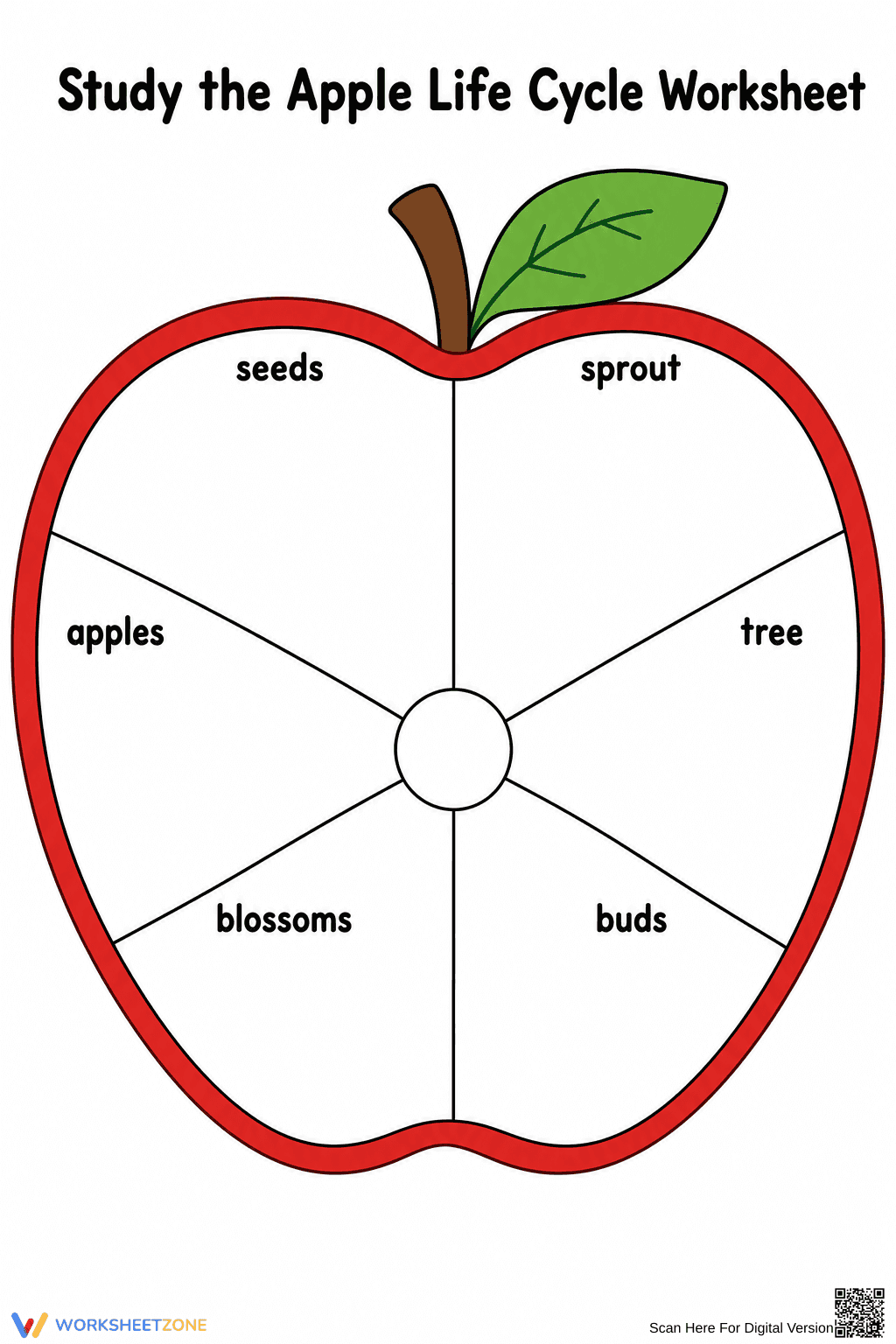
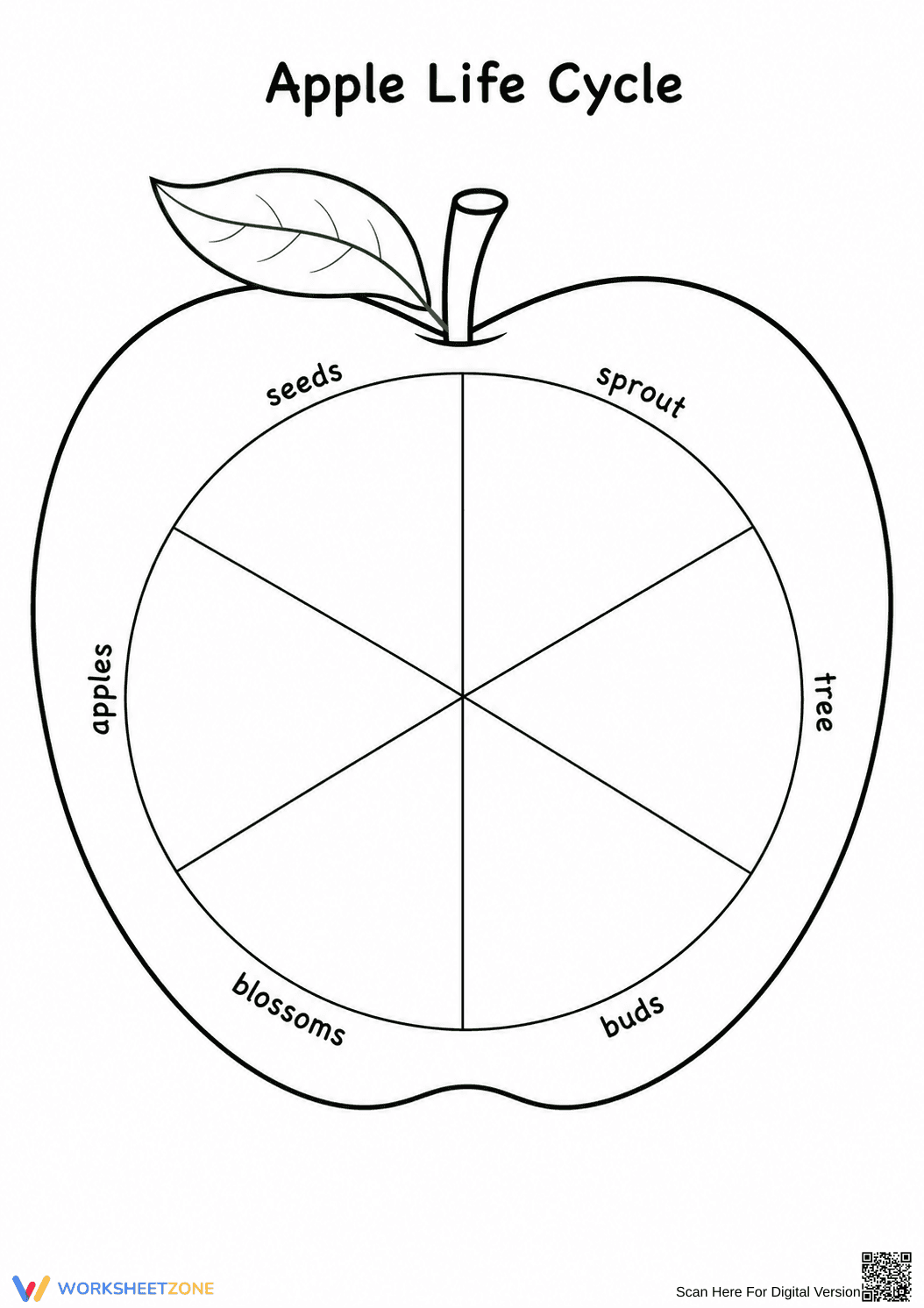
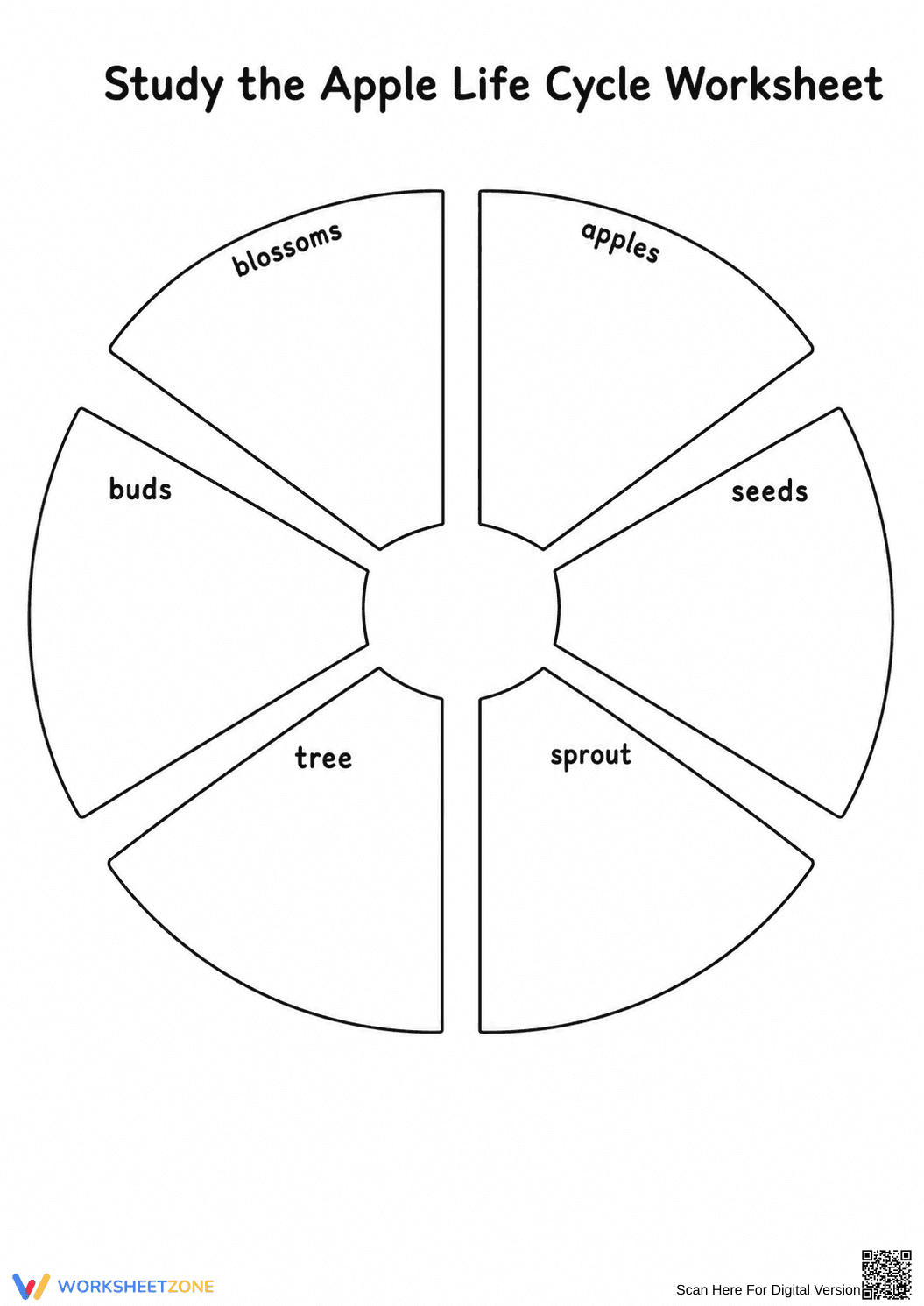
The PDF contains four comprehensive pages designed for flexibility in the classroom. It includes a primary apple-shaped graphic organizer divided into six labeled sections: seeds, sprout, tree, buds, blossoms, and apples. Additionally, the set provides a page of illustrated cut-outs for tactile learners, a black-and-white version for coloring, and a circular diagram for alternative sequencing practice.
Teachers can implement this activity with a simple three-step workflow. First, print the desired version (color or B&W) in less than 1 minute. Second, distribute the sheets and optional cut-outs to students for a 15-minute independent or partner activity. Finally, review the completed cycles as a whole group in 5 minutes using the provided illustrations as a visual key. Total teacher prep time is under 2 minutes.
This resource is primarily aligned with 3-LS1-1: "Develop models to describe that organisms have unique and diverse life cycles but all have in common birth, growth, reproduction, and death." It also supports ELA integration by encouraging students to follow a multi-step technical procedure. Both standard codes can be copied directly into lesson plans, IEP goals, or district curriculum mapping tools.
Use this worksheet during the "Explore" phase of a 5E science lesson to allow students to predict the order of plant growth. It also serves as an effective formative assessment after a read-aloud about orchards. Teachers should observe if students can correctly distinguish between the "buds" and "blossoms" stages. Completion typically takes 20 to 30 minutes depending on the level of artistic detail.
This activity is ideal for general education elementary students, English Language Learners (ELLs) who benefit from visual vocabulary, and special education students requiring structured graphic organizers. It pairs naturally with a classroom plant observation journal or a non-fiction text about seasonal changes in nature.
The use of visual models to represent biological processes is a cornerstone of effective science instruction, as highlighted by the NGSS 3-LS1-1 framework. Research from Fisher & Frey (2014) emphasizes that graphic organizers, such as this apple-shaped life cycle map, provide the necessary scaffolding for students to move from basic recall to conceptual understanding. By breaking down the complex process of plant reproduction into six manageable stages—seeds, sprout, tree, buds, blossoms, and apples—this worksheet reduces cognitive load while reinforcing domain-specific vocabulary. According to the RAND AIRS 2024 report, high-quality printable materials that integrate visual and text-based information significantly improve retention rates in early elementary science. This resource provides a structured yet flexible environment for students to demonstrate mastery of life science standards through modeling, ensuring they grasp the cyclical nature of biological development in fruit-bearing plants.


