


























Views
Downloads

Printable Apple Tree Life Cycle Worksheet | Grade 1 Science
Paste this activity's link or code into your existing LMS (Google Classroom, Canvas, Teams, Schoology, Moodle, etc.).
Students can open and work on the activity right away, with no student login required.
You'll still be able to track student progress and results from your teacher account.
This hands-on science worksheet helps students master the stages of an apple tree's development by sequencing its growth from seed to fruit-bearing tree. By cutting and pasting five distinct stages into a continuous circular diagram, young learners actively build their understanding of biological cycles and plant reproduction.
At a Glance
- Grade: 1 · Subject: Science
- Standard:
3-LS1-1— Develop models to describe organism life cycles- Skill Focus: Plant life cycle sequencing
- Format: 2 pages · 5 problems · Answer key included · PDF
- Best For: Independent practice and science centers
- Time: 15–20 minutes
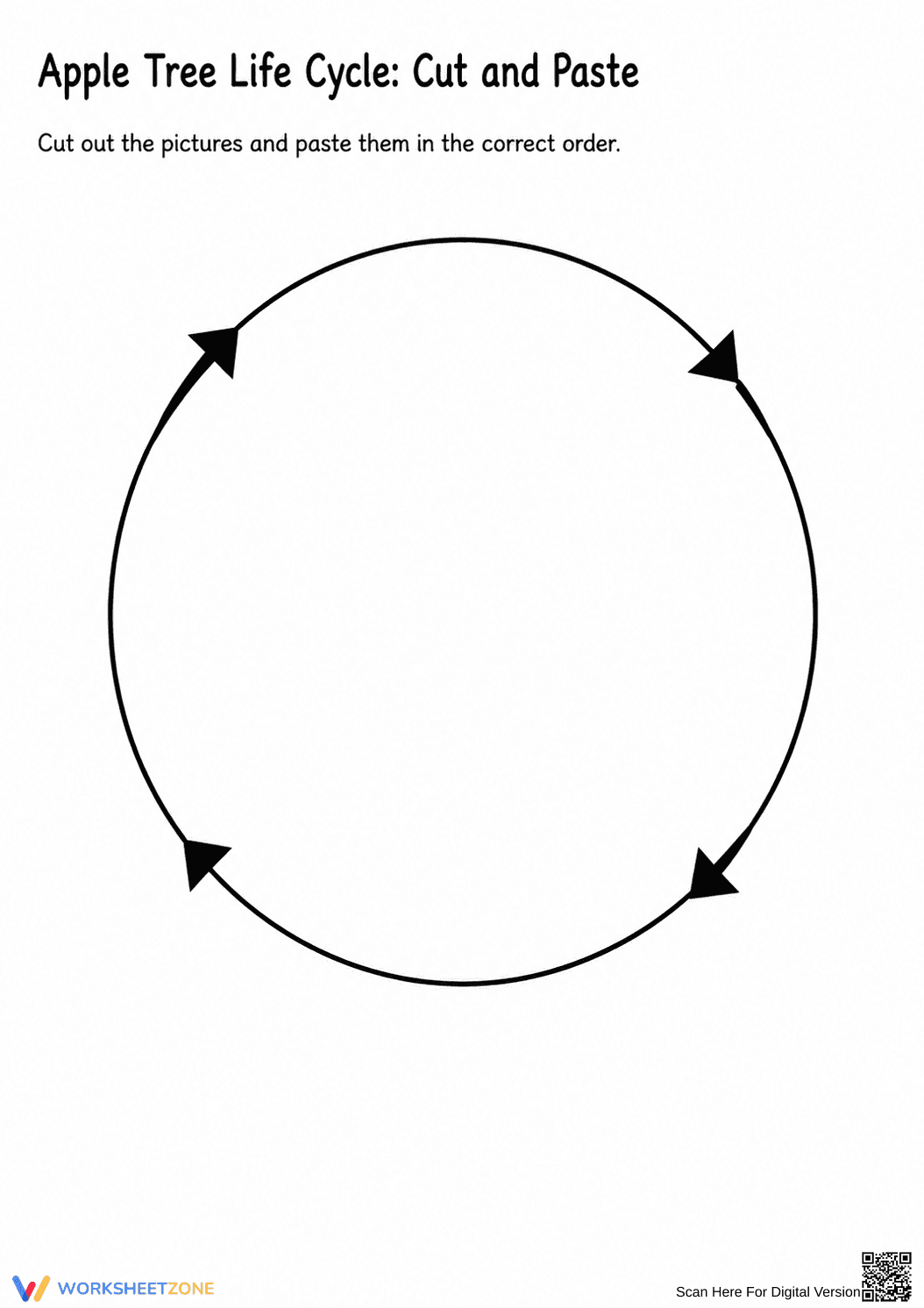
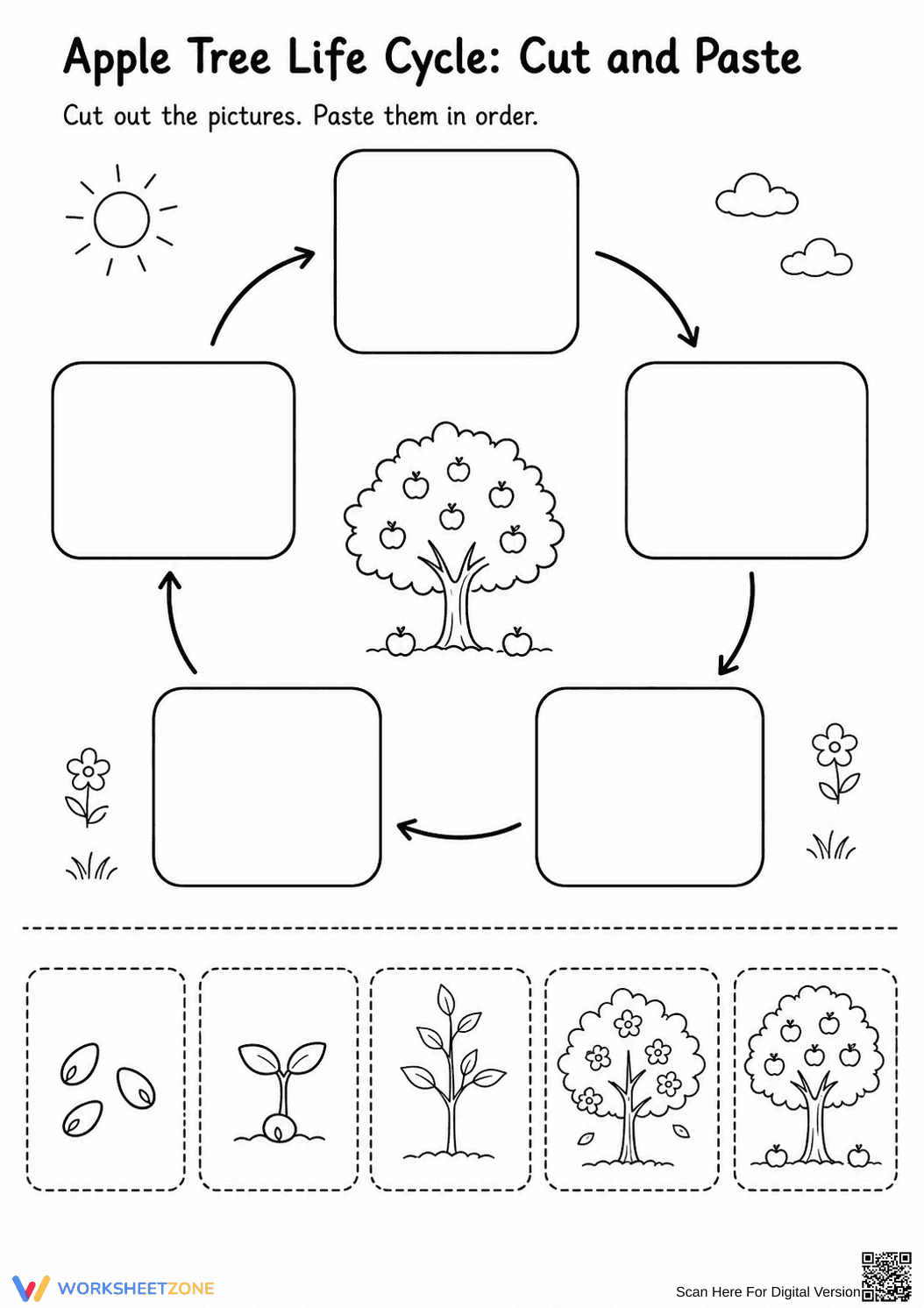
This two-page activity features a circular graphic organizer with five blank boxes connected by directional arrows, reinforcing the continuous nature of the cycle. The second page provides five distinct illustrations representing the seed, sprout, sapling, flowering tree, and mature fruit tree. Students cut out these visual cues and paste them into the correct sequential order.
This print-and-go resource requires under two minutes of total teacher preparation, making it an ideal zero-prep solution for busy educators or emergency sub plans.
- Print (1 minute): Simply print the PDF. No special materials are needed beyond standard scissors and glue sticks.
- Distribute (1 minute): Hand out the worksheets along with basic classroom supplies. The visual instructions are self-explanatory for early readers.
- Review (3 minutes): Quickly check student work by verifying the visual sequence of the five stages around the circle.
This activity is aligned to the primary standard 3-LS1-1: Develop models to describe that organisms have unique and diverse life cycles but all have in common birth, growth, reproduction, and death. It also supports foundational K-2 science skills by encouraging students to observe and document the predictable patterns of plant growth. Both standard codes can be copied directly into lesson plans, IEP goals, or district curriculum mapping tools.
This worksheet fits perfectly into a spring science unit or an autumn apple theme. Use it as independent practice immediately following direct instruction, allowing students to physically manipulate the stages. Alternatively, place it in a science center for small-group work. As a formative assessment observation tip, watch how students place the flowering tree versus the fruit tree—this reveals whether they grasp that blossoms precede fruit. Expected completion time is 15 to 20 minutes.
Designed for K-2 students building foundational knowledge of biological sciences, this cut-and-paste format provides built-in differentiation for visual and kinesthetic learners who benefit from hands-on manipulation over extensive writing. It pairs naturally with a read-aloud book about how apples grow or a direct instruction lesson featuring a plant life cycle anchor chart.
Integrating hands-on modeling tasks like this cut-and-paste activity significantly enhances early childhood science comprehension. According to EdReports 2024, instructional materials that require students to physically sequence biological events improve long-term retention of complex concepts. By aligning with 3-LS1-1, this resource ensures students actively develop models to describe organism life cycles rather than passively receiving information. The physical act of cutting and arranging the five stages of the apple tree reinforces the continuous, cyclical nature of plant growth, moving beyond rote memorization. This multimodal approach supports diverse learning profiles, allowing young students to demonstrate their understanding of scientific phenomena through visual and kinesthetic means. Utilizing structured sequencing tasks provides educators with immediate, observable evidence of student mastery regarding foundational life science principles, ensuring that early learners are fully prepared for more advanced biological studies in subsequent grade levels.


