


























Views
Downloads

Apple Life Cycle Worksheet | Grade 3 Essential Science
Paste this activity's link or code into your existing LMS (Google Classroom, Canvas, Teams, Schoology, Moodle, etc.).
Students can open and work on the activity right away, with no student login required.
You'll still be able to track student progress and results from your teacher account.
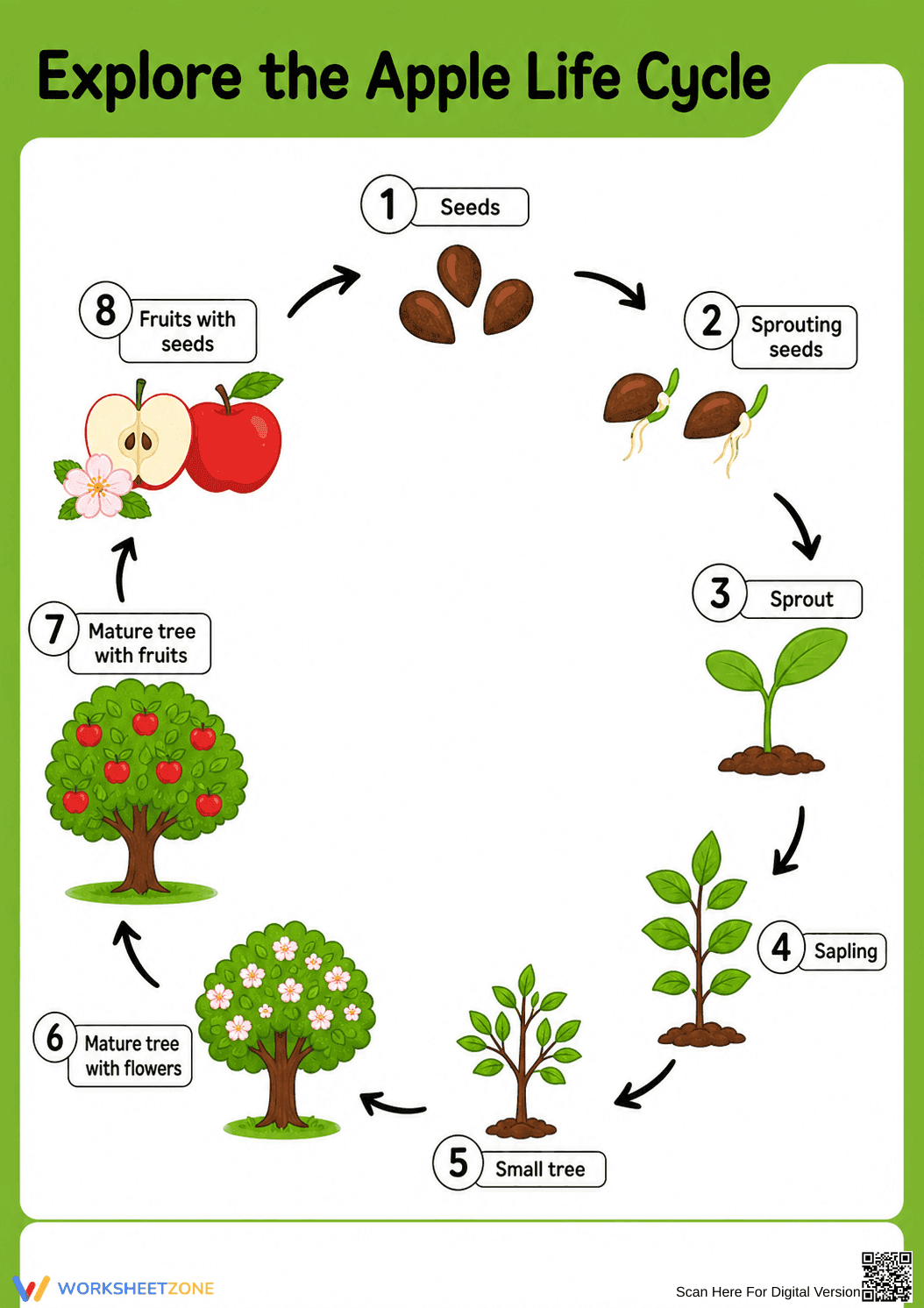
This comprehensive apple life cycle worksheet provides a clear, visual framework for students to master the biological stages of plant growth. By identifying and sequencing the eight distinct phases from seed to fruit-bearing tree, learners develop a concrete understanding of how organisms change over time. This resource ensures students can accurately describe the birth, growth, reproduction, and death cycle of a common flowering plant.
At a Glance
- Grade: 3 · Subject: Science
- Standard:
3-LS1-1— Develop models to describe that organisms have unique and diverse life cycles- Skill Focus: Biological sequencing and plant anatomy
- Format: 2 pages · 8 problems · Answer key included · PDF
- Best For: Introductory science lessons and formative assessment
- Time: 15–20 minutes
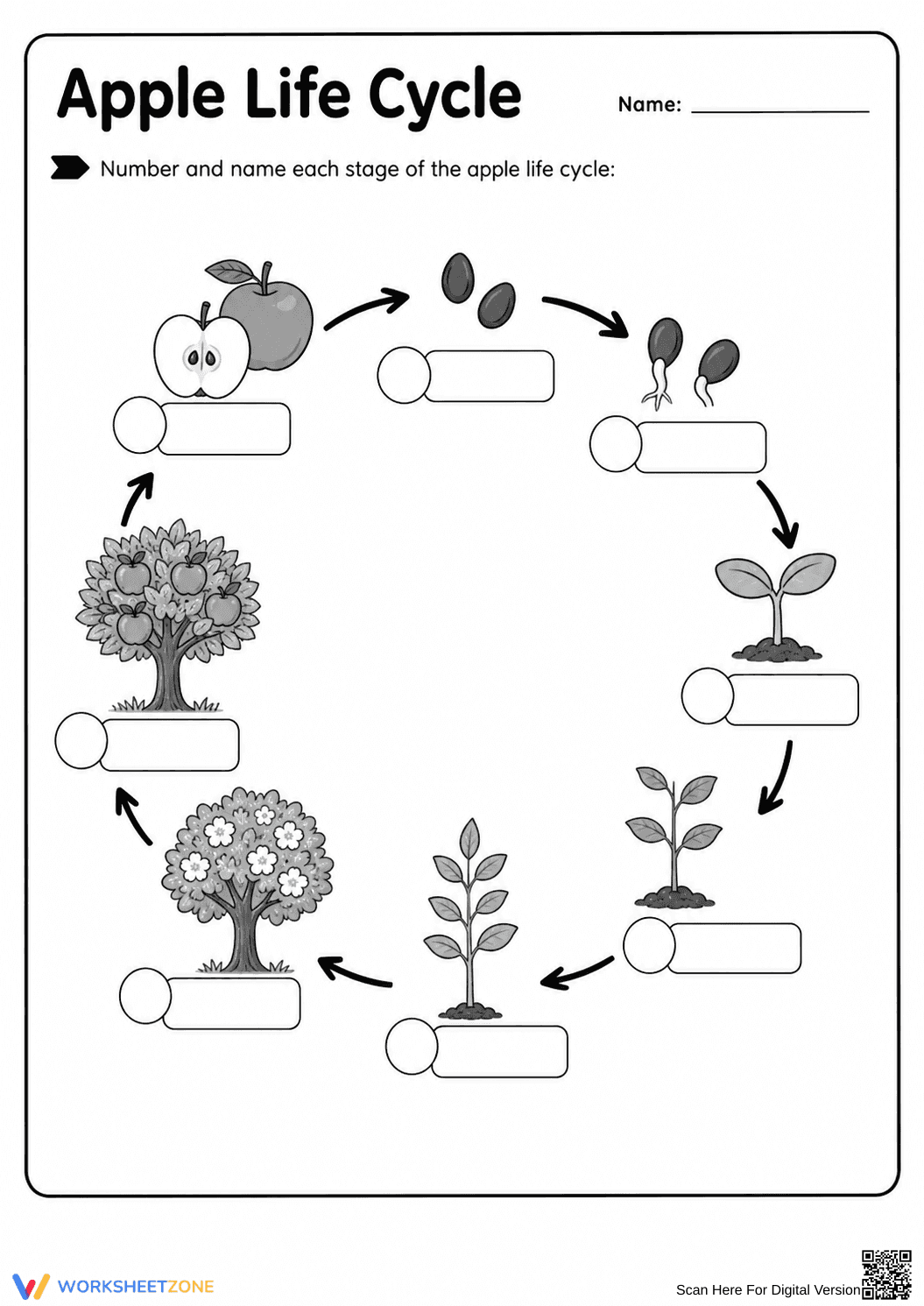
What's Inside: This 2-page PDF package includes a vibrant, full-color reference poster and a corresponding black-and-white student activity sheet. The reference page illustrates 8 numbered stages: seeds, sprouting seeds, sprout, sapling, small tree, mature tree with flowers, mature tree with fruits, and fruits with seeds. The student worksheet mirrors this layout, providing empty labels and numbering circles for students to demonstrate their knowledge through independent recall or guided observation.
Zero-Prep Workflow
- Print (1 minute): Output the color reference page for display and the black-and-white version for students.
- Distribute (30 seconds): Hand out the worksheets after a read-aloud or apple exploration activity.
- Review (30 seconds): Use the reference chart for a quick whole-class check, allowing students to self-correct labels and sequence numbers.
This streamlined process makes the worksheet ideal for emergency sub plans or science center rotations where teacher intervention must be kept to a minimum.
Standards Alignment: This resource is specifically designed to meet `3-LS1-1`. Students develop a model to describe that organisms have unique and diverse life cycles but all have in common birth, growth, reproduction, and death. The inclusion of the flowering and fruiting stages specifically addresses the reproductive phase of the plant life cycle. This standard code can be copied directly into lesson plans, IEP goals, or district curriculum mapping tools.
How to Use It: Assign this worksheet during the "Explain" or "Evaluate" phase of a 5E science lesson. For a formative assessment, have students complete the black-and-white labeling sheet without the reference guide to gauge prior knowledge. Alternatively, use it as a scaffolded note-taking tool during direct instruction. Expected completion time ranges from 15 to 20 minutes depending on whether students color the illustrations.
Who It's For: This resource is tailored for Grade 3 but is effective for Grade 2 through Grade 5 learners who require visual support. It is particularly useful for ESL/ELL students who benefit from pictorial representations of scientific vocabulary. Pair this with a non-fiction text about orchards or an anchor chart on plant needs for a complete instructional unit.
According to the Fisher & Frey (2014) framework, visual models like this apple life cycle worksheet are critical for moving students from guided instruction to independent mastery. By providing an 8-stage reference before independent labeling, the resource reduces cognitive load and allows students to focus on scientific vocabulary and biological processes. Research indicates that students who engage with visual representations of scientific cycles demonstrate higher retention rates of complex concepts compared to text-only descriptions. This worksheet bridges the gap between observation and academic language, ensuring Grade 3 learners meet the 3-LS1-1 standard. The structured layout supports executive functioning by providing a clear path for sequencing, a foundational skill for scientific inquiry.


