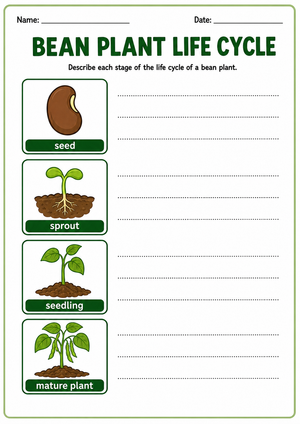
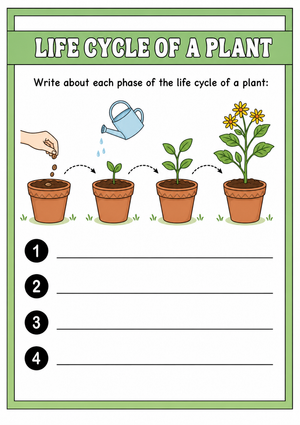
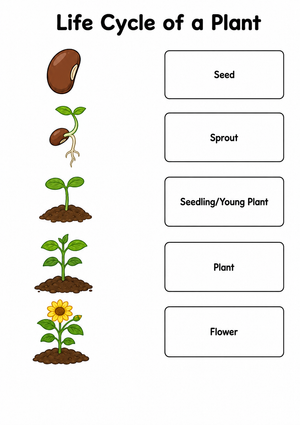
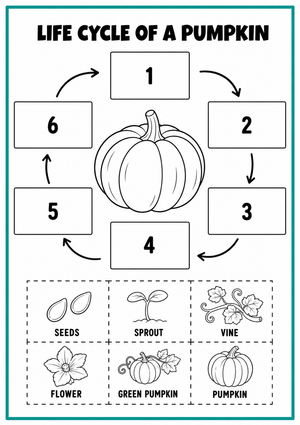
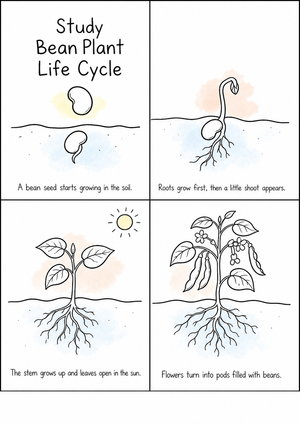
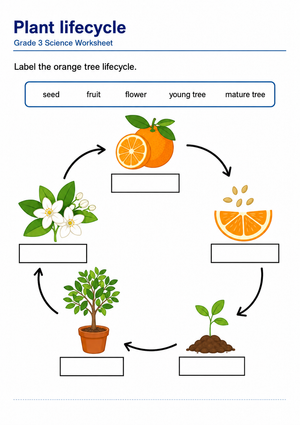
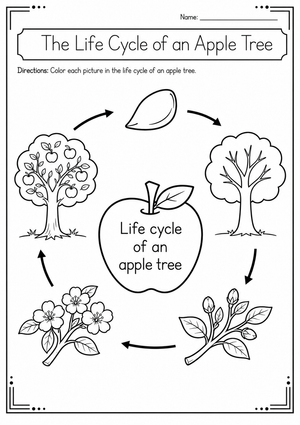
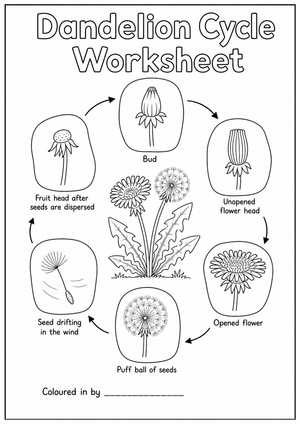
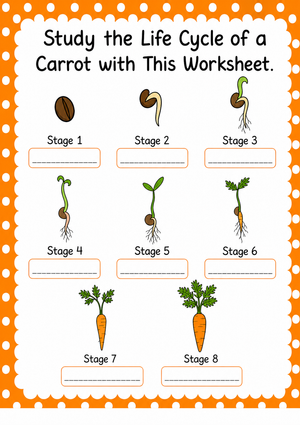
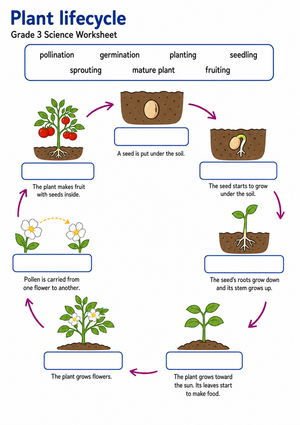
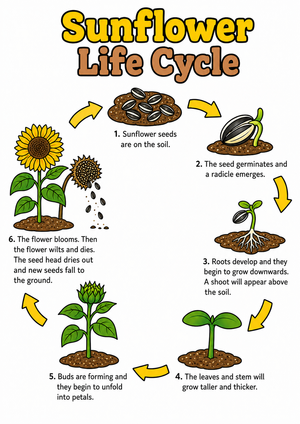
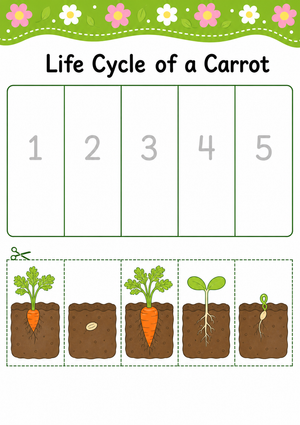
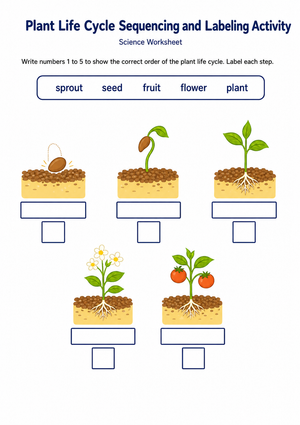
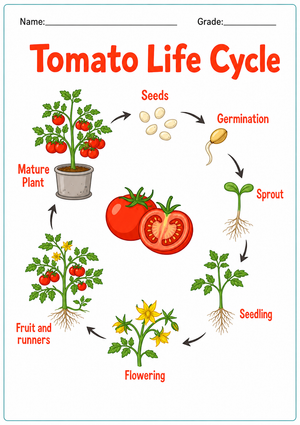
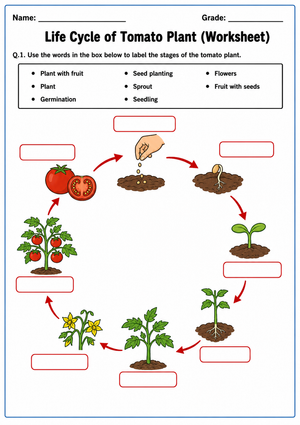
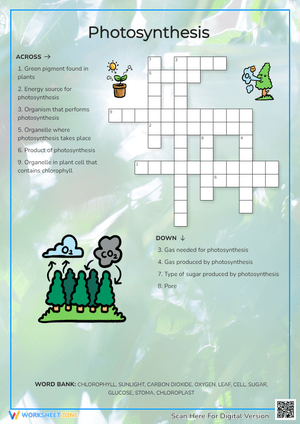
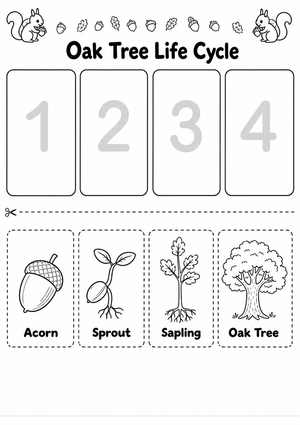
If you teach a grade 2 or grade 3 life science unit, you already know that students need more than a single diagram to understand how a flowering plant grows from seed to seed. Plant life cycle worksheets give you a repeatable way to have students label, sequence, and explain each stage of that process, which matters when your unit is built around modeling and investigation rather than memorization alone.
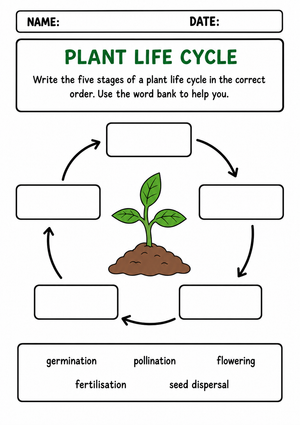
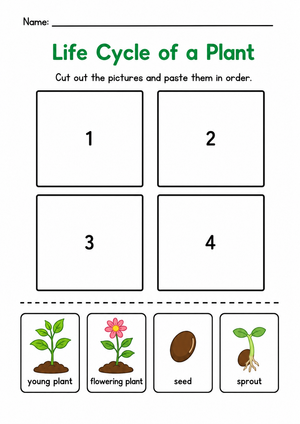
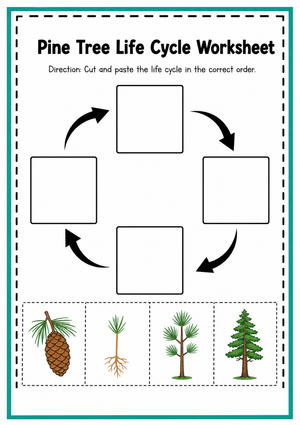
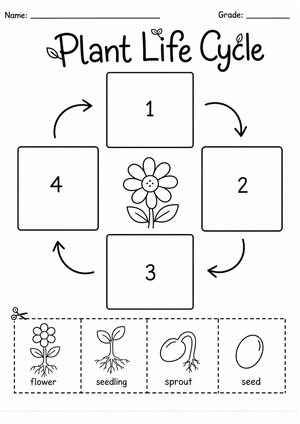
These worksheets work well as a bridge between a hands-on planting lab and a formal assessment. Instead of asking students to recall facts, a good worksheet asks them to place seed, germination, growth, pollination, and seed dispersal in order, then justify why each stage leads to the next. That sequencing skill is exactly what grade 3 standards expect students to demonstrate.
Aligning Worksheets to NGSS 3-LS1-1 Modeling Requirements
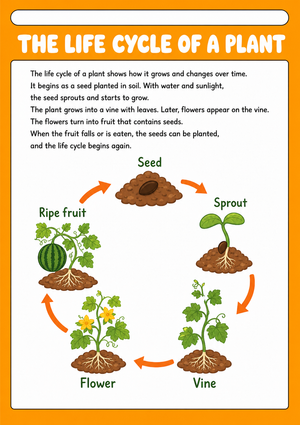
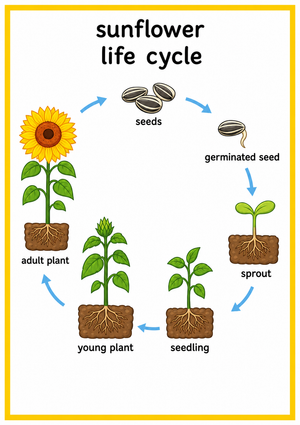
NGSS 3-LS1-1 asks grade 3 students to develop models showing that organisms have unique life cycles that include birth, growth, reproduction, and death, all influenced by the environment. A diagram-labeling worksheet is a natural fit for this standard because it requires students to build a visual model rather than just answer questions in a workbook.
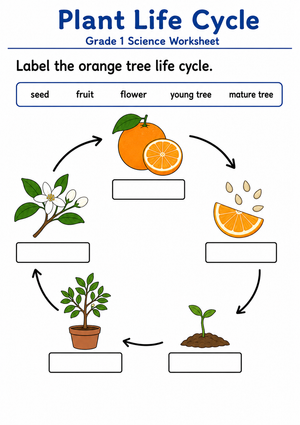
Flowering plants share a common life cycle pattern across an enormous range of species, and this shared structure is the concept grade 3 students are expected to internalize. A worksheet that uses one flowering plant example, then asks students to apply the same four stages to a second plant, checks whether students grasp the pattern instead of just memorizing one diagram.
Supporting Grade 2 Sunlight and Water Investigations
Grade 2 classrooms have a different target. NGSS 2-LS2-1 asks students to plan and conduct an investigation into whether plants need sunlight and water to grow, which is an earlier building block than the full life cycle model expected in grade 3. Worksheets for this grade should lean into observation and data recording rather than full-cycle labeling.
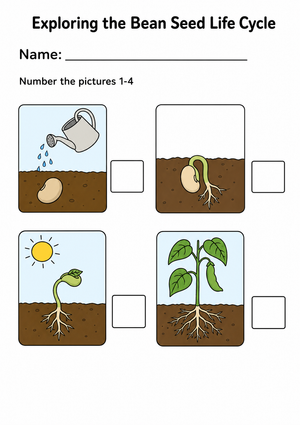
A simple growth-tracking worksheet, where students record plant height or leaf count across several days under different light and water conditions, gives you a formative assessment tool that ties directly to this investigation standard. Pair it with a seed-to-seedling diagram so students can connect what they are growing in the classroom to the broader life cycle they will study in more depth the following year.
Sequencing Activities for Germination, Pollination, and Seed Dispersal
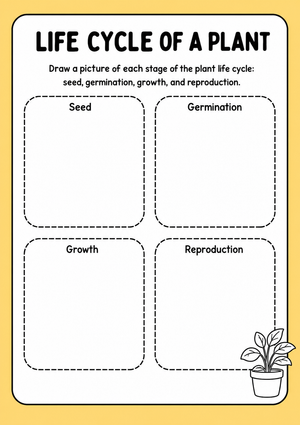
Most plant life cycle units for grades 2-3 cover four core stages: seed structure, germination, pollination, and seed dispersal. Worksheets that isolate each stage before asking students to sequence all four tend to produce stronger results than worksheets that jump straight to the full cycle.
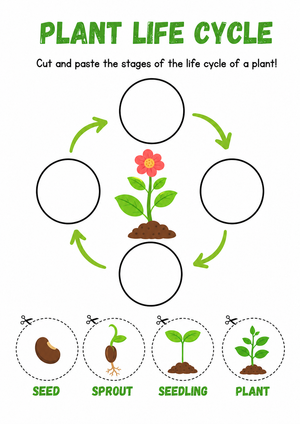
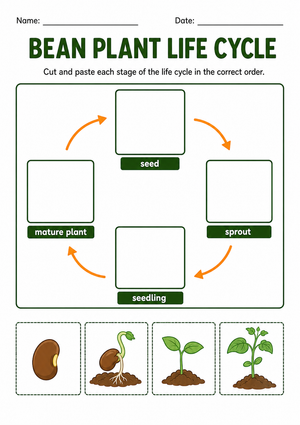
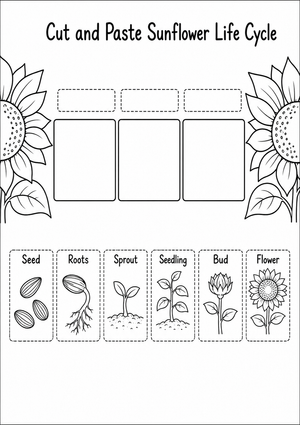
Start with a seed-structure worksheet that has students label the seed coat, embryo, and stored food source. Move to a germination worksheet where students identify the conditions a seed needs to sprout. Then introduce pollination with a worksheet that shows how pollen moves from flower to flower, followed by a seed dispersal worksheet covering wind, water, and animal-based methods. Once students have practiced each stage separately, a cut-and-paste sequencing worksheet that mixes all four stages works as a strong check for understanding.
Classroom Implementation
Plan your plant life cycle worksheets around a two-week arc that pairs with a live planting activity. In week one, use stage-specific worksheets (seed structure, germination) alongside planting seeds in cups so students can observe real germination as they complete the paper task. In week two, shift to pollination and seed dispersal worksheets, then finish with a full-cycle sequencing or modeling worksheet that doubles as your summative check.
Keep a folder of completed worksheets for each student across the unit. This gives you a simple portfolio you can reference during parent conferences or grade-level team meetings, and it makes it easy to spot which stage a specific student is still struggling with before you move to the next science unit.
Frequently Asked Questions
1. What grade level are plant life cycle worksheets best suited for
Most plant life cycle worksheets are built for grade 2-3 classrooms. Grade 2 worksheets tend to focus on sunlight and water investigations, while grade 3 worksheets focus on full life cycle modeling with all four stages.
2. How do these worksheets align with NGSS life science standards
Grade 2 worksheets support NGSS 2-LS2-1, which asks students to investigate plant growth conditions. Grade 3 worksheets support NGSS 3-LS1-1, which asks students to model a complete organism life cycle including growth and reproduction.
3. What stages should a plant life cycle worksheet cover
A complete worksheet set should cover seed structure, germination, pollination, and seed dispersal, since these are the core stages used in most grade 2-3 life cycle units.
4. How can teachers use these worksheets alongside a hands-on planting activity
Assign stage-specific worksheets during the same week students are observing real seeds sprout in class, then use a full-cycle sequencing worksheet as a summative task once the planting activity has run its course.
5. How do plant life cycle worksheets support students who need extra review
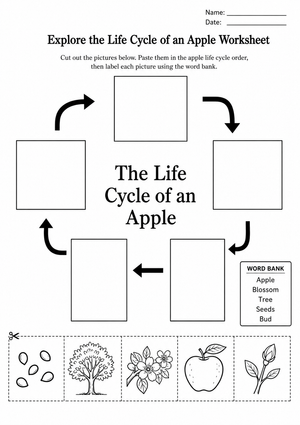
Worksheets with partially completed diagrams and word banks let struggling students focus on placing the correct term rather than recalling it unaided, which makes them useful for small-group intervention.












 Interactive Worksheet Maker
 Quiz Maker
 Word Search Maker
 Crossword Puzzle Maker
 Word Scramble Generator
 Sentence Scramble Generator
 Handwriting Worksheet Generator
 Name Tracing Generator
 Fill In The Blank Generator