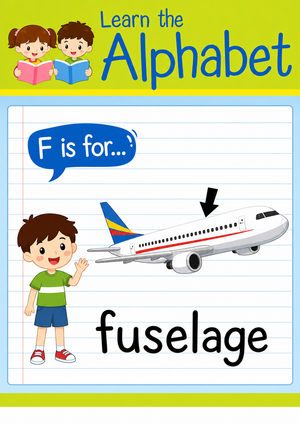
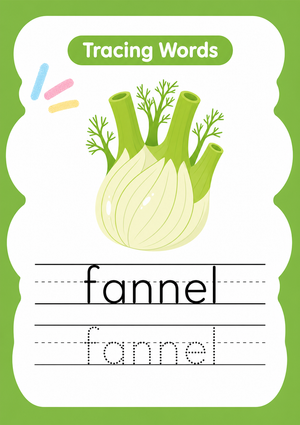
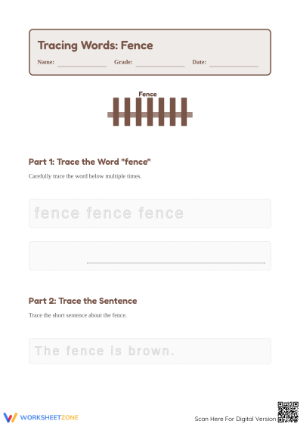
These kindergarten letter f beginning sound printable worksheets give teachers a direct, image-driven route into initial phoneme recognition — no lengthy prep, no props required beyond a printer. The set covers the /f/ sound across six distinct task formats, each worksheet building the same core skill from a slightly different angle so teachers can spread them across a full unit rather than using them all in a single session.
The Specific Skills Each Worksheet Targets
Every worksheet in the set focuses on one thing: isolating the /f/ sound at the beginning of spoken words and connecting it to the letter F on the page. The task formats vary enough to hold attention across repeated use without losing that tight instructional focus.
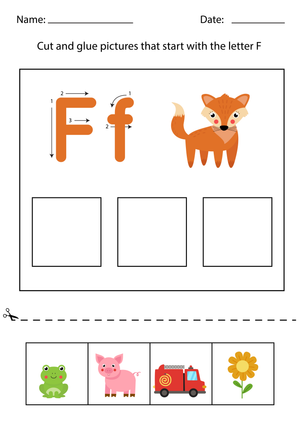
- Visual sorting: Students cut out pictures and place them into two columns — /f/ words and non-/f/ words. The physical act of sorting slows down the identification process in a useful way; students who rush on written tasks tend to be more deliberate when their hands are involved.
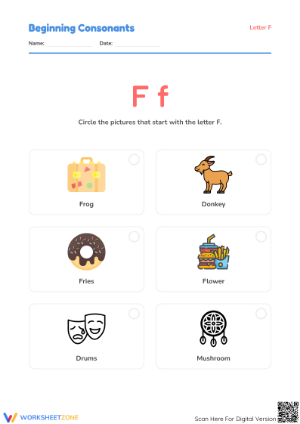
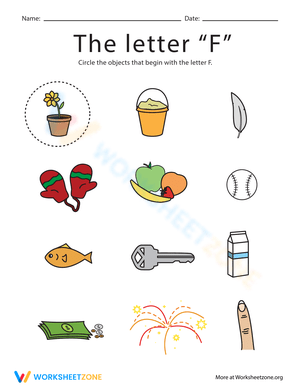
- Color-by-sound: Students color only the images whose names begin with /f/. This works well as a quiet independent task and gives teachers a clear record of which pictures tripped students up.
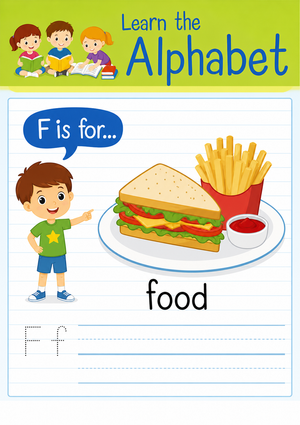
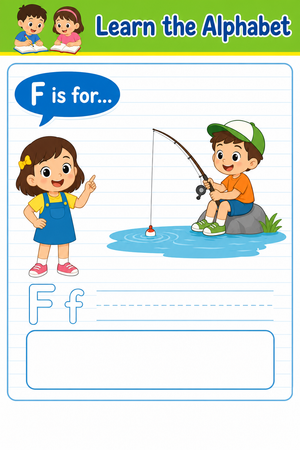
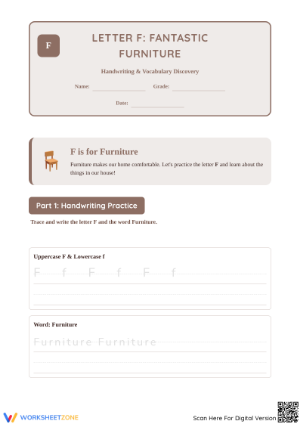
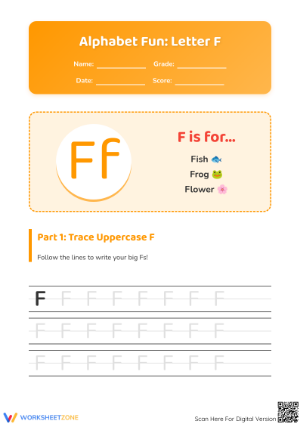
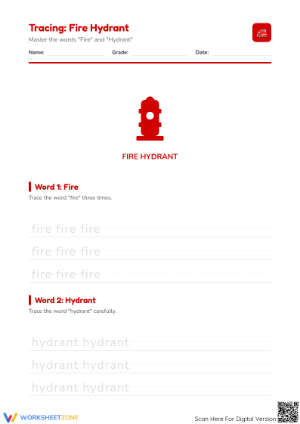
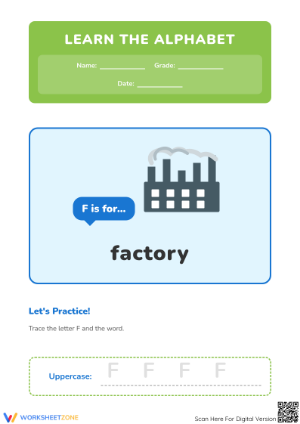
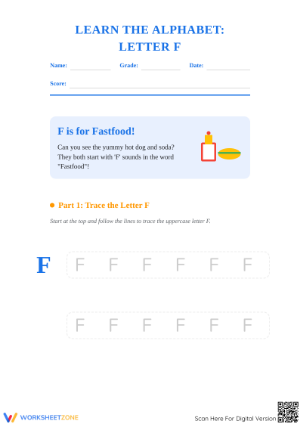
- Letter tracing with sound production: Tracing the letter F is paired with a verbal prompt to say the /f/ sound aloud, creating a motor-phoneme link that supports later encoding work.
- Picture-to-letter matching: Students draw lines from images to the uppercase or lowercase F. Straightforward, but useful for confirming the grapheme-phoneme connection is solid before moving to blending.
- Beginning sound mazes: Students trace a path through a grid by following only the /f/ images. Sustained phoneme isolation across multiple decisions — harder than it looks for students who are still working at the word-family level.
- Reusable phonics mats: Laminated and paired with a dry-erase marker, these let students circle /f/ pictures and practice letter formation repeatedly without consuming additional copies.
Building These Worksheets Into Your Phonics Week
The cut-and-paste sorting worksheet works best as a Thursday or Friday review task, after students have had several days of oral /f/ practice. Introducing it earlier in the week risks having students guess at the sort rather than genuinely isolating the phoneme — the physical manipulation can mask shaky sound discrimination. Save the tracing worksheet for the morning meeting follow-up, right after the class has practiced the /f/ sound together and the articulation is still fresh in their mouths.
Literacy centers are where the maze and color-by-sound worksheets earn their keep. Because the directions are picture-based, students can navigate them independently while the teacher runs a small guided reading group. The reusable mats fit naturally at a tactile station where students are already working with manipulatives. For the substitute teacher folder, the matching and coloring worksheets are the most self-explanatory — two tasks that hold up without any verbal introduction from an adult.
These kindergarten letter f beginning sound printable worksheets also fit neatly into the homework rotation during the letter F unit week. The color-by-sound format travels home without requiring scissors or glue, and parents can follow the directions from the visual cues alone.
Sound Confusions Worth Catching Early
The /f/ sound trips students up in specific ways that are worth knowing before the worksheets go out. The most common confusion is between /f/ and /v/. Both sounds are labiodental fricatives — upper teeth resting on the lower lip, air pushed through — but /v/ is voiced and /f/ is not. Students who say "vox" instead of "fox" are not making a random error; they are producing the voiced version of the same articulation. A quick hand-to-throat check (voice box vibrates for /v/, silent for /f/) resolves this faster than any written correction.
The /th/ confusion appears mostly in students with developing articulation or in those working across two languages. The tongue placement differs — /th/ pushes through the teeth while /f/ keeps the tongue back — but the airflow feels similar to young children. A handheld mirror during the introductory lesson, before any worksheet is distributed, helps students see the difference in their own mouths. Students who can articulate the distinction clearly tend to sort and color with noticeably more accuracy.
On the sorting worksheet specifically, watch for students who correctly identify fish and fan but mark phone as a non-/f/ word. The ph spelling does not appear in this set, but "phone" surfaces in some supplemental image banks and comes up in classroom conversation. If it does, flag it during the group introduction — five-year-olds hear /f/ in "phone" but have not yet connected ph to that sound, which generates genuine confusion about whether their answer was right or wrong.
Adapting the Set for a Range of Learners
For students who are still building basic English word-object vocabulary — English language learners in particular — a quick picture walk before independent work closes a gap that has nothing to do with phonics. If a student doesn't know the English word for "fork" or "feather," the beginning sound task becomes a guessing exercise rather than a phonemic one. Two minutes of vocabulary preview using the worksheet images as flashcards is enough to make the activity accessible. These kindergarten letter f beginning sound printable worksheets use highly familiar images by design, but not every image reads as universally obvious across language backgrounds.
Students who move through the /f/ sound quickly can use the back of the sorting or coloring worksheet to attempt phonetic spelling — writing the words they sorted rather than just categorizing the pictures. That shift from recognition to production adds meaningful challenge without a separate resource. For students who need more time, the reusable mat lets them repeat the same task across multiple days without the finality of a graded paper on the desk.
Standard Alignment
These worksheets address CCSS.ELA-LITERACY.RF.K.3.A, which asks kindergartners to demonstrate basic knowledge of one-to-one letter-sound correspondences by producing the primary sound of each consonant. The /f/ sound is clean and consistent at this level — the ph digraph is typically a second-grade concern — making it a reliable early entry point for RF.K.3.A instruction. Most kindergarten pacing guides place initial consonant sound work in the first six to eight weeks of the school year, which is exactly when these worksheets fit most naturally into the phonics sequence.
Frequently Asked Questions
What images appear on these worksheets?
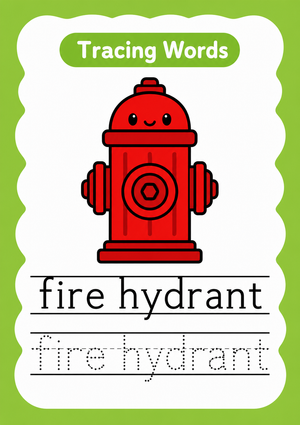
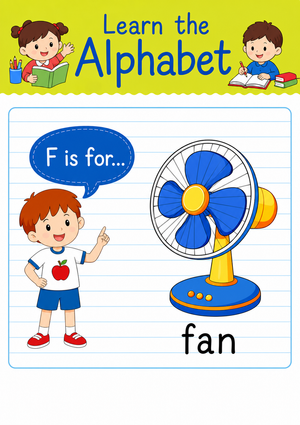
The pictures are limited to high-frequency, easily recognizable objects: fish, fox, frog, fan, flower, foot, fence, and fire. The images are clear line drawings rather than detailed illustrations, which reduces visual distraction and makes the identification task more straightforward for students who are still building visual processing speed.
Can these be used for phonemic awareness work, or are they strictly phonics?
The line between phonemic awareness and phonics blurs on most of these worksheets, and that is intentional. Saying a picture name aloud and isolating the first sound is phonemic awareness. Connecting that sound to the written letter F is phonics. Both happen simultaneously on most tasks here, which is appropriate for mid-kindergarten instruction when oral phoneme work is being mapped to print.
How long does each worksheet take to complete?
Most kindergarteners finish one worksheet in eight to twelve minutes during independent work time. The cut-and-paste sorting task runs a few minutes longer for students who are still developing scissor control — worth factoring in when planning center rotations.
Do these print in black and white or full color?
Every worksheet in the set prints cleanly in black and white on a standard classroom printer. These kindergarten letter f beginning sound printable worksheets keep per-copy costs low precisely because no color ink is needed. The color-by-sound worksheet works in black and white by design — students supply the color themselves, and that coloring step is part of the phonics task, not a finishing touch.