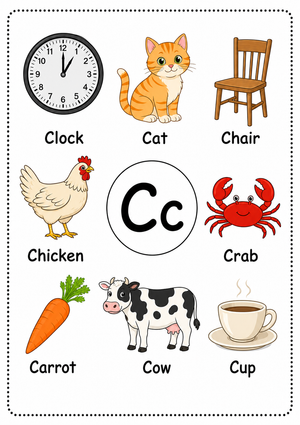
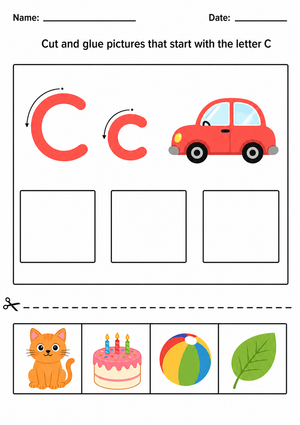
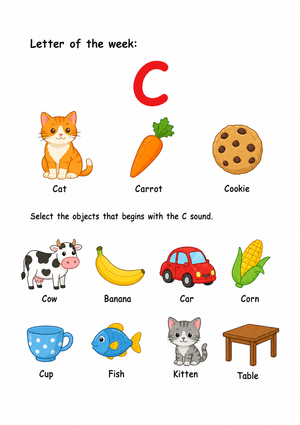
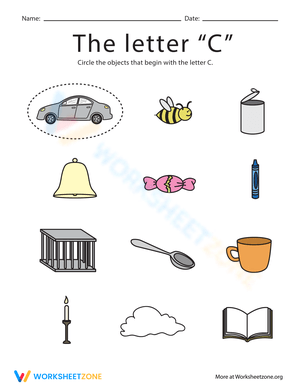
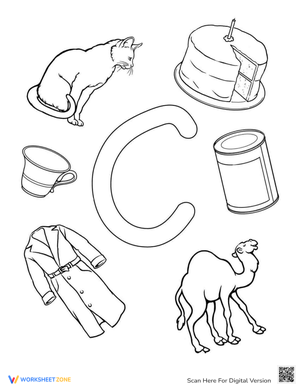
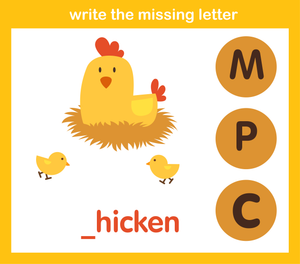
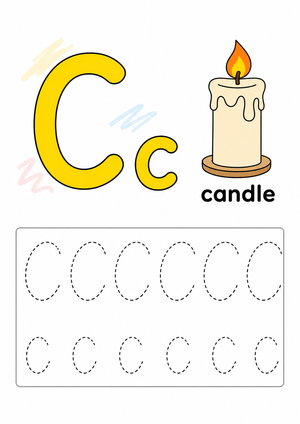
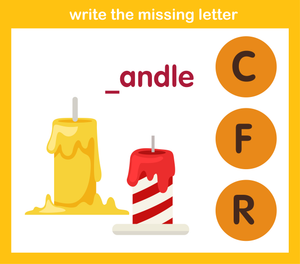
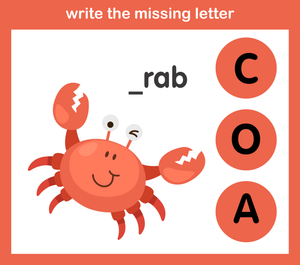
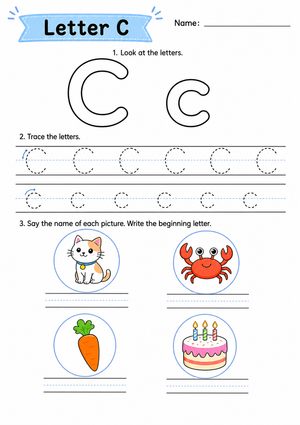
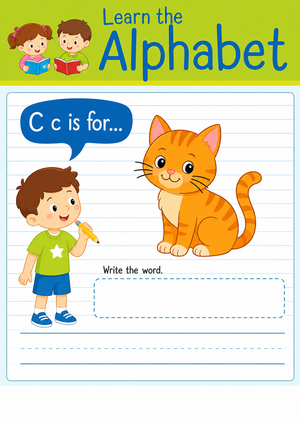
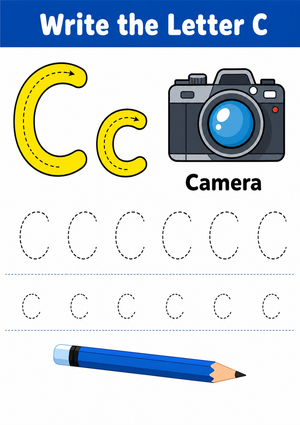
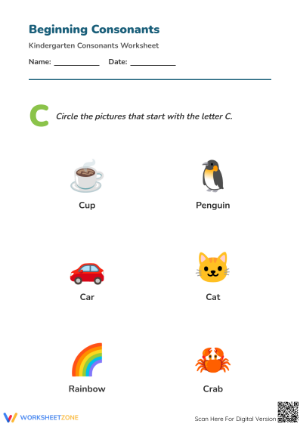
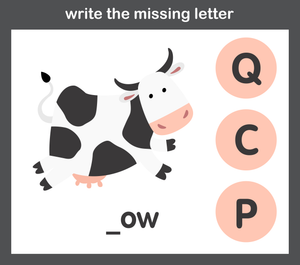
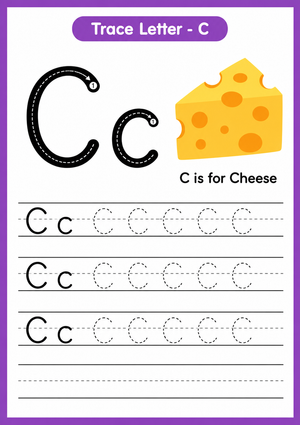
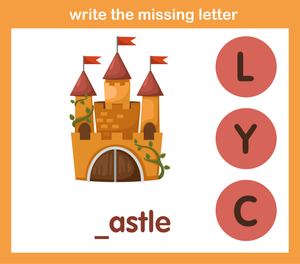
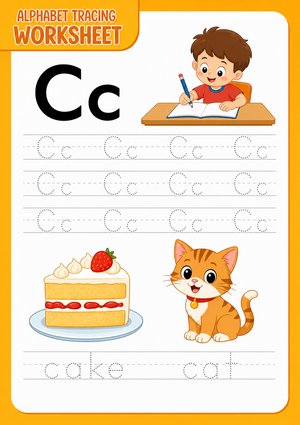
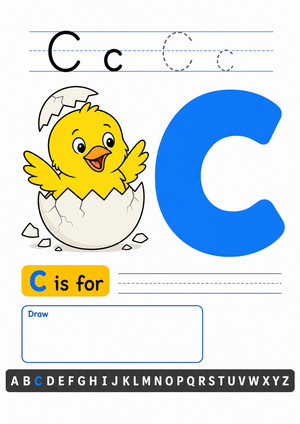
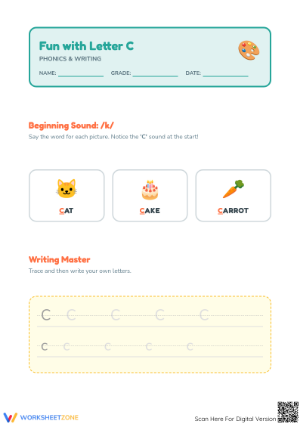
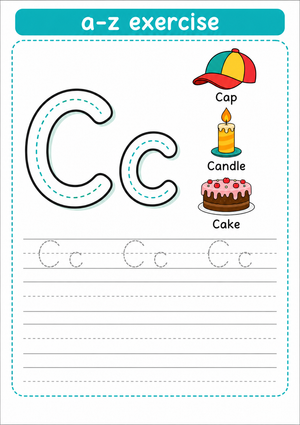
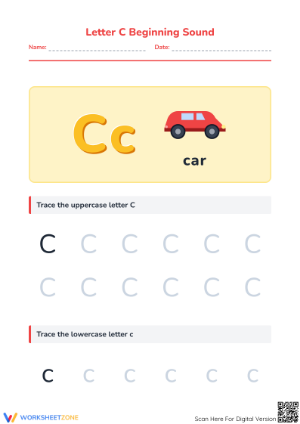
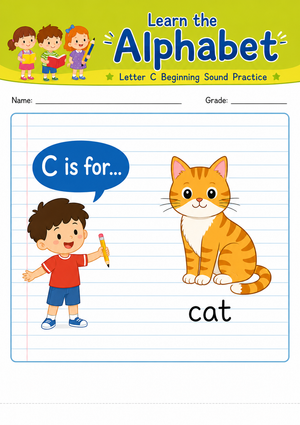
These kindergarten letter c beginning sound printable worksheets target a single phonics move that matters from the first weeks of fall: hearing /k/ at the front of a word and connecting it to the letter C. Each worksheet keeps that focus tight — picture cues, tracing lines, circling tasks, and sort activities — so students get multiple contact points with the same sound without the activity type shifting underneath them.
The Specific Skills Each Worksheet Builds
Word choices matter more here than teachers sometimes expect. Hard C words — cat, car, cup, cap, cake — are where the set begins, and with good reason: kindergartners are still building the foundational understanding that letters stand for sounds. When the /k/ sound is consistent and predictable, students hear it, say it, and recognize it faster. Introducing soft C words like "city" or "cent" at this stage would undercut that emerging understanding before it has a chance to hold.
Within the set, each worksheet approaches the skill through a different format:
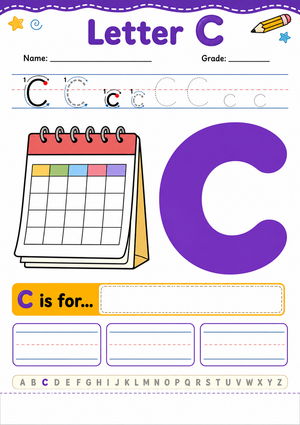
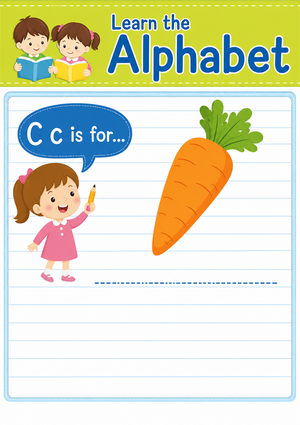
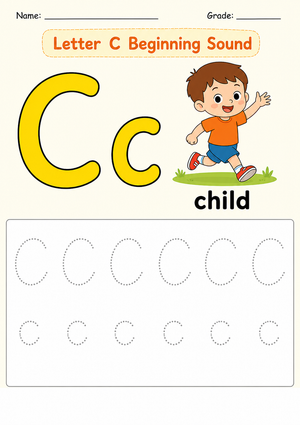
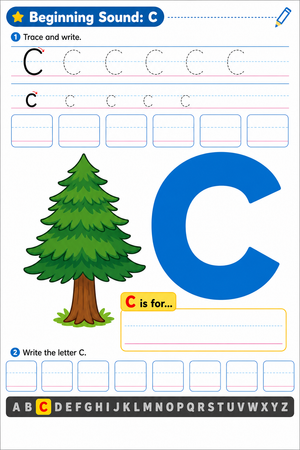
- Tracing tasks — students form uppercase C and lowercase c while saying the letter name and sound aloud
- Picture identification — students look at a row of images and mark only the ones that begin with /k/
- Coloring with oral response — students color pictures like cat, cup, or car and say the beginning sound before putting crayon to paper
- Cut-and-paste sorts — students separate C pictures from non-C pictures, which requires an auditory decision rather than a visual one
- Matching exercises — students draw a line connecting the letter C to the correct beginning-sound picture
Rotating these formats across a unit keeps students from learning the worksheet instead of the sound. A child who notices that "the third picture is always the answer" hasn't internalized /k/ — they've learned a positional shortcut. Using five distinct task types closes that gap.
Mistakes Students Make That Are Worth Catching Early
The most persistent error has nothing to do with letter knowledge and everything to do with vocabulary. A student who doesn't recognize the word "camel" cannot identify it as a C word — they're guessing from the shape of the image. This is why picture selection anchors the whole set: cat, car, cup, cake, and cap are words in nearly every kindergartner's spoken vocabulary before September ends. When the picture is unfamiliar, the task stops being a phonics task and becomes a guessing game.
A second error surfaces during circling and sorting activities: students hear the /k/ sound somewhere in a word and assume it qualifies. A child might mark "duck" as a C word because the final sound includes /k/. The same confusion appears with "sock," "truck," and "black." Repeating the phrase beginning sound throughout all directions helps, but the more reliable move is reading each picture name aloud before students begin — the oral model becomes what they work from, not the image alone.
A third pattern: students who circle every picture when uncertain. That tells you the vocabulary is too unfamiliar, the whole-group modeling didn't stick, or the task is above where those students are operating. Those students need the worksheet read aloud item by item in a small group before any independent attempt.
How to Work These Worksheets Into Your Phonics Week
The typical entry point is a short whole-group introduction — five to eight minutes under a document camera. Project the tracing worksheet, model letter formation once while saying the sound, then complete two or three picture identification items together. Students tap the first sound on their knee before you mark the answer. That physical step slows impulsive circling and builds the habit of checking the sound before committing to a response.
Centers work well with two or three worksheets in a phonics bin. A tracing worksheet, a circle-the-picture worksheet, and a cut-and-paste sort give students variety across the rotation without requiring additional teacher introduction. Because every worksheet targets the same /k/ sound, the center stays self-contained and easy to manage.
Morning work and early finisher folders are natural placements for the simpler worksheets — coloring and matching tasks that need little setup. For intervention groups meeting during small-group time, a dry-erase sleeve over the same worksheet gives students repeated practice without additional copies. The cut-and-paste sort earns its place toward the end of the unit: save it until students have had several exposures to the sound, then use it as a benchmark — can they categorize independently, with no teacher reading the choices aloud?
Teachers who pull kindergarten letter c beginning sound printable worksheets into morning meeting warm-ups at the start of the letter C unit often find that students arrive at center time already primed to hear the sound, which shortens the time spent guessing and increases accurate independent responses.
Standard Alignment
These worksheets address CCSS.ELA-LITERACY.RF.K.3.A, which asks students to demonstrate knowledge of one-to-one letter-sound correspondences by producing the primary sound for each consonant. In classroom terms, that standard sits at the intersection of phonological awareness and early phonics — students must hear the sound (an oral skill) and connect it to the printed letter (a visual one). Beginning sound work with high-frequency consonants like C builds that bridge directly.
The worksheets also support RF.K.2.D, isolating and pronouncing initial sounds in CVC words. When a student says "cat" and then identifies /k/ as the first sound, they are demonstrating the phonemic segmentation this standard targets. The two standards reinforce each other in a single letter C lesson: auditory awareness of the sound comes first, followed by the letter-symbol match.
Adjusting the Worksheets for a Range of Learners
For students still working on basic letter recognition, the tracing worksheets do the heaviest lifting. Pair tracing with a physical letter card so students can feel the shape while they trace it on paper. Reading the picture names aloud to these students removes the vocabulary barrier and keeps the session focused on the initial sound rather than on decoding the image.
On-level students can move through the identification and sorting worksheets with minimal support after whole-group modeling. The critical step is that they say each picture name aloud before marking an answer — the oral response is the actual phonics practice; the marking is the record of it.
Students who have already internalized the hard C sound can use kindergarten letter c beginning sound printable worksheets in a more analytical way: after completing the identification task, have them sort the C pictures by syllable count — one-syllable words like cat and cup versus two-syllable words like camel and cabin. That extension moves toward phonological awareness of word length without abandoning the /k/ sound target.
Frequently Asked Questions
Should I introduce uppercase C and lowercase c at the same time?
Yes, and the tracing worksheets handle both in a single task. Kindergartners encounter both forms in print almost immediately — book titles, names, sentence beginnings — so seeing them together is more realistic than separating them across different lessons. The tracing format keeps the connection visible without requiring additional instruction time.
How do I know when students are ready to move to the next letter?
Aim for consistent accuracy on the cut-and-paste sort — roughly 80 percent correct with no picture names read aloud. If students are still circling non-C pictures frequently or responding randomly, the sound hasn't settled yet. Run the same worksheet in a dry-erase sleeve as a quick daily check until accuracy stabilizes before moving to the next consonant.
Can these worksheets work for students receiving intervention support?
These kindergarten letter c beginning sound printable worksheets hold up well in small-group intervention because each worksheet isolates one phonics target and uses familiar picture vocabulary. In a pull-out or push-in group, the teacher reads each picture name aloud and students mark their responses while repeating the first sound. That read-aloud structure removes the vocabulary variable so the session focuses entirely on sound-symbol connection.
Do these worksheets address the soft C sound?
No — and that's intentional. Beginning sound work in kindergarten stays with hard C words (cat, car, cup, cap) because the /k/ sound is consistent and easy to hear. Soft C patterns (city, cent, circle) depend on the vowel that follows, which is a concept that belongs in a later phonics unit after students have a solid grasp of basic letter-sound correspondence.