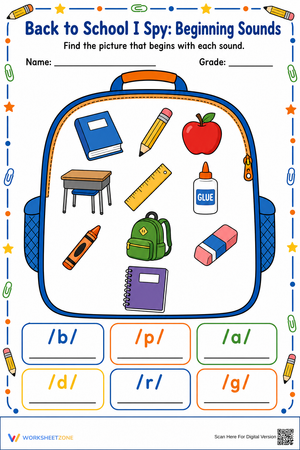
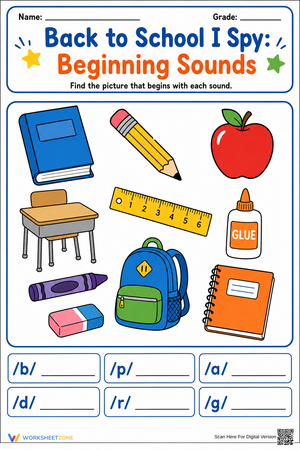
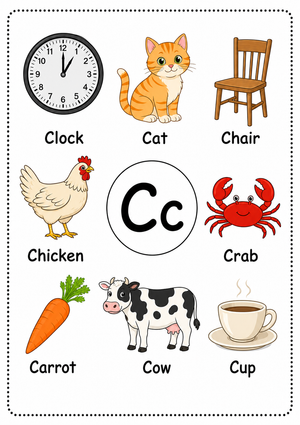
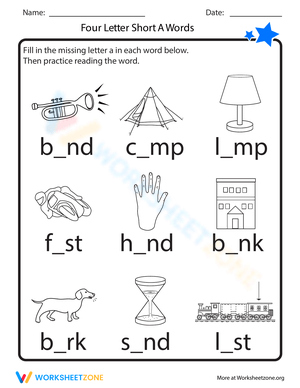
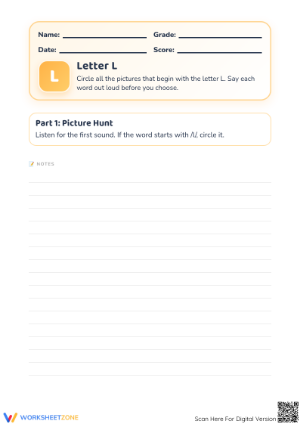
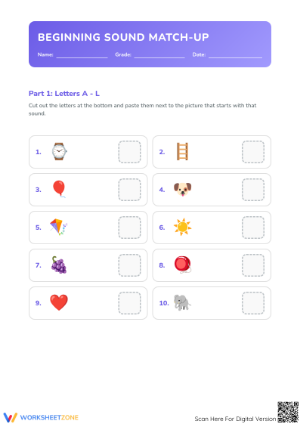
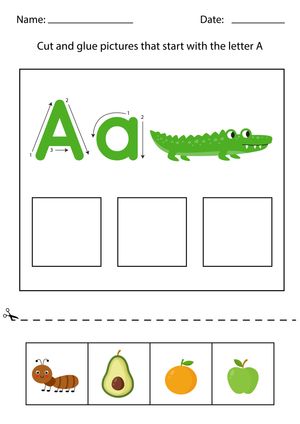
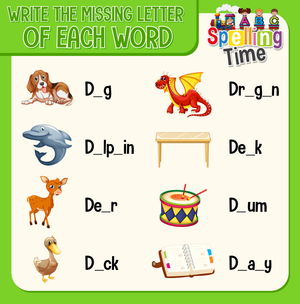
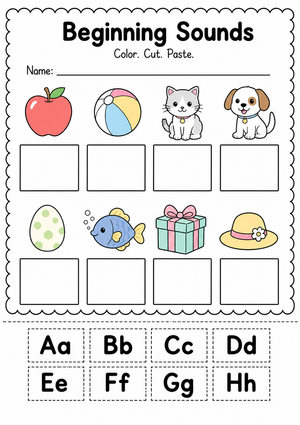
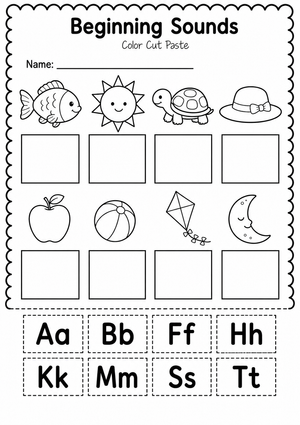
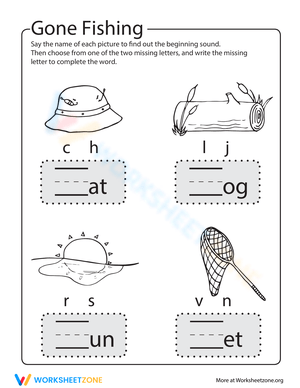
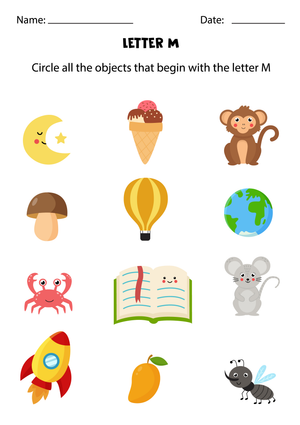
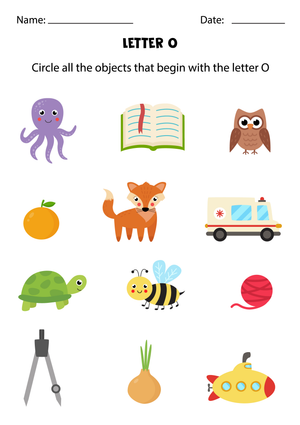
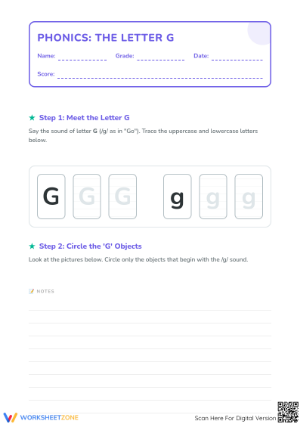
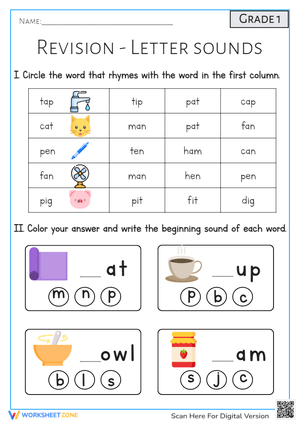
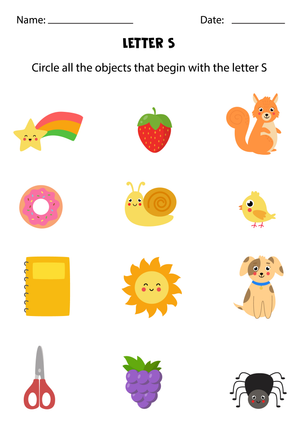
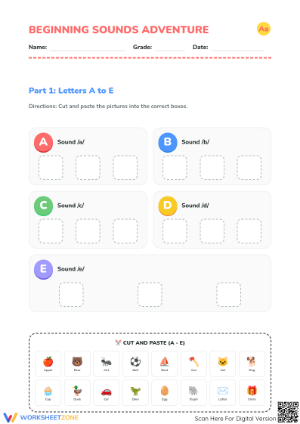
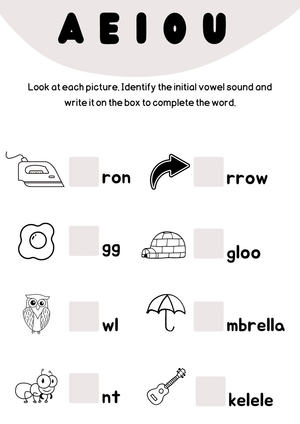
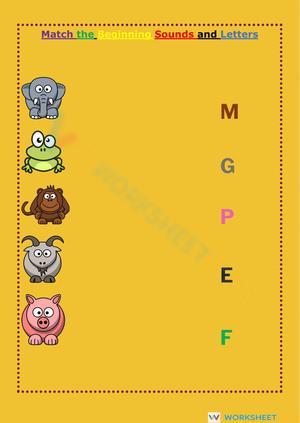
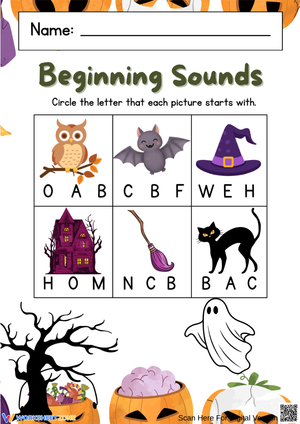
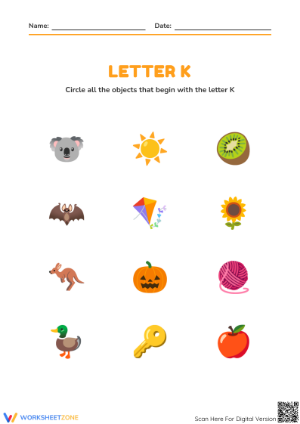
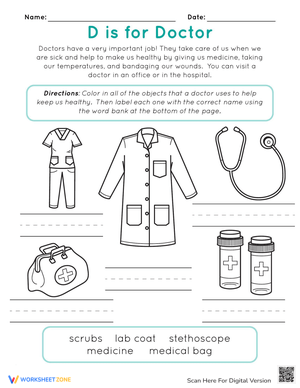
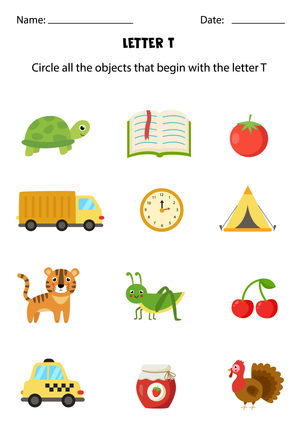
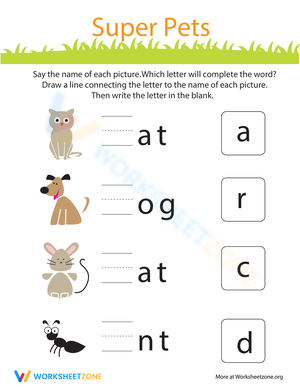
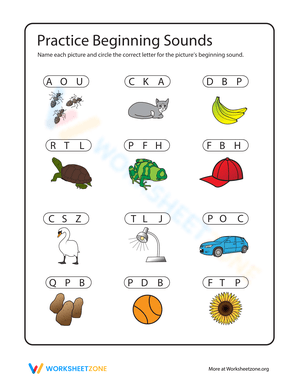
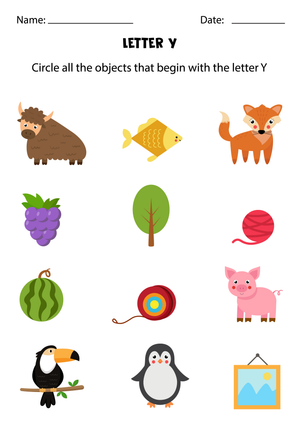
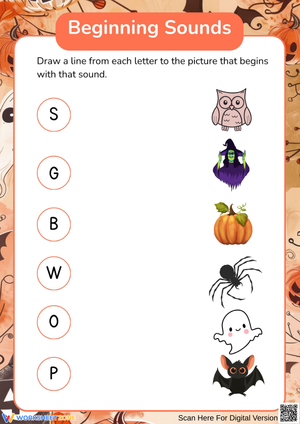
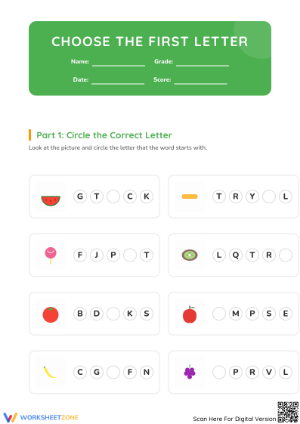
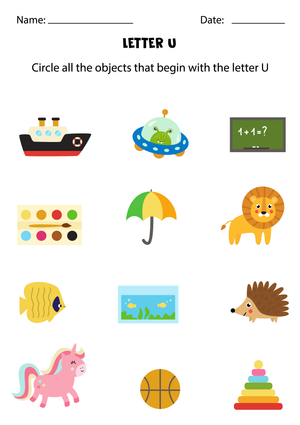
These kindergarten beginning sounds worksheets resources give teachers a repeatable, low-prep format for the most foundational phonics work of the school year — isolating initial phonemes and connecting them to written letters. Each worksheet centers on picture-based tasks: students name the image, listen for the first sound, and either circle, write, or match the corresponding letter. The set covers all 26 initial sounds, with enough variety in task type across worksheets to keep the practice from feeling mechanical.
What's Inside the Set
Every worksheet in the set uses familiar pictures — objects and animals whose names most kindergartners already know by ear, so vocabulary gaps don't block the phonics work. Students underline the correct letter from a set of choices, write the beginning letter beneath a picture, or sort images by starting sound. The variety of task types is intentional: circling a letter activates visual recognition, while handwriting the letter engages the motor memory that supports long-term retention of letter-sound pairs. Some worksheets focus on a single letter; others group contrasting sounds — placing /b/ and /p/ side by side, for example, so students practice discriminating sounds that share similar mouth positions and lip movements.
Where These Worksheets Fit in a Daily Literacy Block
Kindergarten teachers can slot these worksheets into routines that already exist — no new system required. During morning meeting warm-up, one worksheet takes roughly six to eight minutes and gives students something purposeful to do while the teacher handles attendance. In a literacy center rotation, worksheets placed in dry-erase sleeves become reusable: a student marks answers with a fine-tip dry-erase marker, a partner checks the work, and both wipe it clean before the next group arrives. Small-group intervention is where these worksheets often do their best work. During the ten-minute pull-out after centers, pulling a kindergarten beginning sounds worksheets that targets a specific letter the group keeps missing gives struggling students focused, low-distraction repetition without any setup overhead. Before students reach for a pencil, try this: have them place a small manipulative — a plastic letter tile, a counting chip — on the correct picture first. That physical step grounds the abstract phoneme in a concrete action and noticeably improves retention for students who disengage from paper-and-pencil tasks alone.
Continuous Sounds First — A Sequencing Decision That Pays Off
Literacy researchers draw a clear line between continuous sounds and stop sounds, and the distinction matters for how you order these worksheets. Continuous sounds — /m/, /s/, /f/, /n/, /l/ — can be stretched without distortion. When a student hears "mmmmm-oon," there is time to register the phoneme before it disappears. Stop sounds — /b/, /t/, /k/, /p/ — release in a single burst and vanish instantly. Introducing stop-sound worksheets too early is a common sequencing mistake. Students who haven't yet internalized what "find the first sound" means end up guessing, and guessing forms habits that take weeks to undo. Starting with continuous-sound worksheets gives students early, accurate success and a clear understanding of the task before the harder stop sounds arrive. That sequencing choice does more for early phonics outcomes than most other instructional adjustments a teacher can make.
Student Errors That Surface Early and Often
The most predictable error is letter-name substitution. A student sees a picture of a bee, says "bee," and writes B — the right answer, but reached through faulty reasoning. They used the letter's name rather than isolating the phoneme /b/. The same logic leads that student to write Y for the /w/ sound later, because "why" sounds like it starts with a w. Catching this during guided practice — not just when scoring completed worksheets — is what interrupts the pattern before it hardens.
A second common error involves stop sounds followed by a trailing vowel. A student says "buh-all" for ball, hears what feels like two sounds at the start, and either freezes or writes two letters. A brief teacher model — demonstrating just the /b/ with lips pressed and then releasing, nothing added — resolves this faster than re-explaining the concept verbally.
Standard Alignment
These worksheets address CCSS.ELA-Literacy.RF.K.2d, which requires kindergartners to isolate and pronounce the initial, medial vowel, and final phonemes in spoken single-syllable words, and RF.K.3a, which calls for producing the primary sound for each consonant. In classroom terms, RF.K.2d is the oral task — can the student hear and isolate the first sound? — while the written portion of each worksheet produces direct evidence of RF.K.3a. Running both standards through the same activity is efficient: teachers collect formative data on phonemic awareness and letter-sound knowledge simultaneously, without needing separate tasks or separate recording tools.
Adjusting the Worksheets for Students at Different Stages
For students who are still building basic phonemic awareness, the picture-naming step is where to slow down. Before any written response, walk through each image together: "Say the word. Say just the first sound." Some students need that oral rehearsal every session for several weeks before the independent writing portion becomes reliable. A kindergarten beginning sounds worksheets works best for these students in a guided small group, not as independent morning work, because teacher feedback in the moment is what prevents incorrect associations from hardening into habits.
Students who move through initial sounds quickly can extend upward using the same worksheets — ask them to identify the ending sound in addition to the beginning, write the full CVC word instead of just the first letter, or sort pictures into two columns based on a shared sound feature. These extensions require no additional materials and keep the practice meaningful for students who would otherwise coast through the activity with minimal thinking.
Frequently Asked Questions
How many sounds should kindergartners work on each week?
One to two new sounds per week is a workable pace for most kindergarten classes. The real indicator is retention, not speed — if completed worksheets from three weeks ago show confusion on letters students already "learned," that's a signal to slow the introduction of new sounds and add review cycles before moving forward.
Can students use these worksheets before they know all their letter names?
Yes. Letter-name knowledge and letter-sound knowledge develop alongside each other, not in strict sequence. A student who can't yet recite the full alphabet may still associate the /s/ sound with the letter S after enough picture-based exposure. Each worksheet supports that exposure without requiring prior alphabet mastery.
What do I do when a student keeps marking the wrong letter even after repeated practice?
First, separate the phonemic task from the written task. Say the word aloud without showing the picture and ask the student to tap or say just the first sound. If they identify it correctly in speech but still write the wrong letter, the issue is letter-form confusion, not phoneme isolation — target the letter-to-symbol link directly. If they can't isolate the sound orally either, the written task is premature. Return to oral phoneme isolation games for a few sessions before reintroducing the kindergarten beginning sounds worksheets format with that student.
Do these worksheets work for English language learners?
They work well once a vocabulary-check step is added up front. Before a student can isolate the beginning sound of a pictured word, they need to know what that word is called in English. Walking through the pictures together and confirming the English word name before the worksheet begins prevents vocabulary confusion from masking what is actually phonics knowledge — and it often reveals useful information about the student's oral vocabulary in the process.