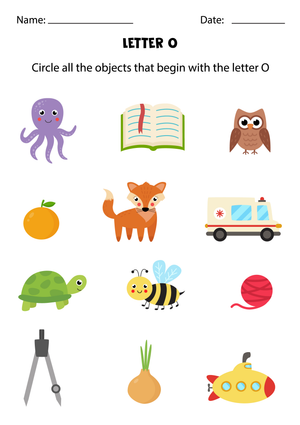
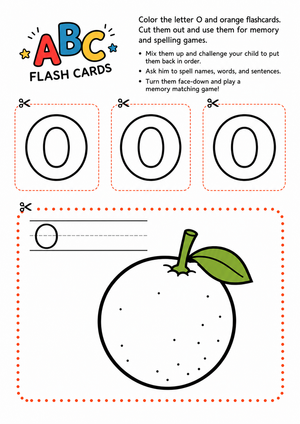
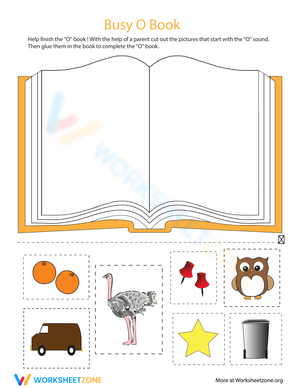
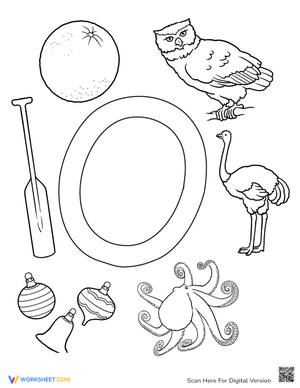
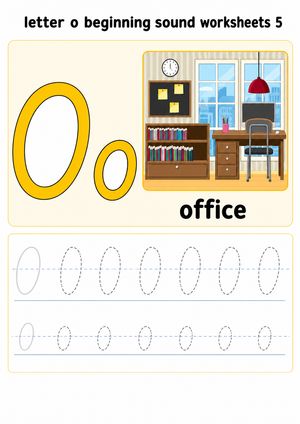
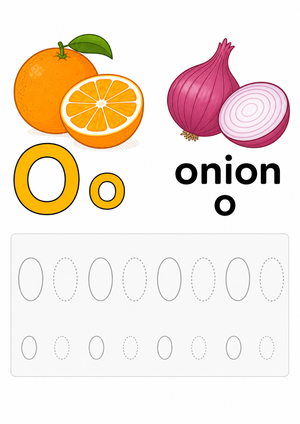
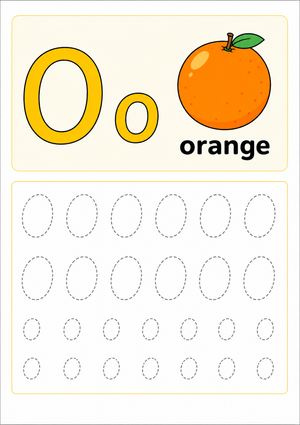
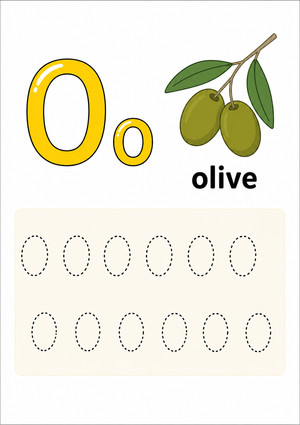
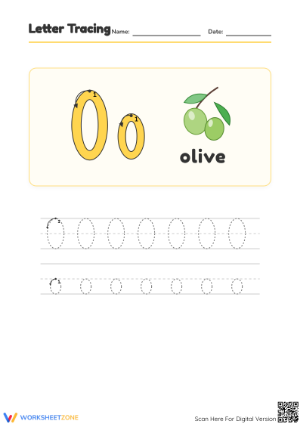
These letter o beginning sound printable worksheets for kindergarten give teachers a targeted set of picture-based tasks for one of the more counterintuitive vowels in early phonics—the short /ŏ/ sound. Unlike most consonant sounds, which students can feel in a specific place in the mouth or throat, short O happens with a relaxed jaw and rounded lips, producing a sound five-year-olds sometimes describe as somewhere between a groan and a yawn. These resources turn that abstraction into something students can see, sort, match, and trace.
What's Inside the Set
Each worksheet targets initial sound recognition for the short /ŏ/ phoneme. Activities vary by format, so the set builds in variety without requiring extra teacher planning. These are the task types included:
- Picture sorting: Students cut out illustrated cards and glue only the ones that begin with /ŏ/ into a designated column or box. Anchor images include octopus, otter, ox, ostrich, and olive—each chosen because it depicts clearly and pronounces without ambiguity.
- Coloring by initial sound: A scene or picture grid where students color objects whose names begin with the target sound. Because students must decide before the crayon comes out, this format requires phoneme isolation rather than guessing by elimination.
- Letter-to-picture matching: Students draw lines from the letter O to surrounding pictures that start with /ŏ/, reinforcing the connection between the printed symbol and the spoken sound.
- Handwriting paired with phonics: Students trace the uppercase and lowercase letter O, then color or label corresponding pictures—so letter formation and phoneme recognition happen in the same task.
- Dab-a-dot pages: Students use bingo daubers to mark pictures starting with /ŏ/. These work well as a center change-of-pace and require minimal fine motor strength, which matters for students still developing pencil grip endurance.
Vocabulary across the set stays within a predictable kindergarten range. No unfamiliar or advanced words appear—the objective is phoneme isolation, not vocabulary building.
Where Short O Trips Kindergarteners Up
The most consistent error on picture-sort activities: students place owl and ocean in the short O category. They recognize that both words start with the letter O and assume the beginning sound is /ŏ/. This is actually a useful error to catch—it reveals that the student understands letter identity but hasn't yet separated letter names from letter sounds. Addressing it before long O instruction begins prevents the confusion from compounding. A quick side-by-side comparison of octopus and ocean at the board, with the teacher exaggerating mouth shape for each, usually resolves it on the spot.
A second pattern appears with students from dialect communities where short O and short U are acoustically close. These students sometimes mark pictures like umbrella or up as beginning with O. On a sorting task, this shows up as consistent misplacement—not random error—which is the signal to address it directly in a small group. Asking the student to watch the teacher's mouth while she says ox and then up side by side makes the jaw-drop difference visible in a way that verbal explanation alone doesn't.
Building These Into Your Week Without Overcomplicating It
Morning work is the highest-traffic placement for these worksheets—one gives students a quiet, purposeful task while attendance runs and the classroom settles. Literacy centers are the second natural fit. A tray with a few worksheets, crayons, safety scissors, and a glue stick becomes a self-managed phonics station once students know the routine. The first time you place letter o beginning sound printable worksheets for kindergarten at a center, model the activity whole-group first—specifically the step where students say the picture name aloud before making any decision about where it belongs. That step is where the phonics work actually happens, and students skip it if no one has shown them it matters.
For small-group instruction, these worksheets double as informal formative assessment tools. Watching which pictures a student hesitates over reveals more than the finished worksheet does. The Friday review block, after a week of /ŏ/ instruction, is a natural window to hand one out and see what solidified and what still needs attention.
Working Across Different Readiness Levels in the Same Room
Students who are still uncertain that words have distinct beginning sounds at all need the picture labels read aloud before they mark anything. Sitting beside a student and saying, "ox—what sound do you hear at the very start?" turns the worksheet into guided practice without requiring a different resource. For students who move through sorting activities quickly, a low-prep extension is to ask them to write one O word from the worksheet on a whiteboard and use it in an oral sentence. That adds a generative step without pulling a new material from the shelf.
Students who are reliably identifying short O in the initial position and showing readiness for medial vowel work—locating the /ŏ/ in CVC words like hop, dot, and mop—have moved past what beginning-sound practice addresses. Pairing their center time with word-building tasks using letter tiles sends them in the right direction without disrupting the rotation structure for the rest of the class.
Standard Alignment
These worksheets address two Common Core foundational skills standards. CCSS.ELA-LITERACY.RF.K.2.D asks kindergarteners to isolate and pronounce the initial, medial, and final phonemes in CVC words—the oral decision-making that happens before and during every picture-sort task. CCSS.ELA-LITERACY.RF.K.3.A covers basic letter-sound correspondence, specifically producing the primary sound for each letter. In classroom terms, both standards are introduced in the fall and developed through mid-year. Short O instruction typically arrives early in the vowel sequence, making these worksheets most relevant during the October through January window, with review use extending into spring as mixed-vowel discrimination begins.
Frequently Asked Questions
Do these worksheets cover the long O sound too?
No. Every worksheet in the set focuses on the short /ŏ/ sound heard in words like octopus, otter, and ox. Teaching short and long O simultaneously increases cognitive load for students who are still learning that letters make sounds at all. Long O instruction fits more naturally after short O recognition is reliable—typically later in the kindergarten year or at the start of first grade.
What materials do students need to complete these?
Most worksheets require only crayons. Cut-and-paste sorting activities need safety scissors and a glue stick. Dab-a-dot pages work with bingo daubers or, in a pinch, a cotton swab dipped in paint. No laminating or teacher prep beyond printing is required.
Can these be sent home for family practice?
Letter o beginning sound printable worksheets for kindergarten travel home well because the visual directions—pictures, not multi-step written instructions—make the task clear to parents without a school explanation. They work best as take-home review after the /ŏ/ sound has been introduced in class. Sending them home before instruction begins typically leads to guessing rather than phonics practice.
How many worksheets on short O before moving to the next sound?
Three to five letter o beginning sound printable worksheets for kindergarten across a one to two week window is a reasonable range, but student performance drives the decision more than the calendar does. In a small group, if students are sorting O pictures accurately and explaining their reasoning aloud—"octopus starts with /ŏ/"—the sound is ready for review status and attention can shift to the next vowel. Students who are still inconsistent need more exposure regardless of where the pacing guide says the class should be.