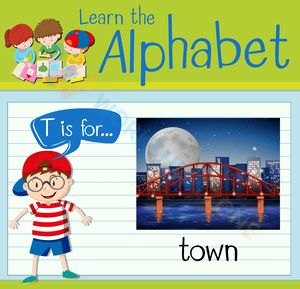
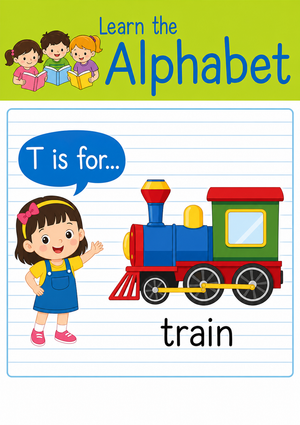
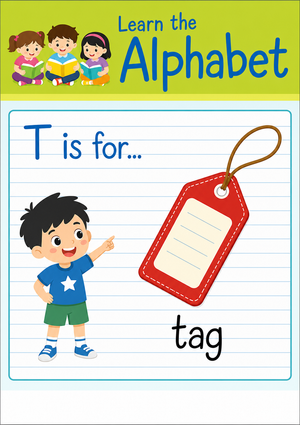
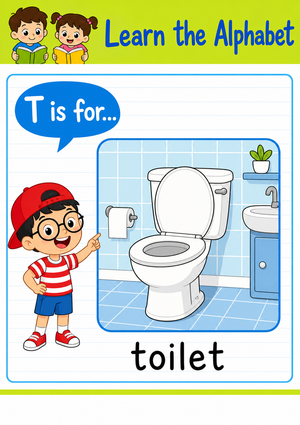
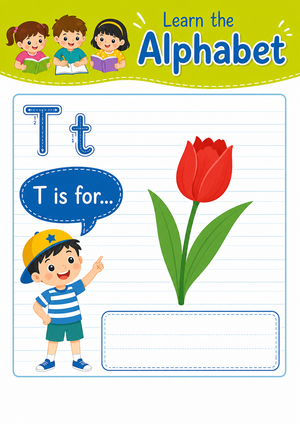
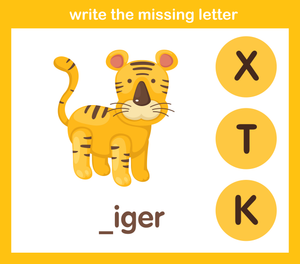
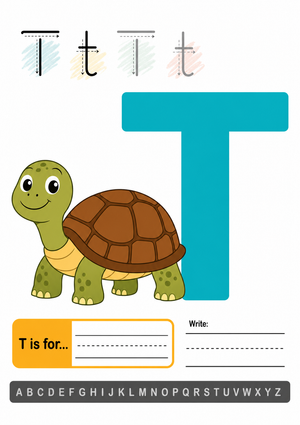
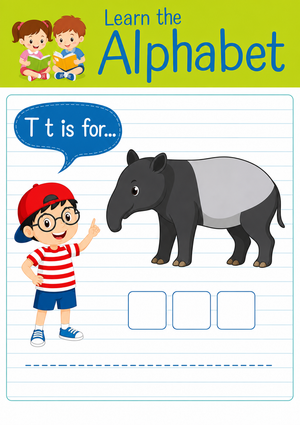
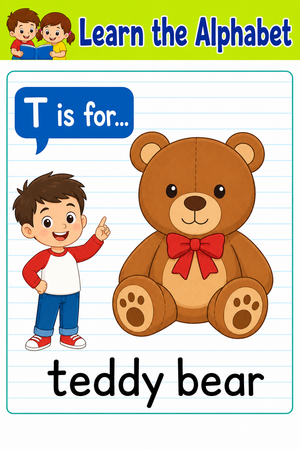
These kindergarten letter t beginning sound worksheets resources give teachers a ready set of phonics activities targeting the /t/ sound — one of the most phonetically clean consonants in the early reading sequence. Each worksheet addresses a distinct skill: sound identification, picture sorting, letter formation, or phoneme isolation, so teachers can match the activity to the lesson rather than work through a fixed sequence.
Why the /t/ Sound Is a Smart Starting Point
The /t/ sound is a voiceless alveolar plosive. The tongue tip touches the ridge just behind the upper teeth and releases a quick burst of air — no vocal cord vibration, which makes the sound short and crisp. That crispness is genuinely useful in the classroom. When a student says "top," the /t/ stops abruptly before the vowel begins, making it far easier to isolate than sounds like /n/ or /m/ that blend into what follows. Phoneme isolation is the specific cognitive skill these worksheets ask students to demonstrate, and /t/'s distinct quality means students can actually hear the boundary they need to find. Kindergarten phonics sequences typically front-load stop consonants like /t/, /p/, and /b/ for exactly this reason — the boundaries are audible, which makes the isolation task achievable for a five-year-old who is still learning to separate sounds from meaning.
What Each Worksheet Builds
The set covers several distinct skills, each reinforcing a different part of the letter-sound relationship:
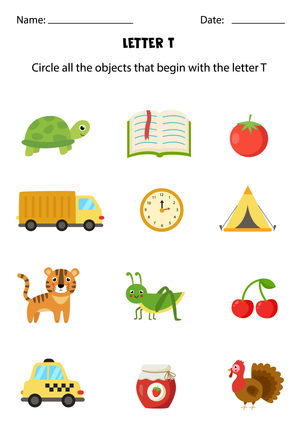
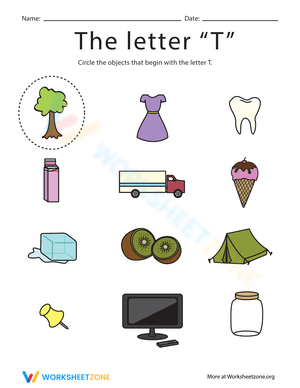
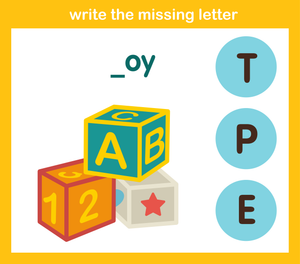
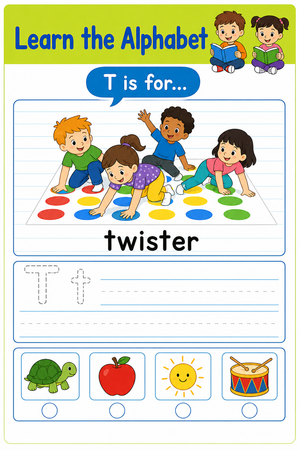
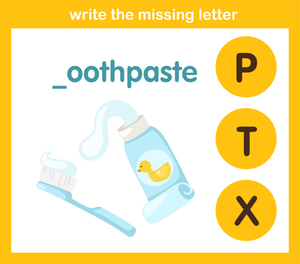
- Phoneme isolation: Students look at a row of pictures and mark only those that begin with /t/. This is the foundational task — recognizing the initial sound before any decoding is required.
- Picture-sound sorting: Worksheets pair /t/ images with images starting with /d/ or /p/, requiring students to listen carefully and categorize rather than simply recognize.
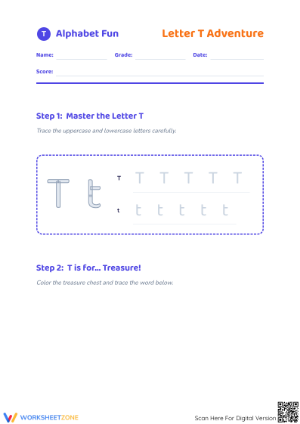
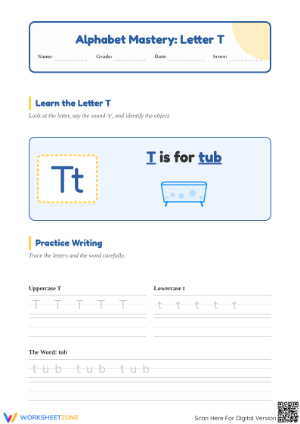
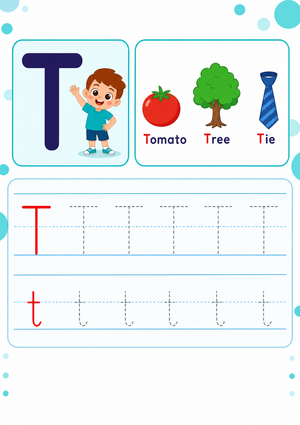
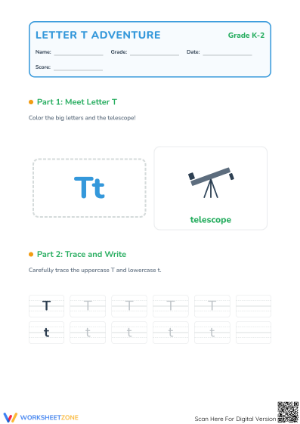
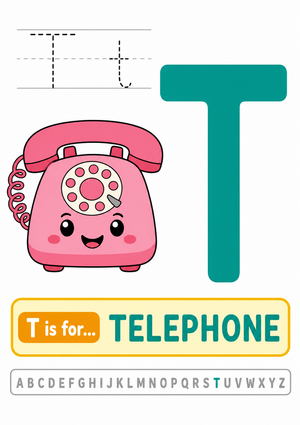
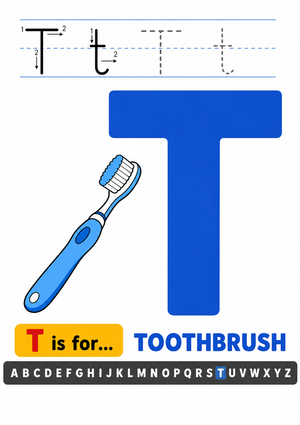
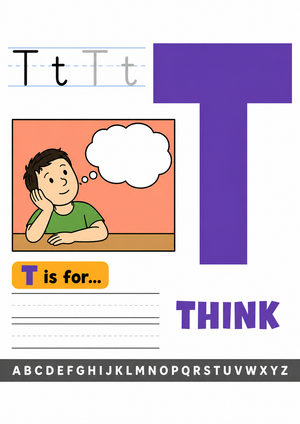
- Letter formation practice: Tracing uppercase and lowercase T while articulating the sound reinforces the grapheme-phoneme link through physical repetition — mouth, hand, and eye working at the same time.
- Cut-and-paste and maze tasks: These build in kinesthetic movement without losing the phonics focus, which helps keep younger or more physically active students on task longer.
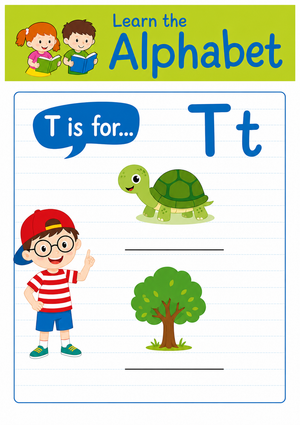
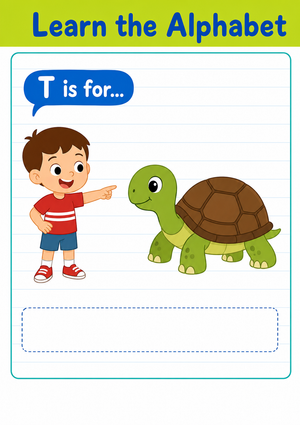
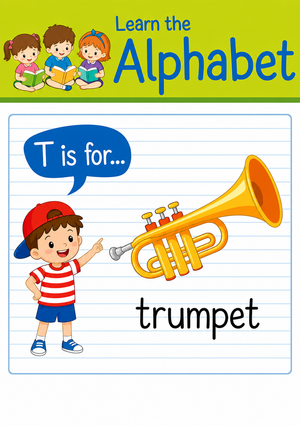
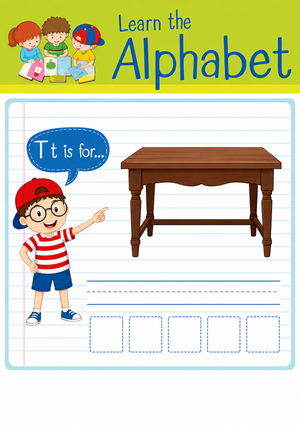
- Vocabulary-anchored illustration tasks: Anchor words like turtle, tent, tomato, and tooth appear alongside clear pictures, giving students a concrete mental image to return to when the sound feels uncertain.
Frequent Student Errors Worth Watching For
The most persistent confusion is between /t/ and /d/. Both sounds form at exactly the same place in the mouth — the difference is that /t/ is voiceless and /d/ is voiced. A student who circles "dog" in a T-sort isn't guessing randomly; their articulation is nearly right. Two fixes work faster than repeating the task. First, have students hold two fingers lightly against their throat while saying each sound — they feel a buzz for /d/ and nothing for /t/. Second, the tissue paper test: hold a small strip in front of the mouth, and the burst of air from /t/ makes it flutter visibly while /d/ barely moves it. That immediate physical feedback tends to click in one small-group lesson in a way that additional worksheet repetition alone cannot replicate.
A second pattern appears in picture-sort tasks. Students correctly identify simple words like top and ten but hesitate or miss words where /t/ leads a consonant cluster — truck, tree, train. This is a developmental issue, not a comprehension failure. They've learned the sound through clean CVC examples and haven't yet generalized it to blends. Keep initial instruction anchored to CVC exemplars and save blend-initial words for a later lesson when the basic connection is solid.
How to Build These Worksheets Into Your Lesson Plans
These activities work best in three spots across the school day. Morning warm-up is the first: a picture-sort worksheet takes roughly six minutes, gives students something purposeful while attendance is called, and brings the sound to the front of working memory early. Small-group instruction is where these worksheets do their most useful work — sitting with four or five students and listening closely to how each one says the sound is how you catch the /t/-/d/ reversal before it hardens. Third is the literacy center, once students know the task format well enough to work independently. By that point, procedural questions disappear and their attention goes to the phonics rather than the directions.
A kindergarten letter t beginning sound worksheets pairs especially well with the day after a read-aloud heavy on T-vocabulary — a nonfiction title about turtles or tigers, or a shared reading where ten, tooth, and tomato came up repeatedly. Students arrive already holding the sound in working memory, which reduces the cognitive load of the worksheet task and lets them concentrate on the phonics work itself rather than retrieving the sound from scratch.
Standard Alignment
These resources address CCSS.ELA-LITERACY.RF.K.3.A, which requires kindergartners to demonstrate basic knowledge of one-to-one letter-sound correspondences by producing the primary sound for each consonant. Every task in a kindergarten letter t beginning sound worksheets — whether a picture sort, a sound circle, or a formation trace — generates visible evidence of whether a student has connected the grapheme T to the phoneme /t/. That makes a completed worksheet a functional formative check: scanning a class set of picture-sorts takes under two minutes and shows immediately which students are circling /d/ distractors in a /t/ task, making next-day small-group reteaching decisions straightforward.
Differentiating the Set Across Ability Levels
For students who haven't yet secured letter recognition, the picture-sort and phoneme-isolation worksheets work without the letter-writing component. Students mark pictures and say sounds aloud, building the auditory connection before grapheme production is demanded. Pairing those students with a teacher or aide during small-group time keeps the task manageable and ensures they get corrective feedback before errors settle in.
Students who have already mastered /t/ identification get the most out of vocabulary extension: after finishing a worksheet, they write one T-word from their own experience — not from the pictures on the page — and illustrate it. That shift from recognition to production is a meaningful step up in cognitive demand. For English language learners, spending two or three minutes naming every pictured object aloud before the task begins removes the vocabulary barrier. A student who doesn't know the English word for turtle cannot isolate its initial sound, so establishing that label is the necessary first step, not an optional extra.
Frequently Asked Questions
Which T-words hold up best in picture-sort tasks with kindergartners?
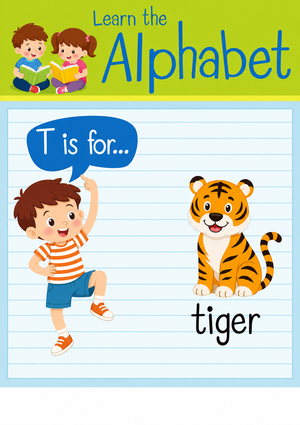
The most reliable choices are visually unambiguous and phonetically simple: tiger, tent, tooth, tomato, top, and turtle. These work because the illustrations read clearly at a glance and the /t/ sound isn't buried in a blend or digraph. Hold off on thumb, three, or trophy until students have the basic sound solid — those words are useful for extension, but they introduce enough complexity to derail a student who is still building the initial connection.
Can a completed worksheet function as informal assessment data?
A finished picture-sort gives a clear snapshot of whether a student can apply the letter-sound connection without support. It isn't a formal assessment, but it works well as a formative check. If six or seven students in a class circle the same incorrect distractor, that pattern signals a whole-group reteaching need rather than individual intervention — and a set of completed worksheets makes that pattern visible in under a minute of scanning.
How do these fit into a structured phonics program that already sequences its own skill order?
These worksheets function as reinforcement material within any sequence-based program. If a structured literacy curriculum introduces /t/ in week three, a kindergarten letter t beginning sound worksheets extends that instruction across the week — a sound-circle worksheet for Monday morning warm-up, a picture sort during small-group work Tuesday, cut-and-paste or maze tasks at the literacy center Wednesday through Friday. They reinforce explicit instruction that has already happened; they are not a substitute for it.
Do dry-erase pockets change how these get used practically?
Sliding a worksheet into a dry-erase pocket and handing each student a washable marker lets the same printed set cycle through the entire class over multiple days. Picture-sort and phoneme-isolation tasks work identically in that format. Students generally find the markers more motivating than pencils, which matters during the Friday afternoon block when energy tends to drop. One printed set handled this way outlasts a full week of individual photocopies.