




























Views
Downloads
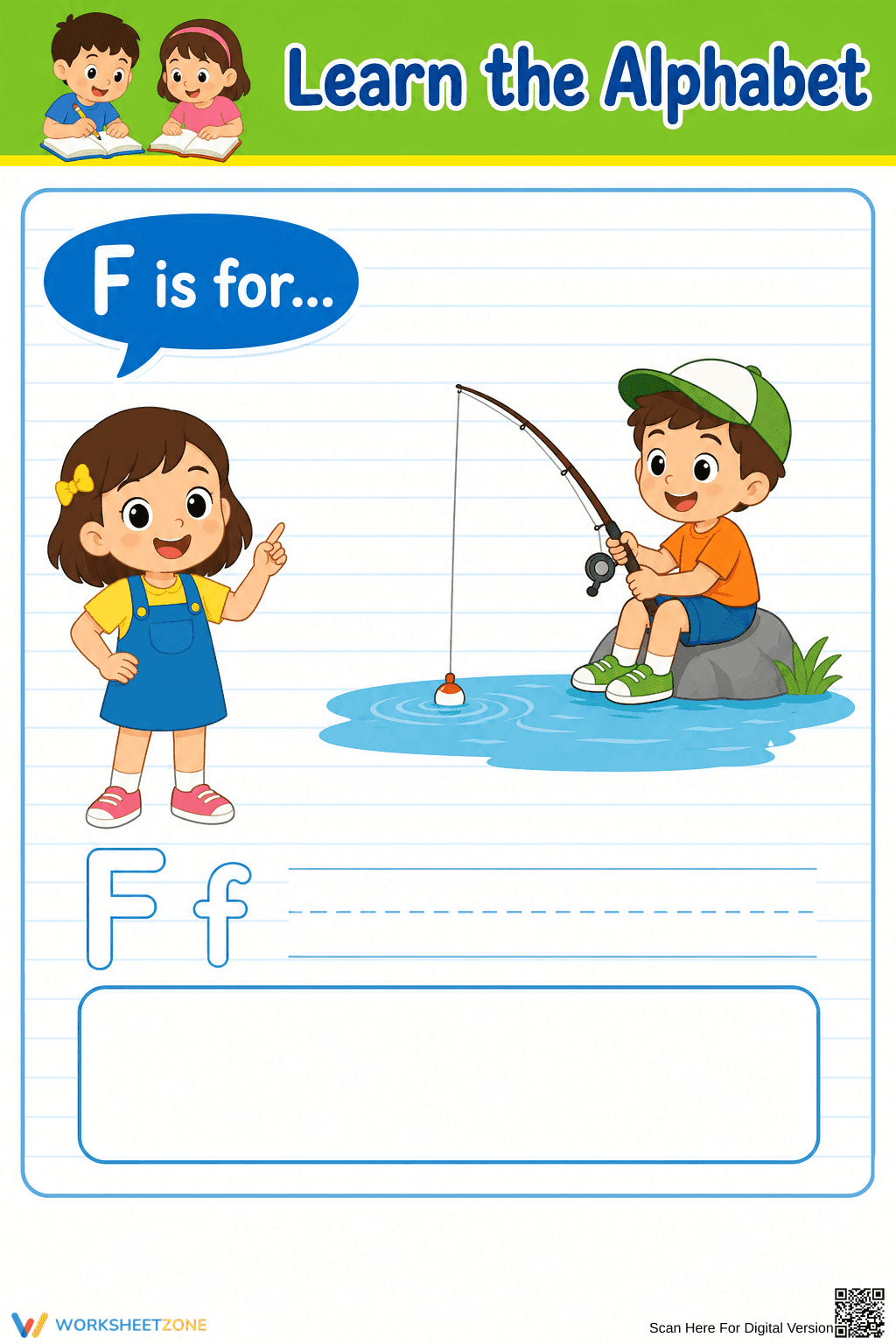

Essential Letter F Beginning Sound Worksheet | Grade K-2

Paste this activity's link or code into your existing LMS (Google Classroom, Canvas, Teams, Schoology, Moodle, etc.).
Students can open and work on the activity right away, with no student login required.
You'll still be able to track student progress and results from your teacher account.
This Letter F beginning sound worksheet helps early learners master alphabet recognition and phonemic awareness. By connecting the letter F to the familiar concept of fishing, students build strong letter-sound associations. This resource provides a structured space for handwriting practice and creative expression, ensuring foundational literacy skills are reinforced through engaging visual cues.
At a Glance
- Grade: Kindergarten · Subject: ELA
- Standard:
CCSS.ELA-LITERACY.RF.K.1.D— Recognize and name all upper- and lowercase letters of the alphabet- Skill Focus: Letter F Recognition & Handwriting
- Format: 1 page · 2 tasks · No answer key needed · PDF
- Best For: Morning work or phonics centers
- Time: 10–15 minutes
Inside this printable PDF, you will find a clean, one-page layout featuring uppercase and lowercase letter F tracing lines. The worksheet includes a large "F is for Fishing" illustration to anchor the phonics lesson. A dedicated drawing box at the bottom allows students to illustrate their own "F" word or practice independent writing, providing a multi-sensory approach to alphabet learning.
The zero-prep workflow for this resource is designed for maximum efficiency. First, print the single-page PDF (30 seconds). Next, distribute the sheets to your small group or whole class (1 minute). Finally, review the letter formation and beginning sound as a group (30 seconds). Total teacher preparation time is under 2 minutes, making it an ideal choice for emergency sub plans or transition periods.
This resource is primarily aligned with `CCSS.ELA-LITERACY.RF.K.1.D`, focusing on the identification and formation of upper- and lowercase letters. It also supports `CCSS.ELA-LITERACY.RF.K.3.A` by linking the letter F to its most common sound. Both standard codes can be copied directly into lesson plans, IEP goals, or district curriculum mapping tools.
Use this worksheet during the "You Do" phase of a gradual release model after introducing the letter F. It serves as an excellent formative assessment tool; observe students' pencil grip and stroke order during the tracing task. For an extension, ask students to find three other objects in the classroom that start with the same sound before they begin drawing.
This worksheet is designed for Kindergarten students, though it provides valuable remediation for Grade 1 and Grade 2 learners who need extra handwriting support. It is particularly effective for English Language Learners (ELLs) who benefit from the clear visual association between the word "fishing" and the letter F. Pair this with a letter F anchor chart.
According to the RAND AIRS 2024 report, early exposure to systematic phonics instruction and letter-sound correspondence is a critical predictor of long-term reading fluency. This worksheet addresses `CCSS.ELA-LITERACY.RF.K.1.D` by providing targeted practice in recognizing and naming upper- and lowercase letters. Research by Fisher & Frey (2014) emphasizes that combining visual anchors, such as the "fishing" illustration, with kinesthetic tracing activities helps solidify orthographic mapping in young brains. By engaging in these 2 specific tasks, students move from simple recognition to active production. This resource offers a structured yet flexible approach to early literacy, ensuring that foundational skills are met through evidence-based practices. Educators can utilize this tool to bridge the gap between phonemic awareness and written expression, providing a clear pathway for students to achieve mastery in beginning sounds and letter formation within a standard classroom setting.


