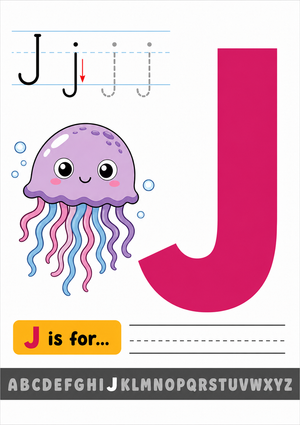
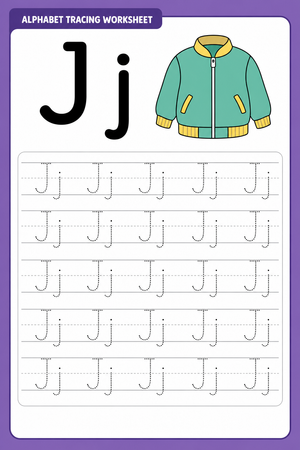
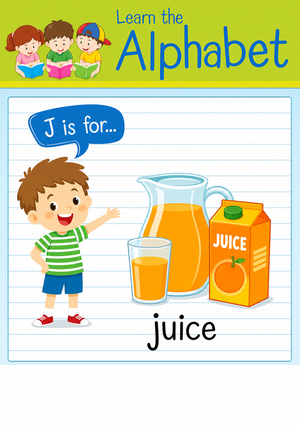
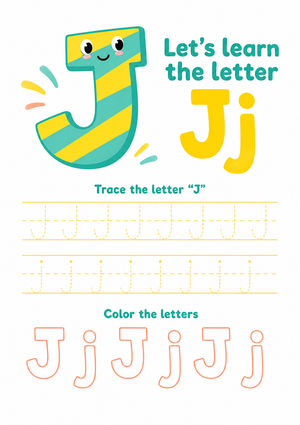
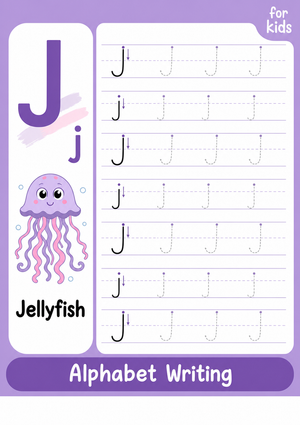
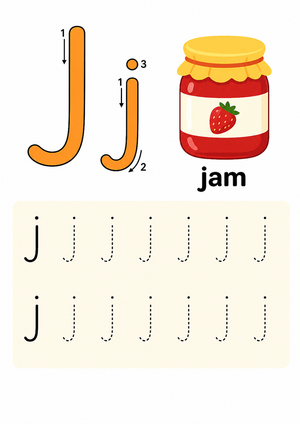
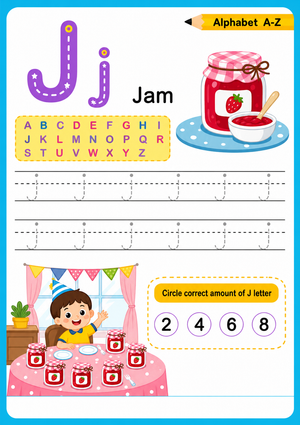
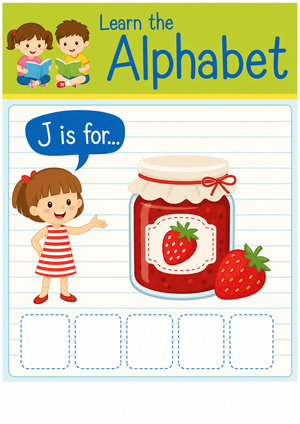
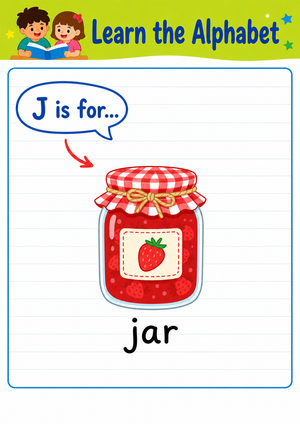
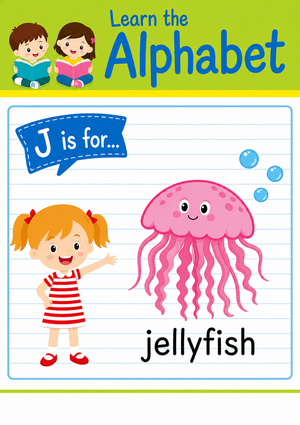
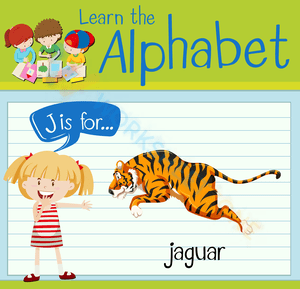
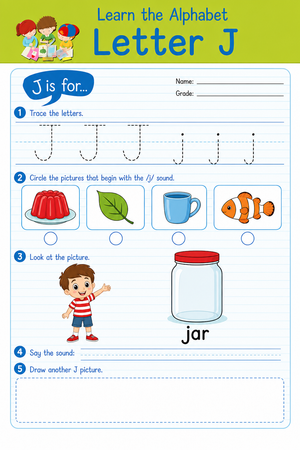
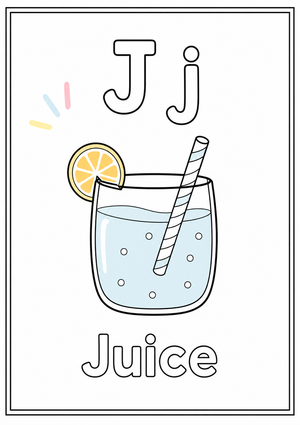
These kindergarten letter j beginning sound pdf worksheets give teachers a ready-made way to anchor /j/ phonics instruction in the explicit, picture-supported routines that early readers need. Each worksheet targets one skill: recognizing and isolating the /j/ sound at the beginning of spoken words. The set fits morning work, literacy centers, small-group pull-outs, and take-home folders without requiring adaptation.
The Specific Skills These Worksheets Build
Letter J phonics practice at the kindergarten level needs to move students through a short sequence: hear the sound, recognize the letter, connect the two, and apply that knowledge to pictures. The worksheets in this set cover that progression across several task formats.
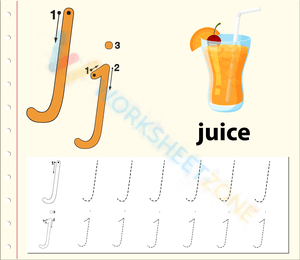
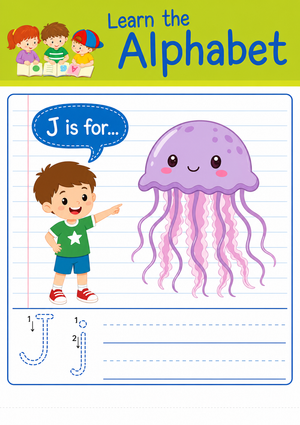
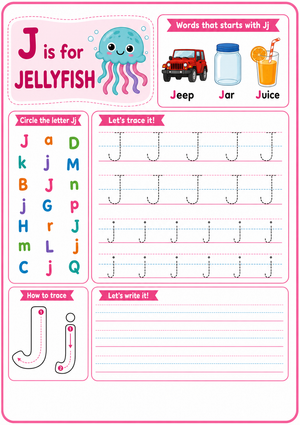
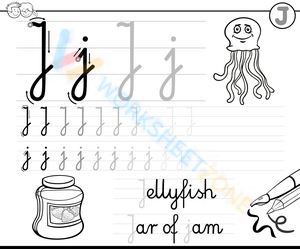
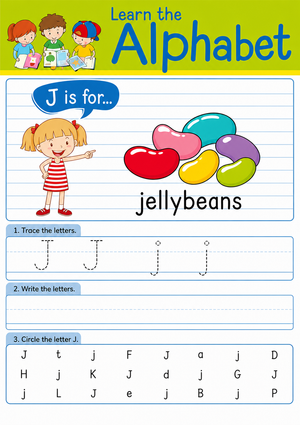
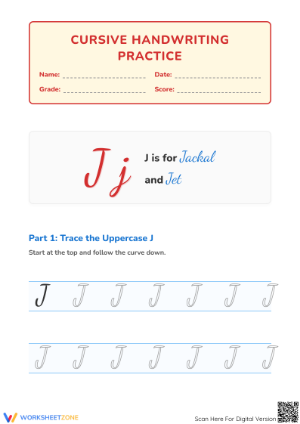
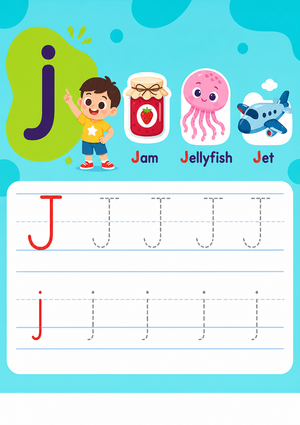
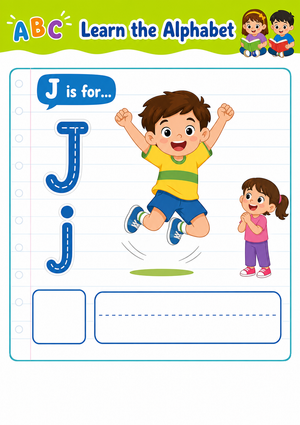
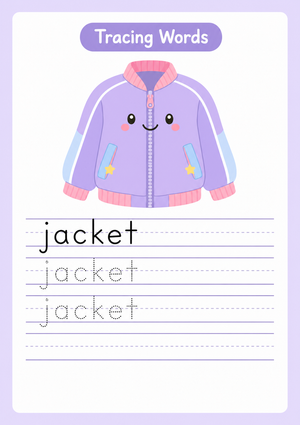
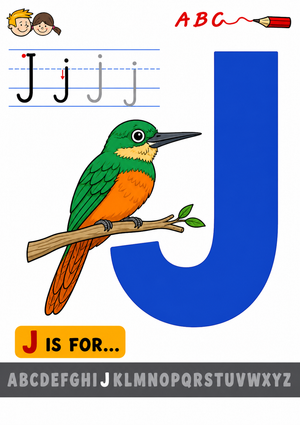
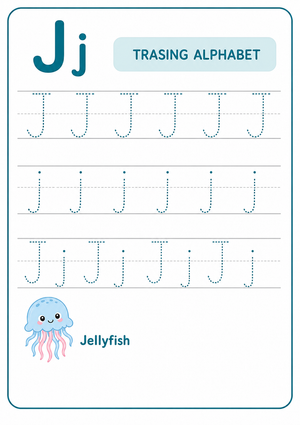
- Trace and name: Students trace uppercase J and lowercase j, say the letter name, and produce the /j/ sound — linking handwriting to phonics in one short routine.
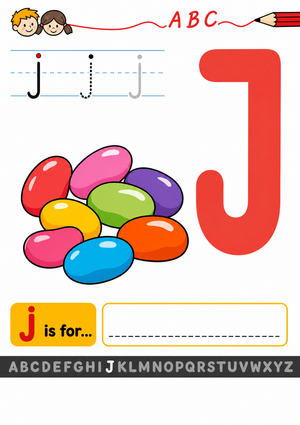
- Circle the picture: Students look at a row of images and circle every one that starts with /j/. Distractors include pictures that share visual features with J words but begin with different sounds, giving teachers a real read on accuracy rather than lucky guesses.
- Picture sort: Students sort images into two columns — J words and non-J words. Some worksheets use cut-and-paste; others have students draw lines to category labels depending on how much fine motor work teachers want to layer in.
- Color by beginning sound: Students color only the pictures that begin with /j/. The task adds fine motor engagement while keeping the phonics decision simple enough for early kindergarten.
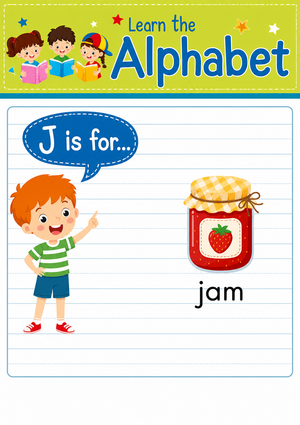
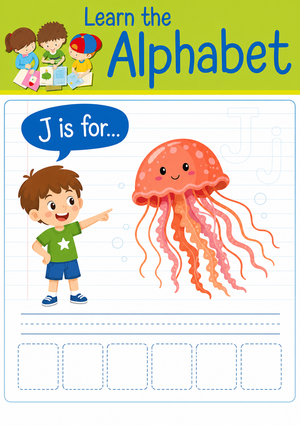
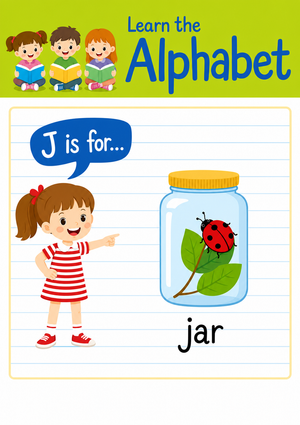
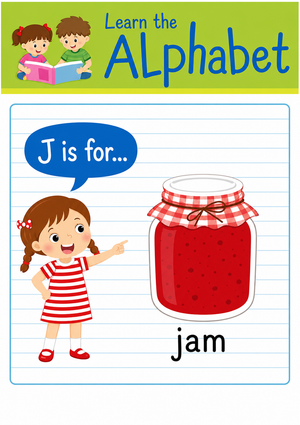
- Draw and extend: After completing the structured task, students draw their own example of a J word. Words like jam, jar, jet, and juice appear consistently across worksheets so students build a reliable mental bank of /j/ examples before reaching for original words.
Keeping picture vocabulary consistent across worksheets matters more than teachers sometimes expect. If a student cannot name the image confidently, the task stops being a phonics activity and becomes a vocabulary quiz — which is a different lesson entirely.
Mistakes Students Make That These Worksheets Help You Catch
The most common error at this stage is not confusing J with a random letter — it is confusing /j/ with /y/. Students who have internalized yellow and other familiar /y/ words sometimes hear "beginning-of-a-word sound" and reach for the nearest consonant that feels similar. When a worksheet includes a picture of yarn or yo-yo as a distractor, watch for students who circle it confidently. That pattern reveals that the student is not yet isolating the sound discretely — they are pattern-matching on word "feel" rather than on specific articulation. It is worth pausing the small group right there, holding up both pictures side by side, and exaggerating the mouth positions for /j/ and /y/ before moving on.
The second error is letter-name confusion. Kindergartners learn letter names before letter sounds, and some students say "Jay" when prompted for the sound rather than /j/. They are not wrong about the name — they have simply not separated the name from the phoneme yet. This surfaces most visibly during trace-and-say tasks, when students say the letter name and stop without producing the sound. The instructional fix is consistent and worth repeating across several lessons: hold up a picture of jet, point to the letter, and say, "The letter is called J. The sound it makes here is /j/." That distinction, stated the same way each time, gradually sticks.
How to Work These Worksheets Into Your Weekly Phonics Block
The most effective placement for these worksheets is directly after the teacher-led sound introduction, not before it. Spending four or five minutes modeling with picture cards — saying the word aloud, isolating the first sound, confirming or rejecting J — gives students a reference point before they sit down with pencil in hand. Without that oral warm-up, the worksheet becomes a guessing activity rather than a phonics practice.
In a whole-group setting, project the first item and complete it together before releasing students to work independently. In small groups, pause after each picture and have students say the word aloud before marking anything. That pause is the most important instructional move in the room: it forces oral rehearsal before a written response, which reveals whether the student is actually processing the sound or just circling something familiar. For centers, pair each worksheet with a small set of picture cards students sort physically before picking up a pencil. Kindergarten students at this level need the verbal and tactile work before the print work, not instead of it.
For homework use, kindergarten letter j beginning sound pdf worksheets work best when the task format is one students have already practiced in class. Sending home a cut-and-paste sort with a family who has never seen the format adds friction that pulls attention away from the phonics goal. A simple circle-the-picture worksheet with clear, familiar images travels home more successfully — families can support the practice without needing to understand the instruction behind it.
Standard Alignment
These worksheets address two overlapping Common Core standards. CCSS.ELA-LITERACY.RF.K.2 covers phonological awareness, including the ability to isolate and pronounce the initial sound in a spoken word — the exact cognitive operation each worksheet requires. CCSS.ELA-LITERACY.RF.K.3 covers phonics and word recognition, specifying that students demonstrate basic knowledge of one-to-one letter-sound correspondences. In classroom terms, these two standards work together in a single task: a student hears a word, isolates /j/, and connects it to the printed letter J. Both standards appear in kindergarten instruction precisely because phonemic awareness and print knowledge need to develop in parallel, not in sequence, and these worksheets support both at once.
Adjusting the Set for a Range of Learners
Students who are still building phonemic awareness at the syllable or onset level need more supported entry into these worksheets. Preview the picture vocabulary with them before the task begins — point to each image, name it together, and say the first sound aloud before students work on their own. For students who lose their place on a busy worksheet, covering all but one row at a time with a blank sheet of paper reduces visual distraction and keeps attention on the active item. Reducing the choice set from eight pictures to four is another simple adjustment that lowers cognitive load without changing the phonics target or requiring a different worksheet entirely.
For students who identify the /j/ sound quickly and accurately, the extension tasks built into each worksheet — drawing a new J word, writing the letter in a sentence frame, or sorting a second round of pictures without picture support — extend the work without pushing past the kindergarten standard. The goal at this stage is not to accelerate into blends or digraphs but to make the /j/ sound automatic and to build the habit of checking the first sound before deciding on a letter. Kindergarten letter j beginning sound pdf worksheets used consistently across a letter J week, with these small adjustments in place, support that habit across the full range of learners in a typical class.
Frequently Asked Questions
Can these worksheets be used without a full phonics curriculum?
Yes. Each worksheet is self-contained and built around explicit sound-to-letter instruction. Teachers can pull individual worksheets for a letter J week, a review rotation, or targeted small-group practice without a surrounding program. The oral warm-up steps — model the sound, say a few picture words aloud together, then move to the worksheet — provide the instructional structure that the worksheet itself cannot supply.
How many worksheets does a kindergartner typically need before showing consistent accuracy?
Most students need three to five exposures across different task formats. One circle-the-picture worksheet followed two days later by a picture sort, and then a color-by-sound activity toward the end of the week, gives students spaced repetition without the feeling of repeating the same task. Stacking multiple worksheets into a single sitting yields less retention than distributing the practice across the week.
Which picture words work best for J, and what should teachers avoid?
Use images of jam, jar, jet, juice, jump, and jacket — words most kindergartners can name from everyday experience. Avoid giraffe, which technically begins with the /j/ sound but uses the letter G. That mismatch derails students who are still building the most basic sound-to-letter connection and belongs in a later lesson on variant spellings, not here.
Do these worksheets work for English language learners?
The heavy reliance on images helps significantly — students do not need to decode words to complete the tasks. The main adjustment for ELL students is previewing the picture vocabulary before the worksheet begins. If a student does not know the word jar, they cannot isolate its first sound, and kindergarten letter j beginning sound pdf worksheets become inaccessible through no fault of the phonics instruction. Two minutes of vocabulary preview before the independent task removes that barrier without changing anything about the worksheet itself.