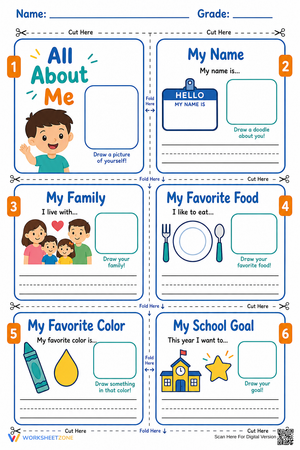
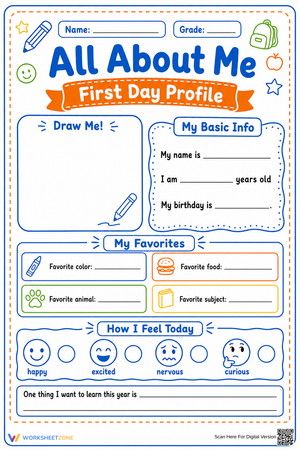
These kindergarten english printable worksheets give teachers a focused, ready-to-use set of resources covering the literacy skills that matter most in kindergarten — phonemic awareness, letter formation, CVC decoding, sight word recognition, and sentence structure. Each worksheet targets one clear skill so students aren't managing multiple demands at once. The set runs from letter-name recognition all the way to reading and responding to two-sentence passages, which makes it useful across the full school year rather than just a single unit.
The Specific Skills Targeted
Phonemic awareness comes first. These worksheets ask students to mark beginning sounds, circle rhyming picture pairs, and segment three-phoneme words using a box-per-sound format — the same Elkonin-box structure that reading interventionists and speech-language pathologists use. That alignment with pull-out support is intentional: students who see the same format in the classroom and in an intervention room transfer the skill faster than students who learn it two different ways.
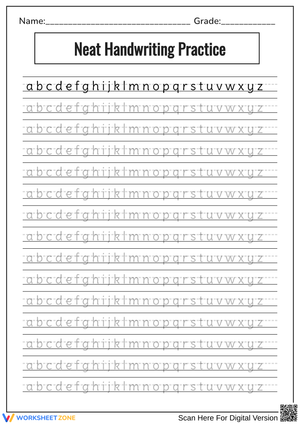
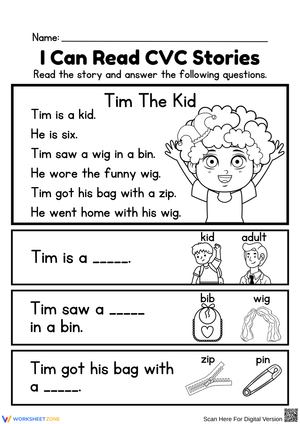
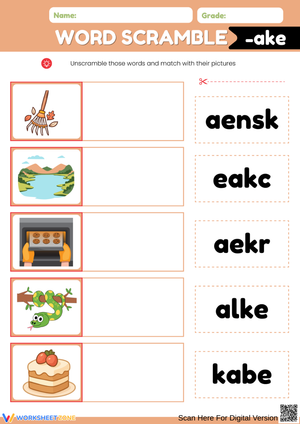
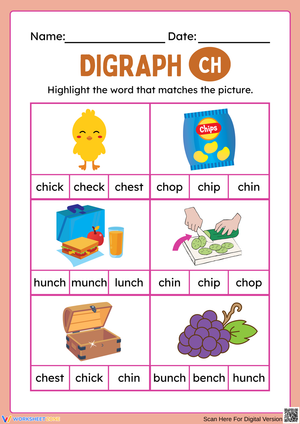
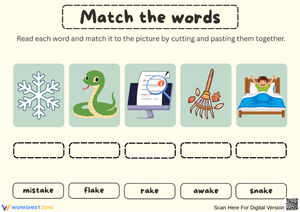
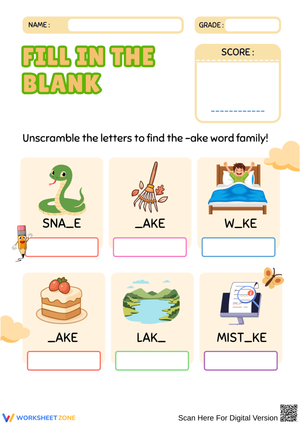
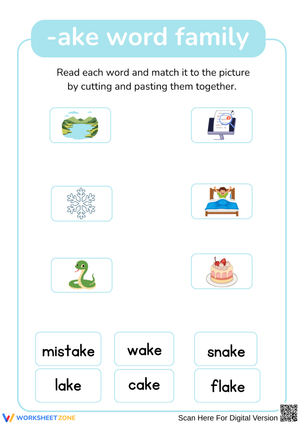
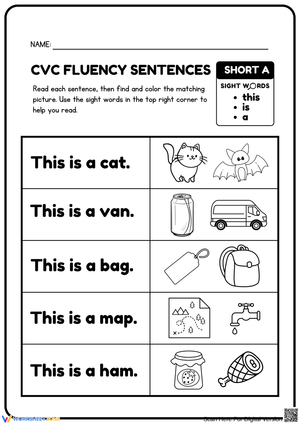
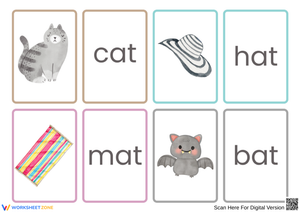
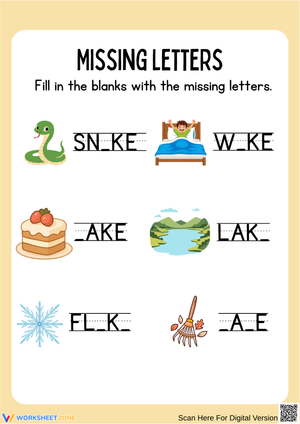
Phonics work centers on the CVC pattern. Students sort pictures by vowel sound, complete word families (grouping "-at" words, then "-an" words), and fill in missing middle vowels — consistently the hardest part of a CVC word for kindergarteners to hear and write. Letter formation worksheets include directional arrows and starting dots for every letter, both uppercase and lowercase. There is enough repetition on each worksheet to build muscle memory without running so long that students begin producing malformed letters out of fatigue.
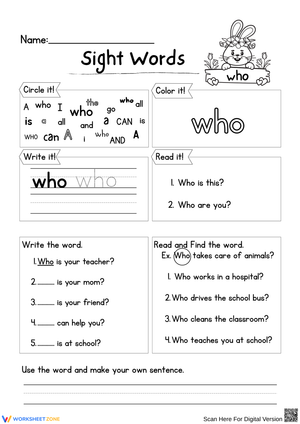
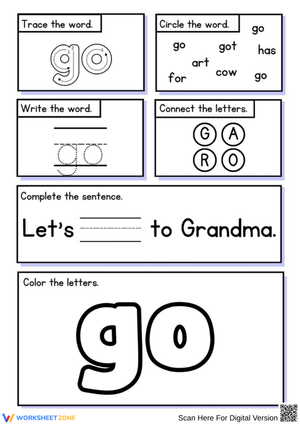
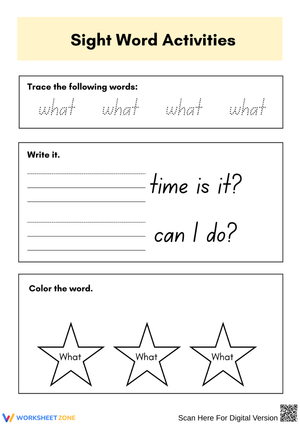
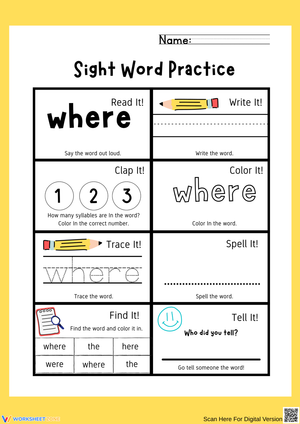
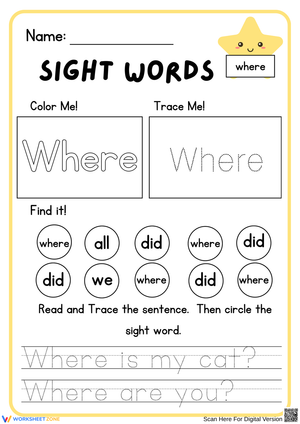
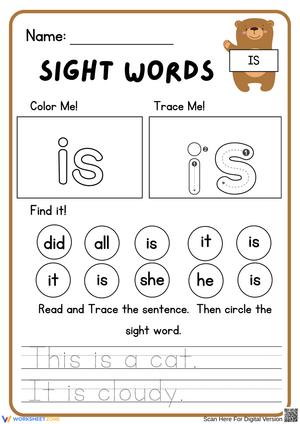
Sight word practice follows a see-it, trace-it, write-it, find-it sequence, with each worksheet covering a single Dolch pre-primer or primer word. That narrow focus matters: when a worksheet introduces six sight words at once, kindergarteners typically retain one. The sentence-building worksheets ask students to reorder cut-apart words into a three-to-four-word sentence, which layers in capitalization awareness and end punctuation without requiring students to generate letter forms from scratch at the same time.
Working These Resources Into Your Daily Schedule
The most reliable slot for these worksheets is morning arrival. A letter-formation or sight word worksheet on the desk gives arriving students a task with clear expectations. Students who have completed a few of these know immediately what "trace, then write" means without needing directions read aloud — that shared understanding settles the first ten minutes of the day faster than almost anything else.
Literacy centers are the second natural home. A phonics sort at one station can sit alongside magnetic letters at the next; the worksheet becomes the artifact showing that a student completed the center independently while the manipulatives handle the tactile practice. Teachers running three or four centers simultaneously find kindergarten english printable worksheets useful precisely because students can complete them without a teacher present at the table.
Small-group instruction is where these worksheets produce the most diagnostic information. Sitting with four students and a CVC worksheet, a teacher catches the student who writes "beg" for "bag" — short /a/ rendered as short /e/, a predictable mid-year error — and addresses it before the pattern is reinforced through weeks of repeated written work. Whole-class worksheet time doesn't give you that same moment of immediate observation. Sending worksheets home extends practice beyond the school day, though the phoneme-segmentation format often needs a brief parent note explaining what the boxes represent.
Mistakes Students Make That These Worksheets Help You Catch
The most common phonics error at this level isn't reversal — it's short vowel confusion, particularly between short /e/ and short /i/. Students write "pit" for "pet" or "sit" for "set" and don't perceive the difference until it's drawn out through explicit auditory contrast. The worksheets that ask students to choose between two pictures and write the matching word surface this error quickly. Once a teacher sees it in written work, the next instructional move is to return to auditory discrimination before pushing forward on decoding.
Directionality in stroke order gets far less attention than reversal errors, but it creates longer-term problems. A student might produce a recognizable "b" while starting at the bottom of the bowl rather than the top of the stick. The end product looks acceptable, but the formation is inefficient. The directional arrows and starting dots on the formation worksheets address this directly — provided the teacher checks that students are actually following the stroke order rather than simply arriving at a shape that looks right.
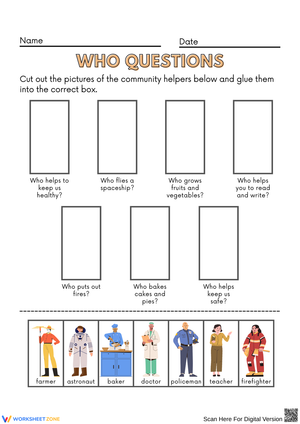
On sentence-building worksheets, students frequently place the capital letter somewhere in the middle of their reconstructed sentence rather than at the first word. They know capitalization is a rule; they haven't yet attached it to position. That specific gap shows up in cut-and-paste work more reliably than anywhere else in the literacy block, and it's worth stopping to address when it appears rather than marking it as an error and moving on.
Standard Alignment
The set aligns with four kindergarten Reading Foundational Skills strands from the Common Core State Standards:
- RF.K.1 — Print concepts: left-to-right directionality, word boundaries, and the understanding that spaces separate words
- RF.K.2 — Phonological awareness: rhyme recognition, syllable counting, phoneme isolation, blending, and segmentation
- RF.K.3 — Phonics and word recognition: letter-sound correspondences, CVC decoding, and high-frequency word recognition
- RF.K.4 — Reading fluency: reading simple texts accurately enough to support meaning-making
RF.K.2 and RF.K.3 receive the heaviest coverage in this set because those two standards generate the most differentiation work in actual kindergarten classrooms. Students who haven't reached RF.K.2 benchmarks by mid-year typically need the phonemic awareness worksheets pulled back for reteaching before phonics instruction takes hold. Having these resources available as reteaching tools — not just first-instruction tools — is part of what makes the set practical across the full year.
Adjusting the Work for a Range of Learners
Kindergarten classrooms commonly hold a thirty-to-forty-point spread in literacy readiness. Some students arrive already decoding simple sentences; others arrive without reliable letter-name knowledge. The set addresses that range without requiring a separate purchase for each tier.
For students still building letter-name recognition, the phonemic awareness worksheets rely on pictures and oral response — students circle, point, and mark without needing to read or produce written words. These resources give students productive practice with sound-level skills that doesn't demand print abilities they haven't yet developed.
Students who are already decoding CVC words can move to the sentence-building and early comprehension worksheets earlier in the year. A student who finishes a phonics sort in three minutes needs an extension task, not the same formation worksheet the rest of the class is working through. When kindergarten english printable worksheets span a genuine range of difficulty, in-place differentiation becomes practical without pulling out a second packet or requiring additional preparation time.
For students receiving speech-language services, the phoneme segmentation worksheets in this set use the same Elkonin-box format their SLP likely uses during pull-out sessions. Consistency between classroom and intervention materials reduces the adjustment students make when moving between settings and speeds overall acquisition of phonemic awareness skills.
Frequently Asked Questions
How do these worksheets align with Common Core kindergarten ELA standards?
This set of kindergarten english printable worksheets addresses RF.K.1 through RF.K.4 — print concepts, phonological awareness, phonics and word recognition, and fluency. That alignment is built into the skill sequence, not applied as a label after the fact. Teachers who use the resources in the order provided are working through the foundational reading progression as the standards lay it out.
Can ESL and ELL students use these worksheets productively?
The phonics and formation worksheets pair pictures with words and rely on tracing rather than generative writing, which makes them accessible for early-stage ELL students. The sight word worksheets are harder for beginning ELL students because high-frequency words like "the" and "was" have no concrete visual referent — they're function words with nothing to anchor them to meaning. For students at beginning English proficiency, phonics and picture-supported phonemic awareness work is more productive early in the year than isolated sight word memorization.
How many worksheets per day is realistic at this grade level?
One or two worksheets per instructional block is the practical ceiling for most kindergarteners. Students in this age group fatigue faster than teachers expect, and a student copying letters with a degraded grip by the third worksheet is reinforcing poor habits rather than fluency. One worksheet completed carefully produces more durable learning than three completed with declining attention and posture.
Do the tracing and formation worksheets work in dry-erase sleeves?
The letter-formation and sight word worksheets work well inside dry-erase sleeves for repeated center rotation. The cut-and-paste sentence worksheets don't translate to that format — they require a physical printed copy. Plan to print the sentence-building worksheets in sets and reserve the sleeves for formation and sight word practice.












 Interactive Worksheet Maker
 Quiz Maker
 Word Search Maker
 Crossword Puzzle Maker
 Word Scramble Generator
 Sentence Scramble Generator
 Handwriting Worksheet Generator
 Name Tracing Generator
 Fill In The Blank Generator