




























Views
Downloads

Letter F Phonics Worksheet | Essential Grade K-2 Practice

Paste this activity's link or code into your existing LMS (Google Classroom, Canvas, Teams, Schoology, Moodle, etc.).
Students can open and work on the activity right away, with no student login required.
You'll still be able to track student progress and results from your teacher account.
This Grade K-2 phonics worksheet provides comprehensive practice for the letter F through handwriting, vocabulary identification, and beginning sound recognition. Students will develop fine motor skills while building a foundation for reading and spelling. The furniture-themed activities make learning relatable and engaging for young learners.
At a Glance
- Grade: K-2 · Subject: ELA
- Standard:
CCSS.ELA-LITERACY.RF.K.3.A— Demonstrate basic knowledge of one-to-one letter-sound correspondences- Skill Focus: Letter F Recognition & Phonics
- Format: 3 pages · 15 problems · Answer key included · PDF
- Best For: Phonics centers and morning work
- Time: 15–20 minutes
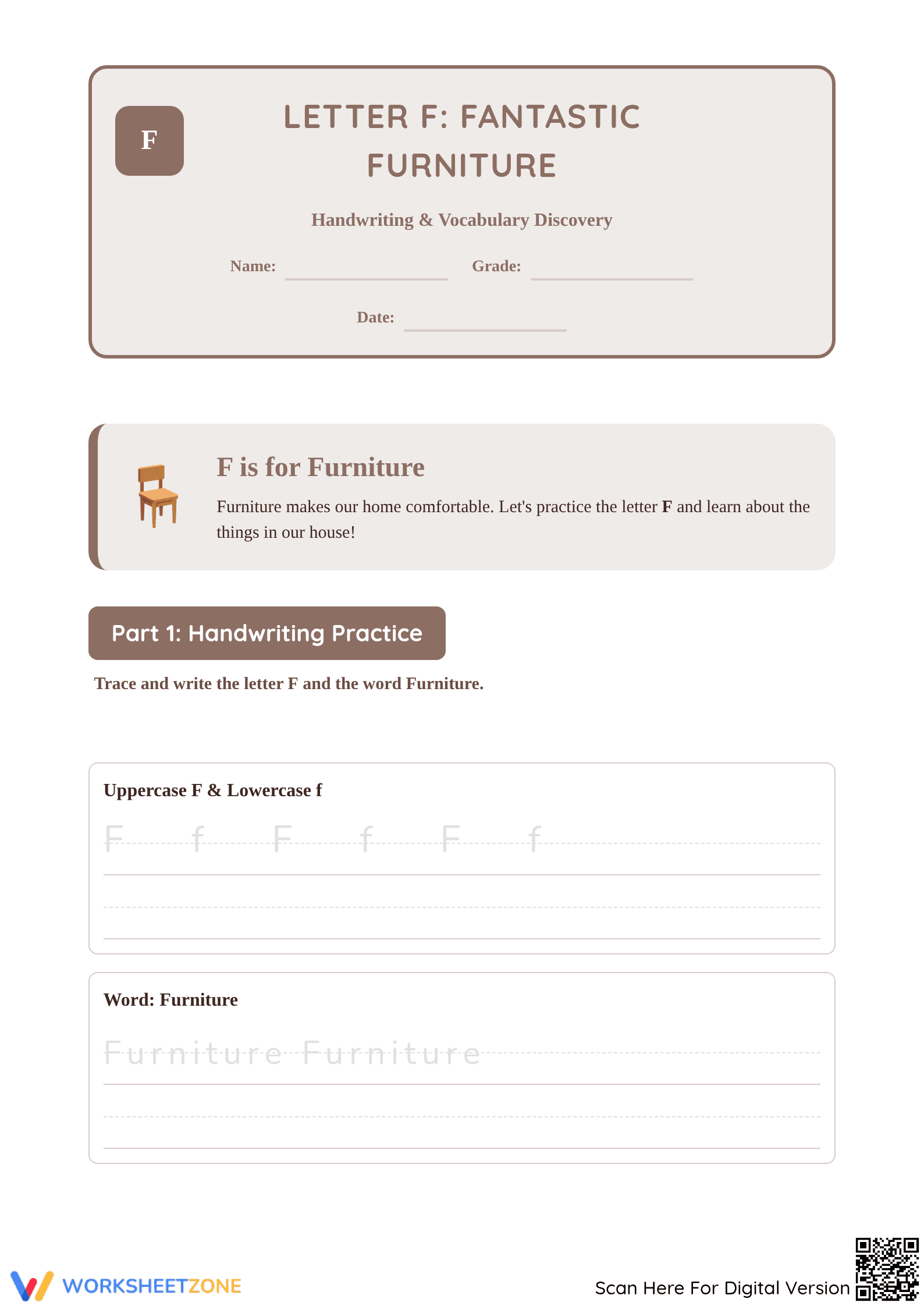
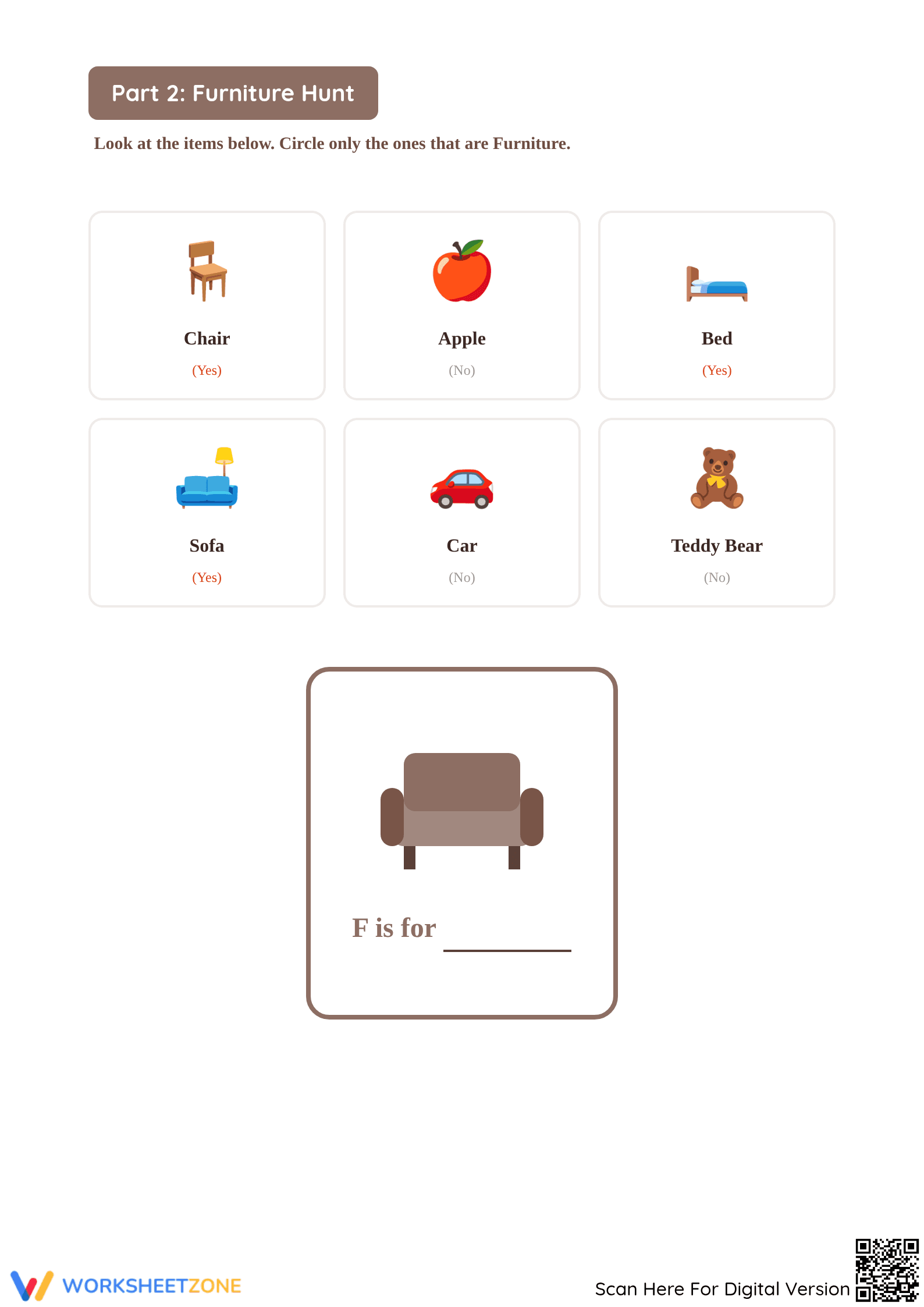
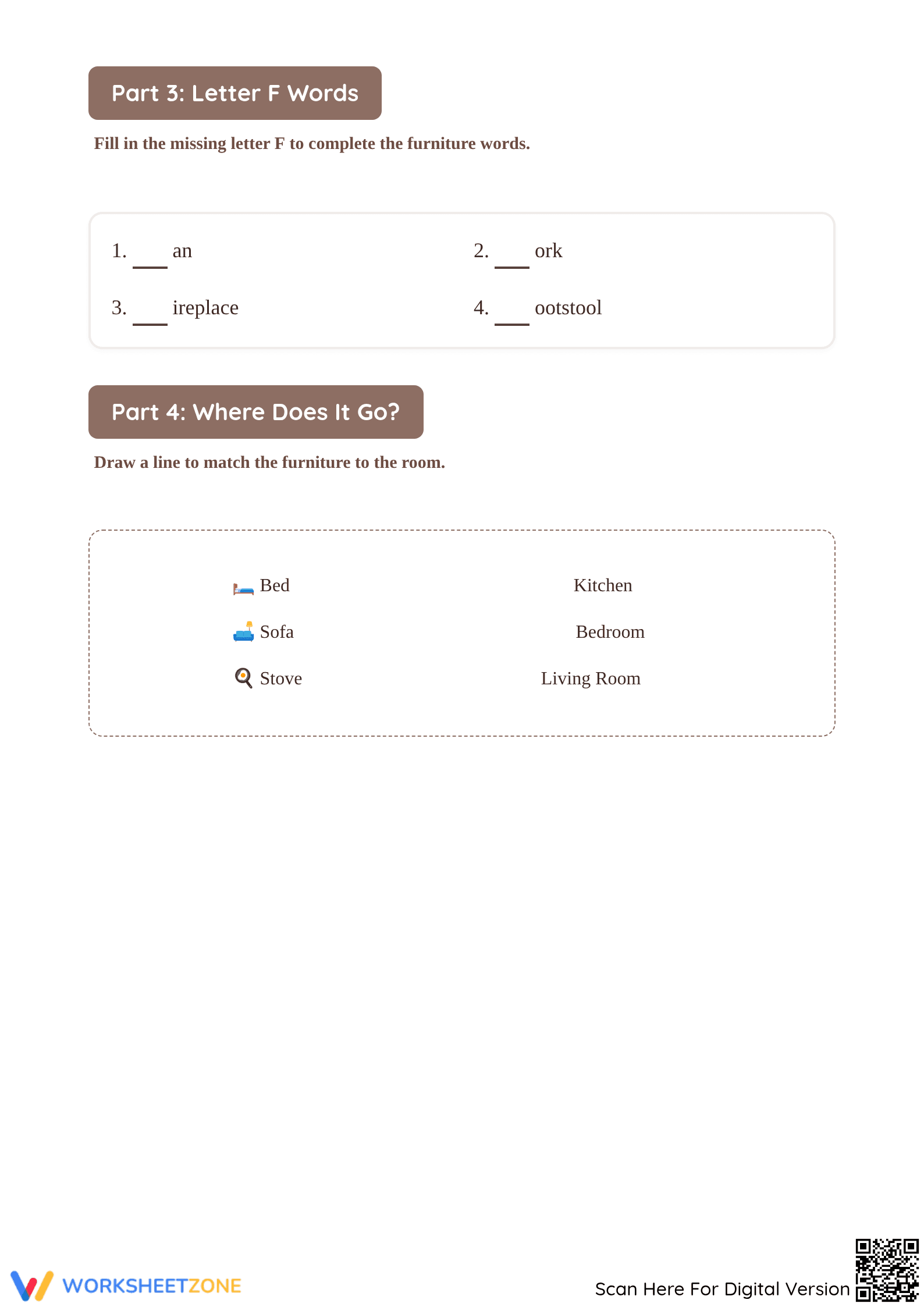
This 3-page PDF packet includes a structured progression of tasks. Page one features uppercase and lowercase tracing lines alongside word-level handwriting practice. Page two offers a visual "Furniture Hunt" for categorization and a fill-in-the-blank identification task. The final page includes missing letter completion for four vocabulary words and a logic-based matching activity connecting furniture to specific rooms.
Skill Progression
- Guided Practice: Students begin with 6 tracing prompts for uppercase and lowercase F, establishing correct stroke order and letter formation.
- Supported Practice: Learners evaluate 6 visual items to identify the /f/ sound in "furniture," supported by clear illustrations and "Yes/No" labels.
- Independent Practice: Students complete 4 word-stems by providing the missing initial consonant and match 3 items to their functional locations.
This sequence follows a gradual-release model, moving from tactile tracing to conceptual categorization and independent phonemic application.
Standards Alignment
The primary focus is `CCSS.ELA-LITERACY.RF.K.3.A`, which requires students to demonstrate basic knowledge of one-to-one letter-sound correspondences by producing the primary sound for each consonant. Additionally, the handwriting components support `CCSS.ELA-LITERACY.L.K.1.A` regarding the formation of upper- and lowercase letters. Both standard codes can be copied directly into lesson plans, IEP goals, or district curriculum mapping tools.
How to Use It
Use this resource during the "You Do" phase of a phonics lesson after introducing the /f/ sound. It serves as an excellent formative assessment; observe students during the "Furniture Hunt" to see if they can distinguish the initial phoneme without teacher prompting. Completion typically takes 15 to 20 minutes depending on the student's writing speed.
Who It's For
This packet is designed for Kindergarten students first learning phonemes, but it also serves as a valuable intervention tool for Grade 1 or 2 students needing handwriting remediation. It pairs naturally with a classroom anchor chart featuring "F" words or a read-aloud book about home environments.
According to the RAND AIRS 2024 report on early literacy, the integration of multisensory tracing with phonemic categorization significantly improves letter-sound retention in primary learners. This worksheet addresses CCSS.ELA-LITERACY.RF.K.3.A by requiring students to identify the /f/ sound across 15 distinct tasks, including handwriting and visual sorting. Research by Fisher & Frey (2014) emphasizes that such structured practice helps bridge the gap between isolated letter recognition and functional vocabulary use. By combining fine motor development with cognitive classification, this resource ensures that students do not just memorize a shape but understand the phonological role of the letter F within the English language. This evidence-based approach supports foundational reading readiness and provides teachers with clear data points for tracking student progress toward state-mandated literacy benchmarks.


