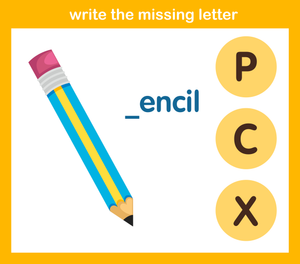
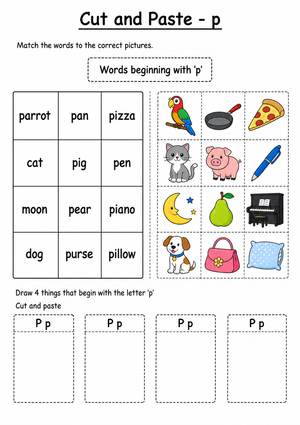
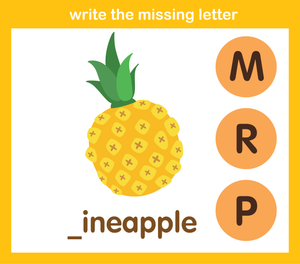
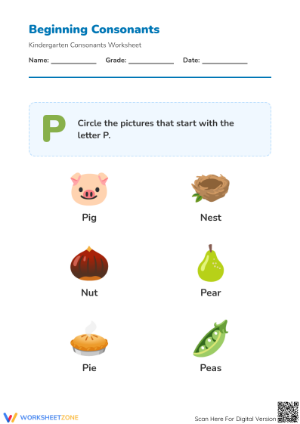
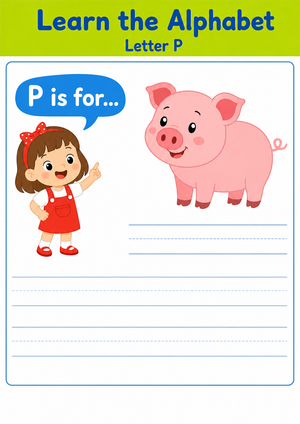
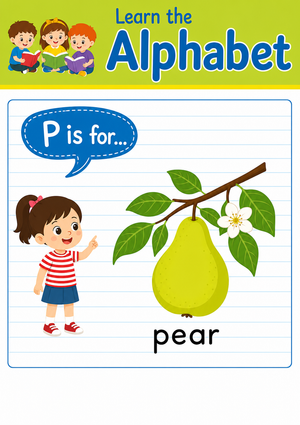
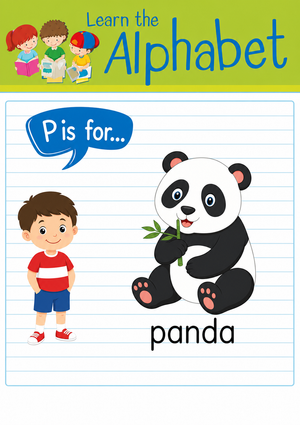
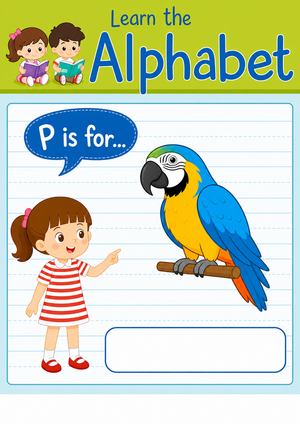
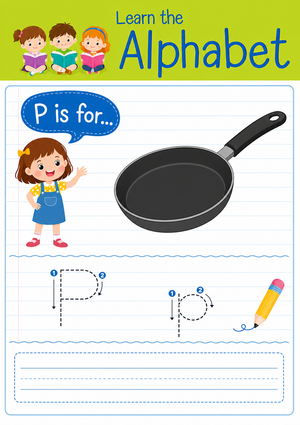
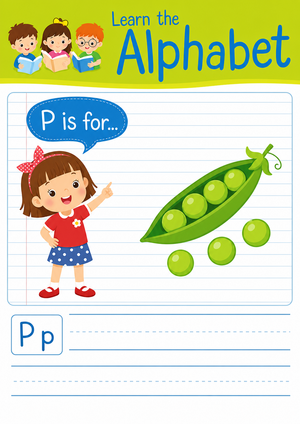
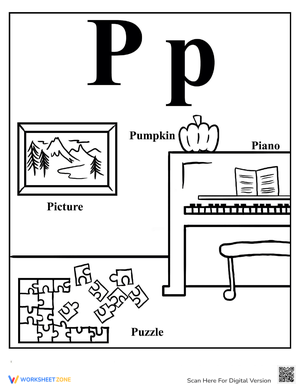
These kindergarten letter p beginning sound printable worksheets give teachers a set of targeted phonics activities that isolate the /p/ phoneme before students have to think about medial vowels or ending consonants. Each worksheet addresses one task — sort the pictures, circle what starts with /p/, trace the letter while naming its sound — so kindergarteners can build confidence through repetition without getting lost in multi-step directions.
Why Word Selection Is the First Decision to Get Right
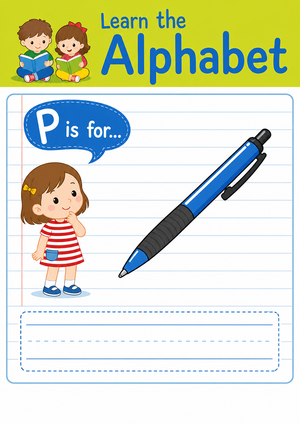
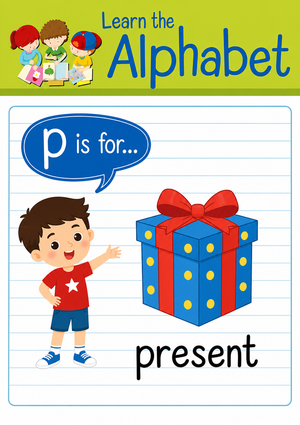
The pictures on a phonics worksheet either clarify the target sound or muddy it. For the /p/ phoneme, the clearest teaching words are short, familiar, and unblended: pig, pot, pan, pen, pizza, popcorn. These work because children already know them and name the pictures automatically, which frees all their attention for the beginning sound. Blended words like play, prize, or pretzel create real problems early in instruction — kindergarteners trying to isolate the first sound in play often hear /pl/ as a single unit and cannot pull the /p/ away from what follows. Saving blend words for later in the year, after students have heard the pure phoneme dozens of times, keeps early lessons clean.
Skills Covered Across the Set
The worksheets target three related but distinct skills, and keeping those skills distinct during instruction matters:
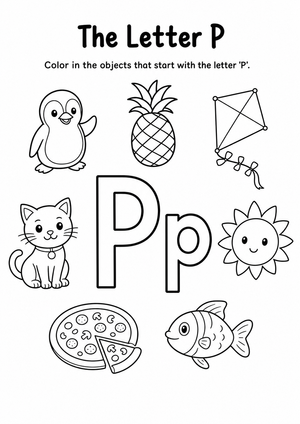
- Initial sound identification: Students look at a row of pictures, name each one aloud, and mark only those that begin with /p/. The oral naming step is not optional — this skill lives in the ear before it lives on paper.
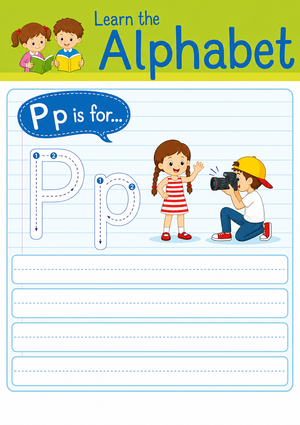
- Letter-sound correspondence: Students trace both forms of the letter P and draw a line from the letter to pictures whose names start with that sound. Writing the grapheme while saying the phoneme builds two-way recall.
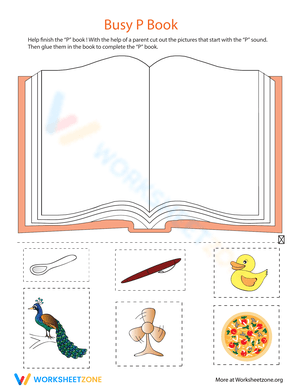
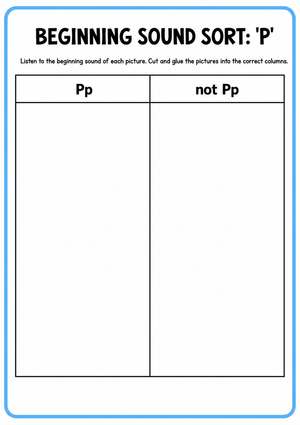
- Sorting by beginning sound: A cut-and-paste format asks students to place pictures into one of two columns — /p/ words and non-/p/ words. Sorting forces contrast, and contrast is often where the sharpest learning happens.
In a well-designed kindergarten letter p beginning sound printable worksheets, fine motor work — cutting, tracing, coloring — is woven into the activity rather than added as decoration. At this age, the act of carefully cutting out a picture of a pumpkin and placing it in the correct column reinforces that word's initial sound in a way that circling a picture alone does not.
Frequent Student Errors Worth Catching Early
The most common mistake is confusing /p/ with /b/. Both sounds are made by pressing the lips together and releasing a burst of air — the only difference is that /b/ is voiced and /p/ is not. Students who sort a picture of a bus into the /p/ column are not being careless; they are responding to a genuine phonemic similarity. A quick check: have students press two fingers lightly to their throats. Saying /b/ produces a clear buzz. Saying /p/ produces nothing. That contrast, felt physically, sticks faster than any verbal explanation.
A second error is less obvious: students add a voiced vowel after the phoneme, producing "puh" instead of a clean burst of air. This often happens because a teacher modeled it that way without realizing it. Hold a small piece of tissue paper in front of your mouth and say /p/ — the tissue should jump from a sudden puff, not flutter from a sustained sound. When a student does the same and gets a flutter, they are almost certainly adding a vowel. Running this as a quick warm-up before students work independently gives visible, immediate feedback that the worksheet itself cannot replicate.
How to Work These Worksheets Into Your Phonics Block
The most effective sequence is explicit introduction first, worksheet second. Spend five to seven minutes in whole-group instruction modeling the sound — lips together, quick release, tissue paper check — before students see the activity. Then introduce the task during that same session. In the following day's opening, use one of these worksheets as a brief review before moving to new content. That one-day spacing does more for retention than massing all the practice into a single sitting.
For literacy centers, the worksheets fit easily into a dry-erase pocket. Students complete sorting or tracing with a whiteboard marker, erase, and repeat — the same activity becomes additional practice without extra copies. The kindergarten letter p beginning sound printable worksheets also work well as morning task work once the sound has been introduced whole-group. Familiar formats like picture-circling or letter tracing need no explanation, so students start without waiting for directions while morning routines finish around them.
Standard Alignment
These worksheets address CCSS.ELA-LITERACY.RF.K.3a, which requires kindergarteners to produce the primary sound for each consonant, demonstrating basic letter-sound correspondence. They also support CCSS.ELA-LITERACY.RF.K.2d, which calls for students to isolate and pronounce initial sounds in CVC words. In practical classroom terms, /p/ typically enters kindergarten phonics instruction in the first six to eight weeks alongside other clear early consonants — M, S, T — because it produces a distinctive, easy-to-isolate sound that helps students grasp what a phoneme actually is before they encounter less predictable ones.
Adjusting the Set for Different Points in Phonics Development
Students who enter kindergarten with some phonemic awareness already in place can move quickly past the picture-identification tasks. The sorting worksheets do more useful work for them — especially when distractors include /b/ words or other stop consonants like /t/ and /k/, where finer discrimination is required rather than simple recognition.
For students still in the earliest stages — not yet reliably isolating any beginning sound — reduce the number of pictures per worksheet and work through each one aloud together before asking them to mark anything. Say the picture name, hold the /p/ at the start, then let the student complete the marking. At that point, the worksheet functions as a record of shared oral practice rather than a silent independent task, which is the appropriate use at that developmental stage.
Frequently Asked Questions
How do I help students who keep mixing up /p/ and /b/?
Make the voiced/voiceless distinction physical before anything else. Have students place two fingers on their throats and alternate between /b/ and /p/ — the buzz disappears completely on the /p/. Once they can feel the difference reliably, return to the sorting worksheet and name each picture together before students decide where to place it. The sorting format is especially useful here because it demands active comparison rather than isolated recognition of a single sound.
Can these worksheets be used for small-group phonics intervention?
Small-group use is where these worksheets often do their most productive work. In a group of four or five students, the teacher can hear each child name the pictures aloud and catch errors in real time — the student who says "bizza" for pizza, or who skips the oral step entirely and guesses from the picture shape. The kindergarten letter p beginning sound printable worksheets are also well-suited to partner work inside centers, where one student names the picture and the other decides whether to mark it, then they switch roles.
When in the school year should the /p/ sound be introduced?
Most kindergarten phonics sequences place /p/ in the first six to eight weeks of school, usually after students have worked with one or two other consonants and have begun to understand that a letter stands for a specific sound. Early consonants are chosen because they are easy to isolate and easy to demonstrate with physical cues — /p/ checks both boxes, which makes it a natural entry point for early phonics instruction.