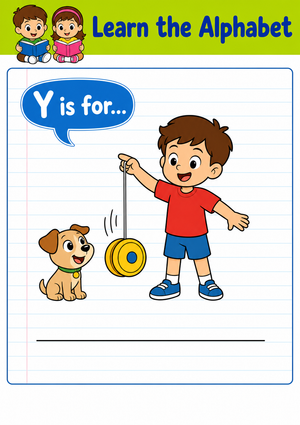
These kindergarten letter y beginning sound printable worksheets give teachers a focused set of phonics resources for one of the trickier initial consonants in the early alphabet sequence. The /y/ sound doesn't appear at the start of many common English words — students meet /s/ and /m/ constantly in shared reading and environmental print, but the pool of high-frequency Y words is genuinely small: yellow, yes, yarn, yo-yo, yak, yawn, yogurt. That limited vocabulary actually helps in the classroom, because wrong answers during sorting tasks stand out clearly and picture-identification errors usually signal a vocabulary gap rather than a phonics error.
What Students Practice Across the Set
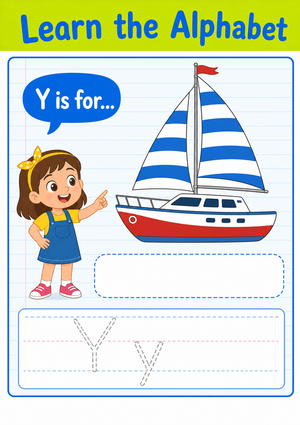
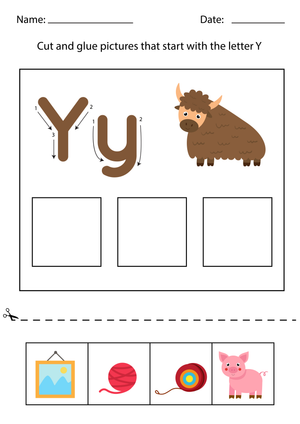
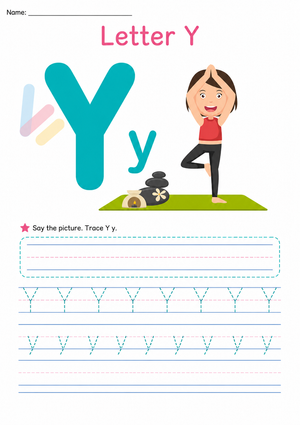
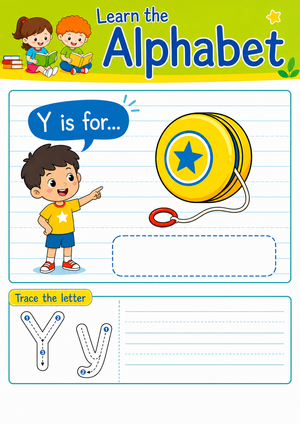
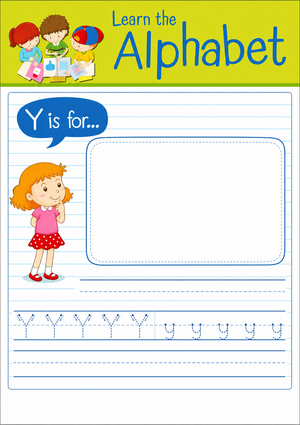
Each worksheet targets letter-sound correspondence for Y as an initial consonant. Students trace both the uppercase and lowercase forms, which matter differently here. Uppercase Y is two short diagonal strokes meeting at a center point with a vertical stem dropping down. Lowercase y adds a descending stroke that dips below the baseline — a concept many kindergarteners are still internalizing. These worksheets give consistent formation practice with directional arrows on each trace line, and students encounter the letter in multiple fonts and sizes to build visual recognition beyond just the handwriting model.
The activity types across the set include:
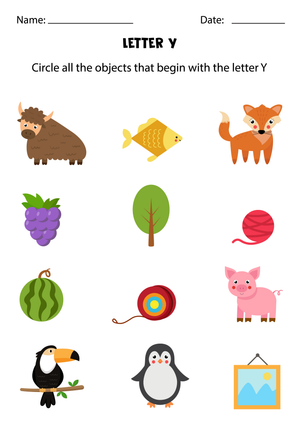
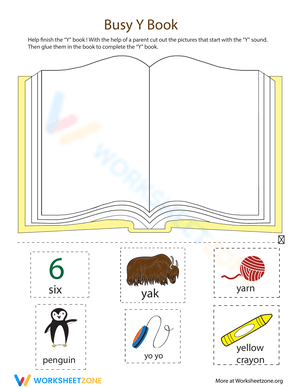
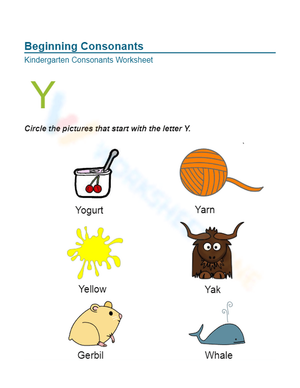
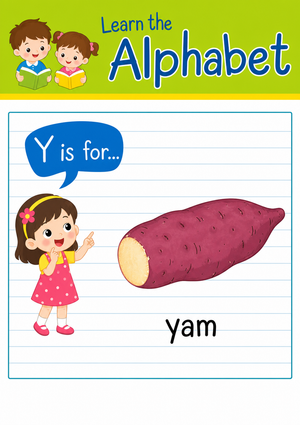
- Picture sorts where students identify which items start with /y/ and which don't, using images like yarn, yak, and yogurt alongside clear distractors
- Beginning-sound discrimination tasks where students mark yes or no for whether a pictured word starts with the target sound
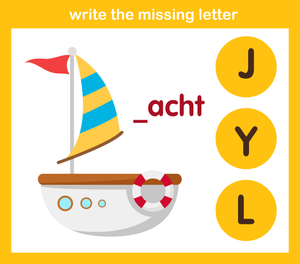
- Fill-in-the-letter exercises paired with labeled illustrations
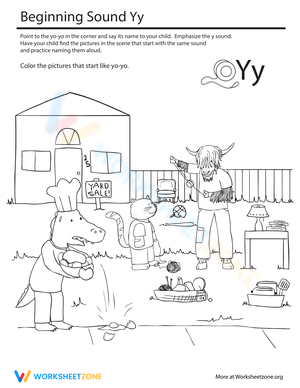
- Color-by-sound activities where correct identification of the /y/ initial sound reveals a simple drawing
Mistakes Students Make That These Worksheets Help You Catch
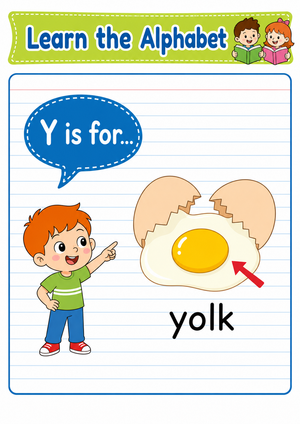
The most consistent error isn't a phonics problem at all — it's a vocabulary gap wearing the mask of one. A student who looks at a picture of an egg yolk and calls it "egg" will mark it as not starting with /y/, and that's not about the sound. These worksheets surface this quickly, and it's worth a brief whole-group check before independent work: "What do we call just the yellow part inside an egg?"
Students also confuse the letter Y visually with V. Both have matching diagonal strokes at the top, and in some handwriting fonts the difference is subtle. In student writing, we regularly see Y formed without the stem — essentially a V — especially when students rush through tracing. Having students circle the stem on completed traces, and calling it "the tail that V doesn't have," addresses this directly without overcomplicating the lesson.
A less obvious error: students sometimes assign the /y/ sound to words that begin with W. Both /y/ and /w/ are glides — sounds where the mouth moves from one position into a vowel rather than stopping or flowing continuously — and they feel similar in production. A student who sorts "wagon" into the Y column isn't usually guessing randomly; they've noticed something phonetically real. A quick side-by-side comparison with exaggerated mouth shapes clears it up faster than additional drill.
Fitting These Worksheets Into Your Lesson Planning
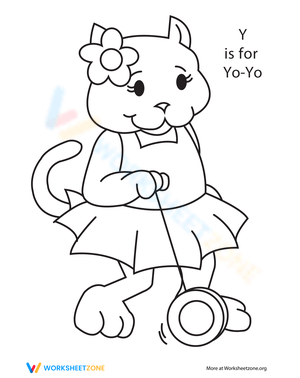
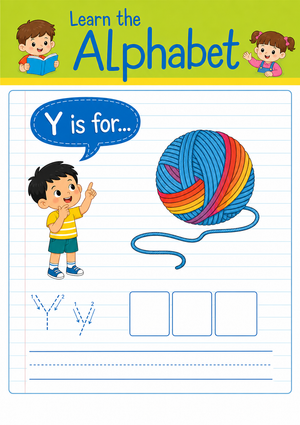
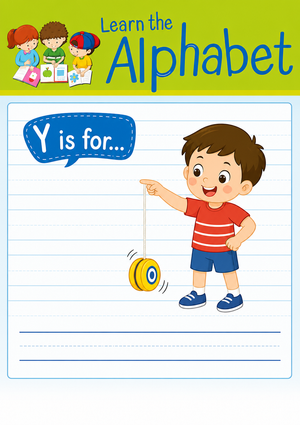
The most natural entry point is morning work on the day you introduce Y. One worksheet at arrival, while the room is still settling, anchors the letter before whole-group circle time begins. After the class introduction — typically including a visual anchor like a skein of yellow yarn or a picture of a yo-yo — a second worksheet fits cleanly into literacy centers that same afternoon while you pull small groups.
The kindergarten letter y beginning sound printable worksheets in this set also make effective exit tasks for the five minutes before transitions. The circle-the-picture activities require no writing, so students who are close to shutdown can still complete them successfully. Students who finish early can flip the worksheet over and draw two more things that start with /y/ — a quick extension that doesn't require you to prepare anything additional.
Standard Alignment
These worksheets address CCSS.ELA-LITERACY.RF.K.3a, which requires kindergarteners to demonstrate one-to-one letter-sound correspondence by producing the primary sound for each consonant. Y sits in an interesting position within that standard: it appears later in most classroom alphabet sequences because its consonant role is clear and consistent, but its vowel role — in words like "gym" or "fly" — belongs to a later instructional phase entirely. At the kindergarten level the expectation is simply that students recognize Y at the beginning of a word and produce /y/ without prompting, and the picture-sort and sound-identification tasks on each worksheet give you a direct, observable check on exactly that.
The set also addresses RF.K.2d, which asks students to isolate and pronounce initial sounds in spoken words. Every kindergarten letter y beginning sound printable worksheets activity in this collection builds toward that standard through its identification and sorting tasks, making the resources directly usable as evidence of phonemic awareness development during any standards-based assessment cycle.
Adjusting the Set for Different Learners
Students who are still working on phonemic awareness at the most basic level — who struggle to isolate any initial sound, not just /y/ — benefit from reducing distractors before they sort. Present three pictures: two that start with /y/ and one that clearly doesn't. When they sort those accurately and consistently, add more distractors and introduce less common Y words like "yoke" or "yodel."
For students who've already secured the /y/ sound and are ready to push further, extend any worksheet by asking them to write the word below the picture rather than just circling it — or to generate two Y words not pictured on the page. Writing "yak" from memory pulls on a different skill than recognizing it in a picture array, and that gap matters even in kindergarten. It moves practice from recognition toward recall, which is where genuine word knowledge lives.
Frequently Asked Questions
Why does the /y/ sound get its own focused practice instead of being grouped with other consonants?
Because of the small word pool. Students who practice B, M, S, or T encounter those initial sounds constantly in shared reading and environmental print. The /y/ sound is genuinely less frequent in English, so deliberate practice through a targeted set matters more for Y than for most letters — and that's exactly what kindergarten letter y beginning sound printable worksheets provide. You can't rely on incidental exposure the way you might for more common initial consonants.
How do I keep students from copying each other during the picture-sort activities?
Cut the pictures ahead of time and give each student their own set in a small envelope or bag. Students sort by physically placing pictures into two columns before pasting anything down. The act of handling each picture card and saying the word aloud before committing to a column slows down the impulse to glance at a neighbor and forces individual processing.
Do the worksheets address lowercase y formation separately from uppercase Y?
Yes. The tracing activities cover both forms, and the directional arrows on the lowercase y specifically mark the descending stroke — the part that goes below the baseline — because that's where formation errors cluster most. Students who form the uppercase correctly will still flatten or reverse the lowercase tail until they have repeated, targeted practice with that below-the-line movement.