




























Views
Downloads

Letter F Phonics Worksheet | Preschool ELA Printable

Paste this activity's link or code into your existing LMS (Google Classroom, Canvas, Teams, Schoology, Moodle, etc.).
Students can open and work on the activity right away, with no student login required.
You'll still be able to track student progress and results from your teacher account.
This printable phonics worksheet helps preschool and kindergarten students master the letter F through targeted practice. By combining beginning sound identification with letter formation, early learners develop essential foundational reading skills. Students will confidently recognize both uppercase and lowercase forms while connecting the letter to its corresponding sound.
At a Glance
- Grade: Preschool · Subject: ELA
- Standard:
CCSS.ELA-LITERACY.RF.K.3.A— Identify primary sounds for consonants- Skill Focus: Letter F Recognition and Sounds
- Format: 2 pages · 3 activities · Answer key included · PDF
- Best For: Morning work or literacy centers
- Time: 10–15 minutes
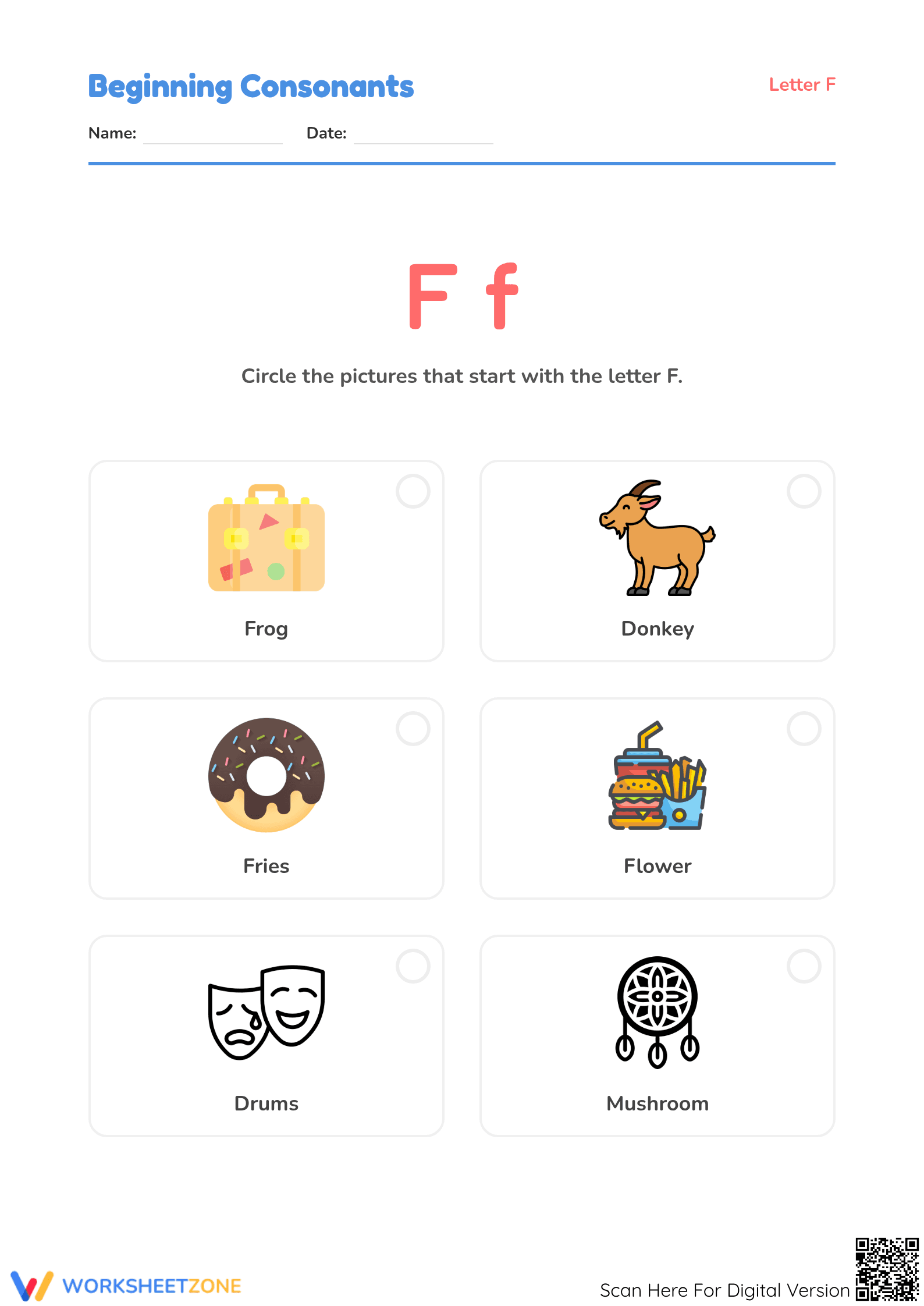
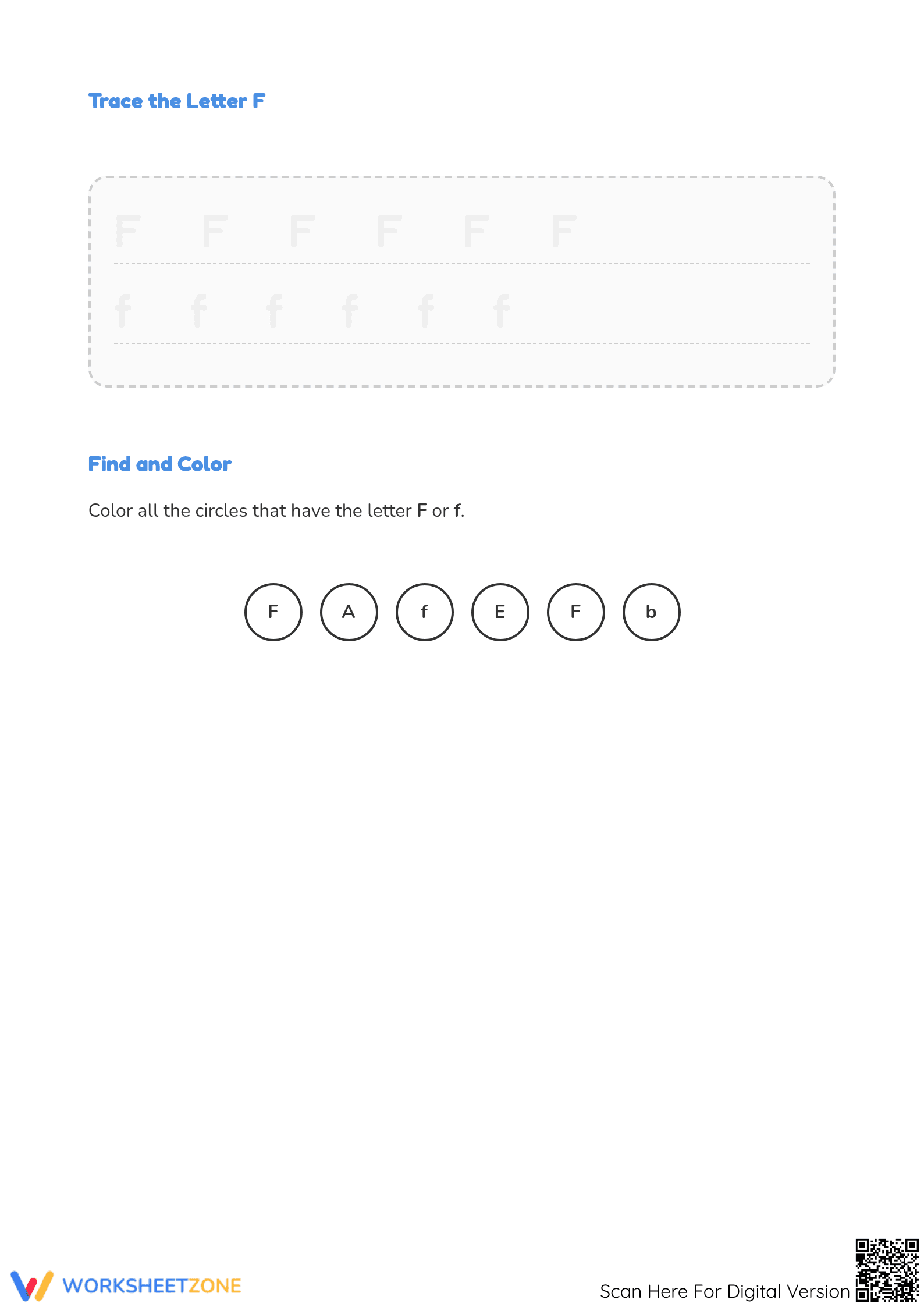
This two-page resource features three distinct activity types designed for early childhood development. The first page presents a visual identification task where students circle words starting with the target consonant. The second page includes guided tracing lines for both uppercase and lowercase F, followed by a letter-hunt activity where children find and color the correct letters among distractors. A complete answer key is provided for quick checking.
- Guided practice: Students begin by identifying beginning sounds with visual picture cues, isolating the /f/ sound in familiar words.
- Supported practice: Children trace uppercase and lowercase letters using dashed guidelines to build fine motor memory and proper stroke order.
- Independent practice: Learners independently scan a mixed group of letters to find and color the target consonant, reinforcing visual discrimination.
This gradual-release approach ensures young learners build confidence as they move from sound recognition to independent letter identification.
Aligned to primary standard CCSS.ELA-LITERACY.RF.K.3.A, this resource supports students as they demonstrate basic knowledge of one-to-one letter-sound correspondences by producing the primary sound for each consonant. It also reinforces basic print concepts and letter recognition. Both standard codes can be copied directly into lesson plans, IEP goals, or district curriculum mapping tools.
Deploy this worksheet during morning work routines to gently introduce the letter of the week. It also functions perfectly as an independent literacy center activity after direct instruction on the /f/ sound. As a formative assessment tip, observe students during the tracing section to ensure they are starting their pencil strokes at the top line rather than the bottom. Expected completion time is 10 to 15 minutes.
This resource is designed for preschool, pre-K, and early kindergarten students developing basic phonemic awareness. The clear, uncluttered layout provides built-in differentiation for students who need visual focus, while the tracing lines support those developing fine motor control. Pair this activity with a read-aloud book that heavily features the letter F to reinforce the sound in context.
Early phonics instruction requires explicit, systematic practice connecting visual symbols to their corresponding sounds. By targeting the specific skill to identify primary sounds for consonants, this resource aligns with CCSS.ELA-LITERACY.RF.K.3.A to build foundational reading readiness. According to Fisher & Frey (2014), providing young learners with multiple modalities of practice—such as auditory identification, physical tracing, and visual discrimination—significantly increases retention of new alphabetic concepts. This multi-sensory approach ensures that students do not just memorize shapes, but actively map the phoneme to the grapheme. Integrating these targeted, brief practice sessions into daily routines helps solidify early literacy skills before students transition to decoding full words, creating a stronger foundation for future reading comprehension and fluency.


