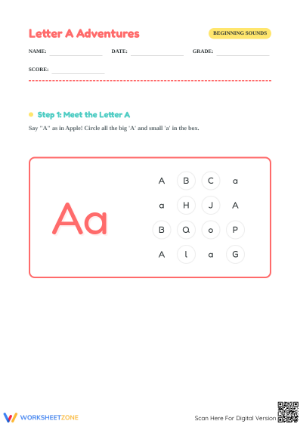
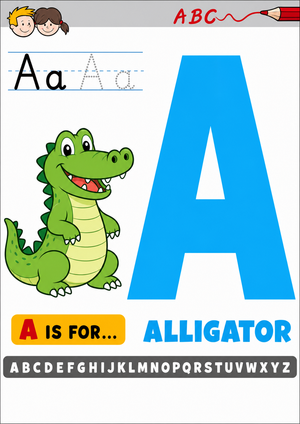
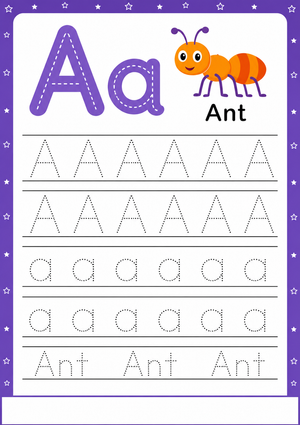
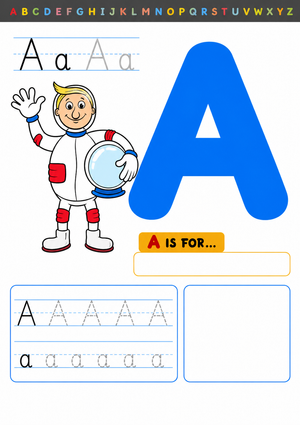
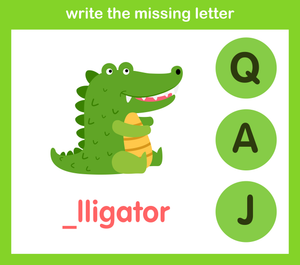
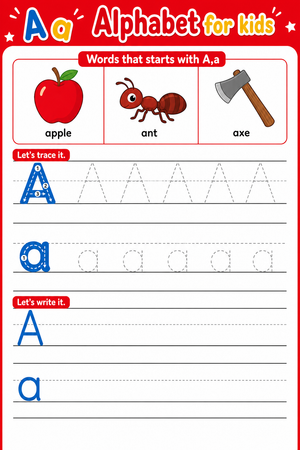
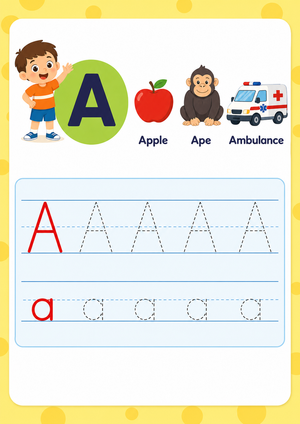
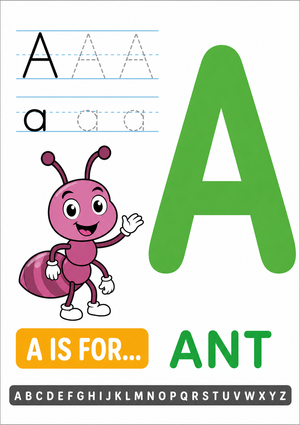
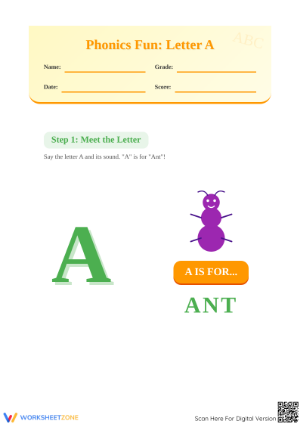
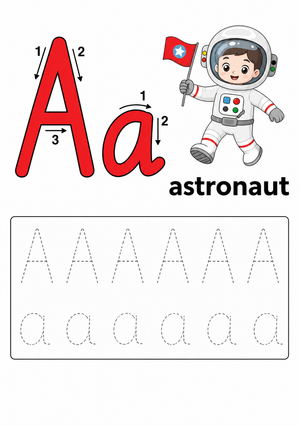
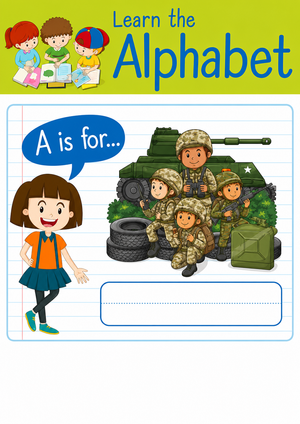
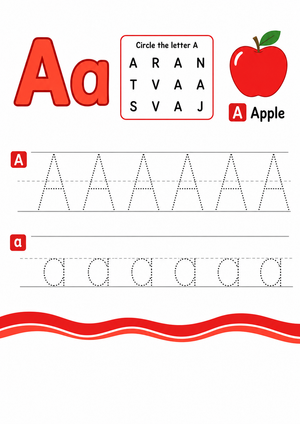
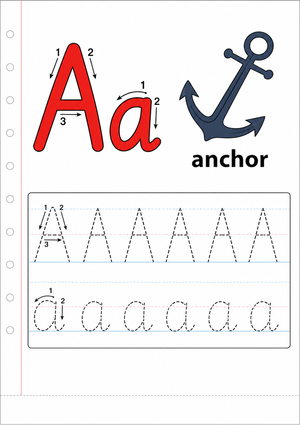
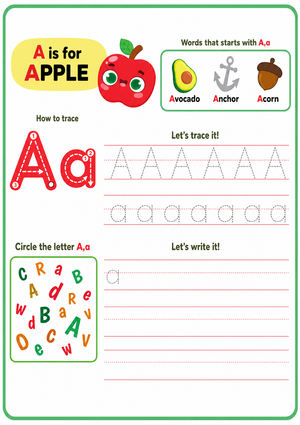
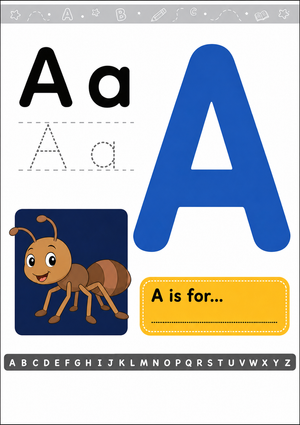
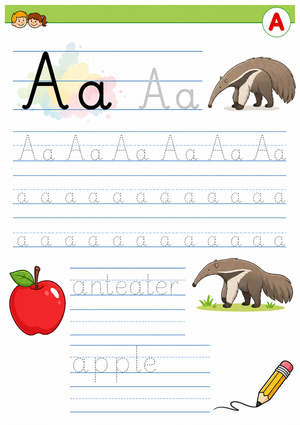
These kindergarten letter a beginning sound printable worksheets give teachers a focused, low-prep way to address one of phonics instruction's most critical early benchmarks: isolating the initial sound in spoken words. The set centers on the short /a/ phoneme — the sound in apple, ant, and axe — and uses picture-based tasks to move students from letter recognition into genuine sound work.
What Students Do in Each Worksheet
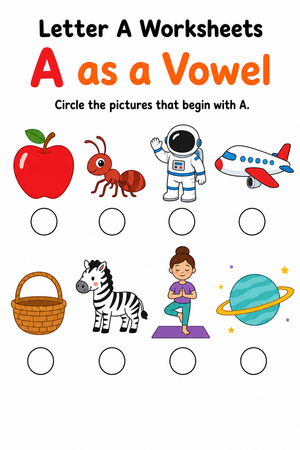
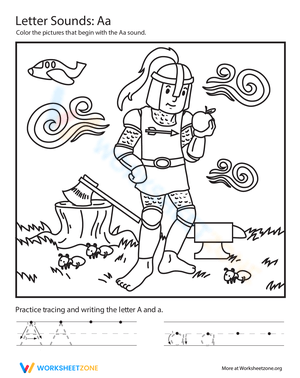
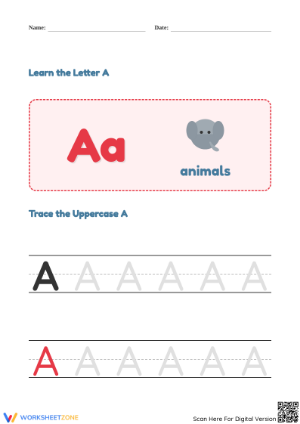
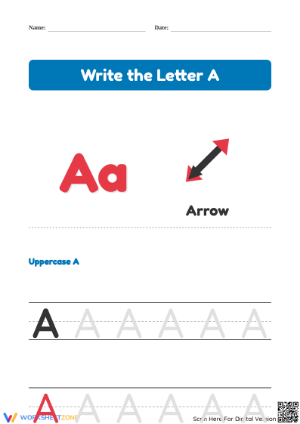
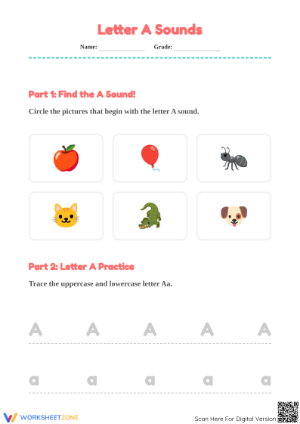
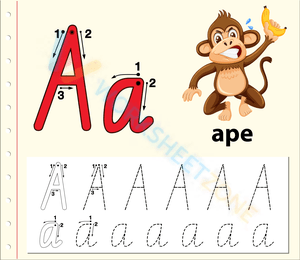
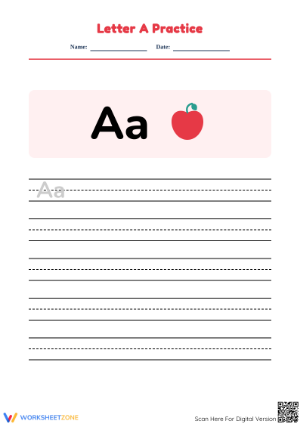
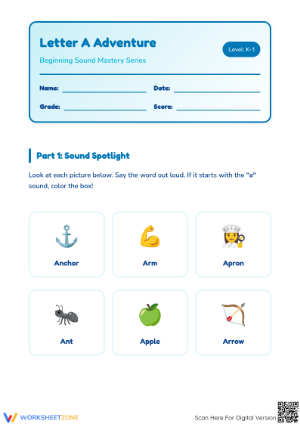
The tasks vary enough to hold attention across repeated practice without repeating the same cognitive move twice. Students circle pictures whose names begin with /a/, cross out images that don't belong, sort words into A / Not A columns, and trace the letter before identifying examples. That order — motor first, then listening — matters. Tracing the letter engages motor memory, and there is solid evidence that physical letter formation accelerates the auditory-to-symbol connection in early readers.
Across the kindergarten letter a beginning sound printable worksheets set, a handful of tasks ask students to say a picture name aloud and then underline the matching letter from a small choice set. That auditory-to-visual link is worth building early. Students who can only match the letter visually but cannot connect it to a spoken phoneme stall out when they reach blending work later in the semester — and these tasks help close that gap before it opens.
Errors Worth Catching Before They Calcify
The most common mistake is medial-sound confusion. A student circles cat because they hear /a/ in the word — accurately — but the task asks for the first sound. This pattern appears especially on worksheets with CVC pictures like hat or bag: for some five-year-olds, the medial vowel is the loudest part of the word, and they haven't yet built the habit of anchoring onto the initial position. Naming that error explicitly in the first whole-group session ("We're listening for the very first sound — the front door of the word") reduces it quickly and gives students language to self-correct.
A second error pattern is less predictable. Students who correctly circle apple will also circle umbrella — not because they confuse A and U, but because both start with vowels, and something about that grouping feels right to them. They've noticed that vowel-initial words behave differently from consonant-initial ones, which is actually an early sign of phonological awareness developing. The error still needs correction, but a response of "you noticed something true — here's the finer distinction" lands better than a flat wrong mark.
Getting These Worksheets Into Your Weekly Routine
The most reliable slot is the five to eight minutes after morning meeting, before the full literacy block begins. A worksheet is already at each seat, face-down, and the transition into academic work happens without a dead pause. The picture vocabulary on these worksheets — images students already know by name — lowers the entry barrier enough that the task runs mostly independently while the teacher handles attendance. Short /a/ words rarely need vocabulary warm-up to get started, which is exactly why beginning sound practice works in that small transitional window.
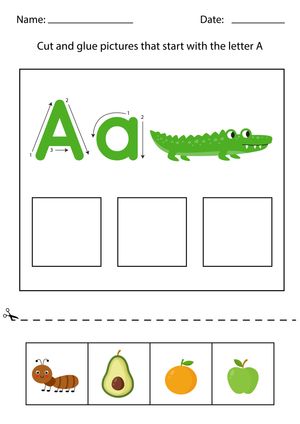
For literacy centers, a picture-sort station works well: students cut pictures from one worksheet and glue them into a two-column chart. The tactile pause — cut, say the word, listen to the first sound, place the image — prevents the guessing-and-rushing pattern that plagues kindergarten seat work when the only task is circle-or-cross-out. A second station from the same set can run as a partner check, where one student names each picture and the other listens for errors. In fact, using kindergarten letter a beginning sound printable worksheets at the end of a center rotation gives you a quick formative read: a scan of student work tells you exactly who is isolating the /a/ phoneme and who is still operating on visual-letter matching alone.
Standard Alignment
These worksheets address RF.K.2d, which asks kindergarteners to isolate and pronounce the initial, medial vowel, and final sounds in three-phoneme words. In classroom terms, RF.K.2d is the standard where phonological awareness becomes something you can observe and document rather than infer. Beginning sound work with the letter A sits at the front end of that standard — students practice the initial position first, then move to medial and final sounds later in the year. Teachers working through a full phonological awareness progression often move directly from these worksheets into a matched set on medial /a/, which keeps the coverage traceable across the semester.
Adjusting the Work for a Range of Learners
For students who are still building basic vocabulary, walk through each worksheet's pictures together before releasing them to work alone. Name each image clearly, have the student repeat it, then let them begin. The vocabulary load on certain worksheets — pictures of anchors, axes, or acorns — can stop a student cold if the word itself is unfamiliar. When that happens, the task has shifted from phonics to guessing, and you won't see it unless you've previewed the images with them. That's a vocabulary problem dressed as a phonics problem, and it's easy to miss from across the room.
Students who move quickly through short /a/ can use a second worksheet from the set as a production task: cover the letter choice and ask them to write the letter A themselves before checking. For a smaller group already noticing the difference between the /a/ in apple and the /a/ in acorn, kindergarten letter a beginning sound printable worksheets can double as a sorting prompt — pull two worksheets side by side and ask them to separate the short /a/ images from the long /a/ images. That distinction isn't a kindergarten standard, but it gives fast-moving students a genuinely harder phonological task without requiring separate printed materials.
Frequently Asked Questions
Why does this set focus on short /a/ rather than covering both vowel sounds?
Short /a/ is the sound that appears in the CVC words — cat, map, fan — that kindergarteners begin blending in the first semester. Long /a/ depends on understanding silent e or vowel pairs, both of which come later in the phonics sequence. Introducing both sounds in the opening weeks reliably produces confusion about when to apply each one, so the worksheets stay with short /a/ until that phoneme is stable both in isolation and in simple blending contexts.
What should I do if a student finishes a worksheet in under two minutes?
Flip it over and ask the student to draw three pictures whose names begin with /a/, then write the letter next to each one. That extension moves from recognition to recall — a harder cognitive task — without requiring another printed worksheet. Students who can generate novel examples have genuinely internalized the phoneme; students who can only identify it from a fixed set of pictures have not quite gotten there yet, and the difference is worth knowing.
Can these worksheets be sent home for family practice?
Yes. The picture-based format travels well because the tasks are legible without printed instructions. One note worth including with any take-home work: ask parents to say each picture name aloud with their child before marking the answer. Silent circling without naming the pictures converts the activity into visual matching rather than phonics practice — a much weaker form of the skill that doesn't transfer into reading the way sound isolation does.